Coimbra Restaurants: What and Where to Eat in Portugal's University City
Coimbra, Portugal, the university city on the River Mondego, eats differently from Lisbon or Porto: student-priced taverns in the Baixa, leitão da Bairrada an hour's drive from its home region, and fado sung after dinner rather than during it. This guide covers the dishes, the neighbourhoods and the planning facts that are actually verified.
Short answer
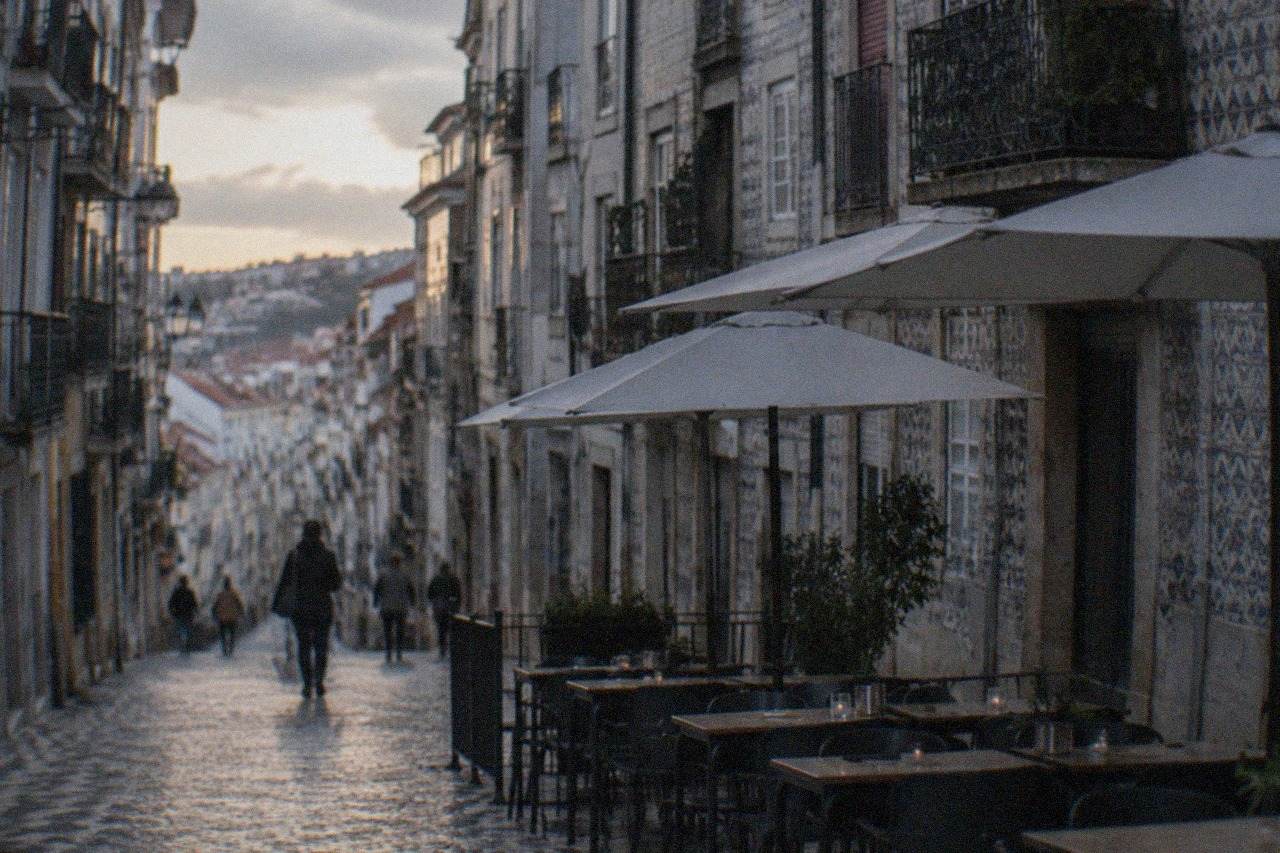
Coimbra's food identity is central Portuguese home cooking: chanfana, roast leitão da Bairrada, Bacalhau à Conimbriga, arrufadas and the student taverns of the Baixa. Eat in the Baixa for taverns and cafés, the Alta for views, and Santa Clara for river-level dining. No individual restaurant's prices or hours were verified for this guide, so it describes dishes and neighbourhoods rather than promising a venue's menu.
Coimbra, Portugal, the university city on the River Mondego, is one of the country's most rewarding places to eat, and the reason is structural rather than glamorous. The University publishes a figure of about 31,000 students on its own homepage, and a city feeding that many students on student budgets produces taverns, cafés and bakeries at a density and price sensibility that bigger tourist cities lose. This guide describes the dishes, the neighbourhoods and the traditions, and it is deliberately careful about one thing: no individual restaurant, café, bakery or market in Coimbra had its prices, opening hours or address verified for this site, so nothing below asserts a fact about a named venue. Where a choice has to be made, the guide describes what distinguishes a kind of place instead. It is part of the wider coverage on Coimbra Travel Guide, where the transport, ticketing and weather facts referenced here are each treated in full.
What Should You Eat in Coimbra, Portugal?
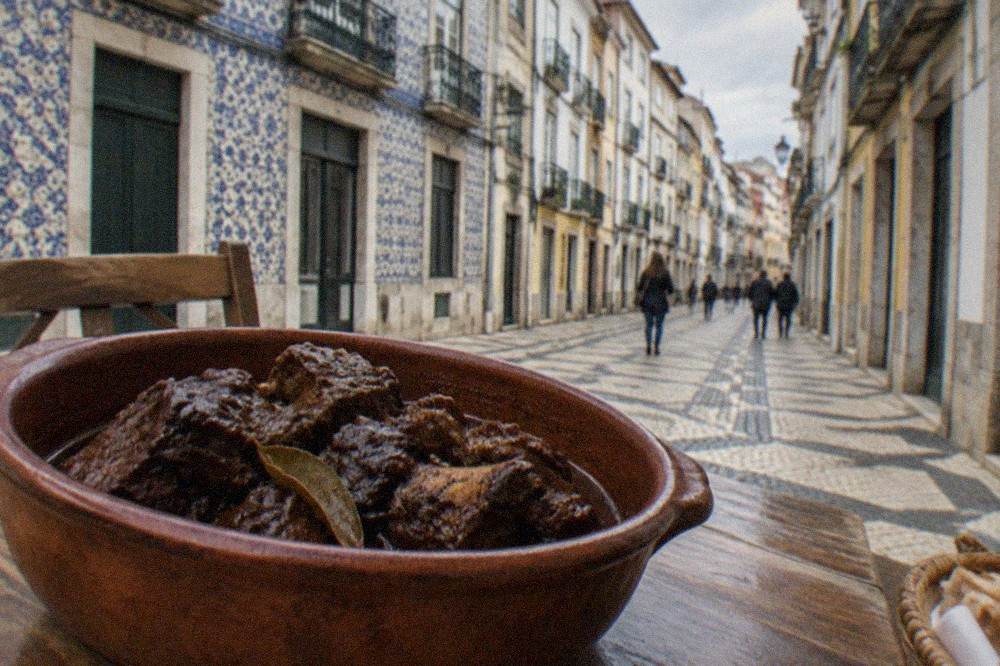
The four dishes that define eating in Coimbra are chanfana, the slow-braised goat of the Beira region; leitão da Bairrada, the suckling pig that gives the neighbouring Bairrada region its name; Bacalhau à Conimbriga, a baked cod dish named after the Roman town; and arrufadas, the city's own sweet buns. Around them sit the standard central Portuguese repertoire of grilled fish, bacalhau in dozens of preparations, and the queijadas and pastries every Portuguese town claims as its own. Chanfana is the one to seek out here rather than on the coast, because it is a Beira interior dish and Coimbra is the largest city of that interior. It is goat or sometimes lamb, braised for hours in red wine, garlic, bay and paprika, traditionally in a clay pot, and it is winter food of the best kind. The dish is old enough that its origins are argued over between the Lousã and Miranda do Corvo area and points further inland, and the schist villages of that same mountain are where its home cooking sits closest to its source.
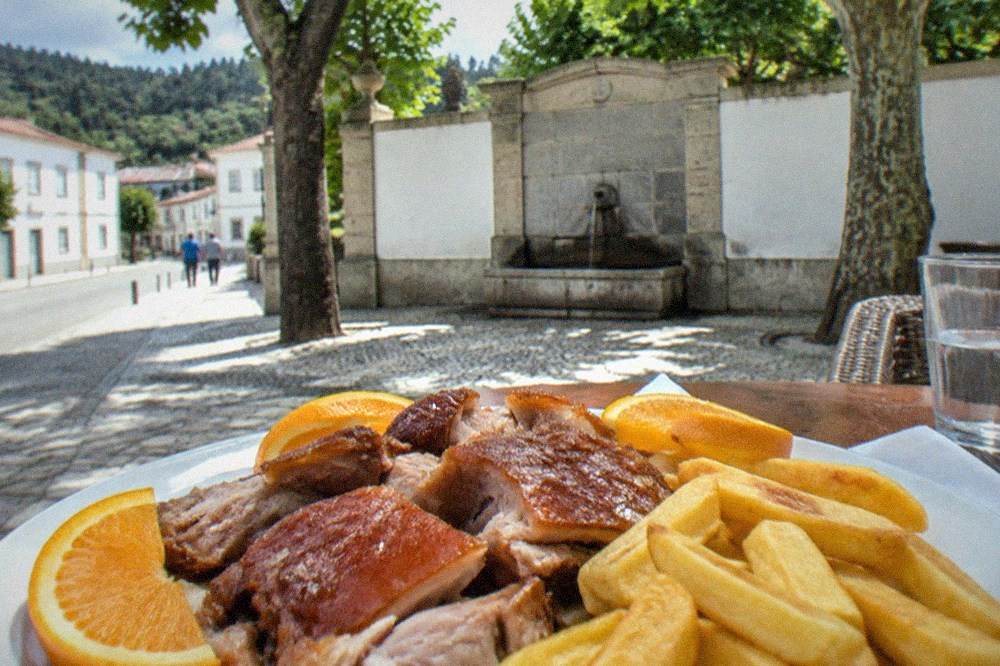
Leitão da Bairrada deserves its own paragraph because it is the dish visitors most often get wrong. It is not a Coimbra invention; it comes from the Bairrada region to the west, and the full treatment of the dish, its region and its wine pairing is in the dedicated leitão da Bairrada guide. What matters here is that Coimbra, as the region's biggest city, is one of the most reliable places to eat it without driving to Mealhada, the town most associated with it. The pig is spit-roasted whole, cut into portions and served with crisp skin, orange slices, fried potatoes and a bottle of the region's sparkling Baga rosé on the table.
Bacalhau à Conimbriga is the local cod dish: layers of salt cod, onion, potatoes and hard-boiled egg, baked with a bread-crumb and olive oil topping that finishes golden. The name borrows from Conímbriga, the Roman town about 16 km south in the parish of Condeixa-a-Velha, in the municipality of Condeixa-a-Nova, and that name carries real weight locally. Beyond these, expect the honest central Portuguese staples: grilled sardines in summer, caldo verde in every tavern, and the cozido whose recipe changes from household to household.
For sweets, Coimbra's claim is the arrufada, a spiral-shaped bun that comes in plain, egg-rich and cinnamon varieties, and the city's monasteries contributed the broader Portuguese tradition of convent sweets, egg yolks and sugar worked into pastries by nuns. The historic cafés of the Baixa, some of them tied to the city's literary and academic life, are the classic place to eat them mid-morning. If you want the full sweep of the city's food, from dishes to markets to where students actually eat, this page is the companion to everything else on the site.
Where Are the Best Areas to Eat in Coimbra?
The four eating areas of Coimbra are the Baixa, the riverside and Santa Clara, the Alta around the university, and the Praça da República student quarter, and each has a distinct character: the Baixa is taverns, historic cafés and the market tradition; the riverside is the modern, terrace-heavy layer; the Alta is small, view-adjacent kitchens above the climb; and República is where the students eat, late and cheaply. The Baixa, the downtown between the river and the hill, is where most visitors end up eating because it is where most visitors end up, full stop. Its grid of pedestrianised streets holds the bulk of the city's taverns, the historic cafés and the everyday places locals use. The old town's upper slopes rise directly behind it, so a dinner in the Baixa can follow an afternoon on the hill without any transport at all.
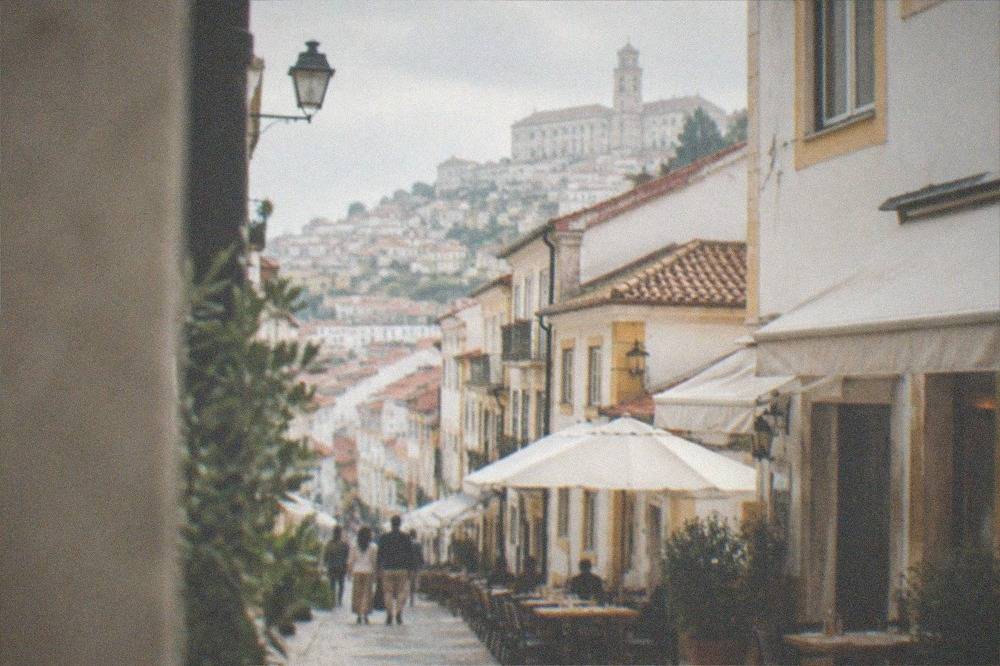
The Santa Clara side, across the River Mondego, is the newest layer of the city's dining. Development pushed north and east over the years, and the riverside now carries terraces with the classic view back up at the university hill. One planning note for that side: its flagship monument, Mosteiro de Santa Clara-a-Velha, has been closed for requalification works since October 2025, so check its status before planning a pre-dinner visit. The Alta, up the hill around the Paço das Escolas, has fewer and smaller places, but they come with the drop-away views over the river, and the climb down to dinner afterwards is part of the point.
República, around Praça da República, is the student quarter, named for the Repúblicas, the shared student houses that line the surrounding streets. Eating here means student-priced portions, late hours on term nights, and the academic calendar ruling everything: during Queima das Fitas in May the whole quarter is a festival site, and the Queima das Fitas guide explains what is and is not officially dated. A guided walk is the efficient way to learn the layout before you commit to a dinner table: the Discovering the charms and places of Coimbra tour, a 3 to 4 hour city walk rated 5 from 79 reviews on the operator's live listing, covers the downtown and the hill in one loop.
How Much Should You Budget for Food in Coimbra?
No individual Coimbra restaurant, café or bakery had its prices verified for this guide, so this site will not print a menu figure for a named venue; the verified planning numbers are the 1.00 EUR per-night tourist tax, capped at three nights and paid to the accommodation, the University's 16.50 EUR combined ticket including the Joanina Library, and the 2.00 EUR on-board bus ticket, 0.90 EUR per trip when pre-purchased in batches of three or more. Those are the fixed, published numbers around which a food budget is built. The variable part, the restaurant bill itself, is where this guide stays deliberately silent, because a price that cannot be traced to a source is a price this site will not publish. The municipality's own figures give the scale of the visitor economy the restaurants sit inside: the Câmara Municipal reported 698,151 overnight stays in Coimbra in 2025, and estimated its own cost per overnight stay at 3.49 EUR, which is the study behind the tax.
| Verified fixed cost | Amount | Rule |
|---|---|---|
| Municipal tourist tax | 1.00 EUR per guest per night | Max 3 consecutive nights, from age 16, paid at the accommodation |
| University combined ticket with Joanina Library | 16.50 EUR adult | Timed Joanina slot, 50 people every 20 minutes, other spaces valid 2 days |
| University ticket without Joanina | 12.50 EUR adult | Same spaces, no library |
| Sé Velha individual ticket | 3.00 EUR | Group rate 2.50 EUR for more than 10 people |
| Mosteiro de Santa Cruz individual ticket | 5.00 EUR | Group rate 3.50 EUR for 12 or more |
| Bus ticket bought on board (SMTUC) | 2.00 EUR | One trip, 90 minutes on the urban network |
| Bus ticket pre-purchased | 0.90 EUR per trip | Batches of 3 or more trips |
The tourist tax is the one visitors regularly misread. A couple staying seven nights pays 3.00 EUR each, 6.00 EUR total, because the cap is three consecutive nights per person, and it is charged all year with no low-season exclusion. The two-euro figure that circulated in news coverage in July 2026 was an approved proposal, not the rate; the municipality's own tax pages still listed 1.00 EUR as of the latest verification. Tipping is its own question, and since no figure for it is in this site's verified pack, the honest answer lives on the is it customary to tip in Coimbra restaurants page, which treats the question directly rather than a food guide guessing at a percentage.
A budget built this way has one more moving part worth naming: the fixed costs above are all per person, but the tavern layer of the Baixa prices for students, which is why the city eats cheaper than its monuments might suggest. That is the practical effect of the 31,000-student population on the menu, and it is the single biggest reason to plan dinners in the student-priced quarters rather than only in the view-priced ones.
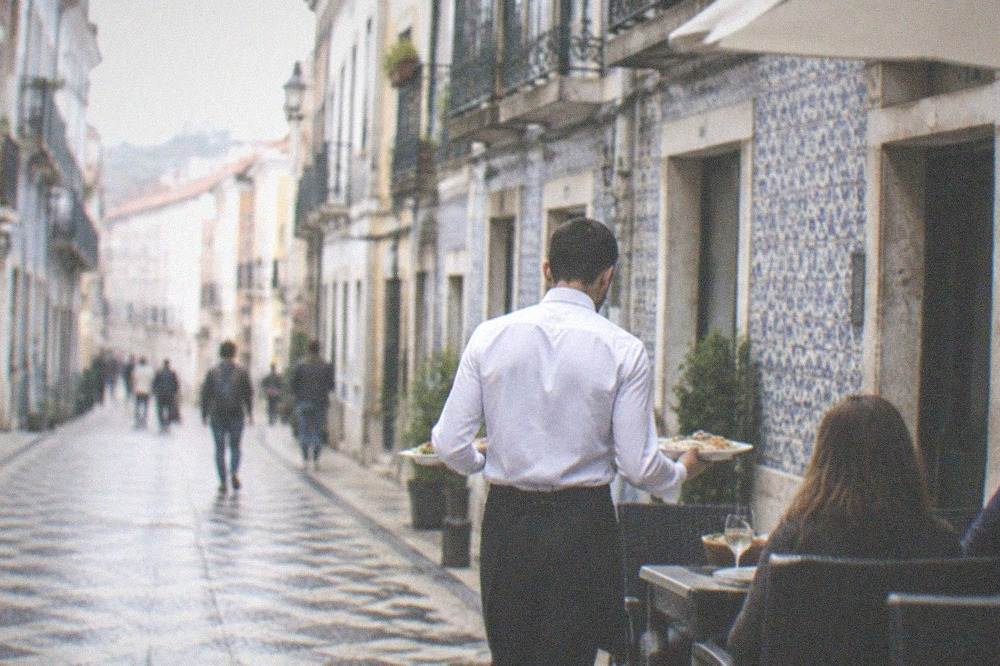
What Is Chanfana and Why Is It Coimbra's Signature Dish?
Chanfana is goat, sometimes lamb, braised slowly for hours in red wine with garlic, bay leaf, paprika and olive oil, traditionally in a clay pot, and it is the signature dish of the Beira interior that Coimbra serves as the capital of; the Lousã and Miranda do Corvo area is most associated with its origins, and the schist villages of that same mountain are where the dish's home cooking is closest to its source. The story told locally, that the dish began as a way to use animals that could not be driven over the mountains, is a tradition rather than a documented fact, and this site does not date it. What is verifiable is the geography: the Serra da Lousã sits directly south and east of the city, its schist villages are a documented, popular day trip, and a food-motivated visit to the mountain is one of the best ways to eat chanfana in the landscape that produced it.
The mountain also gives the dish its best company. Bairrada reds, above all the Baga grape, are the classic pairing for both chanfana and leitão, and the sparkling rosé version is what the region pours with roast pig, a pairing the Bairrada wine route guide covers in full. A guided tour makes the food-and-mountain combination work without a car: the Schist Villages at Lousa Mountain tour runs 4 hours from about $105.37 per person, rated 4.9 from 133 reviews on the operator's live listing, and there is a private version with a coffee stop, the An adventure through the Schist Villages of Lousã tour, from $87.81 per person, rated 5 from 105 reviews.
Back in the city, chanfana appears on tavern menus through the colder months, and IPMA's 1991 to 2020 normals for the Coimbra / Bencanta station show why the season matters: November is the wettest month at 121.5 mm of rain, with October at 114.5 mm and January at 113.5 mm, while July averages 8.9 mm and is effectively dry. A clay pot of wine-braised goat belongs to the first half of that table, and the weather guide carries the full monthly breakdown for planning around it.
Where do Students Eat in Coimbra?
Students in Coimbra eat in the Baixa's taverns, in the cantinas and cheap kitchens around Praça da República, and in the Repúblicas themselves, the historic shared student houses whose collective cooking traditions are a documented part of university life, and the academic calendar shapes all of it: term-time nights run late, Queima das Fitas in May turns the quarter into a festival, and the University closes its visitor circuit on 24 May, a date it publishes itself. The Repúblicas are the part no other Portuguese city has in the same form: houses where students live collectively, cook collectively and host collectively, some of them centuries old. They are private homes, not restaurants, and a visitor does not simply book a table in one, but their existence explains why the eating culture around República is built for large groups, low prices and long evenings rather than for quiet couples.
The calendar is worth planning around, because the two verified dates this site can publish both land in May. The University of Coimbra's own visit pages state that the tourist circuit closes on 24 May, and Mosteiro de Santa Cruz, the burial church of Portugal's first two kings, suspends visits on the Cortejo da Queima das Fitas, a moveable Sunday. Exact festival dates are not published on an official page this site could verify, so the Queima das Fitas guide explains what is confirmed and what is not. During the festival the student quarter's food stalls and street food take over, and during the summer break, when many students leave, the tavern layer thins accordingly. The capa e batina culture behind all of this is the reason the quarter behaves the way it does.
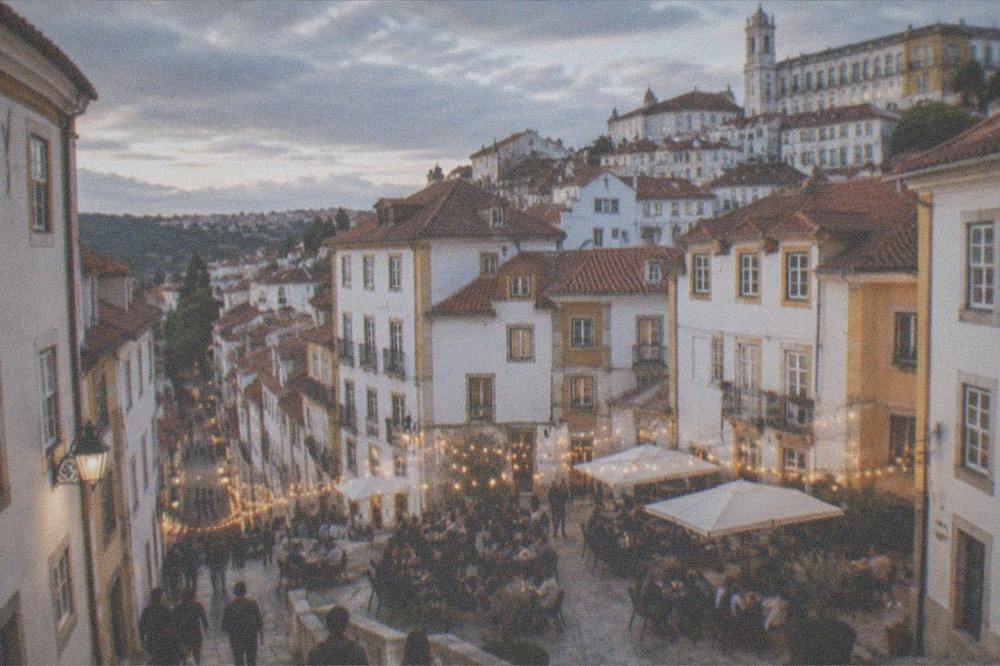
Can You Combine Dinner with Fado in Coimbra?
Yes, and the Coimbra way is the reverse of the tourist-dinner-show format: Coimbra fado is sung by men in the academic tradition, historically in the dark and in silence, and the city's fado houses are dedicated listening rooms rather than dinner theatres, so the practical pattern is dinner first in the Baixa and fado afterwards, with the live shows typically running around 50 minutes. Coimbra fado is a distinct tradition from Lisbon's, tied to the university and the capa e batina, and its rules of silence are real: the singing is the event. The fado de Coimbra guide covers the history and the differences, and the where to hear fado guide covers the venues and the etiquette, including what to wear and whether to tip, questions this site answers in detail elsewhere.
For visitors who want the performance with a glass in hand rather than a full dinner, the Coimbra: Live Fado Show with Glass of Port Wine runs about 50 minutes from $18 per person, rated 4.7 from 1,234 reviews on the operator's live listing, and it is the most-reviewed food-and-music product on this site's roster.
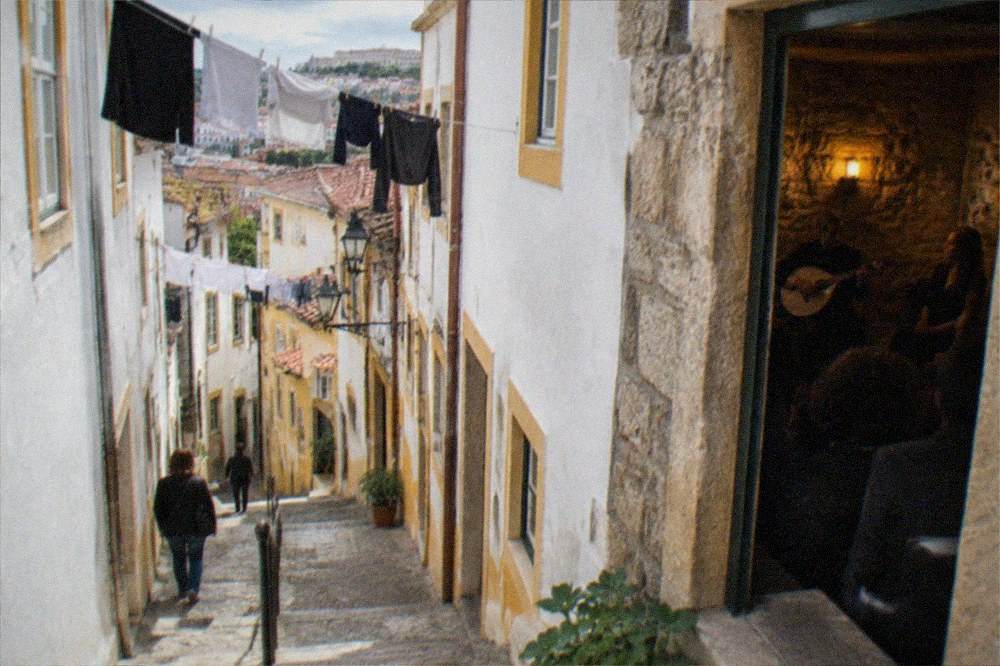
What About Vegetarian and Vegan Eating in Coimbra?
Coimbra is workable for vegetarians and easier than it was a decade ago, because the standard tavern repertoire already includes vegetable-first dishes: caldo verde, soups, grilled vegetables, the egg-and-potato layer of bacalhau à Conimbriga minus the fish, and the convent-sweet tradition built on eggs, sugar and almonds, though strict vegans will find the convent sweets off the table and should lean on the modern café layer in the Baixa and Santa Clara. The honest caveat is the one that runs through this whole guide: no venue's menu was verified, so the vegetarian and vegan guide is the page that treats the question properly, dish by dish. What can be said here is structural. Central Portuguese home cooking is vegetable-and-legume heavy at its base, beans, greens, bread soups and potatoes, with meat used in quantity mainly at festival and Sunday level, so the building blocks exist. The student population, about 31,000 by the University's own published figure, keeps demand for cheap meat-free plates constant, and student quarters in any city are where that demand gets answered first.
When Is the Best Time of Year to Eat in Coimbra?
The two best eating windows in Coimbra are June and September, and the reason is the IPMA 1991 to 2020 climate normals for the Coimbra / Bencanta station: September's mean maximum of 27.4 C is actually higher than June's 26.3 C, but September still gets only 49.9 mm of rain against October's 114.5 mm, so both months sit in the dry gap between the spring rains and the autumn jump, and terrace weather holds through both. This is the table most guides get backwards, so it is worth reading slowly. The rain does not fade out gradually after summer; it holds off until October and then more than doubles, from 49.9 mm in September to 114.5 mm in October, and November at 121.5 mm is the wettest month of all. July, at 8.9 mm, is effectively dry, but it is also the month the city is emptiest of students.
| Month | Mean max C | Rain mm | Days with 1 mm+ rain | Eating weather |
|---|---|---|---|---|
| May | 23.3 | 64.7 | 8.5 | Festival month, Queima das Fitas, student quarter at full volume |
| June | 26.3 | 26.0 | 3.7 | Dry, warm, terraces open, exams thin the crowds |
| July | 28.5 | 8.9 | 1.7 | Effectively dry, hottest daytime dining of the early summer |
| August | 29.1 | 14.8 | 2.2 | Hottest month, 10.9 days above 30 C on average |
| September | 27.4 | 49.9 | 5.2 | Warmer than June, students return, best all-round window |
| October | 23.2 | 114.5 | 10.3 | Rain more than doubles, first proper braising weather |
The seasonal logic maps directly onto the menu. Sardines and grilled fish belong to the June-to-September half of the table; chanfana and cozido belong to the October-to-March half. The best time to visit guide carries the full seasonal picture, including the record extremes at the same station, 41.2 C on 7 August 2016 and -4.3 C on 20 January 2017, which frame what a Coimbra kitchen is cooking for.
How do You Get to the Restaurants: Coimbra Transport Basics?
A bus ticket bought on board a Coimbra city bus costs 2.00 EUR under the SMTUC tariff in force since April 2026, a pre-purchased ticket costs 0.90 EUR per trip in batches of three or more, one trip is valid 90 minutes on the urban network with transfers included, and SMTUC titles are also valid on the new Metro Mondego network, which is the verified transport picture a dinner plan in this city actually runs on. The city is also walkable in its core, with the standard warning that the climb from the Baixa to the Alta is real and steep. The two railway stations, Coimbra-B and Coimbra-A, are in different places and which trains call where is a question this site answers on the train stations A and B page, because the specifics must come from CP and not from a guide's memory. The map completes the picture for anyone planning the walk between dinner and the hill.
| SMTUC ticket type | Price | Validity |
|---|---|---|
| Single ticket bought on board | 2.00 EUR | 1 trip, 90 minutes on the urban network, transfers included |
| Pre-purchased, 3 or more trips | 0.90 EUR per trip | Same validity, loaded on a card |
| Viagem ConVIDA support card | 0.50 EUR | One-off card cost for occasional tickets |
| Large-family 1-day ticket, 7 trips | 1.00 EUR | For qualifying large families |
| Fare evasion fine | 120.00 to 350.00 EUR | The number that makes validating worth it |
Which Food Day Trips Work from Coimbra?
The three food day trips that work from Coimbra are the Bairrada region west of the city for leitão and Baga wine, the Lousã mountain schist villages south-east of the city for chanfana in its home landscape, and the Buçaco forest north of the city, a documented palace-hotel-and-woodland destination whose surroundings include the Luso spa town of the same wine-producing area, and all three sit inside a day's return journey, with guided options running 4 to 8 hours. The Bairrada is the deepest food trip of the three because the dish and the wine come from the same ground, and the leitão guide plus the Bairrada wine route guide cover it as a region rather than as a list of venues. The Lousã is the chanfana trip and the schist-village trip in one, and Buçaco is the grand old excursion, with the spa towns of Luso and Curia in the same corner of the map.
| Guided food-and-region day trip | Duration | From (per person) | Rating on the listing |
|---|---|---|---|
| Schist Villages at Lousa Mountain | 4 hours | $105.37 | 4.9 from 133 reviews |
| An adventure through the Schist Villages of Lousã, private | 3 to 4 hours | $87.81 | 5 from 105 reviews |
| Lousa Mountain Private Tour, wild deer watching | 4 hours | $105.37 | 5 from 88 reviews |
| A tour between Cascades and Schist Villages, Piodão | 8 hours | $152.20 | 5 from 48 reviews |
| Schist Villages and Medieval Castles Tour, lunch included | 4 hours 30 minutes | $128.78 | 5 from 40 reviews |
The lunch-included castles tour is the one to flag for a food guide, because it is the product on this site's roster where a meal is built into the itinerary rather than left to find. Tomar, Fátima and Aveiro round out the wider excursion menu, and Conímbriga, the Roman-town trip whose name the city's cod dish carries, takes a single combined 10.00 EUR adult ticket for its museum and ruins together and opens seven days a week, 10:00 to 18:00, which makes it the reliable Monday option in a region where several national monuments close on Mondays.
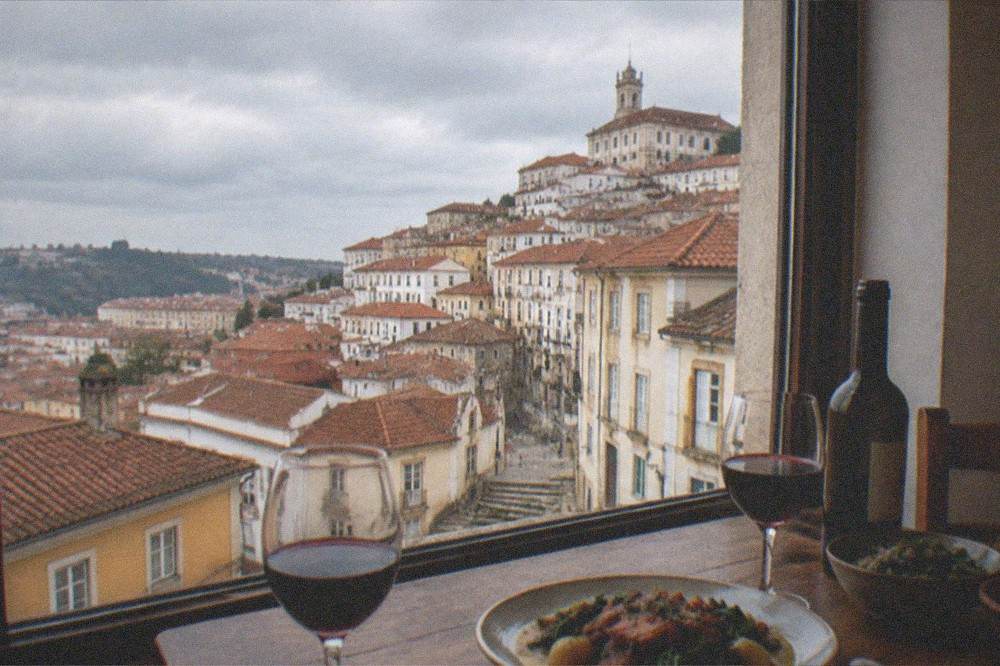
How do You Plan a Food Day in Coimbra?
A food day in Coimbra plans itself around the hill: breakfast and an arrufada in a Baixa café, the university and its 16.50 EUR combined ticket in the morning while the Joanina slot system still has capacity, lunch in a Baixa tavern when the menus turn over, the afternoon on the Santa Clara riverside or in a museum, and dinner back in the Baixa or República, with fado afterwards rather than during, and the whole day runs on the two-euro bus ticket or on foot. The one time-pressure fact that genuinely matters is the Joanina: the library admits 50 people every 20 minutes, the time printed on the ticket is the library slot specifically, entry outside the slot is refused, and online purchase closes 20 minutes before the visit time. A lunch reservation with no slack around that slot is the classic way a Coimbra food day goes wrong, so the Joanina Library tickets guide and the university tickets guide are worth reading before booking anything else.
| University of Coimbra ticket, 2026 season | Adult price | Includes | Validity |
|---|---|---|---|
| Joanina Library + University + Science Museum | 16.50 EUR | Joanina with timed slot, Royal Palace, St Michael's Chapel, Chemistry Laboratory, Academic Museum, Cabinet of Curiosities, Mineral Gallery | 2 days, Joanina slot fixed |
| University + Science Museum | 12.50 EUR | Same spaces without the Joanina | 2 days |
| Guided tour, Palace of Schools | 25.00 EUR | Guide-led visit, 1 hour 30 minutes | Fixed tour time |
| Guided tour, Botanical Garden | 10.00 EUR | 1 hour 30 minutes, side entrance meeting point | Fixed tour time |
For a first visit that strings the eating and the sightseeing together, the Coimbra Top Attractions Walking Tour runs 2 hours 30 minutes from $5.85 per person, rated 5 from 151 reviews on the operator's live listing, and it pairs naturally with a slow lunch afterwards in the streets it covers. A wider stay changes the plan rather than the logic: the same hill, the same taverns, and the same clock apply on day three as on day one.
Common Questions About Coimbra Restaurants
What Food Is Coimbra Famous For?
Coimbra is famous for chanfana, the red-wine-braised goat of the Beira interior; leitão da Bairrada, the suckling pig of the neighbouring Bairrada wine region; Bacalhau à Conimbriga, the baked cod dish named after the Roman town; and arrufadas, the city's own sweet buns. Around them sits the central Portuguese repertoire of grilled fish, caldo verde and convent sweets.
Are There Traditional Restaurants in Coimbra?
Yes, and the tavern layer of the Baixa is the deepest part of it. No individual venue's prices or hours were verified for this site, so this guide describes the kinds of place rather than naming one, and the traditional Coimbra restaurants page treats the question directly.
Is It Customary to Tip in Coimbra Restaurants?
Tipping in Portugal is more modest than in North America, but no specific figure for Coimbra is in this site's verified pack, so the honest, detailed answer lives on the tipping in Coimbra restaurants page rather than being guessed at here.
Where Should I Eat Near the University of Coimbra?
The Alta immediately around the Paço das Escolas has small kitchens with views, and the practical pattern is to eat in the Baixa below after the visit: the combined ticket is valid two days except for the fixed Joanina slot, which admits 50 people every 20 minutes, so plan dinner with slack around it.
Can You Drink Bairrada Wine in Coimbra?
Yes. Coimbra is the largest city of the Bairrada's wider region and the natural place to drink its Baga reds and sparkling rosés, especially alongside leitão. The Bairrada wine route guide covers the region and its grapes in full.
Is Coimbra Good for Vegetarians?
Workable and improving: the tavern repertoire already leans on soups, beans, greens and potatoes, the student population of about 31,000 keeps demand steady, and the modern café layer in the Baixa and Santa Clara covers the rest. The vegetarian and vegan guide goes dish by dish.
Eating in Coimbra runs on three rhythms, the student calendar, the climate table and the Joanina clock, and a plan that respects all three eats better than any list of restaurant names could promise.