The Baixa: Coimbra's Riverside Downtown
The Baixa is the flat, commercial heart of Coimbra, Portugal, the riverside downtown that sits below the university hill and carries the city's shops, cafes, markets and two of its oldest churches. This page lays out what the quarter actually contains, what entry costs, and how to walk it without fighting the slope.
Short answer
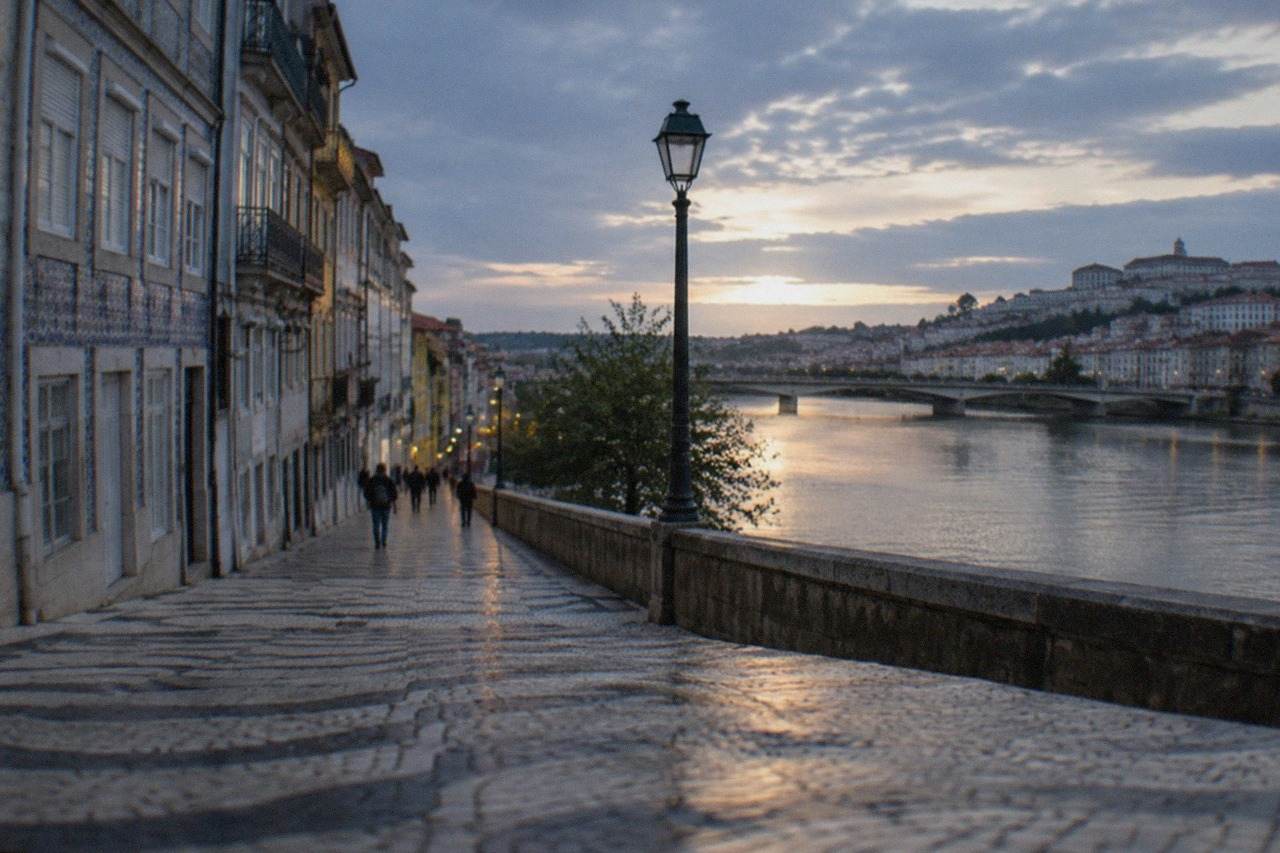
The Baixa is Coimbra's downtown: the low-lying quarter between the River Mondego and the university hill, built around the commercial streets, the Sé Velha, Mosteiro de Santa Cruz and the old market. It is flat, walkable, and free to wander; the paid sights inside or beside it cost from 3.00 EUR at the Sé Velha to 5.00 EUR at Santa Cruz, and the University's combined ticket above it is 16.50 EUR.
The Baixa is the riverside downtown of Coimbra, Portugal, the university city on the River Mondego, and it is the part of the city that behaves like a normal working town: shops, cafes, banks, the old market building, and two of the country's most important churches, all packed into the flat ground between the river and the slope that carries the University up to the Alta. Most guides send you straight up the hill. The Baixa is where the city actually lives on a Tuesday, and it rewards a slower pass: the old town guide covers the historic core as a whole, while this page stays down at river level and answers the practical questions, what the quarter contains, what it costs, how the hills and the funicular work, and when to walk it.
What Exactly Is the Baixa in Coimbra, Portugal?
The Baixa is Coimbra's lower town, the flat commercial quarter that runs from the banks of the River Mondego up to the foot of the university hill. It is organised around the main shopping streets, the old market and the two great churches of Sé Velha and Mosteiro de Santa Cruz. The UNESCO inscription of 2013, "University of Coimbra, Alta and Sofia", covers the hill and the college street, not the Baixa, so the common claim that Coimbra is a UNESCO city is false.
The name is simply Portuguese for "low", and the geography explains everything about how the city is used. The Alta is the crown of the hill, with the Paço das Escolas, the Joanina Library and the student republics. The Baixa is the floor of the valley, and the two are stitched together by steep lanes, stairs and the Elevador do Mercado, the funicular lift that the municipality runs between the lower town and the upper. Visitors who plan only the hill miss the fact that most of the city's daily life, and a good share of its oldest architecture, is down here at river level.
The quarter's boundaries are informal but well understood locally. The River Mondego closes it on the north and east, the Santa Clara district lies across the water, and the hillside of the Alta rises to the south. Within that frame sit the Sé Velha, the Romanesque old cathedral; Mosteiro de Santa Cruz, the burial church of Portugal's first two kings; the commercial axis of Rua Ferreira Borges and its neighbours; and the market building that gives the funicular its name. The distinction matters mostly for hotel planning, since the lower town's flatness is a genuine advantage for anyone who does not want to climb.
What Should You See First in the Baixa?
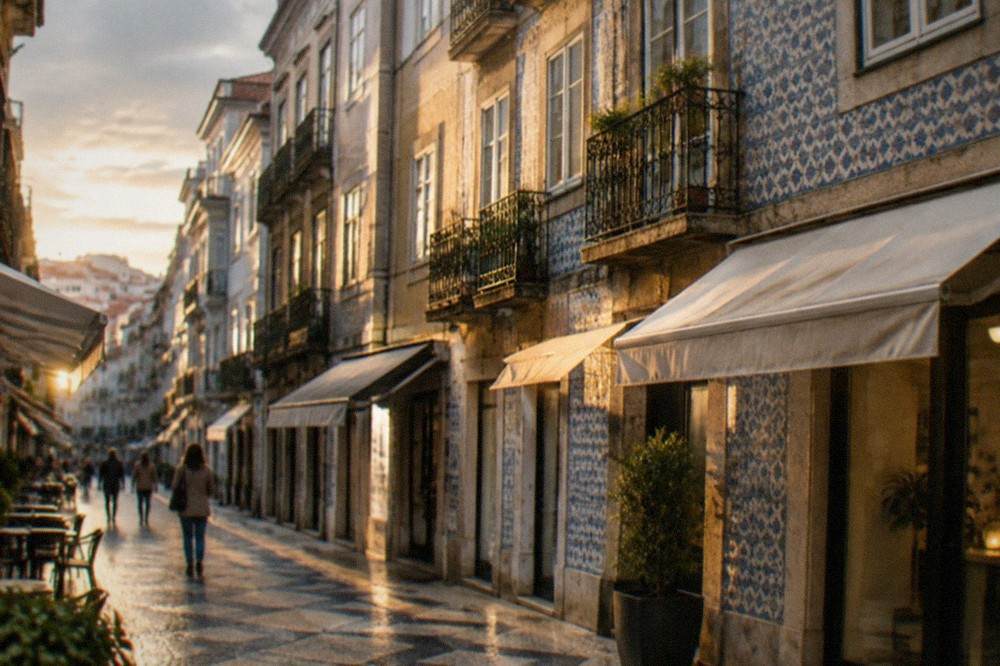
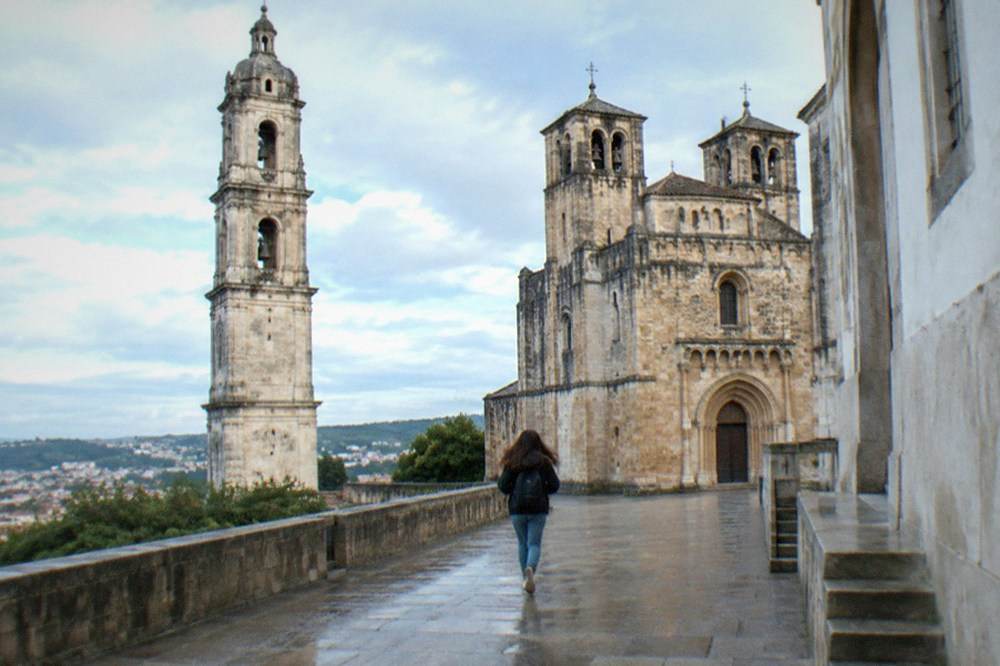
Start with Mosteiro de Santa Cruz and the Sé Velha, the two monuments that anchor the quarter, then walk the commercial streets toward the river. Both churches sit within a few minutes' level walk of each other, and both charge a small fixed fee: Santa Cruz costs 5.00 EUR per person for its visitable parts and the Sé Velha costs 3.00 EUR, prices published by the Unidade Pastoral Aeminium, the parish body that manages both. A first circuit of the core monuments takes roughly half a day.
Santa Cruz deserves the first slot. The parish's own page confirms it is the burial church of Portugal's first two kings, and the visitable interior, sacristy, cloister and tombs, is covered by the 5.00 EUR individual ticket, with group rates from 3.50 EUR for parties of twelve or more. One scheduling trap is worth flagging early: visits are suspended on Easter Sunday and on the Cortejo da Queima das Fitas, the moveable Sunday parade of the student festival, so a May visit can find the monument closed for the day. Hours otherwise run 09:30 to 16:30, with Sundays and religious holidays on a separate schedule.
The Sé Velha is the second anchor, and it is one of the finest Romanesque buildings in the country. The individual ticket is 3.00 EUR, groups of more than ten pay 2.50 EUR each, and summer visiting runs 09:30 to 18:30 with Sundays from 11:00, winter hours closing earlier. From the cathedral the natural line is downhill through the Arco de Almedina, the medieval gate in the old city wall, into the commercial streets, ending at the riverside. The Sé Velha guide covers the building in depth.
A guided walk compresses all of this efficiently. The Coimbra Top Attractions Walking Tour runs two and a half hours from 5.85 per person and is rated 5 from 151 reviews, and the longer Discovering the charms and places of Coimbra walk covers three to four hours from 52.68 per person, rated 5 from 79 reviews, both figures from the operators' live listings. There is also a strong free option: GuruWalk runs a Coimbra tour of downtown, historic center, university and botanic garden walk, tip-based and rated 4.91 from 662 reviews, which spends real time in the Baixa before climbing.
How Do the Baixa and the University Hill Fit Together?
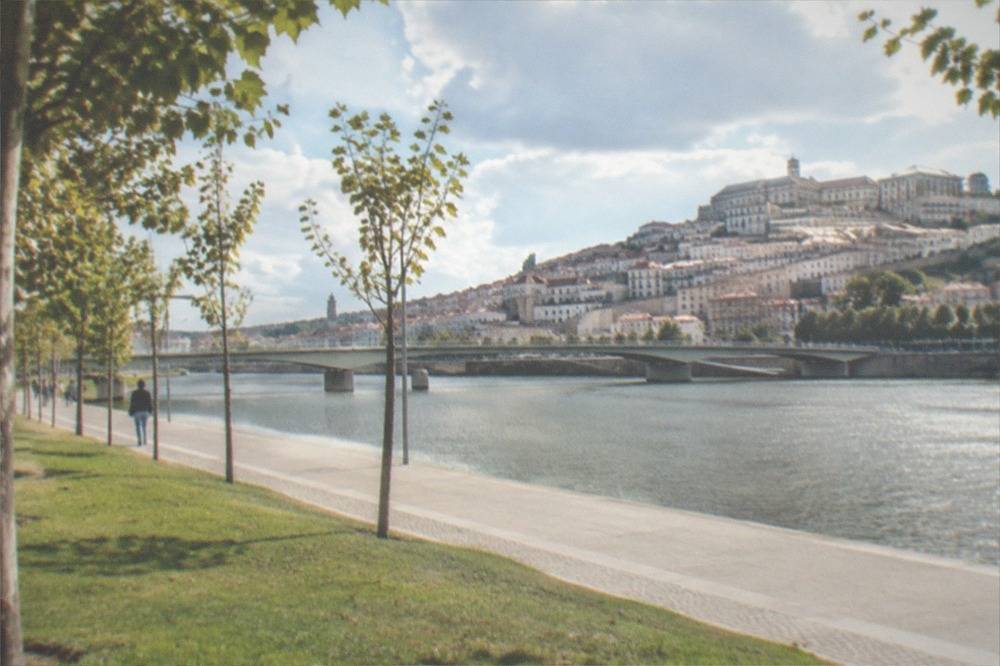
The Baixa and the Alta are two halves of one vertical city: the lower town holds the commerce, the churches and the market, while the hill above holds the Paço das Escolas and the Joanina Library. The University's combined ticket, 16.50 EUR adult, covers the Joanina Library, the Royal Palace, St Michael's Chapel and the science spaces, is valid two days except the fixed Joanina slot, and that slot admits only 50 people every 20 minutes.
That 50-per-20-minutes ceiling is the single most important planning fact in Coimbra, and it is the University's own published rule. The Joanina Library cannot be bought on its own; it exists only inside the 16.50 EUR combined ticket, and the time printed on that ticket is the library slot specifically. Entry outside the printed slot is refused, and online purchase closes 20 minutes before the visit time. In summer, when the circuit runs 09:00 to 20:00, a visitor arriving without a pre-booked slot can simply be turned away. The Joanina Library tickets guide works through the booking mechanics in detail.
The hill itself is a separate study. What matters down here is the climb. The funicular is the civilised option, and the Elevador do Mercado guide explains how it fits into the SMTUC network; the tariff in force since April 2026 confirms SMTUC tickets are also valid on the Metro Mondego network, but it does not publish a standalone funicular fare, so treat the lift as part of the bus system rather than pricing it separately. The stairs are the atmospheric option, and they land you inside the medieval fabric in a way the lift cannot.
Two closures shape any 2026 itinerary. The Torre da Universidade, the clock tower, is closed, the University's own information page states it plainly, so no tower climb exists to buy. And the Museu Nacional de Machado de Castro, which sits at the top of the Baixa's slope and is built over a Roman cryptoporticus of the mid-1st century, is closed for conservation work, its own portal says so twice. Neither should appear on a current plan; the Machado de Castro guide tracks the reopening question.
What Does a Visit to the Baixa Actually Cost?
A day in the Baixa costs very little at entry level: walking the quarter is free, the Sé Velha is 3.00 EUR, Mosteiro de Santa Cruz is 5.00 EUR, so the two great churches plus wandering come to 8.00 EUR per person before food. Add the University's 16.50 EUR combined ticket if you climb the hill, and a tourist tax of 1.00 EUR per guest per overnight stay, capped at three consecutive nights and charged by your accommodation, applies if you sleep in the city.
The tax detail is worth getting right because guides get it wrong. The municipality's own service page states 1.00 EUR per guest per overnight stay, from age 16, paid to the accommodation at check-in or check-out, charged all year with no low-season exclusion, and capped at three consecutive nights: the municipality's worked example has a couple staying seven nights paying 3.00 EUR each. A rise to two euros was approved as a proposal in July 2026, but the published rate remains one euro until the municipality's own tax pages say otherwise.
| Item in or beside the Baixa | Adult price | Source basis |
|---|---|---|
| Walking the Baixa's streets and riverfront | Free | No ticket required |
| Sé Velha de Coimbra, individual | 3.00 EUR | Parish price page |
| Sé Velha, group over 10 people | 2.50 EUR per person | Parish price page |
| Mosteiro de Santa Cruz, individual | 5.00 EUR | Parish price page |
| Santa Cruz group, minimum 12, with audioguide | 4.00 EUR per person | Parish price page |
| University combined ticket with Joanina Library | 16.50 EUR | visit.uc.pt, valid to 31.12.2026 |
| University ticket without Joanina Library | 12.50 EUR | visit.uc.pt |
| Tourist tax, per guest per night, max 3 nights | 1.00 EUR | Municipal service page |
Note what is deliberately absent from that table. Portugal dos Pequenitos, the miniature park across the river in the Santa Clara district, has no published price here because its own price page renders client-side and the served HTML contains no euro amount; the venue's hours are verifiable, 10:00 to 19:00 from 1 March to 15 October, 10:00 to 17:00 in the winter window, closed 25 December. The Mosteiro de Santa Clara-a-Velha, also across the river, has been closed for requalification works since October 2025 and has no current official page, so no price or hours for it belong anywhere on a 2026 plan.
Where do You Eat in the Baixa?
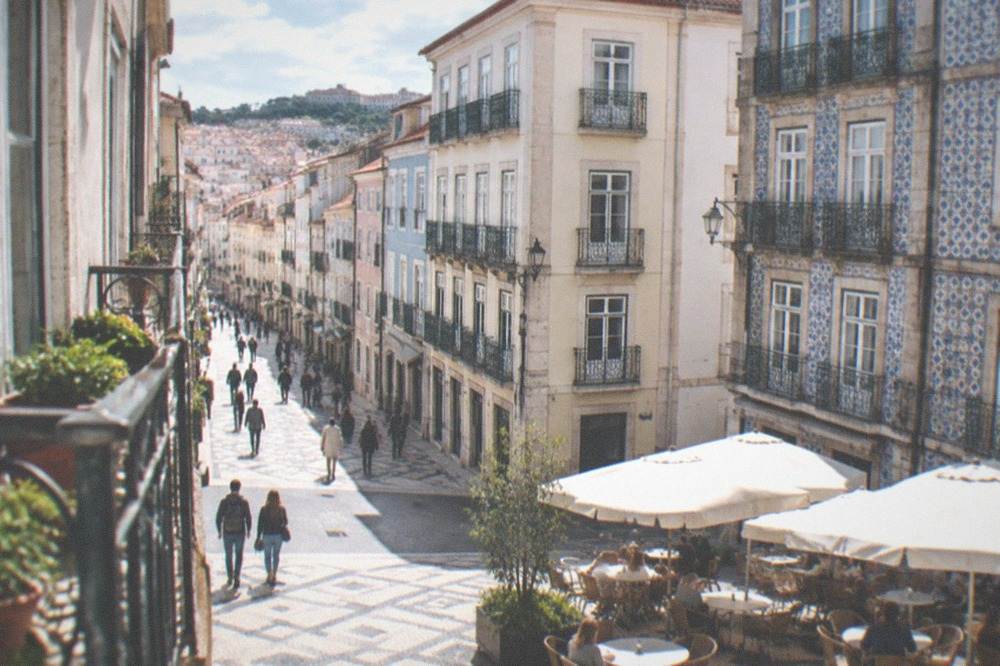
The Baixa holds the densest concentration of eating in the city, from historic cafes around the commercial squares to everyday tascas and the restaurants of the streets running back from the river. No individual venue on this page carries a verified address, hour or price, because none was confirmed from an official source, so this section gives the structure of the quarter's food scene and points to the site's restaurants and what-to-eat guides for venue-level planning.
The regional frame is the Bairrada, whose signature dish is leitão da Bairrada, suckling pig.
The historic cafes are a Baixa institution in themselves, and the site's historic cafes guide covers the ones with a documented past, several of which sit in or on the edge of the lower town. They are the natural morning stop, and they double as the honest answer to rain: Coimbra averages 94 days a year with a millimetre or more of rain, so a cafe with an interior worth sitting in is a practical asset, not a curiosity. The wider set of guides lives on Coimbra Travel Guide.
For dinner, the structure is simple. The Baixa's restaurant rows cluster on the streets between the commercial axis and the river, and the restaurants guide does the venue-by-venue work. The regional dishes to look for include leitão da Bairrada as the celebration meal, the river's own fish preparations, and the pastries and arrufadas of the city's bakeries. None of that requires a hill climb, which is precisely the point of eating down here after a day up there.
How do You Get Around the Baixa and Its Hills?
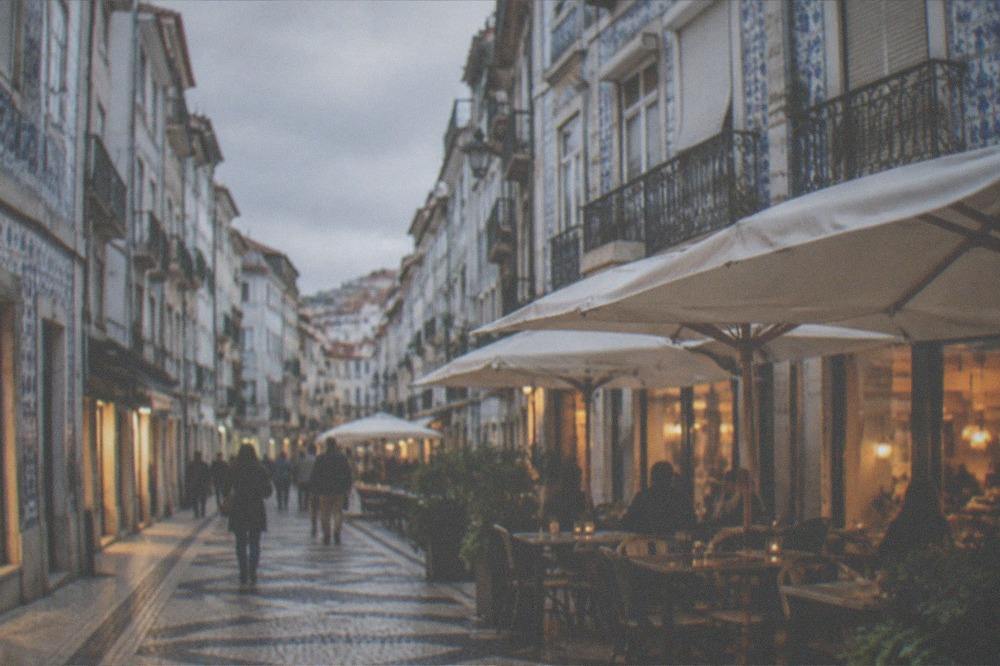
The Baixa is flat and entirely walkable, so most visitors need no transport inside it at all; the transport question is the climb to the Alta and the connections outward. There the 2026 SMTUC tariff gives the hard numbers: a ticket bought on board the bus costs 2.00 EUR, a pre-purchased ticket in a pack of three or more trips costs 0.90 EUR per trip, and one trip is valid 90 minutes on the urban network with transfers included.
Every SMTUC title is also valid on the Metro Mondego network.
The tariff detail comes from the operator's own 2026 PDF, in force since 1 April 2026, and it is the only bus pricing that should be quoted. Day passes exist for one, three and seven days, but the tariff grid's row mapping could not be confirmed from the PDF layout, so this site does not print a day-pass figure. What is certain and genuinely useful is the intermodal rule: the tariff is explicitly headed for use on SMTUC and Metro Mondego together, so a bus ticket is also a Metrobus ticket while the new network grows.
| SMTUC option, 2026 tariff | Price | Notes |
|---|---|---|
| Single ticket bought on board | 2.00 EUR | From the driver |
| Pre-purchased, pack of 3 or more trips | 0.90 EUR per trip | Rechargeable card |
| Validity of one trip | 90 minutes urban | Transfers included from first validation |
| MOVE-C support card | 3.00 EUR youth, 6.00 EUR others | Card itself |
| Viagem ConVIDA support card | 0.50 EUR | For occasional and pre-purchased tickets |
| Valid on Metro Mondego | Yes | All intermodal titles |
| Fare evasion fine | 120.00 to 350.00 EUR | Tariff schedule |
Outward connections have one trap worth repeating. Coimbra has two railway stations with confusingly similar names, Coimbra-B and Coimbra-A, in different places, and the specifics of which trains call where, and whether the shuttle between them is free with a long-distance ticket, are not published in a form this site could verify, so CP's own site is where to check. For arrival planning, the Porto and Lisbon rail approaches follow the same two-station logic, so check the station name on your ticket before you travel.
When Is the Best Time to Walk the Baixa?
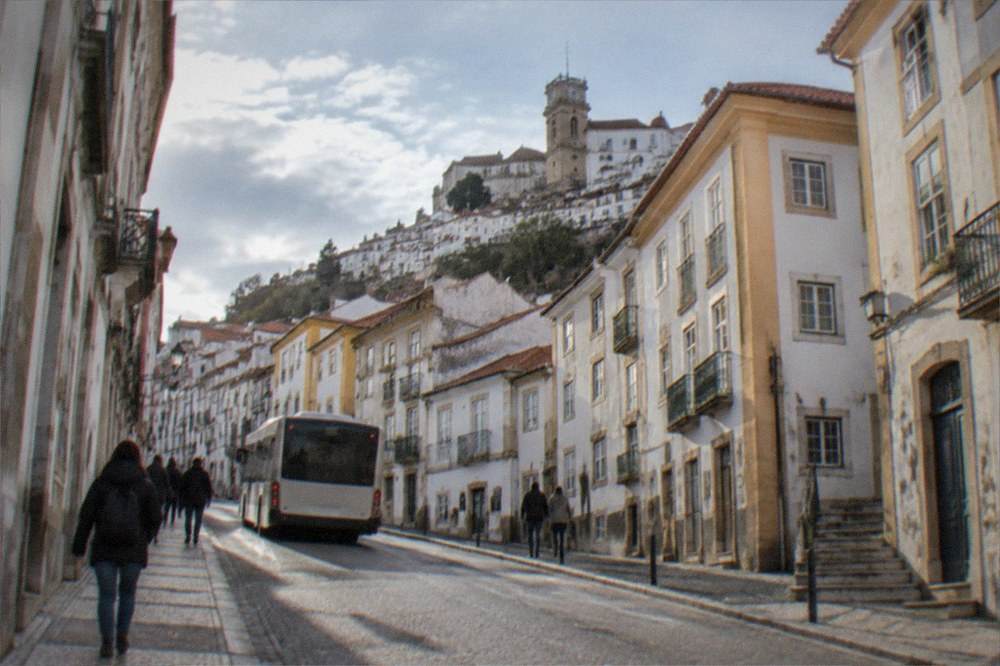
The best months to walk the Baixa are June and September, and September is the better of the two. IPMA's 1991 to 2020 normals for the Coimbra / Bencanta station show September with a mean maximum of 27.4 C, hotter than June's 26.3 C, and only 49.9 mm of rain against June's 26.0 mm, while the student crowds have thinned.
The rain does not arrive in earnest until October, when the monthly total jumps to 114.5 mm, and November is the wettest month at 121.5 mm.
That September reading runs against most people's instincts, which is exactly why it is worth having. Guides routinely call June the sweet spot and warn about September as the start of the rains; the station data says the opposite ordering for temperature and shows that the real precipitation step-change waits a full month. August is the hottest month, not July, on both mean and mean maximum, and it averages 10.9 days above 30 C.
| Month | Mean max C | Rain mm | Days 1 mm+ rain | Read it as |
|---|---|---|---|---|
| May | 23.3 | 64.7 | 8.5 | Warm, green, student season ending |
| Jun | 26.3 | 26.0 | 3.7 | Dry and bright, crowds rising |
| Jul | 28.5 | 8.9 | 1.7 | Effectively dry, hot afternoons |
| Aug | 29.1 | 14.8 | 2.2 | Hottest month, 10.9 days over 30 C |
| Sep | 27.4 | 49.9 | 5.2 | Hotter than June, quieter streets |
| Oct | 23.2 | 114.5 | 10.3 | The rain arrives, mild days |
| Nov | 18.0 | 121.5 | 11.5 | Wettest month |
One calendar event reshapes the lower town each May. The Queima das Fitas, the student festival, fills the Baixa and the hill with parades and concerts, and while the exact dates are published by the Associação Académica rather than by any source this site could verify, two fixed consequences are official: the University closes its visitor circuit on 24 May, and Santa Cruz suspends visits on the day of the Cortejo parade. The Queima das Fitas guide covers the festival and its effect on opening hours.
What Lies Beyond the Baixa for a Longer Stay?
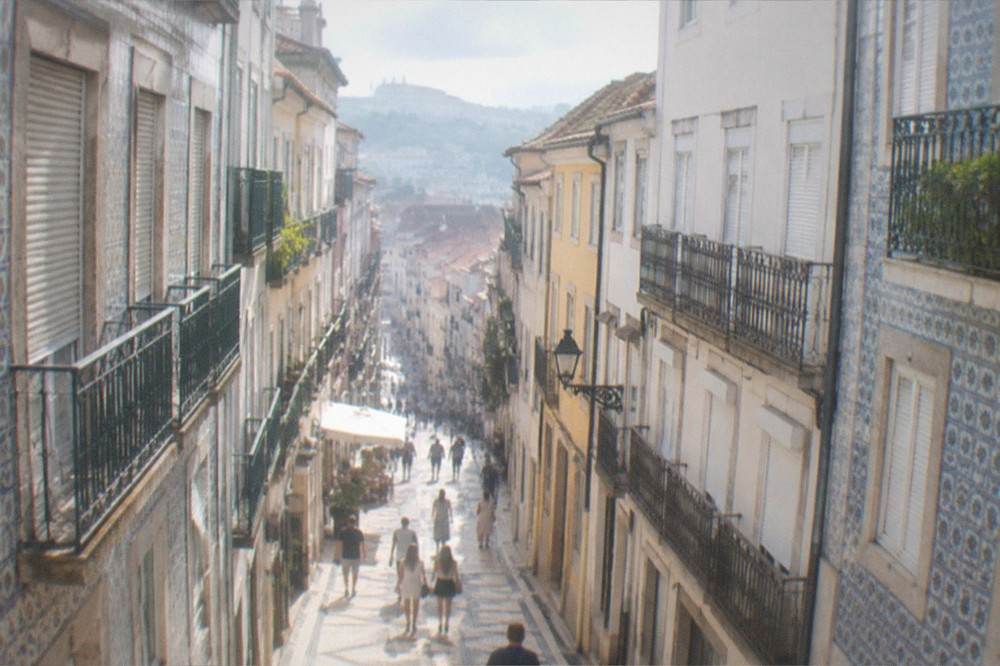
Beyond the Baixa, the city stacks upward and outward: the Alta and its university hill to the south, the Santa Clara district and Portugal dos Pequenitos across the Mondego, the green corridor of the Choupal forest along the river, and a ring of day trips beyond.
The Conímbriga Roman ruins lie about 16 km south in the municipality of Condeixa-a-Nova, where a combined museum and ruins ticket costs 10.00 EUR and the site opens seven days a week, which makes it the reliable Monday option when other monuments close.
The immediate neighbours are all walkable. Across the river, the Santa Clara district guide covers the park side of the Mondego, and the Choupal forest gives the riverside woodland that locals use for running and cycling. Up the hill, the Alta upper town takes over where this page stops. The site's itinerary pages stitch the two halves into a single route for one, two or three days.
The day-trip ring is where Coimbra's location pays off, and the roster's verified listings give real numbers where they exist. Conímbriga is the headline: a Roman town in the parish of Condeixa-a-Velha, roughly 16 km south, with a 10.00 EUR adult ticket covering museum and ruins together, open daily 10:00 to 18:00 with the ticket office closing 17:15. The Conímbriga guide covers the ruins in depth, and the site's day trips page covers the rest of the ring, from the schist villages of the Lousã mountain to the Convent of Christ at Tomar.
| Day trip from Coimbra | Roster listing | Duration | Rating |
|---|---|---|---|
| Conimbriga and The Roman Tour | from 105.37 per person | 4 hours | 4.8 from 136 reviews |
| Schist Villages at Lousa Mountain | from 105.37 per person | 4 hours | 4.9 from 133 reviews |
| Convent of Christ, Tomar, local guide | from 140.49 per person | 2 hours | 4.9 from 110 reviews |
| Forest and Palace of Bussaco | from 87.81 per person | 4 hours | 5 from 50 reviews |
| Cascades and Schist Villages, Piodão | from 152.2 per person | 8 hours | 5 from 48 reviews |
| Fátima shrine and shepherds' hometown | from 129.95 per person | 3 hours | 4.9 from 55 reviews |
Back in the Baixa itself, the evening options are better than the quarter's daytime reputation suggests. The nightlife guide covers the bars and the student-driven late scene, and the fado guide covers the city's own fado tradition, which is sung by students in capa and batina and is a different practice from Lisbon's. A live fado performance with a glass of port wine is listed on this site's roster from 18 per person, rated 4.7 from 1,234 reviews.
For shoppers, the lower town is also the city's retail spine, and the site's shopping and ceramics pages identify what is actually made here rather than imported for tourists, from the traditional pottery of the region to the everyday souvenirs of the commercial streets. A paper map or a marked phone map ties every one of these locations together for anyone planning a route on foot.
Common Questions About the Baixa in Coimbra
Is the Baixa in Coimbra, Portugal the same as the old town?
They overlap heavily but are not identical. The Baixa is the lower, flat, commercial quarter at river level; the old town includes the Baixa and the medieval lanes climbing toward the Alta. Locals use Baixa for the downtown streets specifically, and the university hill is never part of it.
Is the Baixa hilly?
The Baixa itself is flat, which is the whole point of it: the quarter sits on the valley floor of the River Mondego. The hills begin at its southern edge, where the lanes and the Elevador do Mercado lift carry you up to the Alta and the university. Anyone with mobility concerns should plan the Baixa first and treat the climb as a separate decision.
Do you need tickets for anything in the Baixa?
Walking the quarter is free. The two great churches charge: the Sé Velha costs 3.00 EUR per person and Mosteiro de Santa Cruz costs 5.00 EUR, prices published by the Unidade Pastoral Aeminium. The University's combined ticket, 16.50 EUR with the Joanina Library, applies once you climb the hill, and its Joanina slot admits 50 people every 20 minutes, so it should be booked ahead.
What is the wettest month for visiting the Baixa?
November, at 121.5 mm of rain in the IPMA 1991 to 2020 normals for the Coimbra / Bencanta station, marginally ahead of October at 114.5 mm and January at 113.5 mm. July is the driest at 8.9 mm. The rain in Coimbra is autumn and winter rain, and the dry walking window runs from late spring to early autumn.
Can you see the Baixa from the river?
Yes, and it is one of the best angles on the city. This site's roster lists a Mondego river cruise with city views, 50 minutes, from 11 per person and rated 4.2 from 43 reviews, plus a traditional Barca Serrana boat trip at 50 minutes from 15 per person, rated 4.6 from 171 reviews. Both put the lower town, the hill and the Santa Clara bank in one frame.
Is the Machado de Castro museum open in the Baixa?
No. The Museu Nacional de Machado de Castro, which sits at the top of the slope above the Baixa, is closed for conservation work, and its own page on the national museums portal says so. It is built over a Roman cryptoporticus of the mid-1st century, but none of that is visitable while the closure lasts, so it should not appear on a current itinerary.
The Baixa is where Coimbra stops performing and starts functioning: a flat, free, walkable downtown with two of the country's most significant churches, the city's shopping and eating spine, and the river on three sides of the conversation. Walk it slowly, climb when you are ready, and book the Joanina slot before you do anything else.