Coimbra Nightlife, Portugal: An Evening Guide to the University City on the Mondego
Coimbra, Portugal, is a university city of roughly 31,000 students on the River Mondego, and its evenings run on student tradition: fado sung by men in black capes, a compact Baixa bar district, and a calendar anchored by the May festivals.
Short answer
Coimbra nightlife centres on the Baixa lower town and Praça da República, with fado de Coimbra as its signature: a male, student-rooted singing tradition tied to the black academic cape. Bars are compact and cheap by coastal standards, the whole walkable core sits on one hillside, and the strongest nights are tied to the academic calendar rather than the summer months.
Coimbra, Portugal, the university city on the River Mondego, is one of the few mid-sized European cities whose evening culture is shaped by an institution. The University of Coimbra publishes a figure of about 31,000 students on its own homepage, and that population, not tourism, sets the rhythm of the night: term-time streets, exam-season quiet, and a May festival calendar that closes monuments and fills squares. This guide covers what coimbra nightlife actually consists of, where it happens, what it costs, how fado de Coimbra differs from the Lisbon version, and how to get back to your hotel afterwards.
What Is Coimbra Nightlife Really Like?
Coimbra nightlife is a student economy in a compact hillside city: small bars concentrated in the Baixa lower town and around Praça da República, fado de Coimbra as the cultural signature, and a calendar driven by the academic year rather than by summer tourism. It is walkable, inexpensive by Portuguese coastal standards, and quiet outside term time, which is the single most important thing to understand before planning an evening.
The city's evening geography is unusually compressed. The Baixa, the lower town between the river and the university hill, holds most of the bars and restaurants, and everything from the riverfront to the top of the Alta is a continuous walk on one hillside. That compression is why coimbra nightlife feels busier per square metre than its population suggests: the same few streets absorb the whole student population on a Friday night.
The University's own published figure of about 31,000 students, printed on its homepage under "The University in Numbers", is the number that explains the evenings. When term is running, the Baixa is loud until late. During exam periods and the summer break, the same streets empty out, and a visitor arriving in August expecting a party city will find a quiet town instead. The best time to visit guide covers the seasonal pattern in more detail.
What the city is not is a beach resort or a clubbing destination. Nobody on this build verified a single nightclub, bar hour or door price in Coimbra, so this guide deliberately publishes none. What is verified is the shape of the evening: where the districts are, what fado de Coimbra is, what the academic festivals do to the calendar, and what the transport and the tourist tax cost. Everything operational about a specific bar has to come from that bar.
Where Does Nightlife Happen in Coimbra, Portugal?
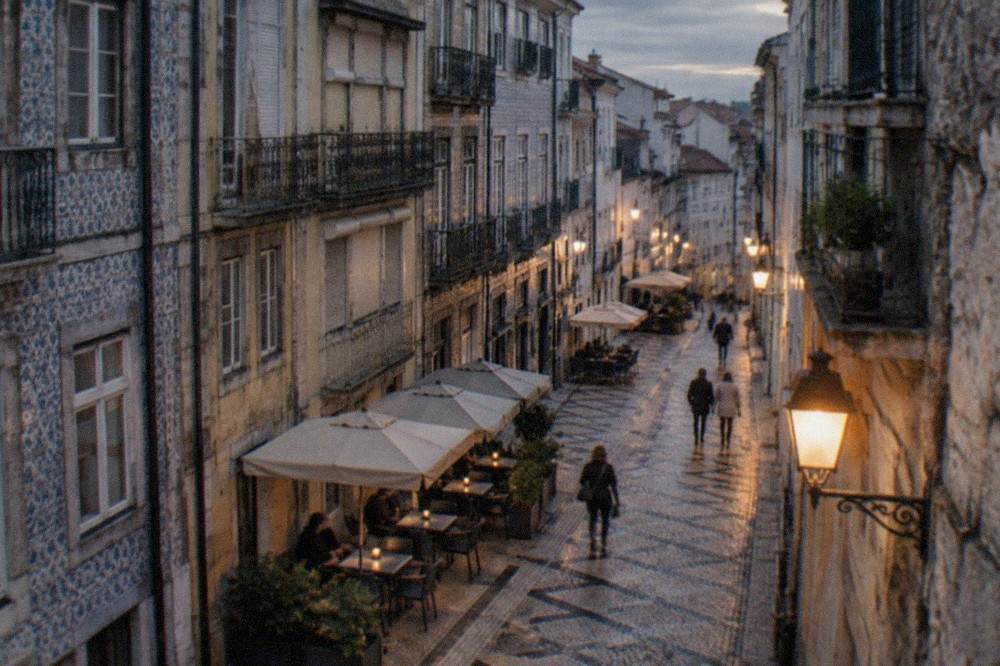
Nightlife in Coimbra, Portugal, happens in three zones within one walkable hillside: the Baixa, the grid of lower-town streets between the river and the hill, which holds the densest cluster of bars and restaurants; Praça da República, the student square up the slope, which is the traditional gathering point; and the riverside along the Parque Verde do Mondego, which is the warm-evening overflow. The Alta above them is the monument zone and largely goes dark after the visitor sites close.
The Baixa is the volume centre. Its streets sit on the flat ground, so bar-hopping involves no climbing, and the whole district is a few minutes' walk end to end. The restaurants guide covers the eating side of the same streets, because in Coimbra dinner and drinks are the same economy: most evenings start with a meal in the Baixa and dissolve into whichever bar is nearest.
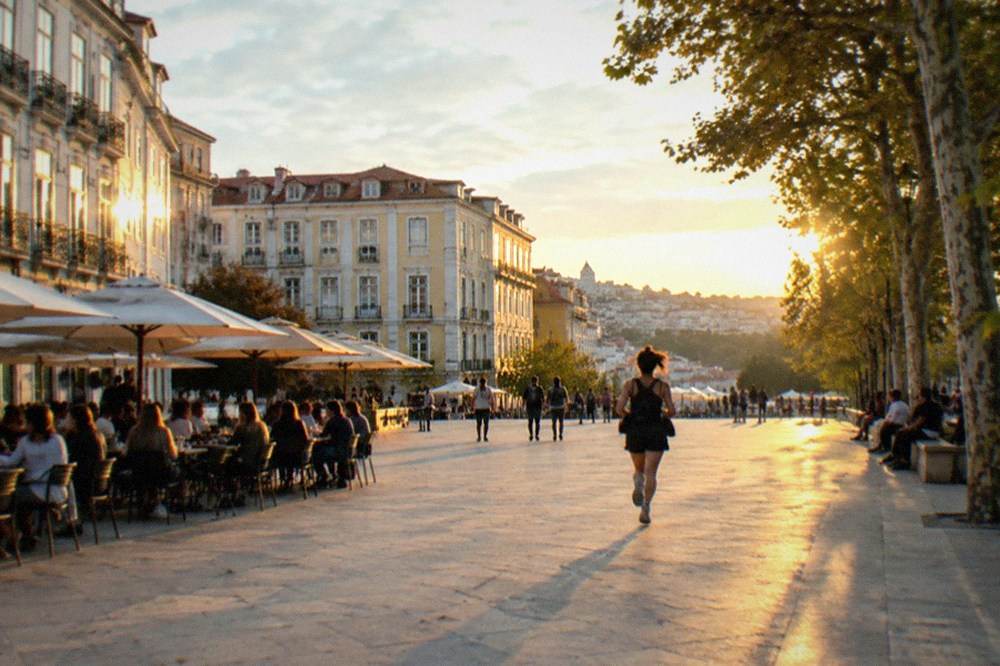
Praça da República, universally called "a Praça" or "a Formiga" by students, is the student square. It is the meeting point before nights out and the place where student traditions spill into public space, and its role in the city's culture is covered in the Coimbra travel guide overview. The square's position on the slope between the Baixa and the university hill makes it the natural hinge of any evening walk.
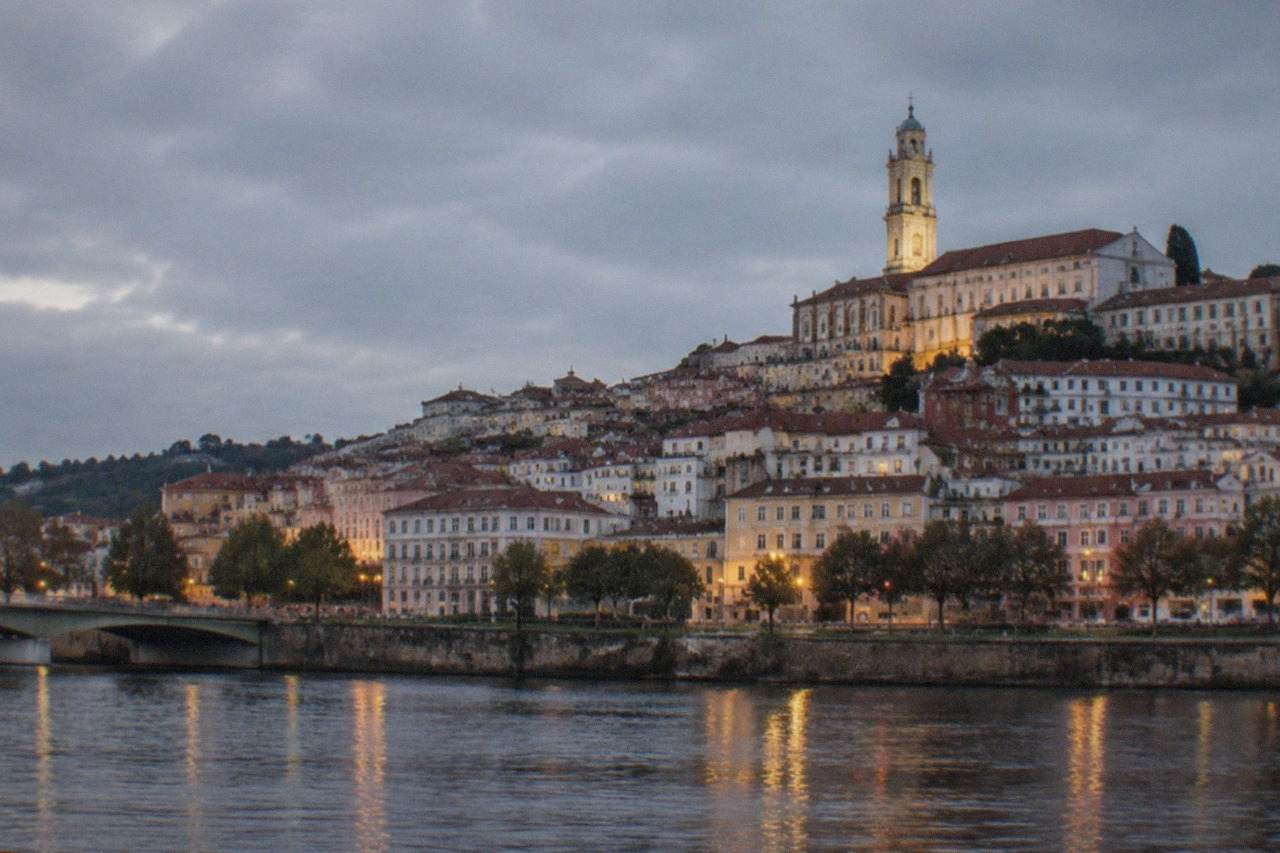
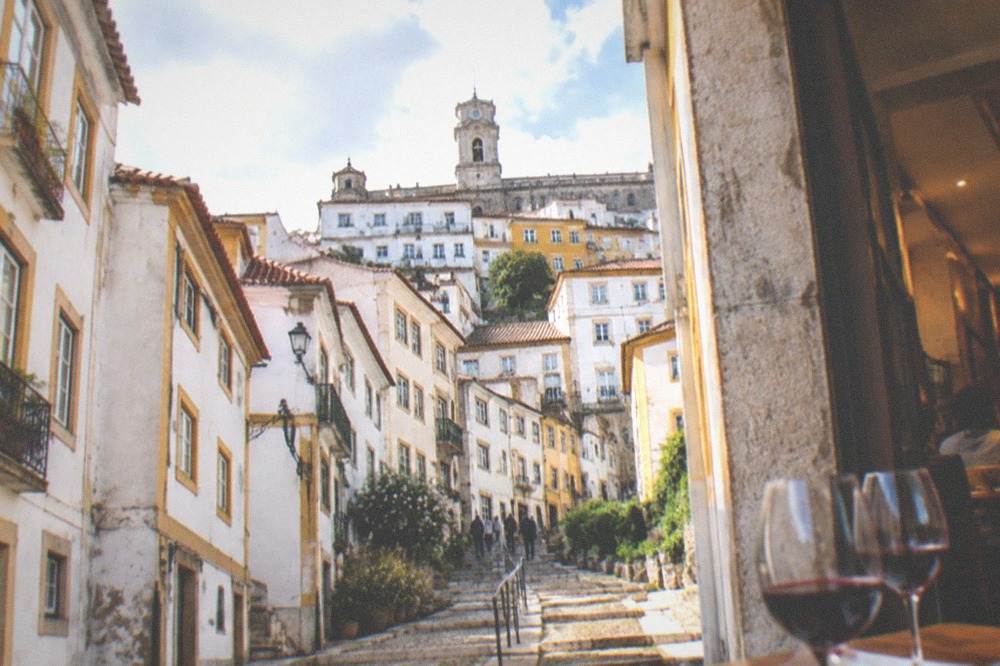
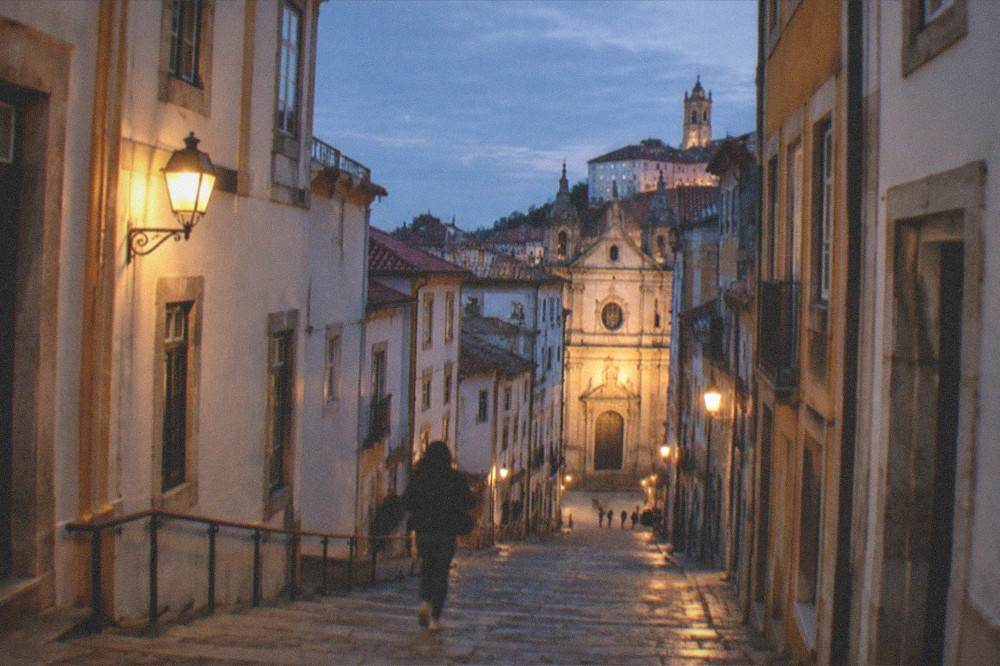
The riverside is the third zone. The Parque Verde do Mondego stretches along the river below the old town, and on warm evenings it collects the overflow, with the old town lit above it. The view back up the hillside, with the university tower above the rooftops, is the city's signature night scene and one of the best views and photo spots territory the hotels guide also covers for anyone who wants to wake up to it.
For a first evening, a guided orientation beats wandering. The Coimbra Top Attractions Walking Tour runs from $5.85 per person, is rated 5 from 151 reviews on the operator's live listing, and covers 2 hours 30 minutes of the old town, which maps the Baixa, the square and the hill onto one walk before you do it at night.
The table below maps the three zones against what each is actually for.
| Zone | Position | Evening character | Best for |
|---|---|---|---|
| Baixa | Lower town, flat ground by the river | Densest cluster of bars and restaurants | Dinner, bar-hopping, first evening |
| Praça da República | Mid-slope student square | Meeting point, student traditions | Pre-drinks atmosphere, people-watching |
| Parque Verde do Mondego | Riverside park below the old town | Warm-evening overflow, night views | Warm nights, walks, photos |
| Alta | University hill above the square | Monuments and fado venues, quiet late | Early evening, culture before the Baixa |
What Is Fado de Coimbra and Where Can You Hear It?
Fado de Coimbra is the city's own school of fado, distinct from Lisbon fado in three verified ways: it is historically sung by men, it grew out of the university's student tradition rather than out of Lisbon's waterfront districts, and it is tied to the black academic cape, the capa e batina, worn by Coimbra's students. It is performed both in dedicated venues and as street serenades, and its themes are student life, farewell and saudade rather than the sea.
The distinction matters because visitors arrive expecting the Lisbon version and hear something else. Coimbra fado is a male tradition in origin, tied to the academic calendar and to the ritual of the serenade, in which singers in capes perform beneath a window or in a square. The form and its history are covered in depth in the fado de Coimbra guide, and the practical question of which venues to target is handled, with the same caution about unverified venue details, in where to hear fado.
What this build could not verify, and therefore does not publish, is anything operational about any specific fado house: no show time, no ticket price, no address, no capacity. Every one of those details has to come from the venue itself. What a visitor can book with published details is a ticketed show: the Coimbra Live Fado Show with a Glass of Port Wine runs from $18 per person, is rated 4.7 from 1,234 reviews on the operator's live listing, and lasts 50 minutes, which makes it a compact, bookable introduction to the form before you chase the unverified late-night venues.
That ticketed show is the one part of a Coimbra evening that can be planned with certainty, and the full listing carries the current dates and availability.
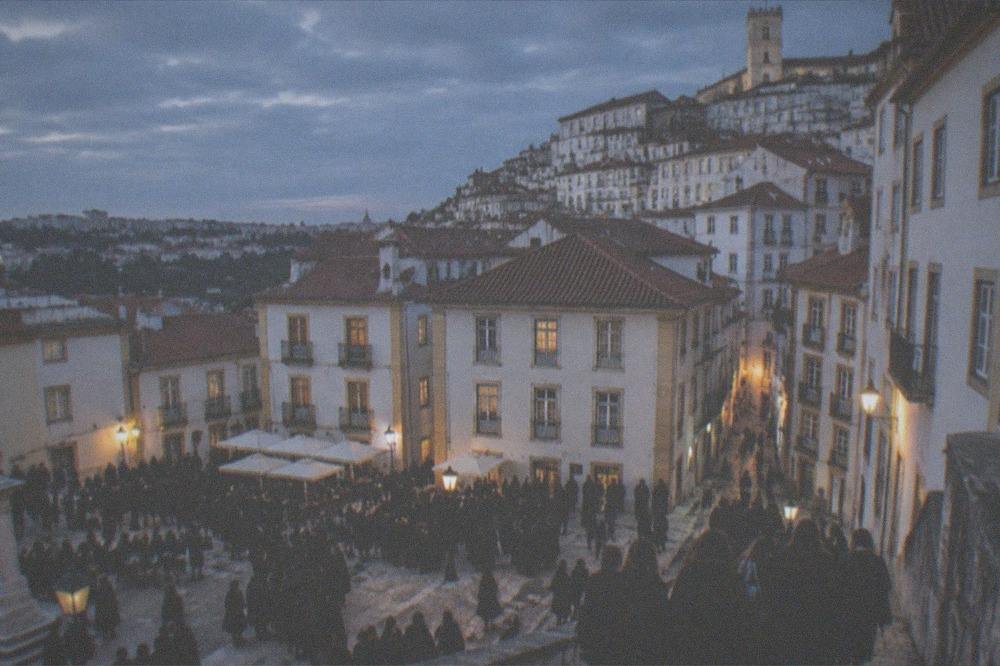
The serenade tradition is the free half of the answer. Fado de Coimbra exists outdoors as well as indoors, and the student tradition of singing in capes in public space is part of what makes the city's evenings different from a generic bar district. On the right nights, around the academic festivals, you do not need a ticket to hear it. The queima das fitas guide covers the festival context, with the two facts that are actually verified: the University closes its visitor circuit on 24 May, and Mosteiro de Santa Cruz suspends visits on the Cortejo da Queima das Fitas, a moveable Sunday.
How Much Does a Night Out in Coimbra Cost?
A night out in Coimbra runs on a student budget, and the verified fixed costs are low: the municipal tourist tax is 1.00 EUR per guest per overnight stay, capped at three consecutive nights, payable at the accommodation from age 16; a fado show ticket starts at $18 on the operator's live listing; and a SMTUC bus ticket bought on board costs 2.00 EUR, or 0.90 EUR pre-purchased. Bar prices were not verified on this build and are deliberately not quoted.
The tourist tax is the one cost every overnight visitor pays, and it is widely misstated. The municipality's own service page confirms 1.00 EUR per guest per night, maximum three consecutive nights, from age 16, paid directly to the accommodation at check-in or check-out, charged all year with no low-season exclusion. A couple staying seven nights pays 3.00 EUR each, 6.00 EUR total, in the municipality's own worked example. A two-euro rate has been approved as a proposal in July 2026 but is not the published current rate, so budget one euro per night per adult.
The bus tariff, in force since 1 April 2026, is the other verified number. A single bought from the driver is 2.00 EUR; pre-purchased tickets in packs of three or more work out at 0.90 EUR per trip; and one validation covers 90 minutes of transfers on the urban network. SMTUC tickets are also valid on the Metro Mondego network, the new BRT system opening in stages, which matters if your hotel sits near one of its stops.
| Cost item | Verified figure | Source basis |
|---|---|---|
| Tourist tax, per guest per night | 1.00 EUR, max 3 nights, age 16+ | Municipal service page |
| SMTUC single, bought on board | 2.00 EUR | 2026 SMTUC tariff |
| SMTUC pre-purchased, per trip | 0.90 EUR, packs of 3+ | 2026 SMTUC tariff |
| Fado show with port wine | from $18 per person, 50 minutes | Operator's live listing |
| Top Attractions evening-adjacent walk | from $5.85 per person, 2h30 | Operator's live listing |
| Bar drinks and bar food | not verified on this build | check each venue |
For context on the wider budget, the municipality's own economic study reported 698,151 overnight stays in Coimbra in 2025 and estimated its own tourism-related cost at 3.49 EUR per overnight stay, which is why the tax exists and why a rise has been proposed. None of that lands on the visitor as a bar bill, but it explains why the city invests in the evening economy at all. The eating side of the budget, from the Bairrada wine country that starts south of the city to the student-priced restaurants of the Baixa, is covered in the restaurants guide and the Bairrada wine route guide.
When Is the Best Time of Year for Coimbra Nightlife?
The best time of year for Coimbra nightlife is the academic term, and the strongest specific window is May, when the student festivals peak: the University itself closes its visitor circuit on 24 May, and Mosteiro de Santa Cruz suspends visits on the Cortejo da Queima das Fitas, a moveable Sunday, which is the clearest official evidence of how completely the festival takes over the city. Outside term time, in the summer break and exam periods, the same streets go quiet.
The calendar point matters more here than in most cities. Coimbra's evenings are a by-product of its student population, and that population leaves. IPMA's 1991 to 2020 normals for the Coimbra / Bencanta station show the weather side of the equation: July is effectively dry at 8.9 mm of rain, August is the hottest month with a mean maximum of 29.1 C and 10.9 days above 30 C, and September stays warm at a 27.4 C mean maximum with only 49.9 mm of rain. But warm weather is not the same as a busy city: the student economy, not the thermometer, fills the bars. The full index of guides sits on Coimbra Travel Guide.
The rain holds off until October, when the monthly total jumps from 49.9 mm to 114.5 mm, and November is the wettest month at 121.5 mm. A visitor weighting weather alone would pick July or September; a visitor weighting nightlife should weight the term calendar first and the weather second. The weather guide carries the full monthly breakdown.
| Month | Mean max C | Rain mm | Nights out: what to expect |
|---|---|---|---|
| May | 23.3 | 64.7 | Festival season, the year's peak student energy |
| June | 26.3 | 26.0 | Warm, exam season begins to thin the streets |
| July | 28.5 | 8.9 | Hottest dry weather, summer break quietens the Baixa |
| August | 29.1 | 14.8 | Peak heat, quietest student nightlife of the year |
| September | 27.4 | 49.9 | Warm and drier than people assume, term returns late month |
| October | 23.2 | 114.5 | Rain arrives sharply, term-time bars return |
The May festivals are the one period when the city's nightlife is a public spectacle rather than a local habit. The Queima das Fitas, the burning of the ribbons, is the headline, and while its exact dates are not published in a form this build could verify, the two closure facts above are official and are the practical planning anchors: expect the visitor circuit at the University to be shut on 24 May, and Santa Cruz to close on the parade Sunday. The queima das fitas guide collects what is verified.
Do You Need to Book Anything Ahead for a Coimbra Evening?
You need to book ahead for two things: a fado show ticket if you want a guaranteed seat rather than a chance at a walk-in venue, and, if your evening includes the University's monuments the next day, the Biblioteca Joanina, which admits only 50 people every 20 minutes and cannot be bought on its own, only inside the 16.50 EUR combined ticket, where the printed time is the library slot and late entry is refused. Bars themselves need no booking.
The Joanina rule is the one genuine scarcity fact in the city, and it is worth understanding even on a nightlife page, because the evening-before pattern is common: a fado show, dinner in the Baixa, then a morning at the university. The University's own program page states the 50-per-20-minutes ceiling, that the ticket time is the Joanina slot specifically, that the rest of the ticket is valid two days, and that online purchase closes 20 minutes before the visit. The Joanina Library tickets guide and the university tickets guide carry the full detail.
For the evening itself, the fado show is the bookable item. The listing for the Coimbra Live Fado Show with a Glass of Port Wine, from $18 per person and rated 4.7 from 1,234 reviews, is the fixed point around which an evening can be planned: a 50-minute show, a glass of port, and a Baixa dinner either side of it. Check availability
The free-walk layer of the evening economy also needs no ticket, but it does need naming honestly. GuruWalk lists several free, tip-based evening-compatible walks in Coimbra, including the Coimbra tour: downtown, historic center, university and botanic garden, rated 4.91 from 662 reviews on its listing, and the Essential Free Tour of Coimbra History and Conflicts Art and Culture, rated 4.89 from 374 reviews. These are pay-what-you-want walks on GuruWalk, not this site's products, and no price belongs on them. They run in the earlier evening and end near the Baixa, which positions them well as a pre-dinner orientation.

How do You Get Back to Your Hotel Late at Night?
The verified late-transport facts for Coimbra are these: a SMTUC ticket bought on board costs 2.00 EUR and a pre-purchased trip 0.90 EUR, one validation covers 90 minutes of transfers, and SMTUC tickets are also valid on the Metro Mondego BRT network, which is opening in stages, with extensions to Coimbra-B station and Praça da República reported in late summer 2026. Night-service hours, taxi fares and ride-hailing prices were not verified on this build and are not quoted.
The honest planning position is that the city's late-night transport is a bus question, and the bus tariff is the only part of it this build could read from a primary source. The 2026 SMTUC tariff, in force since 1 April 2026, gives the figures above, plus a fare-evasion fine of 120.00 to 350.00 EUR, which is the strongest argument on the page for validating a ticket properly. What the tariff does not give is a night-service schedule, and no such schedule was verified, so the working assumption has to be made at the accommodation.
The Metro Mondego layer is genuinely useful and genuinely new. The SMTUC tariff sells intermodal titles marked valid on both the SMTUC and Metro Mondego networks, so a bus ticket works on the BRT, and dated Portuguese press reports extensions to Coimbra-B station and Praça da República from late August and early September 2026, with more than 20 SMTUC bus lines adjusted around it. The route-by-route detail is not verified from the operator, so treat it as "a new network is opening in stages, and your bus ticket works on it", and check the current map at the accommodation.
The saving grace is geography. Because the Baixa, the Praça da República and most visitor accommodation sit on one hillside, the majority of evenings end with a walk, not a ride. The where to stay guide and the best hotels guide both favour the same logic: sleeping within walking distance of the Baixa removes the late-transport question entirely, which is worth more than any tariff detail.
| Transport option | Verified figure | Notes |
|---|---|---|
| SMTUC single, from driver | 2.00 EUR | 90 minutes of transfers included |
| SMTUC pre-purchased | 0.90 EUR per trip | Packs of 3 or more trips |
| Metro Mondego | valid on the same SMTUC titles | BRT opening in stages, 2025 to 2027 |
| Night bus schedule | not verified on this build | ask at the accommodation |
| Taxi and ride-hailing fares | not verified on this build | agree or check the fare before the ride |
What Else Rounds Off a Coimbra Evening Trip?
A Coimbra evening trip rounds off with the daytime and countryside options that bracket the nights: a walking tour of the top attractions from $5.85 per person, the schist villages of the Lousã mountains as a four-hour daytime excursion from $98 per person on the operator's live listing, and the food routes south into the Bairrada, the leitão country covered in the dedicated guides. None of these is nightlife, but all of them are what the evenings of a two- or three-day stay hang from.
The schist villages deserve the mention because they are the city's most distinctive excursion and the least obvious from a first page of search results. The tour Coimbra: An adventure through the Schist Villages of Lousã runs from $98 per person, is rated 5 from 47 reviews on the operator's live listing, and covers Talasnal and Gondramaz by jeep over four hours, which is a daytime commitment that ends back in the city in time for dinner.
The food side is the other bracket. Leitão da Bairrada, the roast suckling pig of the region south of the city, is the plate the Coimbra evenings are built around, and the leitão and Bairrada guide covers where the tradition sits; the restaurants themselves are in the Baixa and are covered, with the same no-unverified-details discipline, in the best restaurants guide.
Common Questions About Coimbra Nightlife
Is Coimbra Nightlife Good?
Coimbra nightlife is good if you want student-priced bars, fado and a compact walkable core, and disappointing if you want large clubs or a resort atmosphere. The city's evenings run on a student population of about 31,000, published by the University itself, which means term-time energy and holiday-season quiet. It is a small, dense, musical night out, not a big-city one.
Is Coimbra nightlife good?
Coimbra nightlife is good for bars, fado and student atmosphere in a compact hillside core, and weak for large clubs or resort-style nightlife. The University publishes a figure of about 31,000 students, and that population sets the rhythm: busy in term, quiet in the summer break and exam periods.
Is Coimbra a party town?
Partly. It is a student town with a real bar culture concentrated in the Baixa and around Praça da República, and a May festival season that takes over the city, evidenced by the University closing its visitor circuit on 24 May and Santa Cruz suspending visits on the Cortejo Sunday. It is not a clubbing destination, and no venue hours or prices were verified on this build.
What is fado de Coimbra?
Fado de Coimbra is the city's own school of fado: historically sung by men, grown out of the university's student tradition, and tied to the black academic cape. It is performed in venues and as street serenades. It differs from Lisbon fado in origin, voice and subject matter. No specific venue's show times or prices are published on this site.
Is there a tourist tax on a night out in Coimbra?
The tax is charged per overnight stay, not per night out: 1.00 EUR per guest per night, capped at three consecutive nights, from age 16, paid at the accommodation. A two-euro rate was approved as a proposal in July 2026 but the published current rate remains one euro.
Do buses run late in Coimbra?
No night-service schedule was verified on this build. What is verified is the tariff: 2.00 EUR for a single bought on board, 0.90 EUR pre-purchased, 90 minutes of transfers included, and SMTUC tickets valid on the Metro Mondego BRT network too. Most visitor accommodation is within walking distance of the Baixa, which reduces the question's importance.
When is the best month for Coimbra nightlife?
May, during the student festival season, when the University closes its visitor circuit on 24 May and Santa Cruz closes on the Cortejo Sunday. Weather-wise, IPMA's 1991 to 2020 normals for the Coimbra / Bencanta station show July effectively dry at 8.9 mm of rain and September warm at a 27.4 C mean maximum, but the student calendar, not the weather, fills the bars.
Coimbra's evenings reward visitors who understand what the city is: a working university town whose nightlife belongs to its students first and its visitors second, with fado in black capes as the thing no other Portuguese city can copy.