How to Plan a Trip to Coimbra, Portugal
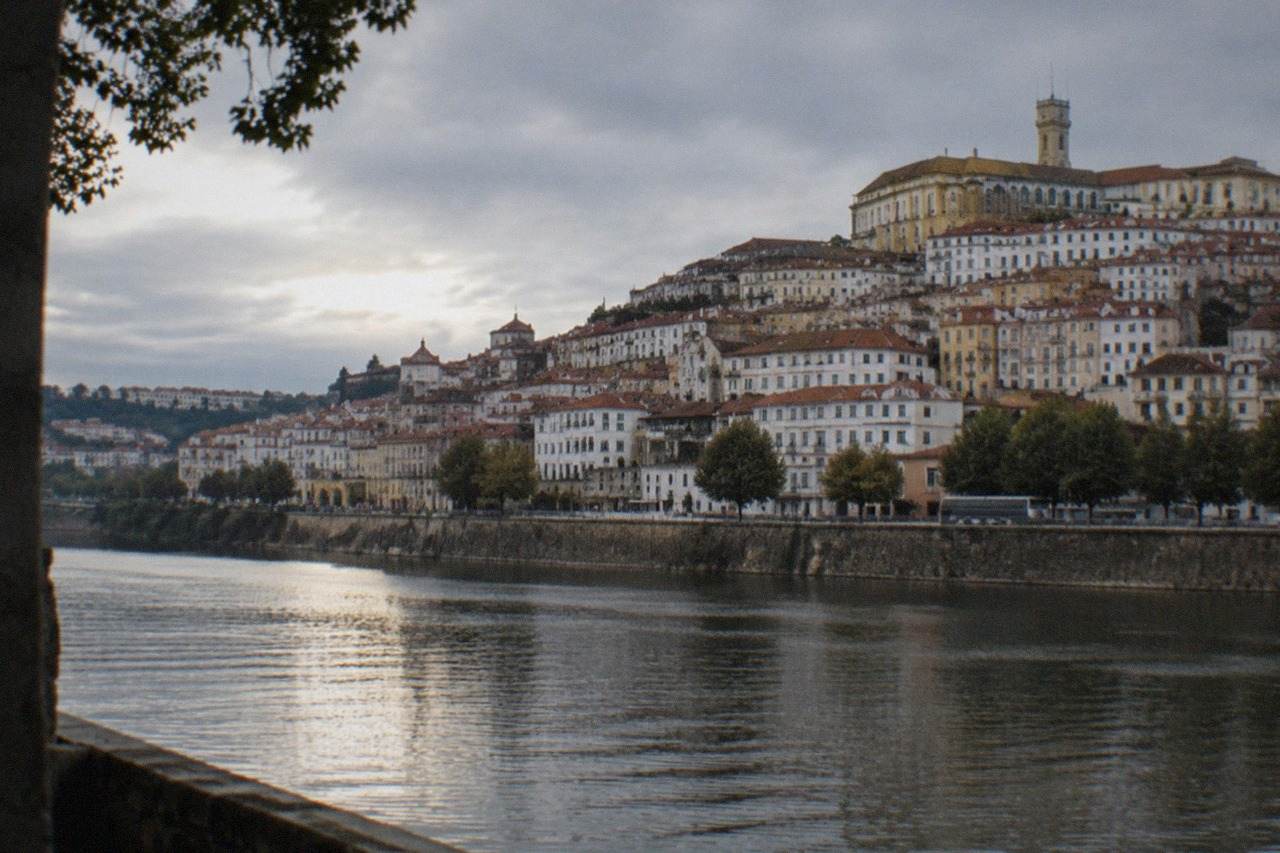
Coimbra, Portugal, the university city on the River Mondego, rewards a little planning: the Joanina Library sells out, two sights are closed for works, and the best month is not the obvious one.
Short answer
Plan two to three days in Coimbra, book the 16.50 EUR University combined ticket online before you travel because the Biblioteca Joanina admits only 50 people every 20 minutes, visit in September or May rather than August, and budget around 1.00 EUR per night in tourist tax paid at your accommodation.
Coimbra, Portugal, the university city on the River Mondego, is a place where a small amount of planning changes the whole trip. The Biblioteca Joanina admits 50 people every 20 minutes and cannot be bought on its own, three of the sights most guides recommend are closed for works in 2026, and the best month to visit is not the one most people assume. This guide walks through the decisions in order: when to go, how long to stay, what to book before you leave, what it costs, and how to move around once you arrive.
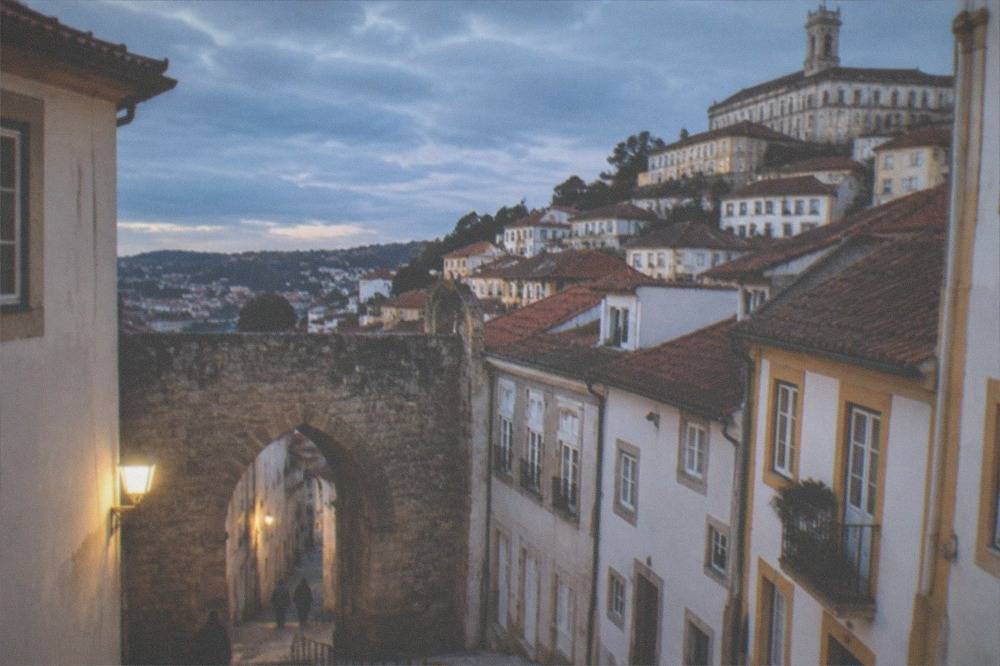
One correction before anything else, because it appears in almost every guide to this city. UNESCO did not inscribe Coimbra. What was inscribed in 2013, under the name "University of Coimbra, Alta and Sofia", list reference 1387, is two components inside the old town: the university hill and the college street below it, Rua da Sofia. The Baixa, the riverside and the rest of the city are not World Heritage, and a guide that says "Coimbra is a UNESCO city" has not read the listing. The distinction matters for planning, because the two inscribed components are exactly where the queues, the timed tickets and the crowds are, and the rest of the city is where the cheaper restaurants and quieter streets are.
Why Is Coimbra Worth Planning a Trip Around?
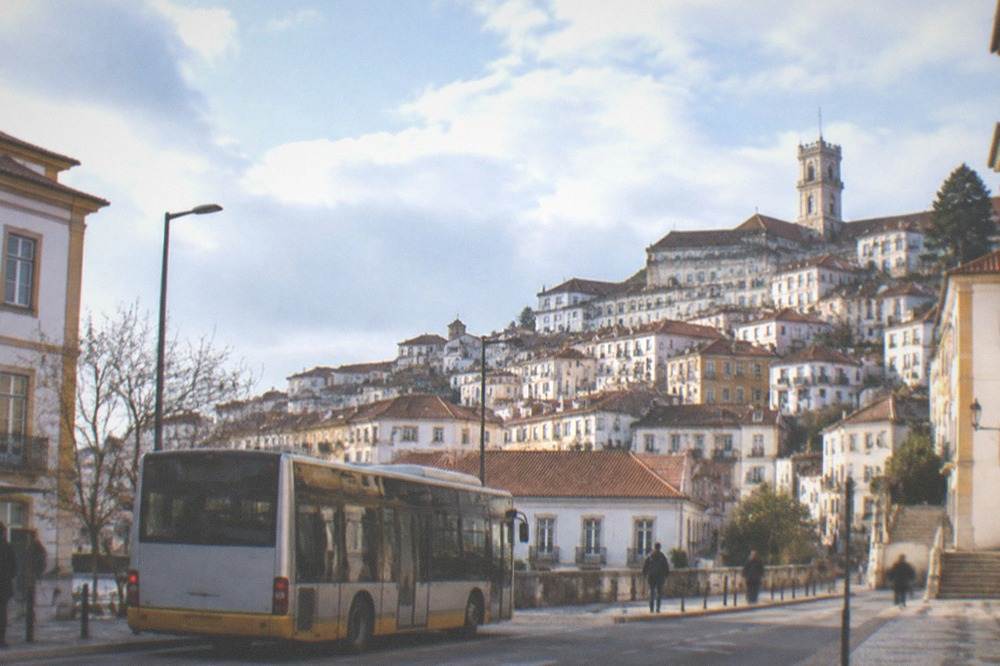
Coimbra packs a baroque university library, a Roman ruin 16 km away, the burial church of Portugal's first two kings and a living student tradition into a city you can cross on foot, and the University's own published figures put about 31,000 students in it, roughly the population that gives the old town its noise, its fado and its academic calendar. The Biblioteca Joanina is the headline: a baroque library from the 18th century that still houses a colony of bats which patrol the book stacks at night for insects, a fact the University states on its own library page. Below the hill, the Baixa holds Mosteiro de Santa Cruz, where Portugal's first two kings are buried, and the Sé Velha, a Romanesque cathedral that charges just 3.00 EUR. The municipality's own figures record 698,151 overnight stays in 2025, which tells you the city is busy but not saturated.
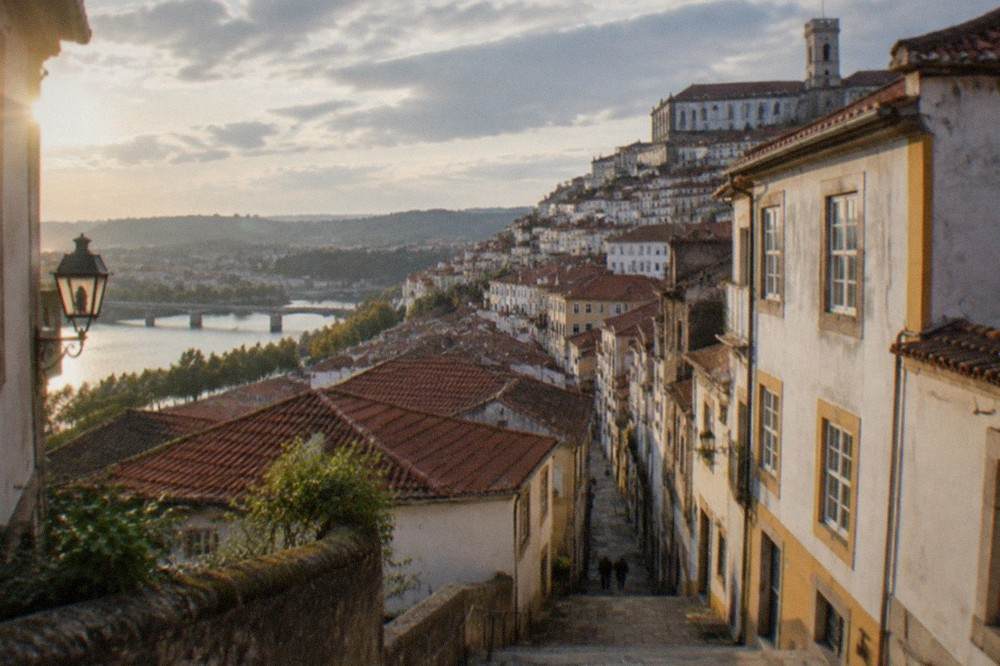
The city's scale is the second reason it rewards planning rather than improvisation. Everything worth seeing sits within a walkable triangle between the university hill, the Baixa and the river, but the hill is steep and the sights at the top run on timed tickets while the sights at the bottom run on fixed hours. A visitor who books the Joanina slot for the wrong part of the day ends up climbing the hill twice. A visitor who checks nothing may find the two museums most commonly recommended, Machado de Castro and Santa Clara-a-Velha, simply shut.
For a first pass through the city, the top things to do in Coimbra and the detailed attractions guide cover the full list, and this page handles the planning decisions around them.
When Is the Best Time to Visit Coimbra?
September is the best month in Coimbra: its mean maximum of 27.4 C is actually higher than June's 26.3 C, it averages just 49.9 mm of rain against October's 114.5 mm, and the summer crowds have gone, while July is the driest month at 8.9 mm and August is the hottest, averaging 10.9 days above 30 C. Those figures come from IPMA's 1991 to 2020 climate normals for the Coimbra / Bencanta station, the city's own station 3 km from the centre, and they overturn two common assumptions. August, not July, is the hottest month. And the autumn rain does not arrive gradually: it holds off until October, when the monthly total jumps from 49.9 mm to 114.5 mm, and November is the wettest month of all at 121.5 mm.
| Month | Mean max C | Rain mm | Days 1mm+ rain | Days max 30 C+ | Planning verdict |
|---|---|---|---|---|---|
| Jan | 15.0 | 113.5 | 11.3 | 0 | Quiet, wet, mild |
| Mar | 19.1 | 75.4 | 9.4 | 0 | Good shoulder value |
| May | 23.3 | 64.7 | 8.5 | 3.5 | Warm, but Queima closures |
| Jun | 26.3 | 26.0 | 3.7 | 6.2 | Dry and warm |
| Jul | 28.5 | 8.9 | 1.7 | 8.9 | Effectively dry, hot |
| Aug | 29.1 | 14.8 | 2.2 | 10.9 | Hottest month |
| Sep | 27.4 | 49.9 | 5.2 | 7.8 | Best overall mix |
| Oct | 23.2 | 114.5 | 10.3 | 2 | Rain returns in force |
| Nov | 18.0 | 121.5 | 11.5 | 0 | Wettest month |
May deserves one warning that almost no guide gives. The student festival, Queima das Fitas, falls in May, and it closes things: the University shuts its whole visitor circuit on 24 May, and Mosteiro de Santa Cruz suspends visits on the day of the Cortejo parade, a moveable Sunday. If your trip lands on those dates, the two most important sights in the city are either shut or disrupted. The best time to visit guide and the Queima das Fitas guide break the festival down in detail, and the monthly breakdown lives in the weather guide.
How Much Does a Trip to Coimbra Cost?
A mid-range day in Coimbra runs roughly 40 to 90 EUR per person: the 16.50 EUR University combined ticket is the single biggest sightseeing outlay, a full meal in the Baixa with wine typically lands between 15 and 30 EUR, the tourist tax adds 1.00 EUR per night capped at three nights from age 16, and city bus trips cost 2.00 EUR bought on board or 0.90 EUR each if pre-purchased in packs of three or more. Those transport and tax figures are the 2026 SMTUC tariff and the municipality's own tax page, and the meal range is a planning band to check against any specific restaurant, not a promise. The tax detail that catches people: it is paid to the accommodation at check-in or check-out, not to the city, and it applies all year with no low-season exemption.
| Item | Figure | Source basis |
|---|---|---|
| Tourist tax | 1.00 EUR per guest per night, max 3 nights, age 16+ | Municipal tax page, in force since 5 April 2023 |
| University combined ticket with Joanina | 16.50 EUR adult | visit.uc.pt, valid for 2026 |
| University ticket without Joanina | 12.50 EUR adult | visit.uc.pt, valid for 2026 |
| Sé Velha individual ticket | 3.00 EUR | Parish visitor page |
| Mosteiro de Santa Cruz individual ticket | 5.00 EUR | Parish visitor page |
| SMTUC bus, bought on board | 2.00 EUR | 2026 tariff |
| SMTUC bus, pre-purchased, 3+ trips | 0.90 EUR per trip | 2026 tariff |
| Bus ticket validity | 90 minutes with transfers | 2026 tariff |
The municipality's own economic study, published in July 2026, is the number worth knowing that no competitor guide carries: Coimbra recorded 698,151 overnight stays in 2025, and the city estimates its cost per overnight stay at 3.49 EUR, against a one-euro tax. A two-euro rise has been approved as a proposal by the Executive, but the published rate remains 1.00 EUR until the municipal tax pages change, so expect 1.00 EUR at check-in today and be pleasantly surprised rather than the reverse.
How Many Days do You Need in Coimbra?
Two full days is the right minimum and three is comfortable: one day for the university hill with its timed Joanina slot, the Sé Velha and the Baixa, and a second for the riverside, Santa Cruz, the Botanical Garden and either a long lunch in the Bairrada tradition or a half-day trip, because the city's sights are dense but the hill is steep and the timed tickets force a rhythm. One day works only if the Joanina slot is booked for the morning and everything else is cut, and the one-day and two-day itineraries on this site are built around exactly that constraint. The University's own ticket is valid for two days, except the Joanina slot, which is fixed, so a two-day stay lets you split the Paço das Escolas spaces across two mornings instead of racing them in one.
| Stay length | What it covers | What you sacrifice |
|---|---|---|
| 1 day | University hill, Joanina, Sé Velha, Baixa, riverside walk | Botanical Garden, Santa Cruz interior, any day trip |
| 2 days | All of the above plus Santa Cruz, Botanical Garden, fado evening | Day trips, museum nuclei |
| 3 days | All of the above plus one day trip, Conímbriga or the schist villages | Nothing major |
| 4+ days | Two day trips, Bairrada lunch route, pottery and ceramics stops | Only if you prefer fast travel |
The two-day itinerary and the three-day itinerary exist for exactly this decision, and the one-day version is honest about what it leaves out. If your time is short, the question "is Coimbra worth visiting at all" is answered in full in the worth visiting guide.
What Are the Top Sights, and Which Ones Are Closed in 2026?
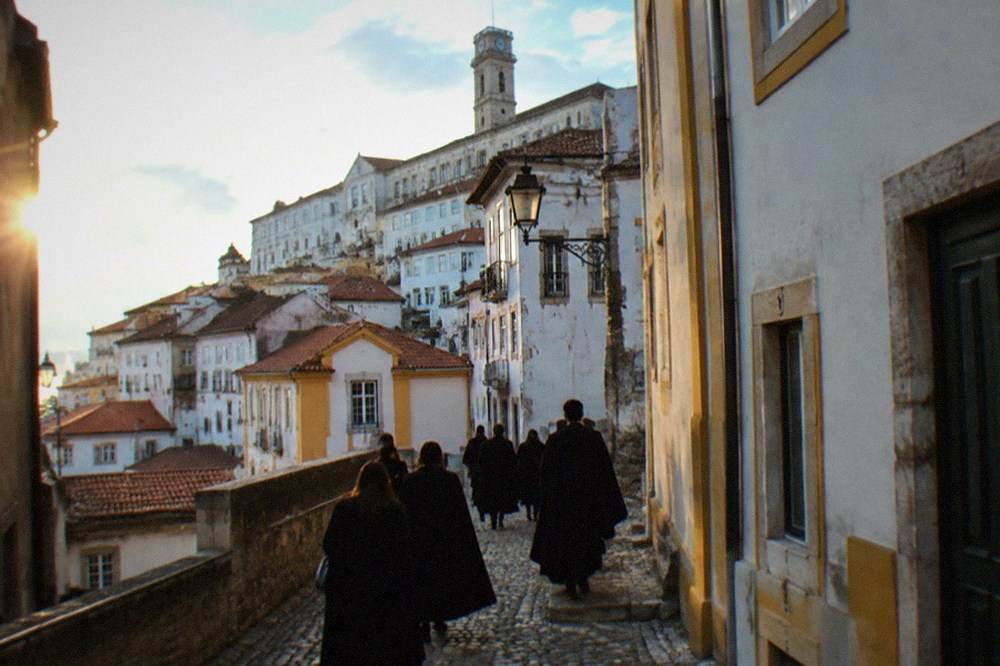
The unmissables are the Paço das Escolas with the Biblioteca Joanina, the Sé Velha, Mosteiro de Santa Cruz and the Mondego riverside, while three sights most older guides recommend are closed and must be dropped from any 2026 plan: the Museu Nacional de Machado de Castro is closed for conservation work, the Torre da Universidade is closed per the University's own information page, and Mosteiro de Santa Clara-a-Velha has no listing at all on the national monuments portal, consistent with closure for requalification works since October 2025. The Machado de Castro case is the trap: the museum's own page prints a normal-looking opening hours table directly below the closure line, so a guide that skimmed it ships hours for a building you cannot enter. Check current status before you go, because the closure is not permanent.
| Sight | Status in 2026 | Entry | Notes |
|---|---|---|---|
| Paço das Escolas and Biblioteca Joanina | Open, timed slots | 16.50 EUR combined | 50 people per 20-minute slot |
| Sé Velha de Coimbra | Open | 3.00 EUR | Summer 09:30 to 18:30 |
| Mosteiro de Santa Cruz | Open | 5.00 EUR | Closed on the Queima Cortejo Sunday |
| Portugal dos Pequenitos | Open | Check the venue's own ticket page | Hours 10:00 to 19:00, 1 Mar to 15 Oct |
| Museu Nacional de Machado de Castro | Closed for works | None published | Reopening phased, check before travel |
| Torre da Universidade | Closed | None | University page says the facility is closed |
| Mosteiro de Santa Clara-a-Velha | Closed for works | None published | No listing on the national portal |
Two of the open sights carry planning detail worth flagging. Portugal dos Pequenitos, the miniature village opened in 1940 and designed by Cassiano Branco, publishes its hours on its own page but its price table renders in the browser, so buy from the venue's own ticket page rather than trusting a third-party figure. And Santa Cruz, the burial church of Portugal's first two kings, suspends visits on the Queima parade day, so a May trip needs a date check against the Queima das Fitas guide.
For the university itself, the university tickets guide and the Joanina Library tickets guide cover every tier, and a guided walk is a good way to see the hill without doing the research yourself.
How do You Book the Biblioteca Joanina Without Getting Turned Away?
Book the 16.50 EUR combined University ticket online and treat the time printed on it as a fixed appointment: the Biblioteca Joanina admits 50 people every 20 minutes, cannot be bought on its own, and the University's own page states that visits outside the stipulated time are refused, with online purchase closing 20 minutes before the slot. That is the single most useful practical fact on this site. The ticket's other spaces, the Royal Palace, the Capela de São Miguel, the Chemistry Laboratory, the Academic Museum, the Cabinet of Curiosities and the Mineral Gallery, stay valid for two days and can be visited before or after the library slot. Only the Joanina slot is fixed.
The booking sequence, in order:
- Decide your day and pick a morning slot if the forecast is hot, because the hill climb is exposed.
- Buy at the University's own visit site rather than on arrival; the counter sells only what the online allocation leaves.
- Arrive at the library entrance, through the Prisão Académica, before the printed time, not at it.
- Keep the rest of the day loose, since the other spaces on the ticket take about two and a half hours at a walk. Other pages covering the same trip are gathered on Coimbra Travel Guide.
The library's bat colony is the reason photography rules on the noble floor are strict, and the University confirms the bats' role in protecting the books on its own library page. The visit inside the library itself lasts about 20 minutes, which is the slot, so the reading you do beforehand matters more than the time inside.
How do You Get to Coimbra and Get Around?
Coimbra has two train stations with confusingly similar names, Coimbra-B and Coimbra-A, in different places, and CP is where to check which trains call where; once in the city, SMTUC buses charge 2.00 EUR on board or 0.90 EUR pre-purchased, a ticket is valid 90 minutes with transfers, and the 2026 tariff makes SMTUC tickets valid on the Metro Mondego network too. The two-station trap is real: long-distance and intercity services and the city-centre station are not the same place, and this site deliberately publishes no timetable detail beyond that because the operator's own pages are the only reliable source. The train stations A and B guide explains the layout, and the Porto to Coimbra and Lisbon to Coimbra guides cover the two main arrival routes.
| Transport | Cost | Validity | Notes |
|---|---|---|---|
| SMTUC bus, on board | 2.00 EUR | 90 minutes, transfers included | 2026 tariff |
| SMTUC bus, pre-purchased 3+ | 0.90 EUR per trip | 90 minutes | Loaded on a support card |
| Metro Mondego | Same SMTUC titles | Per tariff heading | Tickets marked valid on both networks |
| Fare evasion fine | 120.00 to 350.00 EUR | n/a | Stated in the tariff |
| Tourist tax | 1.00 EUR per night, max 3 | Per stay | Paid to the accommodation, age 16+ |
The Metro Mondego, a new bus-rapid-transit network opening in stages, is the change most 2026 guides will miss: the SMTUC tariff's own heading reads "intermodal titles, use on SMTUC and Metro Mondego", so a normal bus ticket works on the new network without any separate purchase. Route maps and station lists are still settling, so treat it as a bonus rather than a plan. For driving, the car rental guide covers the practicalities, and the hills are steep enough that a car is a liability in the old town itself.
What and Where Should You Eat in Coimbra?
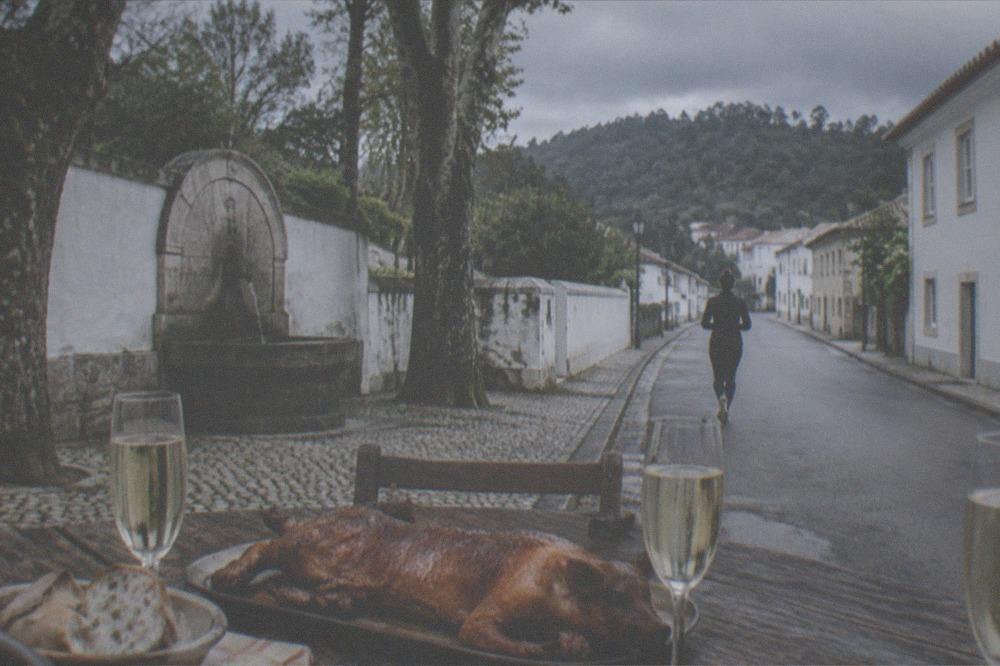
Plan your eating around two things the region is genuinely famous for, leitão da Bairrada, suckling pig from the Bairrada wine country just west of the city, and the student cafés of the Baixa, with a full meal typically running 15 to 30 EUR per person as a planning band to check against the individual room, and the restaurants guide holding the specific addresses. The leitão and Bairrada guide covers the pig tradition and where to find it, and the Bairrada wine route guide turns the same region into a half-day trip for sparkling wine. In the city itself, the historic cafés guide covers the old rooms where students have argued for over a century, and the best restaurants guide is the current shortlist.
Coimbra's food identity is not Lisbon's and not Porto's. It is a student city with a wine region at its back, which means generous portions, roast traditions and a fado culture that runs on student voices rather than tourist venues. The fado de Coimbra guide and the where to hear fado guide explain the difference between Coimbra's fado and Lisbon's, and a live show with a glass of port wine is one of the cheapest booked evenings in the city.
What Day Trips Can You Take from Coimbra?
The two best day trips from Coimbra are Conímbriga, the Roman town about 16 km south in Condeixa-a-Velha in the municipality of Condeixa-a-Nova, where a single 10.00 EUR ticket covers both the museum and the ruins and the site opens seven days a week, and the schist villages of the Serra da Lousã, where stone villages like Talasnal sit on forested slopes about an hour from the city. Conímbriga's seven-day opening is a genuinely useful detail: it is the reliable Monday option on a day when the national monuments that close on Mondays are shut. The ruins' own ticket office closes at 17:15 for an 18:00 site close.
| Day trip | Distance band | Ticket | Best for |
|---|---|---|---|
| Conímbriga Roman ruins | About 16 km south | 10.00 EUR, museum and ruins | Roman mosaics, any day of the week |
| Schist villages, Serra da Lousã | Under an hour | Tour-dependent | Stone villages, forest, deer |
| Buçaco forest | Short drive | Tour-dependent | Wooded park, palace hotel |
| Fátima | Train or tour | Tour-dependent | Sanctuary, pilgrims' route |
| Tomar | Train or tour | Tour-dependent | Convent of Christ, Templar history |
Both headline trips work far better with a guide than with a bus timetable, and the day trips guide compares all of them including timings and what each tour includes. The schist villages in particular are scattered, and the walks between them are the point, not the destinations alone.
The schist villages tour runs about four hours from the city and covers Talasnal, the best preserved of the stone villages, with a guide who handles the mountain roads. It suits travellers who want the scenery and the walking without renting a car, and the operator's live listing carries the current price and departure details.
For the Roman option, a four-hour guided tour from the city handles the transport and the museum context in one booking, pairing the ruins with a guide who can read the mosaics and the forum layout that a casual visitor would walk straight past.
Conímbriga rewards that context more than most ruin sites, because the domestic mosaics and the bath complex are legible only with someone pointing at them. The tour price is on the listing, and the four-hour window leaves the evening free back in the city.
Where Should You Stay in Coimbra?
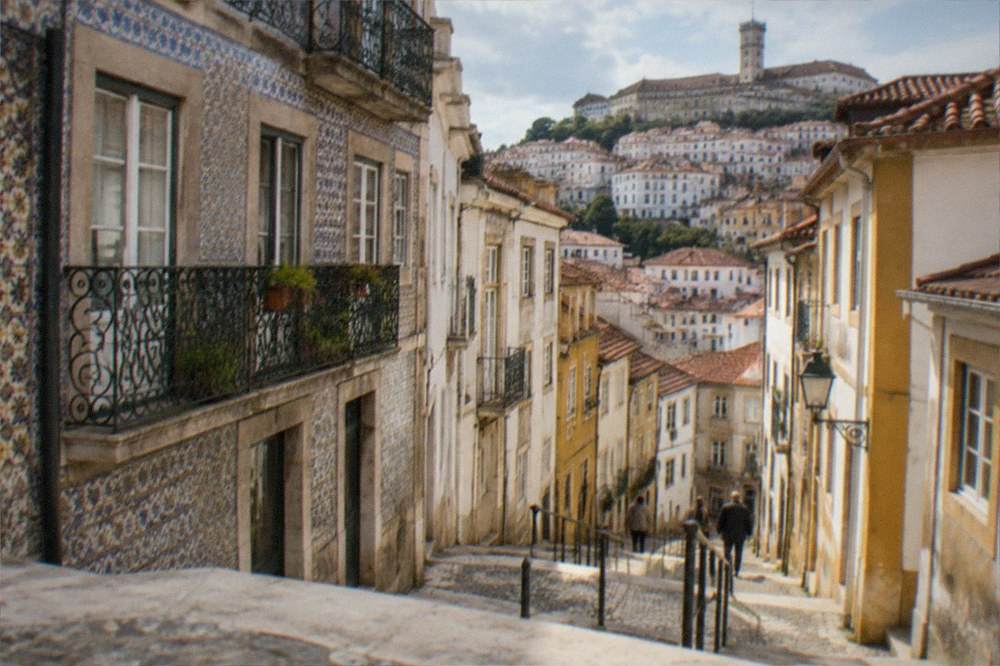
Stay in the Baixa, the downtown between the river and the hill, for a first visit: it is flat, it holds most of the restaurants, and every climb to the university starts from its edge, while the Alta above suits visitors who want the views and accept stairs, and the Santa Clara side across the river suits drivers and families who want parking and space. The where to stay guide breaks the neighbourhoods down properly, the best hotels guide holds the shortlist, and the Quinta das Lágrimas hotel guide covers the one famous property, a hotel inside the park where the Pedro and Inês story is set. Budget travellers have a dedicated hostels and budget stays guide.
The one cost to factor into any booking is the tourist tax, again: 1.00 EUR per guest per night, capped at three consecutive nights, from age 16, paid to the accommodation at check-in or check-out. The municipality's own worked example is a couple staying seven nights paying 3.00 EUR each. It is small, but it is collected, and it is not included in most platform prices.
What Should You Know Before You Go?
Pack for hills and heat: the city's stone lanes climb steeply to the university, August averages 10.9 days above 30 C and the record at the city's own station is 41.2 C, so bring real shoes and a water bottle, and book nothing for 24 May or the Queima Cortejo Sunday without checking what is shut. The what to pack guide and the accessibility and hills guide cover the physical reality of the city, which is the one thing brochures flatten out. The map guide is worth a read before arrival, because the city's layout, hill, Baixa, river, is simple once seen and confusing until then.
Three small things finish the picture. The pottery and ceramics guide covers the city's ceramics tradition if you want a souvenir heavier than a cork wallet. The safety guide confirms what the overnight-stay figures suggest, that this is a low-drama city. And the free things to do guide exists because a surprising amount of the city, including the riverside and the views from the Alta, costs nothing at all.
Common Questions About Planning a Trip to Coimbra
Is Coimbra a UNESCO World Heritage city?
No. UNESCO inscribed "University of Coimbra, Alta and Sofia" in 2013, list reference 1387, which covers two components inside the old town: the university hill and Rua da Sofia. The city as a whole is not inscribed.
How much is the tourist tax in Coimbra?
1.00 EUR per guest per overnight stay, capped at three consecutive nights per person, from age 16, paid directly to the accommodation. A two-euro rise was approved as a proposal in July 2026 but is not the published rate.
Can I buy a Biblioteca Joanina ticket on its own?
No. The Joanina exists only inside the 16.50 EUR combined University ticket, admits 50 people every 20 minutes, and the time printed on the ticket is the fixed library slot. Entry outside the slot is refused.
Which sights in Coimbra are closed in 2026?
The Museu Nacional de Machado de Castro is closed for conservation work, the Torre da Universidade is closed per the University's own page, and Mosteiro de Santa Clara-a-Velha has been closed for requalification works since October 2025. Check status before travel, as closures are not permanent.
How many days do you need in Coimbra?
Two full days is the comfortable minimum and three lets you add a day trip such as Conímbriga or the schist villages of the Serra da Lousã. One day works only with a pre-booked morning Joanina slot and a tight plan.
What is the best month to visit Coimbra?
September. Its mean maximum of 27.4 C is higher than June's, it averages only 49.9 mm of rain, and the summer crowds have gone. The autumn rain does not arrive properly until October, when the monthly total jumps to 114.5 mm.
Plan the Joanina slot first, build the rest of the days around the hill and the river, and Coimbra, Portugal will do the rest.