Porto to Coimbra by Train: The Complete Guide to the Route, Stations and Tickets
The Porto to Coimbra train is one of the easiest journeys in Portugal, ending in a university city on the River Mondego with a baroque library, two cathedrals and a UNESCO-inscribed hill.
Short answer
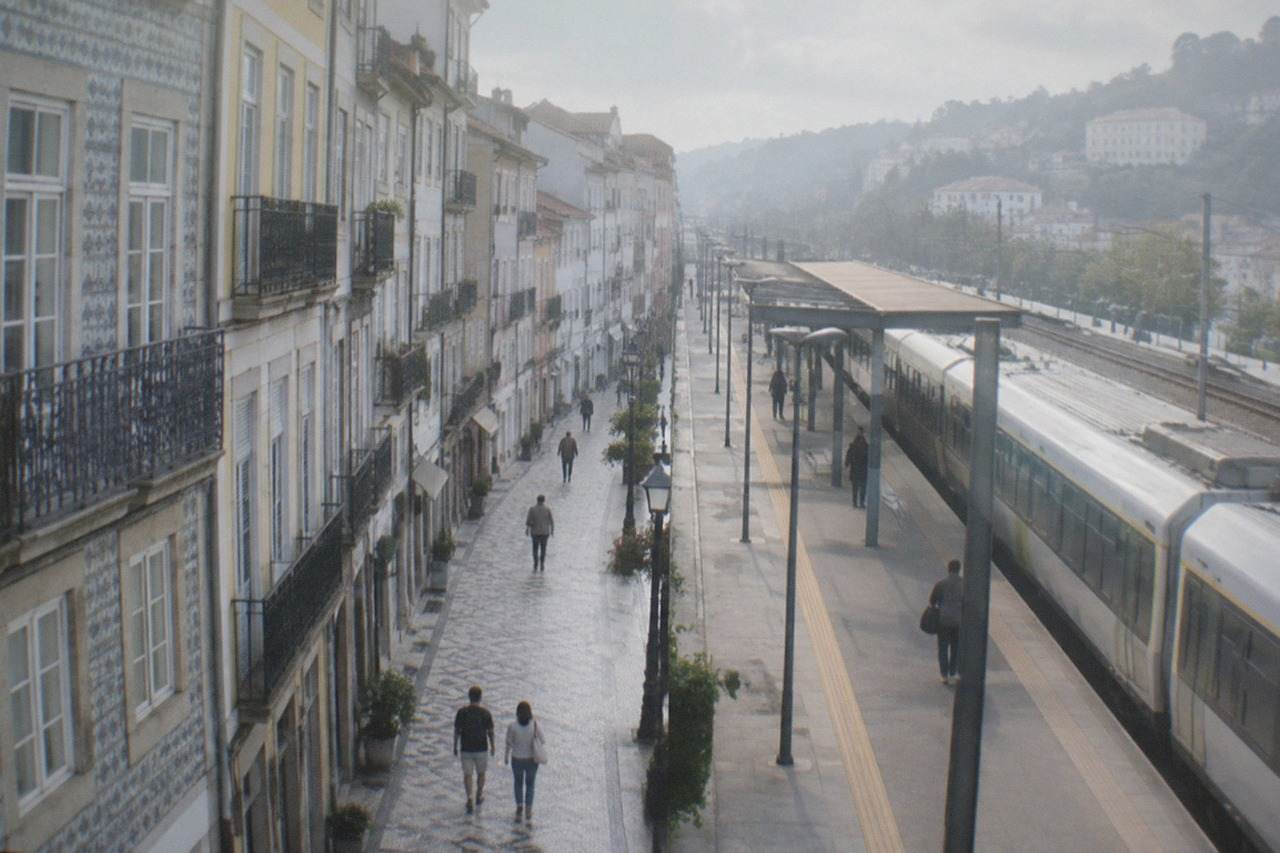
Trains from Porto to Coimbra are run by CP, Comboios de Portugal, and Coimbra has two stations with confusingly similar names, Coimbra-B and Coimbra-A, in different parts of the city. Check the stopping pattern on CP's own site before you travel, and if the Biblioteca Joanina is on your list, book its timed slot before you board.
Coimbra, Portugal, the university city on the River Mondego, sits roughly midway between Porto and Lisbon on the country's main rail spine, and the Porto to Coimbra train is the way most visitors arrive. The route is run by CP, Comboios de Portugal, the national operator, and it ends at a city with two stations whose names differ by a single letter, which is the single most important thing to understand before you travel. This guide covers what the journey involves, what the two stations mean for your arrival, how to plan the hours after you step off the train, and the day-trip options if you would rather let someone else handle the logistics. Prices and rules below come from the University of Coimbra's own visit pages, the 2026 SMTUC tariff, the municipality's published tax rules and IPMA's climate normals for the city's own station.
What Is the Porto to Coimbra Train, and Who Runs It?
The Porto to Coimbra route is operated by CP, Comboios de Portugal, Portugal's national railway, and Coimbra is one of the principal intermediate stops on the Linha do Norte, the main line linking Porto with Lisbon. Multiple service types use the line, from fast long-distance trains to regional and urban services, and CP's own passenger site is where the stopping pattern, times and fares for any specific journey are published. The practical consequence is that you should not plan around a service type you read about in a blog: which trains call at which Coimbra station is exactly the detail that changes between services, and CP's own timetable is the only reliable source for the train you will actually board.
What can be said with confidence, because it is structural rather than operational, is that Coimbra has two stations with confusingly similar names, that they are in different places, and that this distinction matters more here than on almost any other Portuguese city break. The full story of that pair, including the trap that catches visitors who assume the first station named "Coimbra" is the one they want, is covered in the dedicated guide to Coimbra's two train stations.
For orientation, Coimbra is closer to Porto than to Lisbon, which is why so many visitors treat it as a day trip or an overnight stop on a northern Portugal itinerary. The comparison of what each city offers, and why Coimbra rewards a slower pace than a rushed stopover, is laid out in Coimbra vs Porto, and the question of raw distance, and why this site does not publish an unsourced driving time, is handled in how far Porto is from Coimbra.

If the timetable is the part you would rather never think about, a guided day trip from Porto removes it entirely: the operator collects you, runs the route and hands you a planned day in Coimbra. The options below are the three that fit this journey best.
Each of these three is bookable in advance with free cancellation, so the train remains your fallback if a booked day no longer suits. The sections that follow assume you have made the choice between independent rail travel and a guided day, and plan the arrival either way.
Which Coimbra Station Does Your Train Arrive At?
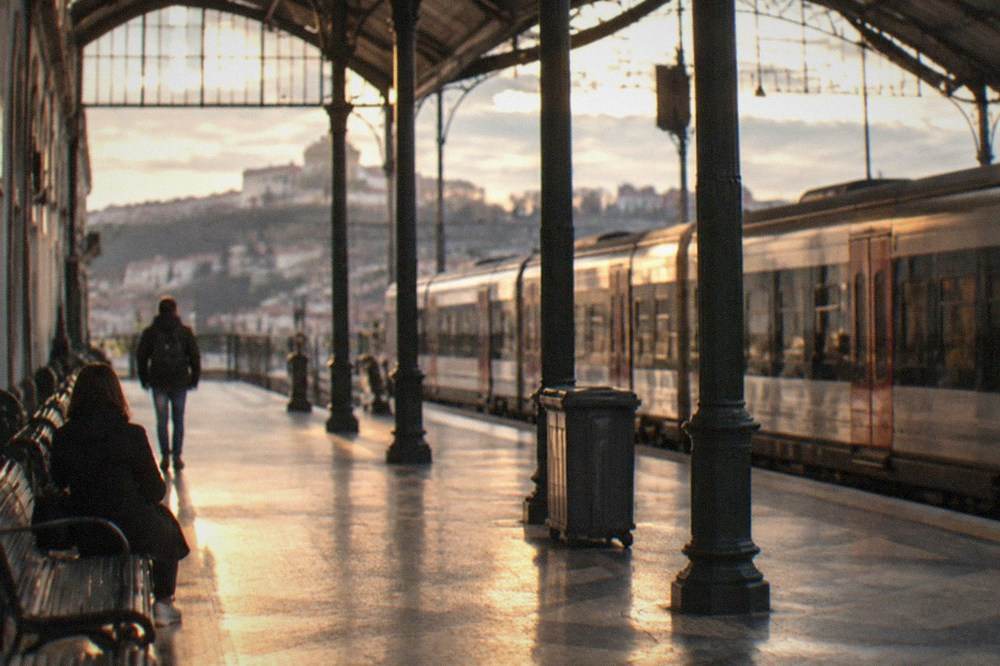
Coimbra has two stations, Coimbra-B and Coimbra-A, in different parts of the city, and which one your train uses depends on the service, so the stopping pattern on CP's own passenger site is the only place to confirm it before you travel. This site deliberately does not publish which trains call where, the distance between the two, or whether the connecting shuttle between them is free with a long-distance ticket, because none of that could be verified from CP itself on this build. Those three details are precisely the ones most often stated wrongly in guides, and a wrong answer here sends a visitor to the wrong end of a hilly city with luggage.
Here is what is verified and what is not, so you know exactly what to check:
| Question a visitor asks | Status on this page | Where to confirm it |
|---|---|---|
| Do two stations exist with similar names? | Yes, verified | CP passenger site and city mapping |
| Are they in different places? | Yes, verified | CP passenger site and city mapping |
| Which trains call at Coimbra-B? | Not published here | CP's own timetable |
| Which trains call at Coimbra-A? | Not published here | CP's own timetable |
| Is the shuttle between them free with a long-distance ticket? | Not published here | CP's own fare rules |
| How far apart are the two stations? | Not published here | CP or city mapping |
The honest reason for the gaps is a technical one: CP's website returns what looks like a successful page for station URLs that are actually dead, so a status code proves nothing on that host. Rather than repeat a plausible-sounding claim, this guide points you to CP directly. The plain-language version of the whole question, written for the search phrase itself, is in the difference between Coimbra and Coimbra-B stations, and the broader closeness question, Porto versus Lisbon, is answered at is Coimbra closer to Porto or Lisbon.
Once you are down in the city, the geography becomes simple: the university hill rises above the Baixa, the riverside park runs along the Mondego, and everything a first-time visitor needs is walkable, with buses and a new Metrobus network for the climbs. The Coimbra map guide puts the stations, the hill and the river in one picture.
If reading station maps and closure notices is not how you want to spend the evening before travel, a booked day trip hands the whole problem to an operator who runs it daily.
How Much Time Should You Spend in Coimbra After the Train?
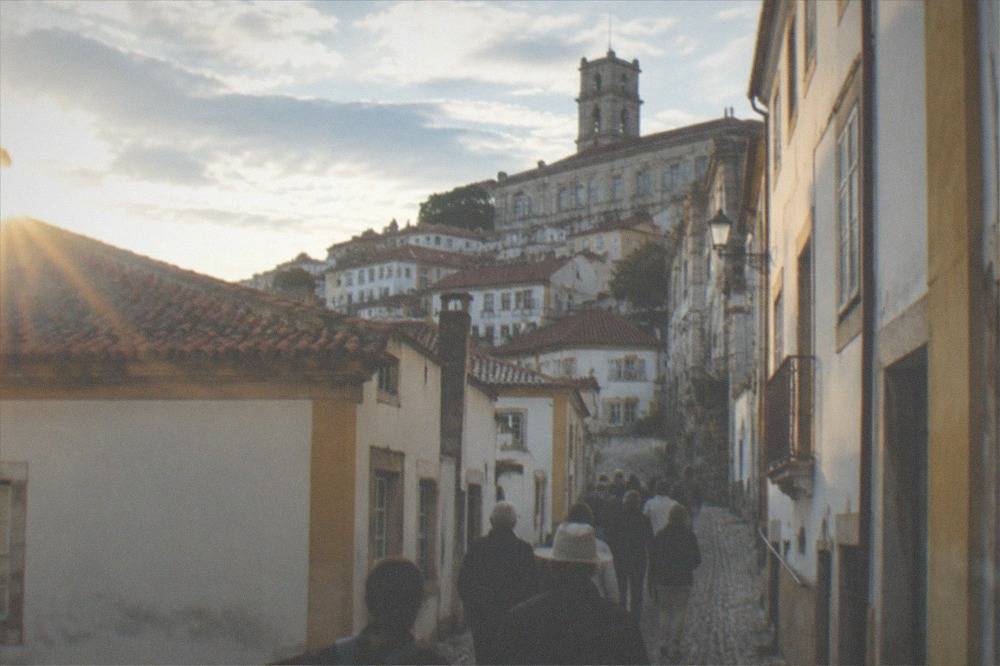
A day trip from Porto gives you enough time for the University's Paço das Escolas, the Biblioteca Joanina if you have a pre-booked slot, one cathedral and a walk through the old town, but two days is the comfortable answer, because the University's own combined ticket is valid for two days and the city's main monuments sit on a steep hill that rewards a slower pace. The two-day ticket detail matters: the 16.50 EUR combined ticket covering the Joanina Library, the Royal Palace, St Michael's Chapel and the Science Museum spaces is valid for two days across its spaces, with only the Joanina slot fixed to a printed time. A one-day visitor buys the same ticket and rushes it.
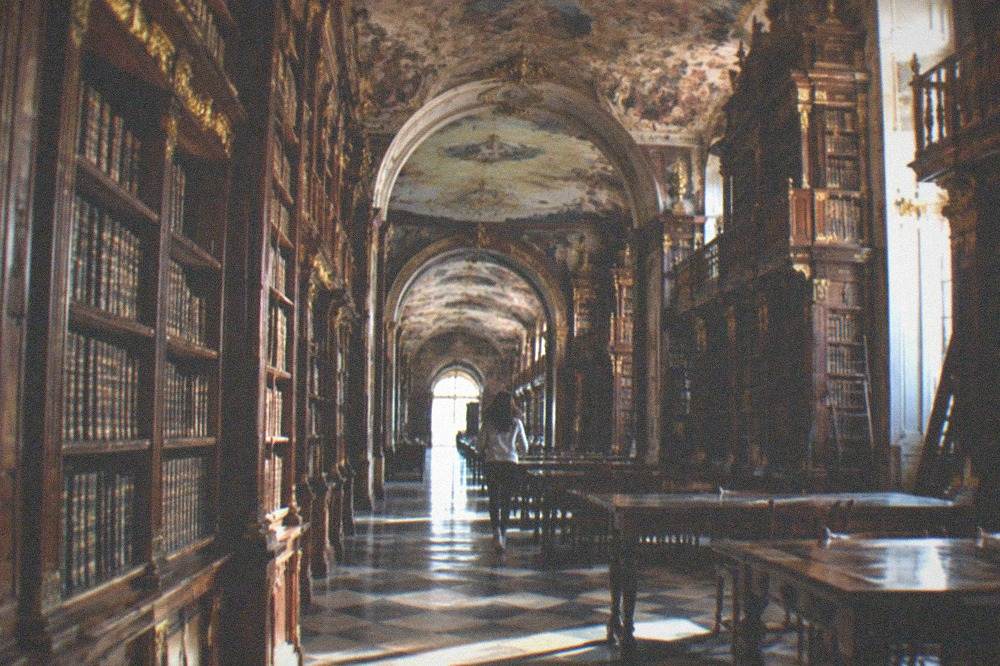
The single hardest planning constraint in Coimbra is not the train at all. It is the Biblioteca Joanina's entry ceiling: the University's own visit page states that entries into the Joanina building are limited to 50 people every 20 minutes, the library cannot be bought on its own, it exists only inside the 16.50 EUR combined ticket, and the time printed on that ticket is the library slot specifically. Entry outside the printed slot is refused. Online purchase closes 20 minutes before the visit time. That is why booking before you leave Porto, or before you leave home, is not caution, it is the difference between seeing the library and photographing its door.
The University's ticket tiers, as published on its own visit pages for the 2026 season:
| University of Coimbra ticket | Adult price | Validity | What it includes |
|---|---|---|---|
| Joanina Library + University + Science Museum | 16.50 EUR | 2 days, Joanina slot fixed | Baroque library, Royal Palace, St Michael's Chapel, Chemistry Laboratory, Academic Museum, Cabinet of Curiosities, Mineral Gallery |
| University + Science Museum | 12.50 EUR | 2 days | Same spaces, without the Joanina Library |
| Guided tour, Palace of Schools | 25.00 EUR | 1h30, guide-led | Guide-led visit; Science Museum spaces not included |
| Science Museum + UC Exploratório | 16.00 EUR | 3h | Chemistry Laboratory, Academic Museum, Cabinet of Curiosities, Mineral Gallery, UC Exploratório; no Palace of Schools spaces |
One closure to plan around: the Torre da Universidade, the clock tower, is closed, and the University's own information page says so plainly. No climb, no price, no view. And the Museu Nacional de Machado de Castro is closed for conservation work, with no reopening date published, so it cannot be on any current itinerary, though the Roman cryptoporticus beneath it is a real mid-1st-century structure for whenever it reopens. The full first-day and second-day breakdowns are in the site's one-day itinerary for visitors coming from Porto.
Is a Day Trip from Porto Realistic?
Yes, a day trip from Porto to Coimbra is realistic and is one of the most popular ways to see the city, because the rail connection is frequent enough on the main line that a morning arrival and evening return leaves six to eight usable hours, enough for the University hill, the Sé Velha and the old town if the Joanina slot is booked in advance. The trade-off is that a day trip buys you the highlights and costs you the atmosphere, which in Coimbra lives in the late afternoon and evening, when the day crowds thin and the student city takes the streets back.
The honest comparison, in the site's own answer to the question, is at is Coimbra a day trip from Porto. If you decide a day is enough, the most efficient version is a guided one, because the fixed costs of a day trip, the timetable, the station transfer, the uphill walking route, are exactly what a guide absorbs. The full-day trip from Porto that pairs Coimbra with Aveiro and a boat ride is the strongest option on this site's roster for that, since it covers two cities in one booked day.
For independent travellers, the budget end of the guided spectrum is a walking tour of the top attractions, from $5.85 per person, rated 5 from 151 reviews, which covers the city's essential sights on foot in two and a half hours. There are also free, tip-based walks on the GuruWalk platform, including a two-and-a-half-hour highlights walk by a certified guide rated 4.95 from 226 reviews; GuruWalk tours are free to book and you tip the guru what you choose at the end, and no price belongs on this page for them because there is none.
What Should You Actually Do in the Hours After You Arrive?
The core sequence for a first visit is the Paço das Escolas and the Biblioteca Joanina on the university hill, the Sé Velha de Coimbra at 3.00 EUR per person, the Mosteiro de Santa Cruz at 5.00 EUR per person, where Portugal's first two kings are buried, and a walk down through the Baixa to the River Mondego, in roughly that order, because the hill is steepest first thing and the riverside is flat for tired legs at the end. The Sé Velha's published visiting hours run 09:30 to 18:30 in summer and 09:30 to 17:30 in winter, with Sunday hours from 11:00. Santa Cruz runs 09:30 to 16:30, with visits suspended on Easter Sunday and on the Cortejo da Queima das Fitas, a moveable Sunday in the festival calendar.
The verified monument prices in the historic centre, from the operating bodies' own pages:
| Monument | Adult price | Published hours | Note |
|---|---|---|---|
| University combined ticket with Joanina | 16.50 EUR | Summer 09:00 to 20:00, winter 09:00 to 17:30 | Joanina slot fixed, rest valid 2 days |
| Sé Velha de Coimbra | 3.00 EUR | Summer 09:30 to 18:30, Sundays 11:00 | Group rate 2.50 EUR over 10 people |
| Mosteiro de Santa Cruz | 5.00 EUR | 09:30 to 16:30, Sundays separate | Burial church of Portugal's first two kings |
| Portugal dos Pequenitos | Price on the venue's own ticket page | 10:00 to 19:00 Mar to mid-Oct, 10:00 to 17:00 otherwise | Closed 25 December |
| Museu Nacional de Machado de Castro | Closed | Closed for conservation work | No reopening date published |
| Mosteiro de Santa Clara-a-Velha | Check before you go | Closed for works, no official page | Do not rely on circulated figures |
The UNESCO point deserves precision, because almost every guide gets it wrong: Coimbra is not a UNESCO World Heritage city. What was inscribed in 2013, under the name "University of Coimbra, Alta and Sofia", list reference 1387, is the university hill and the college street below it, two components inside the old town. The Baixa, the riverside and the rest of the city are not inside the inscription, and a visitor who knows that explores the hill differently, with more time in the Alta and along Rua da Sofia. The full index of guides sits on Coimbra Travel Guide.
For the practical layer, the city's own tourist tax is 1.00 EUR per guest per overnight stay, capped at three consecutive nights, from age 16, paid to the accommodation at check-in or check-out, in force since 5 April 2023. The municipality has approved a proposal to raise it to two euros, but the published rate remains one euro until the municipality's own tax pages say otherwise. A couple staying seven nights pays 3.00 EUR each. Day trippers pay nothing, which is one quiet argument for the day trip from Porto.
The deeper planning material, including where to eat between the monuments, is in the site's restaurants guide, and the full sight list with opening details is in things to do in Coimbra.
How do You Get Around Coimbra Once You Are Off the Train?
Coimbra's city transport is run by SMTUC, whose 2026 tariff prices a ticket bought from the driver at 2.00 EUR and a pre-purchased trip, in packs of three or more, at 0.90 EUR, with each trip valid 90 minutes on the urban network including transfers, and SMTUC tickets are also valid on the new Metro Mondego network, so one ticket covers both. The pre-purchased option requires a rechargeable card, and the tariff lists the Viagem ConVIDA support card at 0.50 EUR for occasional and pre-purchased tickets. The practical reading: buy from the driver only in a pinch, because the card pays for itself within a couple of journeys.
The verified SMTUC fares from the operator's 2026 tariff, in force since 1 April 2026:
| SMTUC ticket type | Price | Condition |
|---|---|---|
| Driver ticket, bought on board | 2.00 EUR | Single trip, urban network |
| Pre-purchased trip | 0.90 EUR per trip | Packs of 3 or more, rechargeable card |
| Viagem ConVIDA support card | 0.50 EUR | For occasional and pre-purchased tickets |
| MOVE-C support card | 3.00 EUR youth, 6.00 EUR others | Youth and standard cards |
| Large-family 1-day ticket | 1.00 EUR | 7 trips, large-family card |
| Fare evasion fine | 120.00 to 350.00 EUR | Penalty range in the tariff |
The Metro Mondego, a new bus-rapid network opening in stages, is the reason the intermodal line matters: the SMTUC tariff's own heading marks its titles as valid on both networks. What is not published here is any station list, line map or opening date for the Metrobus, because the operator's own site refused automated access on this build and the route detail could not be verified. Treat it as a bonus your bus ticket already covers, and check locally for the lines running on the day you visit.
Most visitors, though, walk. The historic centre is compact, the distances between the university hill, the Baixa and the riverside are short, and the only real obstacle is the gradient. The Elevador do Mercado, the public lift linking the Baixa with the upper town, exists and appears in the tariff under a combined-pass line, but no standalone ride price is published in the 2026 tariff, so check the operator's site for the current fare.
When Is the Best Time of Year to Make This Journey?
The best-kept secret on this route is September, whose mean maximum of 27.4 C is higher than June's 26.3 C, with the autumn rain holding off until October, when the monthly total jumps from 49.9 mm to 114.5 mm, so September gives you near-summer warmth with the student crowds back in the city and the worst rain still a month away. These are IPMA's 1991 to 2020 climate normals for the Coimbra / Bencanta station, the city's own station 3 km from the centre, not a coastal or district proxy, and they overturn two pieces of received wisdom: September is not drier than June, it is wetter, 49.9 mm against 26.0 mm, and August, not July, is the hottest month, averaging 10.9 days above 30 C.
The monthly picture from the official normals:
| Month | Mean max C | Rain mm | Days with 1 mm+ rain | Days max 30 C+ |
|---|---|---|---|---|
| May | 23.3 | 64.7 | 8.5 | 3.5 |
| June | 26.3 | 26.0 | 3.7 | 6.2 |
| July | 28.5 | 8.9 | 1.7 | 8.9 |
| August | 29.1 | 14.8 | 2.2 | 10.9 |
| September | 27.4 | 49.9 | 5.2 | 7.8 |
| October | 23.2 | 114.5 | 10.3 | 2.0 |
| November | 18.0 | 121.5 | 11.5 | 0.0 |
November is the wettest month at 121.5 mm, marginally ahead of October and January, and July at 8.9 mm is effectively dry. Record extremes at the same station: 41.2 C on 7 August 2016, and -4.3 C on 20 January 2017. One May-specific planning note: the University closes its visitor circuit on 24 May, and Mosteiro de Santa Cruz suspends visits on the Cortejo da Queima das Fitas, a moveable Sunday, so late May is the one stretch of good weather where the two headline monuments can both be shut on a specific day. The month-by-month detail is in the Coimbra weather guide.
Should You Stay the Night or Return to Porto?
Staying the night is the better choice if the Biblioteca Joanina is a priority, because its 50-people-per-20-minutes ceiling makes pre-booked slots scarce in high season and a fixed slot fits an overnight stay far more comfortably than a day trip's timetable, and the city's fado tradition, distinct from Lisbon's, only exists in the evening. Coimbra fado is sung by men in the traditional academic cape, it is the city's own tradition rather than an import, and it is the single strongest argument for not rushing back to Porto. The site's dedicated coverage of where to hear it is in the fado guide, and the accommodation options, from the hill to the riverside, are in the best hotels guide.
The cost picture helps the overnight case too. The tourist tax adds at most 3.00 EUR per person even on a long stay, the headline monuments are all individually priced at modest figures published on their own operating bodies' pages, and the city's eating and drinking is priced for a student population of about 31,000, the University's own current published figure. A night in Coimbra costs less than most visitors assume, and the smaller city gives you an evening atmosphere the larger one cannot fit into a day-trip window.
For travellers combining the trip with a second city, the pairing options run in several directions: the Aveiro and Coimbra day trip for a two-city booked day, or the Lisbon to Coimbra guide for anyone building a north-south itinerary rather than a Porto loop.
What Are the Alternatives to the Train from Porto?
The realistic alternatives to the Porto to Coimbra train are a guided day trip with transport included, a private transfer, or combining Coimbra with another destination on a booked multi-city tour, and the guided day trip is the one most visitors end up choosing because it removes the station question entirely. The two-station problem, the Joanina slot and the hill are all absorbed by an operator who runs this route daily, and on this site's roster the strongest fits are the full-day Coimbra and Aveiro trip with a boat ride, the ten-hour Fátima and Coimbra full-day tour from Porto, and the low-cost top-attractions walking tour for travellers who arrive independently and want a guide only inside the city.
The three side by side:
| Tour | From | Rating | Length | Best for |
|---|---|---|---|---|
| Full-day trip to Coimbra and Aveiro with boat ride | $114 per person | 4.7 from 106 reviews | 1 day | Two cities, one booked day, canal boat included |
| Fátima and Coimbra full-day tour from Porto | $74 per person | 4.7 from 850 reviews | 10 hours | Shrine and city combined, from Porto |
| Coimbra top attractions walking tour | $5.85 per person | 5 from 151 reviews | 2h30 | Independent arrivals who want a guided city walk |
The Fátima pairing deserves a word of explanation, because it is not obvious: the sanctuary at Fátima sits within day-trip range of Coimbra, and the ten-hour combined tour from Porto is the site's most-reviewed option from the northern city, at 4.7 from 850 reviews. It suits travellers for whom the shrine is the primary destination and Coimbra the powerful second act, rather than the reverse. For a fuller treatment of that route, see the site's day-trip coverage.
Common Questions About the Porto to Coimbra Train
How long does the train from Porto to Coimbra take?
This site does not publish a journey time for the Porto to Coimbra train, because none could be verified from CP's own timetable on this build, and journey times differ between the fast long-distance services and the regional trains anyway. Check the specific departure on CP's own passenger site, which is where the operator publishes times and fares.
Which Coimbra station should I arrive at?
Coimbra has two stations, Coimbra-B and Coimbra-A, in different parts of the city, and which one your train uses depends on the service. The stopping pattern for your specific train is published on CP's own site, and that is the only reliable source. This guide deliberately does not state which trains call where, because the claim could not be verified from CP itself.
Is the shuttle between Coimbra-B and Coimbra-A free with a long-distance ticket?
That is exactly the detail most often stated wrongly in guides, and it could not be verified from CP on this build, so this site does not publish an answer. CP's own fare rules, on the operator's passenger site, are where to confirm it before you travel.
Can I visit the Biblioteca Joanina on a day trip from Porto?
Yes, but only with a pre-booked timed slot. The University's own visit page states that entries are limited to 50 people every 20 minutes, the library exists only inside the 16.50 EUR combined ticket, and entry outside the printed slot is refused. Online purchase closes 20 minutes before the visit time, so book before you leave Porto.
Is Coimbra a UNESCO World Heritage city?
No, and this is the most common error in guides to the city. What UNESCO inscribed in 2013 is "University of Coimbra, Alta and Sofia", list reference 1387: the university hill and the college street, two components inside the old town. The city as a whole is not inscribed.
Do I have to pay the tourist tax on a day trip?
No. Coimbra's municipal tourist tax is 1.00 EUR per guest per overnight stay, capped at three consecutive nights, from age 16, paid to the accommodation, so it only applies if you sleep in the city. It has been in force since 5 April 2023, and a two-euro rise has been proposed but is not the published rate.
The Porto to Coimbra train is the easy part of this trip: book the Joanina slot before you board, check your arrival station on CP's own site, and give the city at least one evening, because the fado alone is worth the overnight.