Car Rental in Coimbra: When You Need One and When You Really Don't
Coimbra, Portugal, the university city on the River Mondego, is a hill town with a walkable core, two train stations with confusingly similar names, and a set of day trips that split neatly into ones you can do by rail and ones where a car or a tour earns its keep. This guide separates the two honestly, using the city's own published prices and closures, because almost every generic car rental page about Coimbra gets at least one of them wrong.

Short answer
Most visitors to Coimbra, Portugal do not need a rental car: the old town is compact and steep, city buses cost 2.00 EUR bought on board or 0.90 EUR pre-purchased per trip under the 2026 SMTUC tariff, and Lisbon and Porto both connect by train. A car or an organised tour only earns its keep for the scattered day trips, such as the Conímbriga Roman ruins about 16 km south or the schist villages of the Lousã mountains, where public transport thins out.
Coimbra, Portugal, the university city on the River Mondego, is one of the few mid-size European destinations where the honest answer to "should I rent a car?" is "probably not, with two specific exceptions". The city itself stacks vertically: a UNESCO-inscribed university hill above, a commercial Baixa below, and a river between them, and nearly everything a first-time visitor wants sits inside that triangle. The exceptions are the scattered sights of the surrounding region, from the Roman ruins of Conímbriga to the schist villages of the Lousã mountains, and even most of those now have organised tours departing from the city. This guide, from the Coimbra Travel Guide editorial desk, works through the decision using the city's own published figures, because the numbers are what decide it.
One warning before anything else, because it affects every page about driving here. Coimbra is also the name of a Portuguese district that reaches the Atlantic, and a common Portuguese surname, and a place name reused across Brazil and Angola. A rental listing, a driving distance or a "Coimbra" search result may be pointing at any of those. This page is about the city only, and where a figure below matters, it says exactly which Coimbra it belongs to.
Do You Need a Rental Car in Coimbra, Portugal?
For the city itself, no: the core sights sit within walking distance of each other, the 2026 SMTUC tariff sells bus trips at 2.00 EUR on board or 0.90 EUR pre-purchased, and the same tickets are valid on the new Metro Mondego network. A car becomes worth considering only for regional day trips such as Conímbriga, the Lousã schist villages or the Buçaco forest, and even those are covered by guided tours from about $87.81 per person. The arithmetic is simple once you see the hill. The Paço das Escolas, the Joanina Library, the Sé Velha and the Baixa all belong to one connected slope, and the city's own published visitor circuit is designed to be walked.
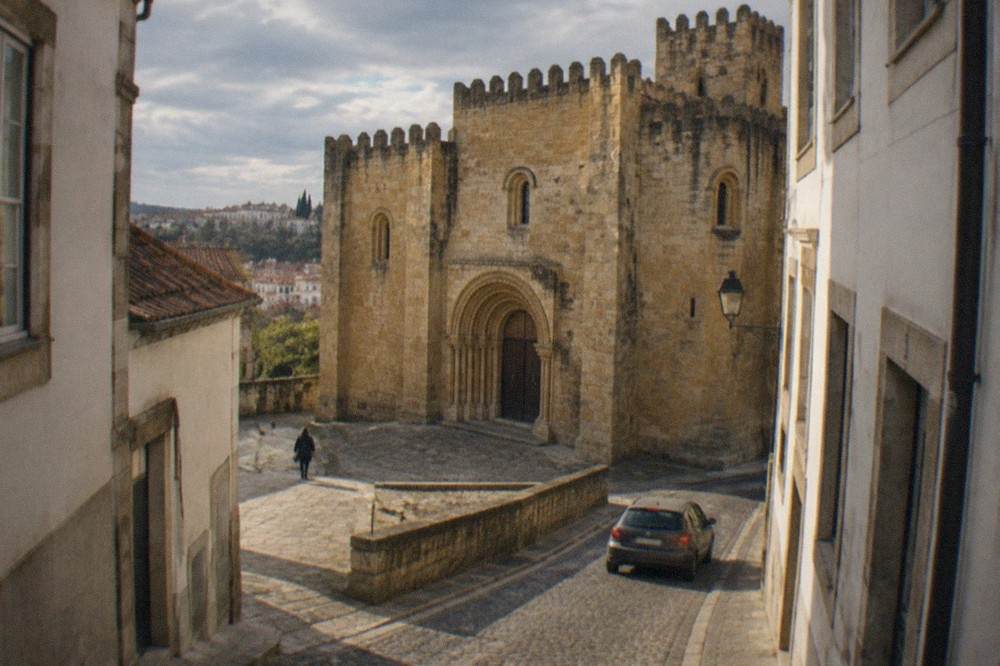
That is not a slogan, it is how the ticketing works. The University of Coimbra's combined ticket, 16.50 EUR for the adult version that includes the Biblioteca Joanina, is valid for two days across the Royal Palace, St Michael's Chapel, the Chemistry Laboratory, the Academic Museum, the Cabinet of Curiosities and the Mineral Gallery, with only the Joanina slot fixed to a printed time. A visitor driving between those spaces would save perhaps four minutes per leg and then spend longer than that hunting for a spot. The old cathedral, the Sé Velha, costs 3.00 EUR per person and sits a few minutes' walk down the same hillside.
What a car genuinely changes is the region. Conímbriga, the Roman town about 16 km south in the parish of Condeixa-a-Velha, in the municipality of Condeixa-a-Nova, is the flagship example: it is open seven days a week, 10:00 to 18:00, with a 10.00 EUR adult ticket covering both the museum and the ruins, which makes it a reliable Monday option when other monuments close. The Lousã mountain villages, the Buçaco forest and the Templar town of Tomar sit in the same category: reachable, but thinly served by public transport, and where a car or a tour is the practical answer.
For readers who want the city laid out street by street before deciding, the self-guided walking tour guide shows how much of Coimbra connects on foot, and the map guide puts the hill, the river and the Baixa in one frame.
Where do You Pick Up a Rental Car in Coimbra?
Coimbra has two railway stations with confusingly similar names, Coimbra-B and Coimbra-A, in different parts of the city, and rental pickup points are listed by each operator on its own site, so the practical move is to book from wherever your train actually arrives and confirm the desk's address before travel. The one thing no visitor should do is assume the two stations are interchangeable, because they are not in the same place. The Coimbra-B and Coimbra-A question is the single most common transport trap in this city, and this site keeps a whole page on it: the train stations A and B guide explains what is verified and what is not.
What can be stated with confidence, because the sources support it, is limited and worth respecting. Two stations exist. They serve different traffic. CP, the national operator, publishes the current stopping patterns and fares, and that is where the answer to "which station does my train use?" lives. What this site will not do is print a distance between the two, a transfer time, or a claim about the shuttle between them, because none of those has been confirmed from an official source, and wrong versions of all three circulate confidently elsewhere.
The same discipline applies to the airports, because Coimbra has no airport of its own. Visitors fly into Porto or Lisbon and arrive by train or coach. The Porto to Coimbra guide and the Lisbon to Coimbra guide cover those arrivals by rail, which is the mode with published timetables. Driving distances and times from either airport are deliberately absent from this site: the figures circulating online are unsourced, and a distance-calculator site is not an acceptable citation here. If a road figure matters to your plan, the route and the traffic decide it, and the operator's own listing or a current map read on the day is the honest source.
For rental itself, the standard advice holds anywhere and costs nothing to follow: book before you arrive rather than at a desk, read the fuel policy, photograph the car at pickup, and check whether the desk is at a station, in the Baixa or requires a shuttle. Operators publish all of this on their own listings, and it changes often enough that any specific claim printed here would be stale before the season ended.

What Does It Cost to Get Around Coimbra Without a Car?
The 2026 SMTUC tariff, in force since 1 April 2026, sells a single ticket bought on board the bus for 2.00 EUR, a pre-purchased trip in packs of three or more for 0.90 EUR each, and each journey stays valid for 90 minutes on the urban network with transfers included. The same titles are valid on the Metro Mondego network as well, and a support card costs 6.00 EUR, or 3.00 EUR for youth. Those are the operator's own published figures, and they make the no-car arithmetic blunt: a couple doing four bus trips a day pre-purchased spends 7.20 EUR total, less than a single day of parking in most European cities, before the rental rate itself.
The tariff has a few more edges worth knowing. The Viagem ConVIDA support card, for occasional and pre-purchased tickets, costs 0.50 EUR. A large-family one-day ticket covering seven trips costs 1.00 EUR. Fare evasion is fined between 120.00 and 350.00 EUR, which tells you how seriously the operator takes validation. And the tariff document is explicitly headed for intermodal use, marked repeatedly as valid on both the SMTUC and Metro Mondego networks, which matters because the new Metrobus system has been opening in stages since 2025 and a bus ticket is your ticket to it too.
| SMTUC ticket (2026 tariff, in force 1 April 2026) | Price | Notes |
|---|---|---|
| Single, bought on board | 2.00 EUR | From the driver |
| Pre-purchased, packs of 3+ trips | 0.90 EUR per trip | Loaded on a card |
| Journey validity | 90 minutes | Urban network, transfers included within the window |
| MOVE-C support card | 6.00 EUR | 3.00 EUR for youth |
| Viagem ConVIDA support card | 0.50 EUR | For occasional and pre-purchased tickets |
| Large-family 1-day, 7 trips | 1.00 EUR | Per the tariff |
| Fare evasion fine | 120.00 to 350.00 EUR | Enforcement is real |
| Metro Mondego validity | Included | SMTUC titles are marked valid on both networks |
Walking, meanwhile, is free and the city is built for it in a way that cuts both ways. The climb from the Baixa to the Paço das Escolas is short in distance and real in gradient, and the accessibility and hills guide addresses it honestly for visitors for whom it matters. The Elevador do Mercado exists as a public lift linking levels of the city, and the Elevador do Mercado guide covers it, but this site publishes no standalone fare for it because the tariff does not give it one.
Which Day Trips from Coimbra Are Easier with a Car?
The day trips that reward wheels are the scattered ones: the Conímbriga Roman ruins about 16 km south, the schist villages of the Lousã mountains, the Buçaco forest and palace, and the Templar town of Tomar, each of which is served by a guided tour from Coimbra at roughly $46.83 to $152.20 per person, so a rental car and a tour are direct competitors on price. A family of four can undercut a tour per-head, but a solo traveller often cannot once fuel and a day of parking are counted, and the tour buys a local's knowledge of roads that are narrow, signed in Portuguese conventions and, in the schist villages, genuinely mountainous.
Conímbriga is the easiest case to make precisely, because its facts are fully verified. The site is a Roman town in Condeixa-a-Velha, in the municipality of Condeixa-a-Nova, roughly 16 km south of Coimbra. The Museu Nacional de Conímbriga charges 10.00 EUR adult for one combined ticket covering the museum and the ruins, opens Monday to Sunday from 10:00 to 18:00 with the ticket office closing at 17:15, and closes only on 1 January, Easter Sunday, 1 May, 24 July and 25 December. That seven-day opening is a quiet advantage: it is the reliable Monday option when the state monuments that close on Mondays are shut.
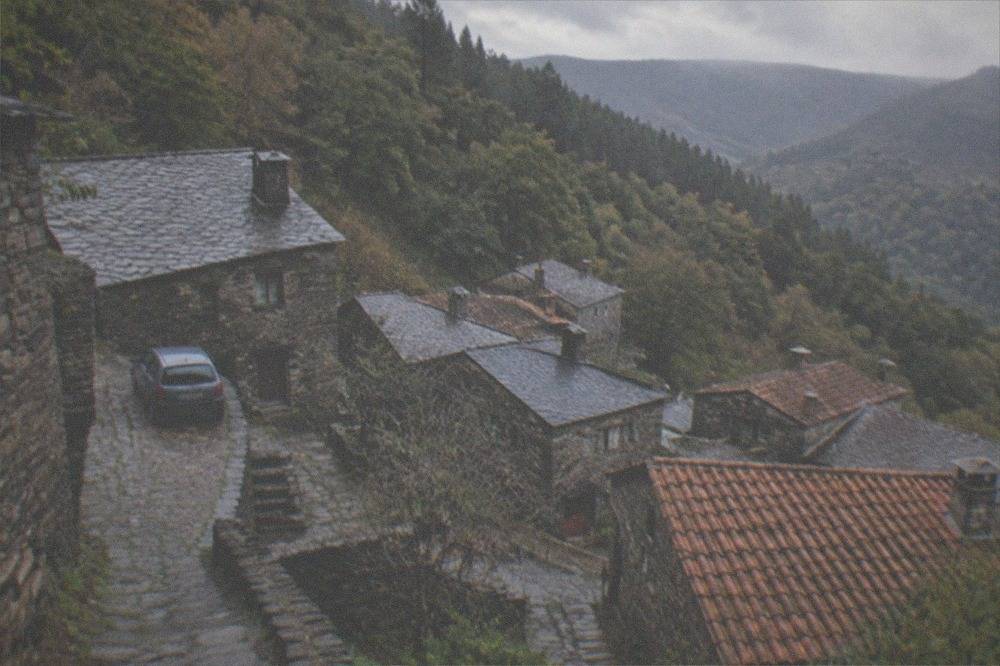
The Lousã mountain villages are the second case, and arguably the stronger one. These are stone settlements, Talasnal the best known, threaded up forested slopes where bus service is thin and the walking between villages is the whole point. The verified tours here range from about $81.95 to $152.20 per person depending on length and group size, with an eight-hour cascades-and-Piodão version at the top of that range. A car works well for these if you are confident on mountain roads; otherwise the tours, several of which include hotel pickup, remove both the driving and the route-finding.
Buçaco, Tomar and Fátima complete the set. The Buçaco forest and palace tour runs about four hours from $87.81 per person; Tomar's Convent of Christ is served by tours from $46.83 to $140.49; the Fátima shrine options run from $74 for a full-day combination out of Porto to $129.95 for a private tour from Coimbra. The day trips guide compares all of them in one place, and the Lousã day trip guide, Buçaco forest guide and Tomar day trip guide each go deeper on their own ground.
| Day trip from Coimbra | Typical tour price (from) | Duration | Car advantage |
|---|---|---|---|
| Conímbriga Roman ruins | $105.37 per person | 4 hours | Moderate: 16 km south, in Condeixa-a-Nova |
| Lousã schist villages | $81.95 to $152.20 per person | 3 to 8 hours | High: mountain roads, thin public transport |
| Buçaco forest and palace | $87.81 per person | 4 hours | Moderate |
| Tomar, Convent of Christ | $46.83 to $140.49 per person | 1 to 4 hours | Moderate to high |
| Fátima shrine | $74 to $129.95 per person | 3 to 10 hours | Moderate |
| Aveiro, with boat ride | $114 per person | Full day | Low: rail corridor |
One row deserves its own sentence. Aveiro is on the list of tours, but it is also on a rail line, and the Aveiro day trip guide treats the train as the natural way there. If your only long-distance ambition is a coastal-canal day out, the car rental case weakens again.
What Should You Know About Driving and Parking in Coimbra Itself?
Coimbra's old town is a steep, narrow, largely pre-car street plan: the Alta upper town and the Baixa below are better walked than driven, and the practical pattern for car visitors is to park once at the edge of the centre and move on foot, because the sights you came for are stacked on a hillside, not spread across a grid. The city's own visitor economy is organised around that fact: the University's two-day ticket, the walking tours, and the free GuruWalk model all assume legs, not wheels.
The free walking tours deserve a specific mention here, because they are the cheapest possible answer to "how do I cover the city without a car". GuruWalk lists several Coimbra walks that are free to join and pay-what-you-want at the end, including the Coimbra tour covering downtown, the historic centre, the university and the botanic garden, rated 4.91 from 662 reviews over three hours, and the Coimbra Highlights, History and Traditions walk by a certified guide, rated 4.95 from 226 reviews. These are not this site's products and carry no price; the gurus are tipped at the walker's discretion, and naming the platform and the guides is the honest way to present them.
For parking itself, this site publishes no prices, addresses or capacities for any car park, because none was verified, and a stale or invented parking figure is worse than none. What can be said is structural: the city centre is old, the streets around the Sé Velha and the Arco de Almedina were built for foot traffic and mules, and the newer parts of the city, where parking is easier, are precisely the parts with fewer sights. The parking guide exists for exactly this question and keeps to what can be verified.
Driving rules are national, not municipal: Portugal drives on the right, speed limits are posted in kilometres, and motorways are frequently tolled, with electronic transponders common, so a visitor planning to drive the region should ask the rental desk how tolls are handled on that specific car before leaving the lot. Those are general facts of driving in Portugal rather than Coimbra specifics, and the rental operator's own documentation is the authoritative version for your contract.

When Is the Worst Time of Year to Have a Car in Coimbra?
May is the awkward month: the University closes its visitor circuit on 24 May, and Mosteiro de Santa Cruz suspends visits on the Cortejo da Queima das Fitas, a moveable Sunday parade that fills the streets. October and November are the wet ones: IPMA's 1991 to 2020 normals for the Coimbra / Bencanta station show monthly rain jumping from 49.9 mm in September to 114.5 mm in October and 121.5 mm in November, the wettest month of the year.
The student calendar drives the city, and it should drive your rental decision too. The University of Coimbra publishes about 31,000 students, and the academic year means term-time streets, term-time buses and, in May, the Queima das Fitas festival, whose exact dates this site does not print because the Associação Académica's own pages could not be verified. What is official and usable: the University's visitor information page lists 24 May among its closure dates, and the Santa Cruz monastery's own page suspends visits on the Cortejo day. A visitor holding a rental car in May gains nothing on those days and loses the parking.
The climate table, read honestly, adds a second answer. September is the quiet winner: its mean maximum of 27.4 C is actually higher than June's 26.3 C, and its 49.9 mm of rain is modest, while the crowds of summer have gone. July, at 8.9 mm of rain and a mean maximum of 28.5 C, is effectively dry but the busiest. August is the hottest month, not July, averaging 10.9 days above 30 C at this station, and the record maximum of 41.2 C was set on 7 August 2016. None of that argues for a car in the city; all of it argues for timing.
| Month | Mean max (C) | Rain (mm) | Car verdict for the city |
|---|---|---|---|
| May | 23.3 | 64.7 | Crowded, Queima season: park once or skip the car |
| June | 26.3 | 26.0 | Fine on foot |
| July | 28.5 | 8.9 | Hot and busy: walking early, buses midday |
| August | 29.1 | 14.8 | Hottest month, 10.9 days over 30 C: shade and buses |
| September | 27.4 | 49.9 | Best month: no car needed at all |
| October | 23.2 | 114.5 | Rain quadruples: roof over wheels has some value |
| November | 18.0 | 121.5 | Wettest month: regional trips by tour beat wet mountain roads |
The best time to visit guide and the weather guide carry the full version of this, month by month. The short version for a rental decision: the car's value rises in October and November, when rain makes regional walking and waiting less pleasant, and falls to near zero in September, which is the month this site recommends most.

What Are the Alternatives to Renting a Car in Coimbra?
The verified alternatives are: walking and SMTUC buses for the city, trains for the Lisbon and Porto corridors, guided day tours for the scattered regional sights, and the free, tip-based GuruWalk walks for the city's core, so a full Coimbra visit can be done car-free at a cost of a few euros of bus fare plus whatever tours you choose. The city's own economics back this up: the municipality recorded 698,151 overnight stays in 2025, and its visitor infrastructure, from the University's own ticketing to the free walking model, is built for people arriving by rail and moving on foot.
The tour layer deserves a fair hearing, because it competes directly with a rental day. A certified local guide's three-hour visit with admission included runs from $31 per person, rated 4.6 from 51 reviews; a full-day Coimbra and Aveiro combination from Porto with a boat ride runs from $114, rated 4.7 from 106 reviews; and the budget end of city walking starts at $5.85 for a two-and-a-half-hour top-attractions walk rated 5 from 151 reviews. Set any of those against a day's rental rate plus fuel plus parking and the tour wins often, especially for one or two travellers.
There is also an honest case for the car, and it should be stated rather than buried. Independent travellers who want to linger, to change plans mid-afternoon, to stop at a village bakery between Talasnal and Casal Novo, or to visit the Bairrada wine route at their own pace with a designated driver, get something no tour sells. The leitão da Bairrada guide region is a driving-and-eating landscape, and the trip costs guide helps price the comparison for your own group size.
| Way of covering Coimbra | Verified cost | Best for |
|---|---|---|
| Walking the city core | Free | Everything between the Alta and the river |
| SMTUC bus, pre-purchased | 0.90 EUR per trip | Hills, the Baixa, cross-town legs |
| SMTUC bus, on board | 2.00 EUR | Spontaneous single trips |
| Free GuruWalk city walks | Pay what you want | First-day orientation, the botanic garden circuit |
| Certified guided visit, admission included | From $31 per person | Depth, context, no ticket queues |
| Guided day tours to the region | From $46.83 per person | Conímbriga, Lousã, Buçaco, Tomar, Fátima |
| Rental car | Check the operator's listing | Independent regional roaming, Bairrada eating |
What Is Open, Closed and Timed That a Car Cannot Fix?
Three 2026 facts no amount of mobility solves: the Museu Nacional de Machado de Castro is closed for conservation work, the Torre da Universidade is closed to public access per the University's own page, and the Biblioteca Joanina admits only 50 people every 20 minutes on a fixed printed slot inside the 16.50 EUR combined ticket, with entry outside the slot refused. A car gets you to the door faster; it does not get you through it. Booking discipline, not driving, is what protects the headline sights.
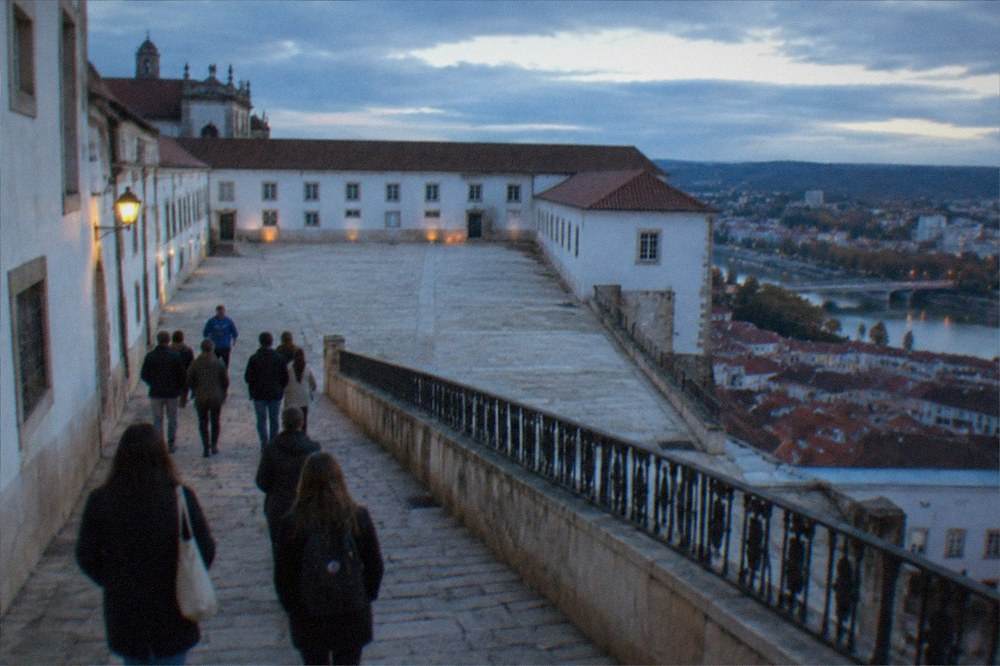
The Joanina rule is the one that matters most, and it is the single most useful practical fact on this entire site. The library cannot be bought on its own: it exists only inside the 16.50 EUR combined ticket, the time printed on that ticket is the library slot specifically, the rest of the ticket's spaces are valid for two days, online purchase closes 20 minutes before the visit time, and the University's own wording refuses entry outside the stipulated time. In summer, a visitor turning up without a pre-booked slot can simply be turned away, and the 50-per-20-minutes ceiling is why. This is genuine scarcity, honestly stated, and it is the reason to book the university portion of any Coimbra trip early, car or no car.
The closures list is equally real. Machado de Castro, the national museum built over a mid-1st-century Roman cryptoporticus, is shut for conservation work per its own page on the national museums portal, with a phased reopening targeted after summer 2026; no reopening ticket price is published, and the 10.00 EUR figure in dated press is not official. The clock tower is closed, per the University's own information page, so no tour, guide or car sells a tower climb. Mosteiro de Santa Clara-a-Velha has been closed for requalification works since October 2025, and this site publishes no price or hours for it. Portugal dos Pequenitos is open, 10:00 to 19:00 from 1 March to 15 October and 10:00 to 17:00 in the cooler months, closed only on Christmas Day, but its prices render client-side on the venue's own page, so this site prints the hours and points to the venue's ticket page rather than a number.
| Sight | 2026 status | Verified figure |
|---|---|---|
| Biblioteca Joanina | Open, timed entry | 16.50 EUR combined ticket, 50 people per 20-minute slot |
| Paço das Escolas circuit | Open, two-day ticket | 12.50 EUR without the Joanina |
| Sé Velha | Open | 3.00 EUR individual |
| Mosteiro de Santa Cruz | Open, suspended on the Cortejo Sunday | 5.00 EUR individual |
| Museu Nacional de Machado de Castro | Closed for conservation work | No official reopening price |
| Torre da Universidade | Closed to public access | No ticket exists |
| Mosteiro de Santa Clara-a-Velha | Closed for works since October 2025 | No verified price or hours |
| Portugal dos Pequenitos | Open | Hours published; prices on the venue's own page |
| Conímbriga | Open daily, 10:00 to 18:00 | 10.00 EUR, museum and ruins combined |
The pattern in that table is the real conclusion of this guide. Coimbra's constraints are booking constraints, not mobility constraints. A rental car solves none of the rows above and is irrelevant to the two that most often ruin a day, the Joanina slot and the museum closures. The Joanina Library tickets guide and the university tickets guide handle the booking side properly, and the Machado de Castro guide tracks the reopening.
Common Questions About Car Rental in Coimbra
Do I need a car in Coimbra, Portugal?
For the city, no: the old town is compact and steep, SMTUC buses cost 2.00 EUR on board or 0.90 EUR pre-purchased under the 2026 tariff, and those tickets also work on the Metro Mondego network. A car or a guided tour pays off only for regional day trips such as Conímbriga, the Lousã schist villages, Buçaco or Tomar.
Where do I pick up a rental car in Coimbra?
Each operator lists its own pickup points, and the practical step is to confirm the desk address against your arrival station before travel. Coimbra has two stations, Coimbra-B and Coimbra-A, in different parts of the city, and CP publishes which trains use which, so check your ticket and book pickup accordingly.
Is parking difficult in Coimbra?
In the historic core, yes: the Alta and the Baixa predate cars and the streets are narrow and steep. This site publishes no car park prices or addresses because none were verified; the workable pattern is to park once at the edge of the centre and walk, and the parking guide on this site covers what can be confirmed.
Can I visit Conímbriga without a car?
Yes, though public transport is thin: guided tours from Coimbra run from $105.37 per person for four hours, and the site itself is open daily, 10:00 to 18:00, with a 10.00 EUR adult ticket covering the museum and the ruins together. It sits about 16 km south, in Condeixa-a-Velha, in the municipality of Condeixa-a-Nova.
How do I get from Porto or Lisbon airport to Coimbra?
Coimbra has no airport of its own. Both Porto and Lisbon connect to Coimbra by train, and this site's Porto to Coimbra and Lisbon to Coimbra guides cover the rail options. This site publishes no driving distances or times from either airport because no official source was found, and the honest answer is to use the published timetables.
Does the tourist tax affect my car rental budget?
Indirectly: Coimbra charges a municipal tourist tax of 1.00 EUR per guest per overnight stay, capped at three consecutive nights, from age 16, paid directly to the accommodation at check-in or check-out, in force since 5 April 2023. A two-euro rise was proposed in July 2026 but is not the current published rate, so budget one euro per night per adult, up to three nights.
The final word is the one the numbers already gave. Rent a car in Coimbra, Portugal for the region and the free days: the schist villages, the Bairrada tables, the long loop to Tomar. Leave it parked, or skip it entirely, for the city itself, because the hill, the 0.90 EUR bus trip and the 50-people-per-20-minutes Joanina slot are what actually shape a visit here, and none of them cares how you arrived.