Coimbra to Aveiro Day Trip: How to Plan It, What It Costs and What to See
Aveiro sits north of Coimbra on Portugal's Atlantic coast, and it pairs with the university city better than almost any other destination in the region. This guide covers how the trip works, what it costs and what to do when you arrive.
Short answer
Aveiro is one of the easiest day trips from Coimbra, Portugal: a coastal city of canals, lagoon boats and Art Nouveau façades, reachable by train along the Linha do Norte corridor. Most visitors spend the morning in Aveiro's canals and museums and still be back in Coimbra for dinner.
Coimbra, Portugal, the university city on the River Mondego, sits roughly midway between Lisbon and Porto, and one of the most rewarding escapes from its hillside of colleges is the canal city of Aveiro to the north. Where Coimbra is stone, students and fado, Aveiro is salt water, seaweed-harvesting boats painted in bright stripes, and a lagoon that shaped the whole town. The two cities complement each other so neatly that pairing them has become one of the standard moves of any central-Portugal itinerary, and this Coimbra Travel Guide page lays out exactly how the day trip works.
Before the practicalities, one piece of geography discipline matters here. Coimbra itself is an inland city on the Mondego and has no beach: the district of Coimbra reaches the Atlantic and contains Figueira da Foz, but the city does not touch the sea. Aveiro, by contrast, is genuinely coastal, sitting on a lagoon system that opens to the Atlantic. That contrast is precisely why the trip works: a morning of canals and sea air after a day or two of climbing Coimbra's steep Alta feels like a change of country rather than a change of city.
Why Does Aveiro Work So Well as a Day Trip from Coimbra?
Aveiro works because it is compact, flat and different: the entire canal-side core, from the fish market quarter to the Art Nouveau streets, is walkable in a single morning, and the city's whole identity, its lagoon, its moliceiro boats and its salt and seaweed economy, is visible from the central canals without a single museum ticket. The contrast with hilltop Coimbra is the point: you trade granite stairs for sea level and come back the same evening.
The two cities sit on the same north-south rail corridor, the Linha do Norte, which is the spine of Portuguese intercity travel. That makes Aveiro one of the few day trips from Coimbra that needs no car, no tour bus and no advance planning beyond a ticket. The operator is CP, Comboios de Portugal, and its passenger site is where to check the current timetable and fares for the exact date, because this site does not publish unverified journey times or frequencies.
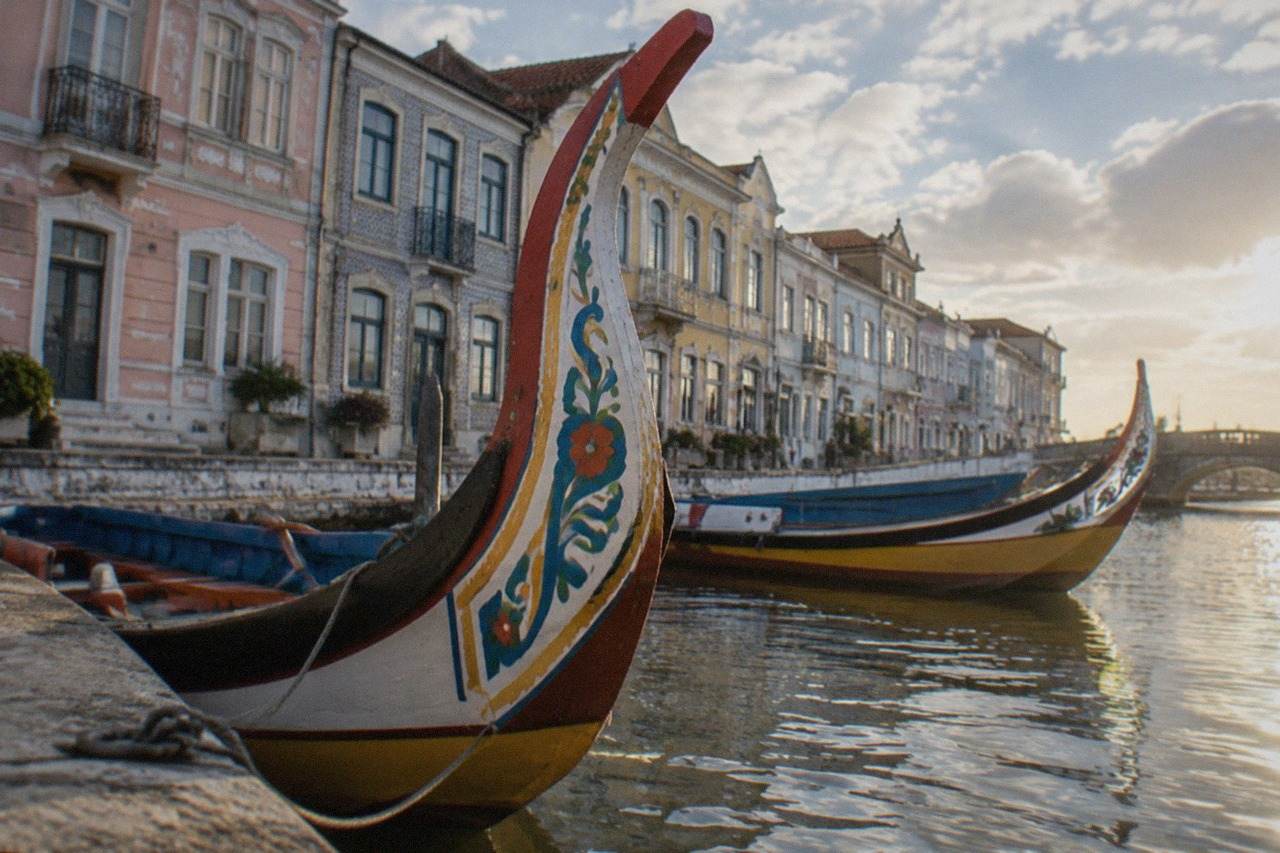
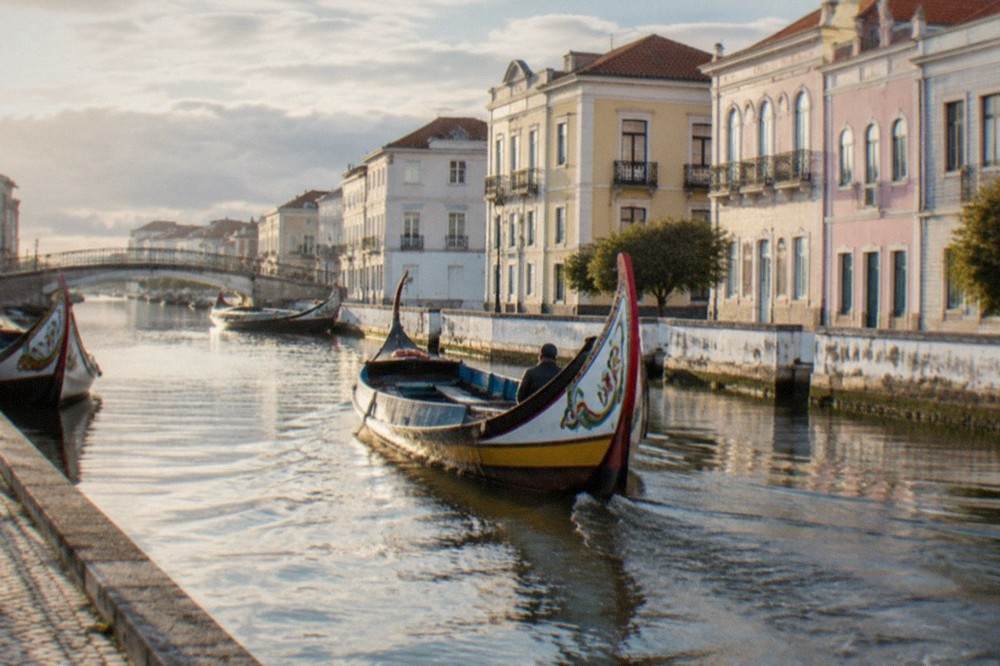
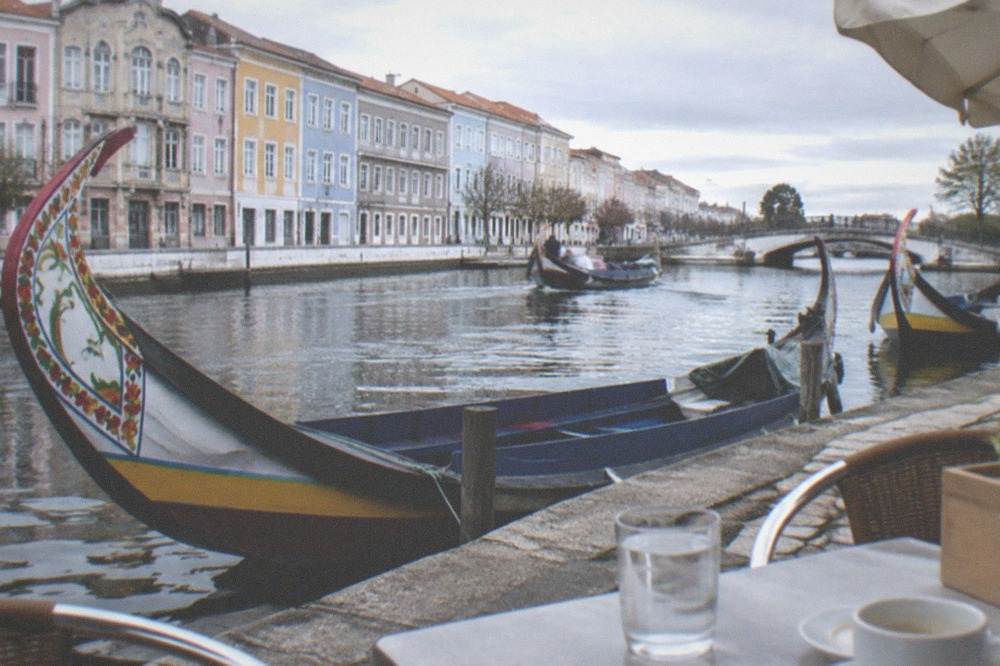
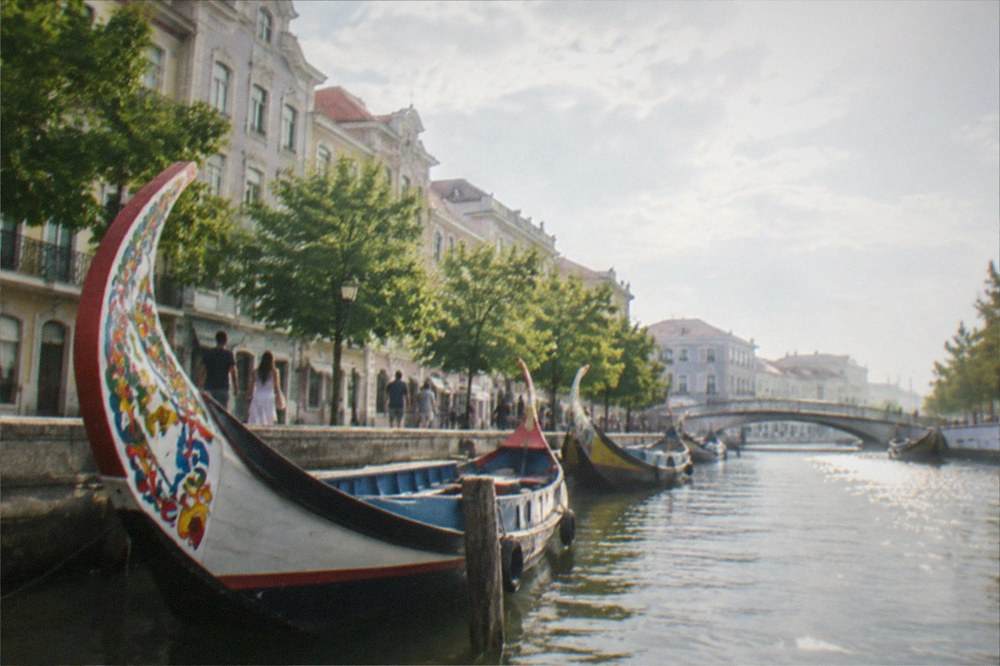
What you get at the other end is a town built around water. Aveiro's central canals were once working routes for moliceiro boats harvesting seaweed for fertiliser; today those same boats, painted with prow figures and bright geometric patterns, run pleasure trips through the heart of the city. The surrounding streets hold one of Portugal's best concentrations of Art Nouveau architecture, a fish-market quarter turned restaurant row, and a lagoon, the Ria de Aveiro, that spreads out north and south of the centre.
For a sense of how Aveiro fits into the wider set of escapes from the city, the day trips from Coimbra roundup covers the full menu, from the schist villages of the Lousã to the Templar town of Tomar, and the Coimbra versus Aveiro comparison page looks at the two cities side by side for travellers deciding where to base themselves.
How do You Get from Coimbra to Aveiro?
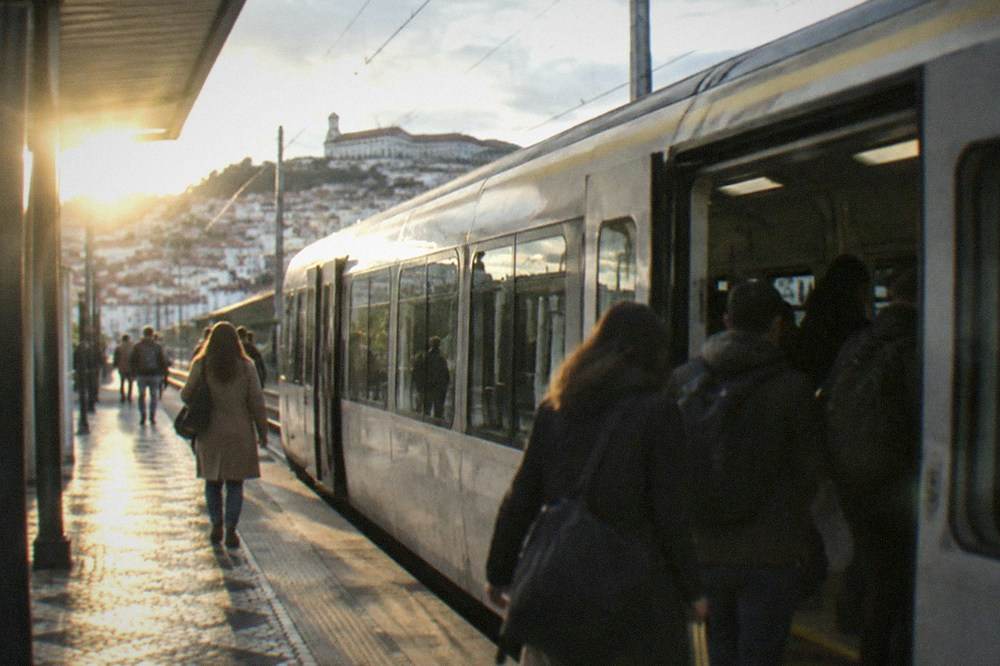
The practical answer is the train: Coimbra and Aveiro are both on the Linha do Norte corridor operated by CP, Comboios de Portugal, and the journey is a short intercity hop that runs several times a day in each direction. Buy at cp.pt or at the station, and check the operator's own site for the current timetable, fares and stopping pattern, because no journey time or frequency on this route has been verified for this page.
One warning that genuinely matters: Coimbra has two stations with confusingly similar names, Coimbra-B and Coimbra-A, and they are in different places. Which services call at which station, and whether the shuttle between the two is included in a long-distance ticket, are exactly the kind of details that get stated wrongly in guides, so treat CP's passenger site as the only authority on the stopping pattern and the connection. The Coimbra train stations A and B guide covers the two-station problem in full.
If you would rather not manage rail logistics in a foreign language, the guided options remove the friction entirely. The most direct fit is a full-day trip that covers both Coimbra and Aveiro in one itinerary, with an Aveiro boat ride included:
That tour, the Coimbra and Aveiro full-day trip with boat ride, is listed from $114 per person, rated 4.7 from 106 reviews, and runs a full day. It is designed for travellers based in Porto, so read the listing carefully if you are starting from Coimbra itself: the meeting point and the direction of travel matter. You can also Check availability for your dates before committing to the rail option.
For orientation once you are back in Coimbra, the Coimbra map page shows how the two stations relate to the old town, and the getting-around guide covers the city buses and the new Metro Mondego network, on which SMTUC tickets are valid.
What Are the Must-See Sights in Aveiro?
The core of an Aveiro visit is the canal network and the moliceiro boats: the Central Canal, the São Roque channel and the fish-market quarter can all be walked in a loop of a couple of hours, and the boat trips along them are the city's signature activity, bookable on the spot from the canal-side kiosks. Beyond the water, the Art Nouveau museum quarter and the striped Aveiro railway station façade are the two sights most visitors photograph.
Start at the Praça do Peixe fish market and work along the water. The moliceiro boats moored along the Central Canal are the visual heart of the city, long, low vessels built for the lagoon, each painted with a figure on the prow. Trips run from the central kiosks; prices are set by the operators on the day, so treat anything you read online as a planning range and check at the kiosk rather than trusting a fixed figure.
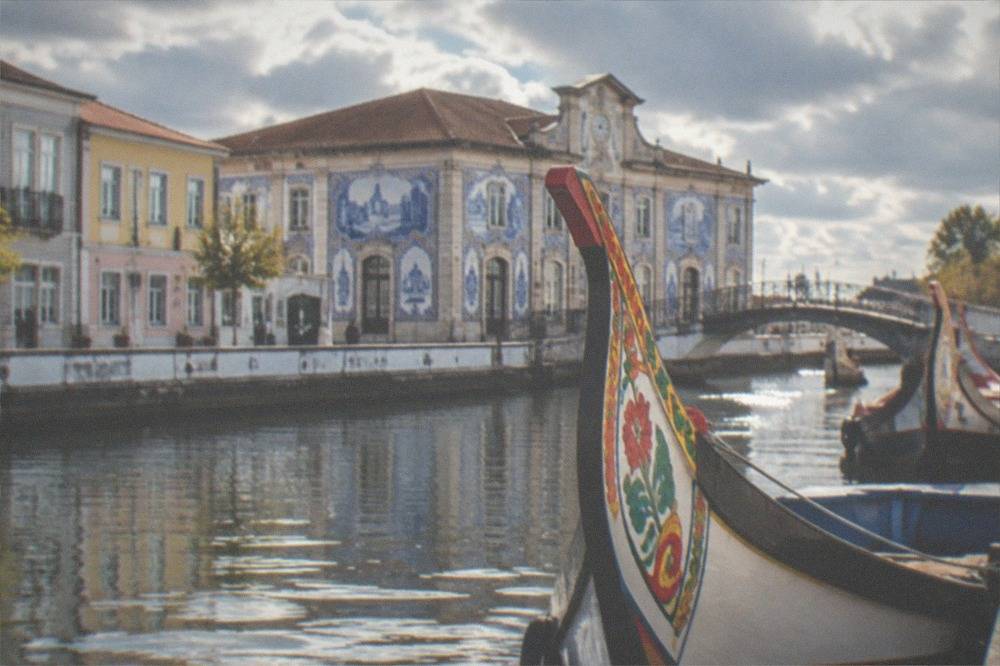
From the canals, the streets north and east hold the Art Nouveau cluster, a legacy of the late-19th-century prosperity built on salt, and the museum dedicated to it sits in one of the best-preserved houses. The railway station itself, its walls covered in the same azulejo tradition that runs through central Portugal, is worth the short walk even if you arrive by train and pass through it anyway. Out on the sand bar, the Costa Nova quarter, with its candy-striped former fishermen's houses, is the classic half-day extension, though reaching it needs a local bus or taxi and the timing should be checked locally.
A guided version solves the boat question in advance. The Coimbra and Aveiro full-day trip with boat ride includes the Aveiro boat ride in the ticket, which removes the one activity in the city where availability and pricing vary most. If you are building the day yourself, plan the boat first and the museums second, because the boats stop running earlier than the streets empty.
For travellers who end up with more time in the region than expected, the Aveiro and Coimbra day trip itinerary page sequences both cities in a single day from scratch, and the Coimbra to Aveiro transport guide goes deeper on the rail practicalities.
How Much Does an Aveiro Day Trip Cost?
A self-guided day trip from Coimbra to Aveiro costs two rail fares plus whatever you spend on the ground: the boat trips, food and any museum entries are priced by their operators and none of those figures is published in this site's verified research, so budget on the fare plus a lunch, a boat trip and incidentals. A guided alternative, the full-day Coimbra and Aveiro tour with boat ride, is listed from $114 per person with the boat included.
The honest position of this site is that it publishes only figures it has verified, and the rail fare for this exact journey has not been confirmed from CP for this page. What can be stated is the structure: CP sells intercity and regional services on this corridor, with advance-purchase discounts on the faster services, and the fare is bought at cp.pt, at ticket machines or at the counter. Treat any specific euro figure you see on a third-party blog as unverified.
What this site has verified is the Coimbra side of the ledger, which is where the day starts and often ends:
| Cost item in Coimbra | Verified figure | Source basis |
|---|---|---|
| Municipal tourist tax | 1.00 EUR per guest per night, max 3 nights, from age 16 | The municipality's own tax pages |
| SMTUC bus ticket bought on board | 2.00 EUR | The 2026 SMTUC tariff |
| SMTUC pre-purchased trip (3 or more) | 0.90 EUR per trip | The 2026 SMTUC tariff |
| University combined ticket with Joanina Library | 16.50 EUR adult | visit.uc.pt, valid for the 2026 season |
| Sé Velha de Coimbra individual entry | 3.00 EUR | The parish's own visitor page |
| Mosteiro de Santa Cruz individual entry | 5.00 EUR | The parish's own visitor page |
A note on that tourist tax: it is 1.00 EUR per guest per overnight stay, capped at three consecutive nights, payable at the accommodation, and charged all year. A two-euro rise was approved as a proposal by the municipal executive in July 2026 but is not the published rate, so expect one euro per night at check-in. The municipality's own justification for that rise is a genuinely useful data point: it recorded 698,151 overnight stays in the municipality in 2025 and estimated its tourism-related cost at 3.49 EUR per overnight stay, which is the kind of figure almost no guide to this city carries.
For budgeting the whole Portuguese leg of a trip, the is 100 euros a day enough in Portugal answer page works through a realistic daily figure, and the Coimbra trip costs guide itemises the city itself.
What Would a One-Day Aveiro Itinerary Look Like?
A workable self-guided day runs: an early train from Coimbra, a mid-morning moliceiro boat trip on the Central Canal, a walk through the Art Nouveau quarter and the fish market before lunch, an afternoon choice between the railway station tiles and a trip out to the striped Costa Nova houses, and an evening train back in time for dinner in Coimbra's Baixa. The whole thing fits inside roughly ten hours door to door.
The sequencing matters more than the sights. Boats and kiosks thin out in the late afternoon, so do the water first; the Art Nouveau streets and the station tiles are unhurried and can absorb whatever time is left. Lunch in Aveiro is its own small institution: the city is known for its fish and for ovos moles, the sweet made from egg yolks and sugar inside rice-paper shells, a convent legacy sold in every pastry window in the centre. As with all restaurant and café details on this site, no opening hours or addresses have been verified, so wander the fish-market quarter and take the room as it comes.
A comparison of the guided alternatives, all verified from the tour roster:
| Tour | Kind | Listed from | Rating | Duration |
|---|---|---|---|---|
| Coimbra and Aveiro full-day trip with boat ride | Multi-city day trip | $114 per person | 4.7 from 106 reviews | 1 day |
| Coimbra Top Attractions Walking Tour | City walking tour | $5.85 per person | 5 from 151 reviews | 2 hours 30 minutes |
| Conimbriga and the Roman Tour | Roman ruins day trip | $105.37 per person | 4.8 from 136 reviews | 4 hours |
| Fátima and Coimbra full-day tour from Porto | Fátima day trip | $74 per person | 4.7 from 850 reviews | 10 hours |
The walking tour in that table is a Coimbra, not an Aveiro, product, but it earns its place in the planning: at $5.85 per person and two and a half hours it is the cheapest way to cover the university city before you leave it, and the Coimbra Top Attractions Walking Tour page has the details.
If a single day in Coimbra itself is also on the agenda, the one day itinerary page sequences the university, the Sé Velha and the riverfront in order, and the is-one-day-enough question is weighed on the answers pages.
When Is the Best Time of Year for the Coimbra to Aveiro Day Trip?
The best months are May, June, September and early October: IPMA's 1991 to 2020 normals for the Coimbra / Bencanta station show June averaging a 26.3 C mean maximum with only 26 mm of rain and September 27.4 C with 49.9 mm, while July and August are hotter, 28.5 and 29.1 C, and crowded with Portuguese holidaymakers. October is when the rain arrives properly, jumping to 114.5 mm.
That table deserves reading carefully, because the obvious assumption about September is backwards. September is both hotter and wetter than June on the Coimbra station's normals: 27.4 C against 26.3 C on the mean maximum, and 49.9 mm of rain against 26.0 mm. What makes September golden is that the crowds have gone while the sea-level heat in Aveiro has not, and the real rain still holds off until October, when the monthly total more than doubles.
| Month | Mean max C | Rain mm | Days 1mm+ rain | Days max 30C+ |
|---|---|---|---|---|
| May | 23.3 | 64.7 | 8.5 | 3.5 |
| June | 26.3 | 26.0 | 3.7 | 6.2 |
| July | 28.5 | 8.9 | 1.7 | 8.9 |
| August | 29.1 | 14.8 | 2.2 | 10.9 |
| September | 27.4 | 49.9 | 5.2 | 7.8 |
| October | 23.2 | 114.5 | 10.3 | 2.0 |
August is the hottest month, not July, on both the mean and the mean maximum, and it averages 10.9 days above 30 C. November is the wettest month of the whole year at 121.5 mm, marginally ahead of October and January. None of this is Aveiro's own station, to be clear: these are the Coimbra / Bencanta normals, the city's own station 3 km from the centre, and the coastal city a short train ride north runs a degree or two cooler in summer, but the seasonal shape is the same. The full breakdown, month by month, is on the Coimbra weather page and the best-time-to-visit guide.
One timing trap specific to this pairing: the University of Coimbra closes its visitor circuit on 24 May, and Mosteiro de Santa Cruz suspends visits on the Cortejo da Queima das Fitas, a moveable Sunday in May. If your Aveiro day is part of a first Coimbra visit, do not stack the university on the same May weekend as the student festival; the Queima das Fitas guide explains what closes and why.
What Are the Alternatives If You Have Already Seen Aveiro?
The strongest alternatives from Coimbra are the Roman ruins of Conímbriga about 16 km south in Condeixa-a-Nova, the schist villages of the Lousã mountain, the Bussaco forest, and the Templar town of Tomar, each a half-day or full-day loop with a verified guided option.
Conímbriga is the most reliable of them: its museum and ruins are open seven days a week, 10:00 to 18:00, with a 10.00 EUR combined adult ticket, making it the one major site in the region that does not close on Mondays.
That Monday point is worth more than it looks. The national-monument sites that close on Mondays are a real constraint on day-trip planning, and Conímbriga's daily opening is the exception. The Conimbriga Roman ruins guide covers the site in depth, and the Conimbriga and the Roman Tour page describes the four-hour guided version, listed from $105.37 per person and rated 4.8 from 136 reviews.
The wider menu of escapes, with their verified guided options:
| Day trip from Coimbra | Character | Guided option listed from | Verified guide page |
|---|---|---|---|
| Conímbriga Roman ruins | Archaeology, 16 km south | $105.37 per person, 4 hours | /attractions/conimbriga-roman-ruins/ |
| Schist Villages at Lousa Mountain | Mountain villages, 4 hours | $105.37 per person | /day-trips/schist-villages/ |
| Bussaco forest and palace | Walled forest, 4 hours | $87.81 per person | /day-trips/bussaco-forest/ |
| Tomar and the Convent of Christ | Templar history | $46.83 per person | /day-trips/tomar-day-trip/ |
| Fátima sanctuary | Pilgrimage site | $129.95 per person, private | /day-trips/fatima-day-trip/ |
| Montemor-o-Velho | Castle and wetlands | Self-guided | /day-trips/montemor-o-velho/ |
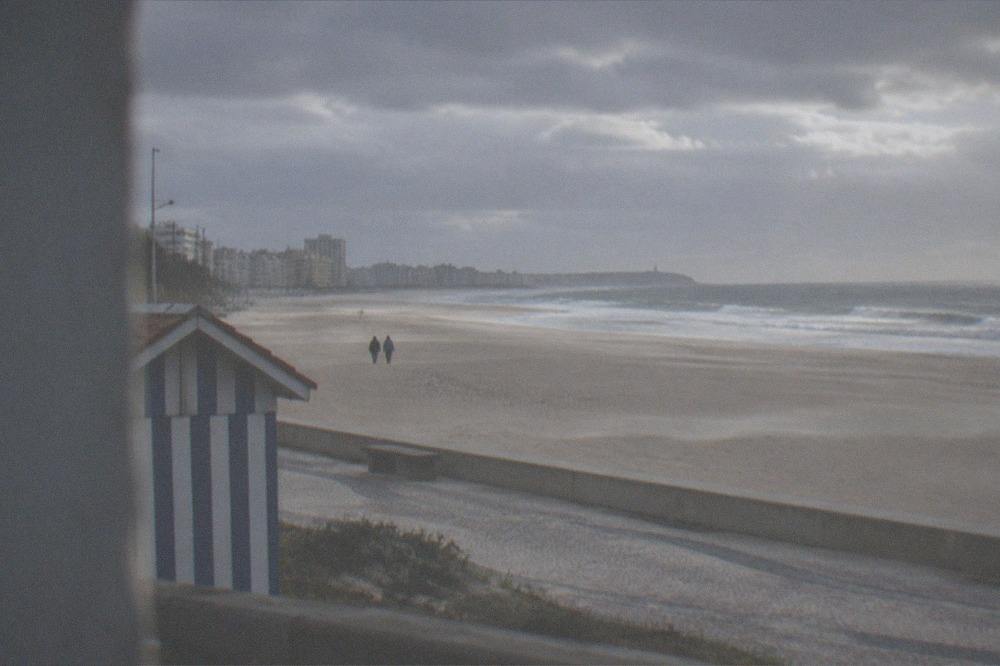
If the coast is what drew you to Aveiro, be careful about substituting a "beach near Coimbra": the city has none, and the nearest verified coastal options are district-level destinations like Figueira da Foz, covered on the beaches-near-Coimbra page. The Lousã and Tomar day-trip pages round out the inland options.
What Should You Know Before Booking Anything in Coimbra or Aveiro?
Three closures and one booking rule matter in 2026: the Museu Nacional de Machado de Castro is closed for conservation work, the Torre da Universidade clock tower is closed to the public, and Mosteiro de Santa Clara-a-Velha has been closed for requalification works since October 2025, while the Biblioteca Joanina admits only 50 people every 20 minutes and cannot be visited without the 16.50 EUR combined university ticket.
The Joanina rule is the one that actually bites. The library's entry is limited to 50 people every 20 minutes, the time printed on the ticket is the library slot specifically, entry outside that slot is refused, and online purchase closes 20 minutes before the visit. The rest of the combined ticket is valid for two days, but the library slot is fixed. In summer a visitor who arrives without a pre-booked slot can simply be turned away, which is why the Joanina Library tickets guide exists and why the university tours that include tickets are worth their premium. The university and university-tickets pages carry the full price table.

Common Questions About the Coimbra to Aveiro Day Trip
Can you do a day trip from Coimbra to Aveiro?
Yes. The two cities sit on the same north-south rail corridor operated by CP, Comboios de Portugal, and the trip is one of the standard day excursions from Coimbra. Check the operator's own site for the current timetable, fares and stopping pattern, as this site publishes no unverified journey times. A full-day guided tour covering both Coimbra and Aveiro, with an Aveiro boat ride included, is listed from $114 per person.
How do I get from Coimbra to Aveiro?
By train on the Linha do Norte corridor, or by car. Coimbra has two stations with confusingly similar names, Coimbra-B and Coimbra-A, in different places; which services call at which, and whether the shuttle between them is included in a long-distance ticket, should be confirmed with CP itself, whose passenger site is the place to check the stopping pattern and the shuttle.
Is Aveiro worth a day trip?
For most travellers, yes: the canal network, the painted moliceiro boats and the Art Nouveau quarter are concentrated in a compact, flat, walkable centre, and the city contrasts completely with hilltop Coimbra. The signature boat trips are booked from canal-side kiosks at prices set by the operators on the day, so check at the kiosk rather than trusting a fixed figure.
What is there to do in Aveiro in one day?
A moliceiro boat trip on the Central Canal, a walk through the fish-market quarter, the Art Nouveau museum and streets, the azulejo-covered railway station, and, if time allows, the striped fishermen's houses of Costa Nova on the sand bar. Lunch on local fish and the ovos moles sweets rounds out the day before the train back.
Is Coimbra close to the sea?
The city of Coimbra is not coastal and has no beach: it sits inland on the River Mondego. The district of Coimbra reaches the Atlantic and contains Figueira da Foz, but that is a different level of geography. Aveiro, by contrast, is genuinely coastal, sitting on a lagoon system that opens to the Atlantic, which is part of why the pairing works so well.
What is the best month for the trip?
May, June, September and early October. IPMA's 1991 to 2020 normals for the Coimbra / Bencanta station show June at a 26.3 C mean maximum with only 26 mm of rain and September at 27.4 C with 49.9 mm, while the heavy rain holds off until October, when the monthly total jumps to 114.5 mm. August is the hottest month, averaging 10.9 days above 30 C.
The Coimbra to Aveiro day trip is, in the end, the easiest good decision in central Portugal: one train corridor, one flat canal city, one boat trip, and a hillside of students waiting when you get back. Plan the Joanina slot before you leave Coimbra, check the CP timetable the night before, and let the moliceiro boats take care of the rest.