The Bairrada Wine Route Near Coimbra
The Bairrada wine region begins south of Coimbra, Portugal, and it pairs one of the country's most distinctive red grapes with its most famous roast pig.
Short answer
The Bairrada wine route is the wine country directly south of Coimbra in central Portugal, known above all for the Baga grape and for leitão da Bairrada, the suckling pig roast that is the region's signature dish. It works as a day trip by car from the city, and the food-and-wine pairing tradition behind it is older than any visitor infrastructure.
Coimbra, Portugal, the university city on the River Mondego, sits at the northern edge of one of the country's most distinctive wine regions. The Bairrada, whose name comes from the Portuguese word for clay, "barro", the heavy soil that defines its vineyards, stretches south from the city towards Mealhada and beyond. It is a region that visitors to Coimbra routinely drive through on the way between Porto and Lisbon without ever stopping, which is a mistake, because it holds two of central Portugal's best food-and-wine traditions: the Baga grape and leitão da Bairrada, the suckling pig roast that carries the region's name.
This guide from Coimbra Travel Guide covers what the Bairrada wine route actually is, what grows there, how the region eats, and how to fold it into a Coimbra trip. One honest note up front, consistent with how this site works: no winery, restaurant or producer in the Bairrada had its prices, opening hours or addresses verified for this build, so nothing below names a business with an operational claim attached. What the page does instead is explain the region, its grape and its traditions, and point to the verified Coimbra-side facts, from the city's own climate record to the tours that leave from it.
What Is the Bairrada Wine Route?
The Bairrada wine route is the wine region lying immediately south of Coimbra in central Portugal, a low, clay-soiled landscape of vineyards, pine forest and small towns centred on Mealhada, and it is named after that clay, "barro", rather than after any single town. Its route, in practice, is a loose string of producers, wine museums and roast-pig restaurants rather than one signed scenic drive, and its two signatures are the Baga grape and leitão da Bairrada.
The region's identity is unusually tied to one grape. Baga is a thick-skinned, late-ripening red variety that produces wines with deep colour, firm tannins and high acidity, and for most of the twentieth century it was the backbone of Bairrada reds. The same acidity that made those wines famously demanding in youth is what lets the best examples age for decades, and it is also what makes Bairrada a natural home for sparkling wine, where acidity is an asset rather than a fault.
What makes the route interesting from Coimbra specifically is proximity. The Bairrada is the wine country the city sits next to, not a region you cross half the country to reach. That shapes the rhythm of a visit: most travellers treat it as a long lunch and a tasting, a half-day loop out of the city, rather than the multi-day itinerary that the Douro demands. If you are planning a wider stay, the site's three-day Coimbra itinerary shows where such a half-day fits.
The region's food reputation is, honestly, bigger than its wine reputation among Portuguese travellers. Ask a Portuguese person about Bairrada and the first word back will usually be "leitão", the roast suckling pig, not the name of a grape. The two belong together, and the pairing is the reason the route exists as a destination at all.
Which Wines and Grapes Define the Bairrada?
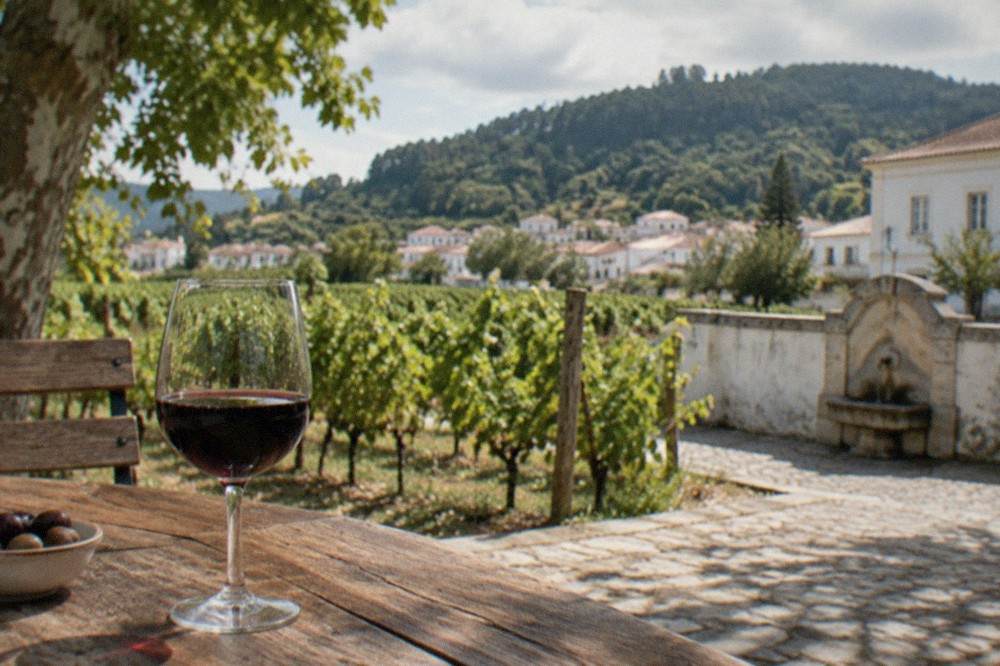
Bairrada is defined above all by the Baga red grape, a thick-skinned, high-acid variety that gives the region's reds their colour, tannin and age-worthiness, and by a sparkling-wine tradition built on the same acidity, following the classic bottle-fermented method. White plantings, including Bical and Maria Gomes, the local name for Fernão Pires, supply the fresh whites and the base wines for those sparkling wines.
Baga is the story. It ripens late, which matters in a coastal-influenced climate, and its thick skins demand real winemaking skill: handled carelessly it gives hard, astringent wines, which is exactly the reputation Bairrada reds carried for a generation. Handled well, and increasingly with the gentler extraction methods that came in over recent decades, it gives structured reds with savoury depth that reward years in the cellar. The grape is not unique to Bairrada, but nowhere else is it so central to a region's identity.
The sparkling wines deserve equal billing. Bairrada has a long tradition of méthode classique production, the same bottle-fermentation used in Champagne, and the regional climate suits it: grapes that struggle to ripen fully are exactly what you want for a base wine with low alcohol and crackling acidity. A chilled Bairrada sparkling wine is the standard local aperitif before a plate of leitão.
For planning purposes, here is how the region's wine styles sort out:
| Wine style | Typical grape base | Character |
|---|---|---|
| Red | Baga, sometimes blended | Deep colour, firm tannins, high acidity, savoury, age-worthy |
| Sparkling white | Bical, Maria Gomes, Arinto | Dry, crisp, bottle-fermented, citrus and brioche notes |
| Still white | Maria Gomes, Bical | Fresh, light, often drunk young |
| Rosé | Baga | Dry, bright, high acid |
Tasting rooms in the region range from large historic producers to small family quintas, and since none of their hours or fees were verified for this site, the honest advice is to decide what kind of visit you want, a structured tasting, a vineyard walk or a simple lunch with a bottle, and confirm arrangements with the producer directly. The site's general wine tasting guide covers how to read a Portuguese tasting room and what a tasting fee normally covers, and the answers page on Portugal's best wine tasting puts Bairrada in its national context.
How do You Plan a Bairrada Day Trip from Coimbra?
The practical shape of a Bairrada day trip from Coimbra is a car loop: out of the city south towards the Mealhada area, a vineyard or producer visit in the late morning, a long leitão lunch, and a second stop or a sparkling-wine tasting in the afternoon before returning. Public transport serves the main towns but ties you to timetables, and a hired car is how the region is genuinely seen, since the producers are scattered across country roads rather than strung along one street.
Start from the car question. The site's car rental guide covers renting in Coimbra itself, which avoids the city-driving question entirely: pick up after a few days in town, do the Bairrada loop, and drop the car before moving on by train. If you are arriving by rail, note that Coimbra has two stations with confusingly similar names, in different places, and that CP, Comboios de Portugal, is the operator whose passenger site you check for stopping patterns and connections; this build could not verify which services call where, so it will not pretend to.
The rhythm matters more than the route. Portuguese lunch is the anchor of the day, and in Bairrada lunch is not a sandwich. A leitão house at midday, followed by an afternoon tasting, is the classic sequence, and it is a better one than trying to taste on an empty stomach first. Harvest season, roughly late summer into autumn, is when the vineyards are at their most photogenic, though any visit outside deep winter will find working cellars.
A rough planning frame:
| Time of day | Activity | Notes |
|---|---|---|
| Morning | Drive south from Coimbra | Allow a relaxed start; nothing in the region opens early |
| Late morning | Producer or vineyard visit | Book directly; hours vary and were not verified here |
| Midday | Long leitão lunch | The region's signature meal, eaten slowly |
| Afternoon | Second tasting or sparkling producer | Or a walk to reset before driving |
| Evening | Return to Coimbra | Sunset over the vineyard country on the way back |
One warning worth making explicit: this is a wine region, and the honest way to do it is with a designated driver, a paid driver-guide, or a tour that includes transport. The temptation to "just one more taste" and then drive is real, and the roads back into Coimbra are country roads. If nobody in your group wants to stay sober, a guided option is not a luxury, it is the plan.
Before heading south, it helps to actually know Coimbra. The Coimbra: Adventure, Discovery & Learning with a Local tour is a three-hour small-group walk with a local guide, rated 4.9 from 55 reviews and priced from $40 per person, that covers the city's history and traditions in a way that makes the food you eat in Bairrada afterwards make more sense. Check availability
What Is Leitão da Bairrada and Why Is It Famous?
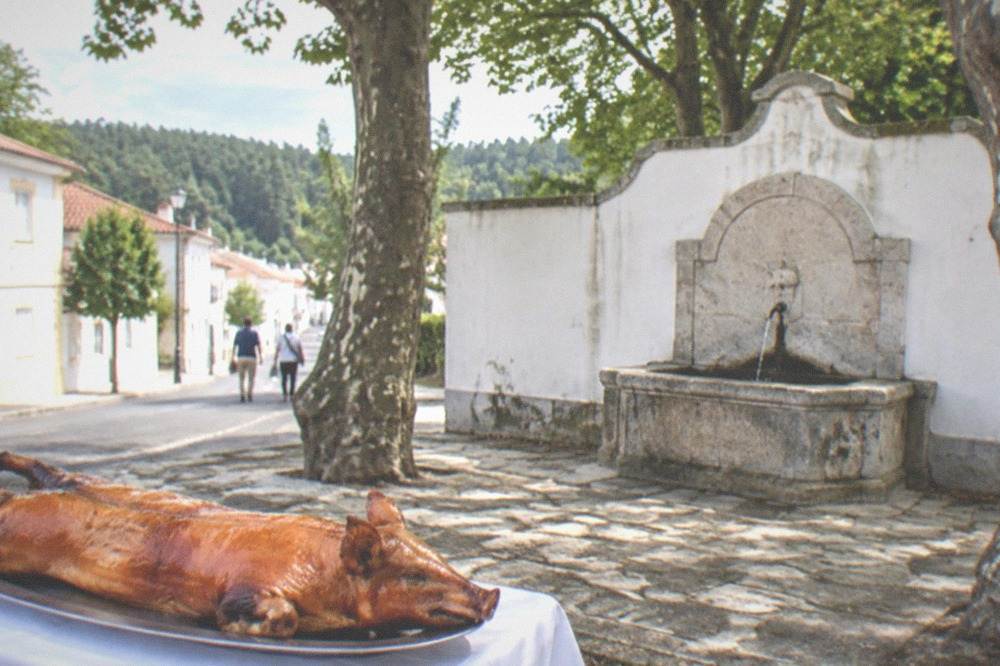
Leitão da Bairrada is the region's roast suckling pig, a young pig seasoned with garlic, pepper, lard and coarse salt, slow-roasted whole over an open wood fire until the skin shatters like glass and the meat underneath stays succulent, and it is legally protected as a regional specialty, meaning the name carries rules about what it is and where it is produced. It is the dish the region is nationally famous for, more famous than its wine among many Portuguese.
The technique is the point. A whole small pig, typically just a few weeks old, is split and flattened, marinated, and roasted in front of a wood fire, basted and turned for a couple of hours. Done right, the skin comes out in crackling sheets and the flesh is almost spoon-soft. Done wrong, and every region has its failures, it is greasy and dull. The dish's fame rests on the ceiling of what the method reaches at its best.
The pairing is not an accident. The traditional accompaniments are Bairrada sparkling wine, whose acidity and bubbles cut the richness of the pork and the fat of the skin, plus boiled potatoes, orange slices and a simple salad. It is one of the clearest examples in Portuguese cooking of a regional dish and a regional wine growing up together, and the sparkling wine is not a modern marketing match but the way the meal has always been eaten.
The site's dedicated leitão and Bairrada guide goes deeper into the dish's history and where the tradition sits in Portuguese food culture, and the broader guide to what Coimbra eats covers the city-side places to understand the region's table. Because no individual restaurant's hours, address or prices were verified for this build, this page will not tell you which leitão house to book, but it will tell you how to judge one: wood fire, whole pigs visible, local crowds at one in the afternoon, and sparkling wine on the list by the glass.
When Is the Best Time of Year for the Bairrada Route?
The best months for the Bairrada wine route are May and June, when the vineyards are green, the weather is warm but not yet at summer peaks, and rain is at its lowest of the whole year, and September, which in the Coimbra climate record is hotter than June on average and only modestly wetter, with harvest activity in the vineyards. Midsummer is the hottest and driest stretch, and October is when the autumn rain arrives in force.
That is not a guess, it is the city's own climate record. IPMA's 1991 to 2020 normals for the Coimbra / Bencanta station, the city's own station 3 km from the centre, show the pattern clearly, and since the Bairrada lies immediately south at similar elevation, the same record describes the wine country:
| Month | Mean max C | Mean min C | Rain mm | Days 1mm+ rain |
|---|---|---|---|---|
| April | 20.5 | 9.4 | 84.6 | 10.6 |
| May | 23.3 | 11.8 | 64.7 | 8.5 |
| June | 26.3 | 14.2 | 26.0 | 3.7 |
| July | 28.5 | 15.6 | 8.9 | 1.7 |
| August | 29.1 | 15.7 | 14.8 | 2.2 |
| September | 27.4 | 14.1 | 49.9 | 5.2 |
| October | 23.2 | 11.9 | 114.5 | 10.3 |
Two details in that table are worth spelling out, because most guides get them backwards. September's mean maximum, 27.4 C, is higher than June's 26.3 C, and September is also wetter than June, 49.9 mm against 26.0 mm. The real story is that the rain holds off until October, when the monthly total jumps to 114.5 mm, and November is wetter still at 121.5 mm. So a September visit gets harvest-season energy, near-summer warmth, and a real but manageable chance of a shower, while October trades a few degrees of warmth for more than double the rain.
Midsummer, July and August, is genuinely hot: August averages 10.9 days above 30 C, and the station's record maximum is 41.2 C, set on 7 August 2016. A vineyard visit in that heat is best done in the morning, with lunch indoors and the serious tasting after the day cools. Winter visits work, cellars do not close for cold, but the vineyards are bare and the roast-pig houses, not the vines, become the whole point. The site's month-by-month weather guide and best time to visit guide extend this for the trip as a whole.
How Much Does a Bairrada Wine Trip from Coimbra Cost?
A Bairrada day trip's costs fall into three parts: the Coimbra sights you pair it with, which run from 3.00 EUR at Sé Velha to 16.50 EUR for the University of Coimbra's combined ticket with the Joanina Library, the transport, a hired car day or a guided tour, and the region's own food and drink, where tasting fees and lunch prices were not verified for this build and must be checked with each producer and restaurant directly.
The Coimbra side is fully verifiable, so here is what the official sources publish for the city you start from:
| Coimbra site | Adult price | Source basis |
|---|---|---|
| University of Coimbra combined ticket with Joanina Library | 16.50 EUR | University's own visit site, valid 2026 season |
| University of Coimbra ticket without Joanina Library | 12.50 EUR | University's own visit site |
| Sé Velha de Coimbra | 3.00 EUR | Parish operator's visitor page |
| Mosteiro de Santa Cruz | 5.00 EUR | Parish operator's visitor page |
| Museu Nacional de Conímbriga, museum and ruins | 10.00 EUR | National museums portal |
Two warnings from the verified record. The Biblioteca Joanina cannot be bought on its own; it exists only inside that 16.50 EUR combined ticket, and the time printed on the ticket is the library's timed slot, with entry capped at 50 people every 20 minutes, so summer visitors without a pre-booked slot can be turned away. And the Museu Nacional de Machado de Castro is closed for conservation work, so no price for it is published here. The site's Joanina Library tickets guide and university tickets guide carry the full detail.
The Bairrada side is different, and this page will stay honest about it. Tasting fees at Portuguese producers typically run modest, and a leitão lunch is priced per person or per portion, but no figure for any named Bairrada producer or restaurant was verified on this build, so none appears here. Budget as you would for a good regional restaurant meal plus a tasting or two, and confirm prices when you book. What can be stated with confidence is the shape of the spend: transport, one long lunch, and one or two tastings cover a full day, and the region is not one that rewards stacking five visits into an afternoon.
Which Coimbra Tours Pair Well with a Bairrada Trip?
The tours that pair best with a Bairrada wine day are the city tours that give you Coimbra's context in half a day or less, leaving the other half free for the wine country, and the half-day countryside tours that show you the landscape of the wider region. The strongest pairing on the roster is Coimbra: Adventure, Discovery & Learning with a Local, a three-hour guided experience from $40 per person rated 4.9 from 55 reviews, which fits naturally before or after a day in the vineyards.
The logic is simple. The Bairrada trip is a half-day-to-full-day excursion, and Coimbra itself deserves at least a full day, so the efficient plan is a guided city experience on one day and the wine loop on another. On the city side, the Coimbra Top Attractions Walking Tour, from $5.85 per person and rated 5 from 151 reviews over 2 hours 30 minutes, is the budget option that covers the university hill and the old town, and the Discovering the charms and places of Coimbra walk, from $52.68 per person over 3 to 4 hours, goes deeper.
On the countryside side, the half-day schist-village tours into the Serra da Lousã, such as Schist Villages at Lousa Mountain, from $105.37 per person and rated 4.9 from 133 reviews, show the forested half of the region that the vineyards do not, and the soft canyoning trip on the river Ceira, from $58.54 per person and rated 4.9 from 79 reviews, adds an active morning. Neither is a wine tour, but both are the same kind of half-day loop out of Coimbra, and travellers with three or more days mix them.
A comparison of the natural pairings:
| Tour | Kind | From (per person) | Rating | Length |
|---|---|---|---|---|
| Coimbra: Adventure, Discovery & Learning with a Local | City, guided | $40 | 4.9 from 55 reviews | 3 hours |
| Coimbra Top Attractions Walking Tour | City walk | $5.85 | 5 from 151 reviews | 2h 30m |
| Schist Villages at Lousa Mountain | Countryside half-day | $105.37 | 4.9 from 133 reviews | 4 hours |
| Soft Canyoning, river Ceira | Active half-day | $58.54 | 4.9 from 79 reviews | 4h 30m |
For the city tours, the free-walking option is also worth knowing about: GuruWalk runs several tip-based walks in Coimbra, including the Coimbra Highlights, History & Traditions walk led by a certified guide, rated 4.95 from 226 reviews, which is free to join with tips at the end. It is not this site's product and carries no price here, but for a traveller budgeting around a Bairrada lunch, a free orientation walk the day before is a genuinely useful combination, and the fixed-price local-guided alternative is listed above with its live availability link.
Common Questions About the Bairrada Wine Route Near Coimbra
What is the Bairrada wine route?
The Bairrada is the wine region immediately south of Coimbra in central Portugal, named after the clay soil, "barro", that defines its vineyards. Its route is a loose string of producers and roast-pig restaurants centred on the Mealhada area rather than one signed scenic drive, and its signatures are the Baga grape and leitão da Bairrada.
What grape is Bairrada known for?
Baga, a thick-skinned, late-ripening red grape that gives the region's wines deep colour, firm tannins and high acidity. The same acidity underpins Bairrada's long sparkling-wine tradition, made by the classic bottle-fermented method.
What food is Bairrada famous for?
Leitão da Bairrada, roast suckling pig, seasoned with garlic, pepper, lard and salt and slow-roasted whole over a wood fire until the skin crackles. It is traditionally eaten with Bairrada sparkling wine, boiled potatoes and orange slices, and the dish's name is regionally protected.
Can you visit the Bairrada as a day trip from Coimbra?
Yes, and that is how most visitors do it. The region lies directly south of the city, and the classic day is a car loop with a late-morning vineyard visit, a long leitão lunch and an afternoon tasting. A hired car is the practical way to reach scattered producers, and a designated driver or a guided tour with transport is the honest plan in a wine region.
When is the best time to visit the Bairrada wine region?
May and June, when the vineyards are green and rain is at its annual low, and September, which the Coimbra climate record shows is hotter than June on average and only modestly wetter, with harvest activity in the fields. October is when the autumn rain arrives in force, jumping to 114.5 mm in the city's own station record.
Are there wine tours of the Bairrada from Coimbra?
This site's verified roster does not include a dedicated Bairrada wine tour from Coimbra, so it will not invent one. The practical alternatives are a self-driven loop, or pairing a Coimbra city tour with your own arrangements in the wine country; the tours listed on this page are the city and countryside options that were verified.
The Bairrada rewards exactly the kind of traveller Coimbra attracts: someone who wants a strong regional lunch, a distinctive grape they cannot taste at home, and a half-day of country roads between them. Plan the driver, book the lunch, trust the sparkling wine with the pig, and the region delivers the rest.