What Are Some Traditional Coimbra Restaurants?
A guide to the traditional eating places of Coimbra, Portugal: tascas, historic cafés, student repúblicas and fado houses, and the dishes to order in each.
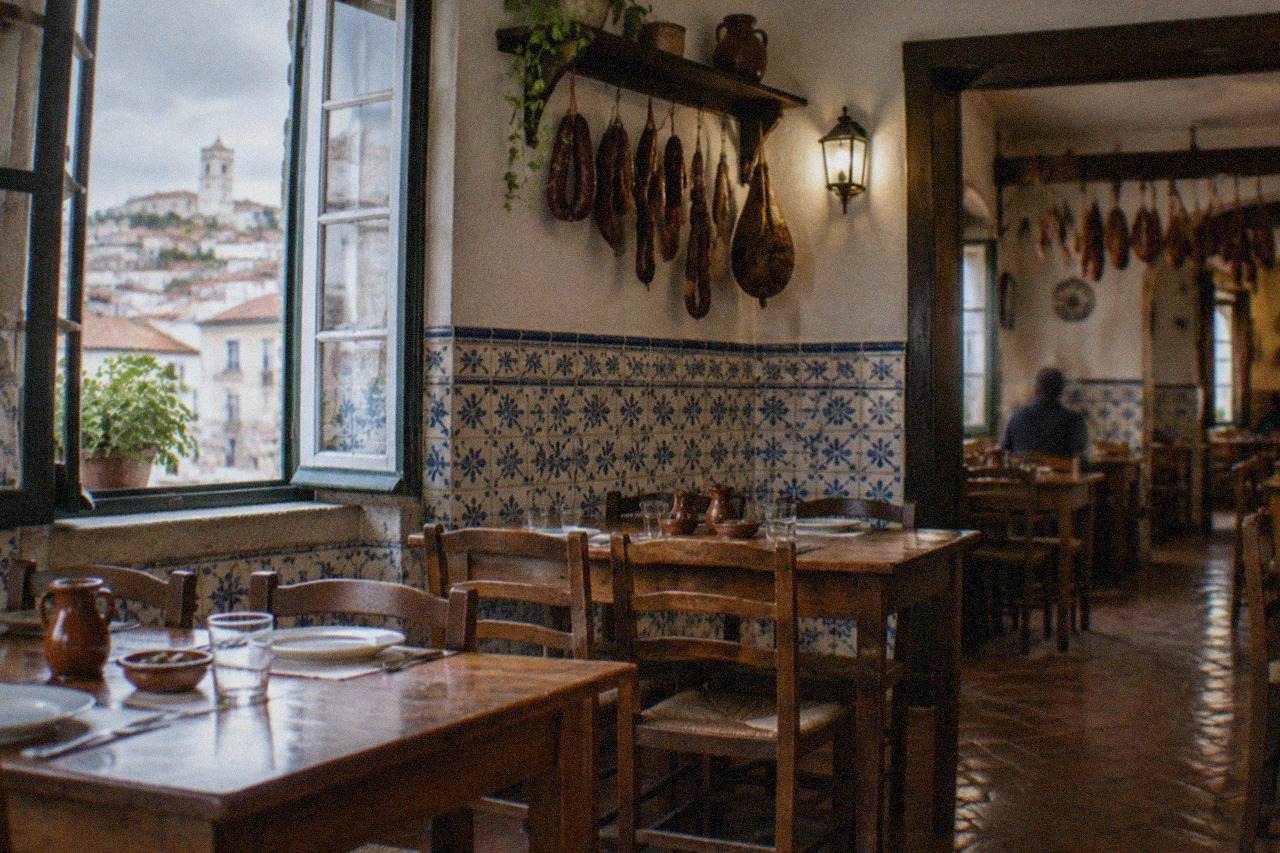
Coimbra, Portugal, the university city on the River Mondego, does not eat the way the coastal capitals do. Its traditional restaurants grew up around a student population of about 31,000, according to the University's own published figures, and around the rural Bairrada and Beira food cultures that surround it, so the city's classic eating places are modest, tiled, loud and cheap by instinct: the tasca, the casa de pasto, the historic café, the student república at its open table, and the fado house where dinner and song share a room. None of the prices, opening hours or addresses of individual Coimbra restaurants were verified for this site, so this page describes what distinguishes each kind of place and what to order in it, rather than asserting facts about one venue. For a fuller treatment, the site's Coimbra restaurant guide goes deeper.
What Are Some Traditional Coimbra Restaurants?
The traditional eating places of Coimbra, Portugal fall into five recognisable types: the tasca, a small family-run room serving grilled fish, offal and cheap wine; the casa de pasto, a heftier daily-plate house; the historic tiled café of the Baixa, several of which date to the nineteenth and early twentieth centuries; the student república, where communal student tables open to outsiders on fixed nights; and the fado house, where Coimbra's male-voiced fado is sung over dinner and a glass of port. Names change and rooms close, but a visitor who can recognise these five shapes can find a traditional meal in Coimbra on any street without a single recommendation.
The tasca is the backbone. It is usually a narrow room, a handful of tables, a counter with the day's dishes under glass, and an owner who cooks. What comes out is whatever the market and the season gave that morning. The casa de pasto is its larger cousin, built around a fixed daily plate rather than a long menu, and it is where the city's older families eat at midday.
The historic cafés are a Coimbra speciality. The Baixa, the low downtown grid between the river and the university hill, holds a cluster of ornate nineteenth-century cafés with mirrored walls, marble counters and waiters in white jackets, and they function as living rooms for the city: coffee in the morning, a pastry at eleven, an evening drink before dinner. The site's guide to Coimbra's historic cafés covers the type in detail, and the old town guide maps where they sit.
The repúblicas, the centuries-old student houses of the university, are the least known of the five and the most Coimbra-specific. Several hold open communal dinners on set nights during term, where strangers pay a small fixed sum, eat a big shared pot of food, and are expected to sing. The repúblicas guide on this site explains the tradition and the etiquette, and the student traditions guide gives the surrounding culture.
The fado house closes the list, and it is the one type where booking ahead genuinely matters, because the rooms are small and the shows are short. Coimbra fado is a distinct tradition from Lisbon's: sung by men in the black capa of the student, historically from the stairways and at night, and tied to the university rather than the docks. The fado de Coimbra guide covers the music; the eating side of it is below.
What Traditional Dishes Should You Order in Coimbra?
The dishes to look for are leitão da Bairrada, the roast suckling pig of the region just west of the city; chanfana, goat or lamb slow-cooked in red wine; the grilled river fish of the Mondego; bacalhau in its many daily preparations; sopa do dia and the heavy soups of the Beira interior; arrufadas, the city's signature sweet bun; and the pork, offal and rice dishes that tascas have always used to feed students cheaply. None of these is a restaurant's invention; they are the food of the Bairrada wine country and the Beira hills that surround Coimbra, and a traditional room will cook several of them on any given day.
Leitão da Bairrada is the regional signature. The Bairrada, the wine region west of Coimbra in the district of the same name, produces the pig, and the classic presentation is whole, spit-roasted, served with the skin crackling and the local sparkling wine or a Bairrada red alongside. The site's leitão and the Bairrada guide treats the dish and its wine properly.
| Dish | What it is | Which traditional place serves it best |
|---|---|---|
| Leitão da Bairrada | Spit-roast suckling pig with crackling skin, from the Bairrada wine country | Casa de pasto and specialist roast houses, especially west of the city |
| Chanfana | Goat or lamb braised for hours in red wine, a Beira interior dish | Tascas and country-style rooms, usually as a weekend plate |
| Grilled river fish | Sardines, eel and Mondego river fish, simply grilled | Tascas near the market and the riverside |
| Bacalhau | Salt cod, a different daily preparation, from boiled with everything to baked with cream | Every type, the daily plate in most tascas |
| Arrufadas | Coimbra's round, sugar-dusted sweet bun, an old city bakery tradition | Historic cafés and the city's pastry counters |
| Sopa do dia | Whatever soup the morning produced, often bean or bread-based | Every type without exception |
The pattern to notice is that nothing on that table is fancy. Coimbra's traditional food is peasant and student food, raised to a tradition, and the city's best rooms are the ones that never tried to be anything else. The what to eat in Coimbra guide, the traditional dishes guide and the answer page what food is Coimbra famous for expand every one of these dishes; the pastries and arrufadas guide handles the sweet side.
A guided walk is a good way to see the layout before dinner, because Coimbra's eating geography follows its vertical geography: the university hill above, the Baixa grid in the middle, the river at the bottom, and the traditional rooms scattered along the seams between them.
Where in Coimbra Do the Traditional Places Cluster?
The traditional rooms cluster in four zones: the Baixa, the low downtown grid of streets between the river and the hill, where the historic cafés and most tascas sit; the streets immediately below the university gate at Arco de Almedina, where student money keeps prices honest; the Largo das Ameias and Santa Clara side, across the river, where the old quarters hold quieter family rooms; and the market streets around Mercado D. Pedro V, where the fish and produce arrive and the tascas cook them the same day. A visitor staying in the Baixa is within walking distance of all four.
The Baixa is the practical base. The grid of Rua Ferreira Borges, Rua da Sofia and the streets between them holds the cafés, the tascas and the highest density of eating rooms in the city, and it is flat, which matters in a city whose university sits on a hill. The Baixa downtown guide and the city centre guide on this site map it street by street, and the where to stay answer confirms it as the standard choice.

The university seam is different in character. The streets just below the Arco de Almedina and around the Sé Velha serve the student body, so the rooms are cheaper, louder and later, and the repúblicas sit in this belt. The Arco de Almedina guide and the Alta upper town guide cover the hill itself.
Across the river, the Santa Clara side holds the old quarter around the ruined monastery, and its rooms are the quiet family kind that locals keep to themselves. The Santa Clara district guide covers the ground, and the map guide ties the whole city together.
One honest warning about this geography: Coimbra is a city of hills, and the walk back up from the riverside to the university hill after a long dinner is steep. The walkability answer and the hills and accessibility guide on this site treat the slopes properly, and the getting around guide covers the buses and the Elevador do Mercado, the public lift that links the Baixa to the upper town.
How do Fado and Dinner Work Together in Coimbra?
In Coimbra, Portugal, fado and dining share a room rather than merely coexisting: the traditional fado houses serve dinner or at minimum a drink while the singers perform, the audience stays silent for the duration of each song, and the classic pairing is a glass of port wine, which is what the city's best-known fado experience, a 50-minute live show with a glass of port included, from 18 USD per person and rated 4.7 from 1,234 reviews on the operator's live listing, is built around. Fado in Coimbra is sung by men, often students or former students in the black capa, and the tradition belongs to the university, not the port.
The etiquette matters more than the food. When the guitarra de Coimbra, the twelve-string pear-shaped guitar that distinguishes this city's fado from Lisbon's, starts the introductory flourish, conversation stops, and it stops completely. Applause follows the last line, and the shouted appreciation, when it comes, is its own small ritual. A visitor who eats through the songs will be noticed. The fado de Coimbra guide covers the whole tradition and the nightlife guide places the fado rooms among the city's other evening options.
The show format suits a dinner evening well: fifty minutes is short enough to plan a meal around, the port wine is part of the ticket rather than an extra, and the room does the traditional work of combining food, drink and song in one place. Check availability on the operator's live listing for current times, since no fado house's schedule was verified for this site.
What Should You Know Before Eating Out in Coimbra?
The practical rules are few: tip modestly, a few percent or rounding up, because service is included by law in Portugal; expect to pay the municipal tourist tax of 1.00 EUR per person per night, capped at three nights and from age 16, at your accommodation rather than at any restaurant; eat later than you might at home, with the Portuguese dinner hour starting around 20:00; and do not rely on any single restaurant being open, because no Coimbra venue's hours were verified for this site. Plan around types of place and dishes, not around one name.
The tax is worth knowing in advance because it surprises people. The municipality's own service page sets it at 1.00 EUR per guest per overnight stay, in force since 5 April 2023, payable at the accommodation, with no low-season exemption. In July 2026 the municipality's Executive approved a proposal to raise it to two euros, but until the municipal tax pages themselves say 2.00 EUR, the published rate remains one euro.
On tipping, the full treatment is in the answer page is it customary to tip in Coimbra restaurants. The short version: nobody will chase you for a tip, nobody expects an American percentage, and a euro or two on a good meal is the local register.
On choosing a room without recommendations, use the five shapes from the top of this page. A room with a short handwritten list, a counter of the day's food, and locals eating at midday is a tasca doing its job. A mirrored café with a marble counter and waiters in white is the historic café tradition. A doorway with students in capes and a hand-written price for a communal dinner is a república night. A small room with a stage, chairs facing it and port wine on the list is a fado house. Every one of those shapes is a traditional Coimbra restaurant, and the city's answer to the question of where to eat is really an answer about learning to read them.
Common Questions About Traditional Coimbra Restaurants
What are some traditional coimbra restaurants?
The traditional eating places of Coimbra, Portugal fall into five types: the tasca, the casa de pasto, the historic tiled café of the Baixa, the student república at its open communal table, and the fado house where dinner and Coimbra's male-voiced fado share a room. Names change and rooms close, so recognise the type rather than chasing one name.
What is the most traditional dish to eat in Coimbra?
Leitão da Bairrada, the spit-roast suckling pig of the Bairrada wine country west of the city, is the regional signature, closely followed by chanfana, goat or lamb slow-cooked in red wine, and the grilled fish of the Mondego. Arrufadas, the city's sugar-dusted sweet bun, is the traditional finish at a historic café.
Can you eat at a student república in Coimbra as a visitor?
Several of the university's centuries-old student houses hold open communal dinners on set nights during term, where outsiders pay a small fixed sum, share a big pot of food and are expected to join the singing. The tradition belongs to the university's student culture, and the repúblicas guide on this site explains the etiquette.
Is Coimbra fado different from Lisbon fado?
Yes. Coimbra fado is sung by men, often students or former students in the black capa, accompanied by the twelve-string guitarra de Coimbra, and it grew out of the university rather than the port. In the fado houses the audience stays silent for each song, and a glass of port wine is the traditional accompaniment.
Do you need to book a traditional restaurant in Coimbra in advance?
For tascas and cafés, no. For fado houses, yes, because the rooms are small and the shows are short, and the best-known fado experience in the city is a 50-minute show with a glass of port wine included. No individual venue's opening hours were verified for this site, so check current times on the operator's live listing before you go.
Is dinner in Coimbra expensive?
Traditional Coimbra eating is modest by instinct, because it grew up feeding a student population the University puts at about 31,000. Tascas and casas de pasto price for locals and students, and the historic cafés are café-priced. The site's budget guide treats trip costs in full, but no individual restaurant's prices were verified for this page.
For where the dishes themselves come from, read the answer to what food is Coimbra famous for, and for one evening's plan that strings a walk, a tasca and a fado room together, the one day itinerary does exactly that. More on what makes this city distinctive is in the what is special about Coimbra, Portugal answer, and the full site overview lives at Coimbra Travel Guide.