What Is Famous About Coimbra?
Coimbra, Portugal is famous for its hilltop university, the baroque Biblioteca Joanina, student fado, the tombs of Portugal's first two kings and the Roman ruins of Conímbriga nearby.

Coimbra, Portugal, the university city on the River Mondego in the country's Centro region, is famous for one thing before all others: its university. Everything a visitor recognises about the place, the black student capes, the fado sung only by men, the hill crowned by a baroque library, the whole shape of the old town, exists because a medieval Portuguese institution decided to put its seat on this hill. This page sets out, fact by fact, what the city is actually known for, and it sticks to what official sources say rather than to the folklore that fills most guides. It is written by an editorial desk, and every figure below comes from the University's own pages, the municipality, the national museums portal or the Portuguese weather service.
What Is Famous About Coimbra?
Coimbra is famous for the University of Coimbra, whose hilltop core of the Alta and the college street of Rua da Sofia was inscribed by UNESCO in 2013; for the Biblioteca Joanina, a baroque library that admits only 50 people every 20 minutes and keeps bats that eat the insects which would damage the books; for fado de Coimbra, sung by students in black capes; and for the tombs of Portugal's first two kings in Mosteiro de Santa Cruz.
That is the honest short version, and one part of it is worth underlining immediately, because it is the single most common error in guides to this city. Coimbra is not a UNESCO World Heritage city. UNESCO inscribed two components inside the old town, the university hill and Rua da Sofia, list reference 1387, criteria (ii), (iv) and (vi). The Baixa, the riverside and the rest of the city carry no inscription at all. A guide that opens with "Coimbra, a UNESCO World Heritage city" has already told you it was written from other guides rather than from sources.
The fame also has a population behind it. The University publishes its own numbers on its homepage: about 31,000 students, 1,935 professors, 434 courses, 22 libraries and 4 campuses. That student mass is why the city feels the way it does, why the Repúblicas, the historic student houses, line the streets near the hill, and why the academic calendar interrupts the tourist circuit every May. For a fuller treatment of the city's reputation, the companion page why Coimbra is famous works through the question at greater length.
Why Is the University of Coimbra So Famous?
The University of Coimbra is famous as one of the oldest continuously operating universities in Europe, and its hilltop core, the Paço das Escolas with the Joanina Library, the Royal Palace and the Capela de São Miguel, was inscribed by UNESCO in 2013 together with the Rua da Sofia colleges. The University's own visit page states that the Joanina Library admits 50 people every 20 minutes, and it cannot be bought on its own: it exists only inside the 16.50 EUR combined ticket.
That 50-per-20-minutes ceiling is the most useful practical fact on this whole site, and almost no competing guide carries it. The University's own program page states the limit verbatim, and it explains why a visitor who turns up in summer without a pre-booked slot can be turned away: the date and time printed on the ticket is the library slot specifically, entry outside that slot is refused, and online purchase closes 20 minutes before the visit time. The other spaces on the combined ticket, the Royal Palace, the Capela de São Miguel, the Chemistry Laboratory, the Academic Museum, the Cabinet of Curiosities and the Mineral Gallery, can be visited before or after the library slot across two days.
The bats are real and officially documented. The University's own page for the Joanina explains that a colony of bats roosts in the building and eats the insects that would otherwise damage the book collection, which is why the tables are covered in leather at night. It sounds like a legend invented for tourists, and it is the reason the library's books have survived so well. The question of whether Coimbra has the oldest university in the world is answered separately, because the claim needs careful wording.
Here is what the University charges, from its own visit pages, stamped as valid for the 2026 season:
| Ticket | Adult price | What it includes |
|---|---|---|
| Joanina Library + University + Science Museum | 16.50 EUR | Baroque Library, Royal Palace, St Michael's Chapel, Chemistry Laboratory, Academic Museum, Cabinet of Curiosities, Mineral Gallery, valid 2 days |
| University + Science Museum | 12.50 EUR | The same list without the Joanina Library, valid 2 days |
| Guided tour, Palace of Schools | 25.00 EUR | Guide-led visit, 1 hour 30 minutes, meeting at the ticket kiosk in front of the Faculty of Medicine |
| Science Museum + UC Exploratório | 16.00 EUR | Laboratory, Academic Museum, Cabinet of Curiosities, Mineral Gallery and Exploratório, no Palace of Schools spaces |
One warning that matters for planning: the Torre da Universidade, the clock tower, is closed. The University's own information page states plainly that the facility is closed, so no tour and no itinerary should promise a tower climb. The same page lists the current cycle's closure dates for the whole visitor circuit, including 24 May, which is the day the circuit shuts for the year's biggest student festival.
A guided visit is the efficient way to see the famous core, because the hill is steep, the ticketing is tiered and the library slot is fixed. The guided tour of the University and city of Coimbra covers both the Paço das Escolas and the streets below in two to three hours, Check availability if that pace suits.
What Is Coimbra Fado and Why Is It Famous?
Fado de Coimbra is the city's own distinct school of Portuguese fado, sung traditionally by male students in the black academic cape, and it is famous for a darker, more ceremonial sound than Lisbon fado and for its close tie to student life and the Queima das Fitas festival. The city's live fado shows, some sold with a glass of port wine included, are among the most booked evening activities in Coimbra.
The two schools are genuinely different traditions, not regional accents of one thing. Coimbra fado grew out of the academic culture of the university: the singers were historically male students and former students, the repertoire is built around the city, the river and student longing, and the performance etiquette is more formal. Lisbon fado, by contrast, grew out of the streets and taverns of the capital with a different voice placement and a female star tradition. The question of what the most famous fado song is is examined on its own page, because the honest answer differs between the two cities.
What is officially verifiable about the student calendar is narrower than the festival mythology suggests. The University closes its visitor circuit on 24 May, and Mosteiro de Santa Cruz suspends visits on the Cortejo da Queima das Fitas, a moveable Sunday, because the parade passes its doors. Those two closures are published facts; the festival itself falls in May, and exact dates should be taken from the Associação Académica rather than from a guide.
What Else Is Coimbra Famous for? Kings, Ruins and the Table
Coimbra is also famous for the Mosteiro de Santa Cruz, the burial church of Portugal's first two kings, whose tombs sit in the monument's main space; for Conímbriga, one of the largest Roman town sites in Portugal, about 16 km south in the municipality of Condeixa-a-Nova; for leitão da Bairrada, the roast suckling pig of the surrounding wine region; and for Portugal dos Pequenitos, the miniature village built in the 1940s from the designs of architect Cassiano Branco.
The royal connection is the part most visitors under-rate. Portugal's first two kings are buried at Santa Cruz, in the heart of the Baixa, and the church's visitor operation, run by the Unidade Pastoral Aeminium, charges 5.00 EUR for an individual ticket covering the sacristy, the cloister and the tombs. The monument closes for the Queima parade, which tells you how central it still is to the city's living student traditions, not just to its history.
Conímbriga is the famous day trip, and the geography needs stating precisely: the ruins are in the parish of Condeixa-a-Velha, in the municipality of Condeixa-a-Nova, roughly 16 km south of the city. The Museu Nacional de Conímbriga charges 10.00 EUR for one combined ticket covering the museum and the ruins together, and it is open seven days a week, 10:00 to 18:00, which makes it the reliable Monday option when the monuments that close on Mondays are shut. The wider question of Roman ruins in Portugal puts Conímbriga in its national context.
The food fame belongs to the region as much as the city. Leitão da Bairrada, roast suckling pig, is the signature dish of the Bairrada wine country at the city's doorstep, and the question of what food Coimbra is famous for covers the table in detail. Beyond the table, the schist villages of the Serra da Lousã, stone hamages built along the mountain slopes, have become one of the most photographed inland attractions in central Portugal.
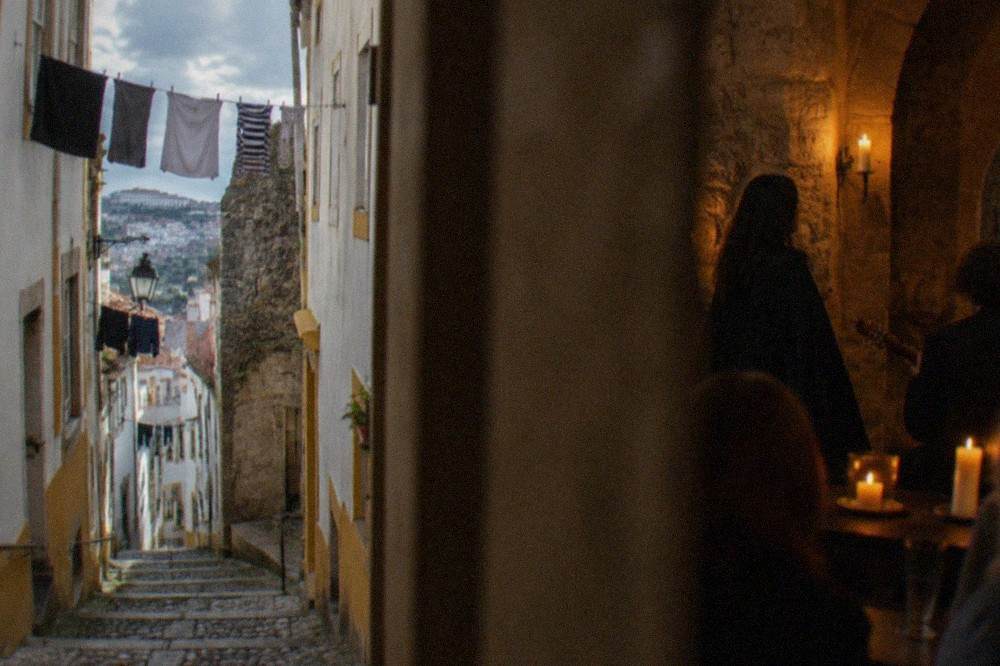
Here is the fame in one table, with the verified figures attached to each thing:
| What Coimbra is famous for | The verified fact behind the fame |
|---|---|
| The University of Coimbra | About 31,000 students published by the University; UNESCO inscribed the Alta and Sofia components in 2013, list reference 1387 |
| The Biblioteca Joanina | 50 people admitted every 20 minutes; sold only inside the 16.50 EUR combined ticket; a bat colony protects the books |
| Fado de Coimbra | A distinct student fado tradition, sung in the black academic cape, separate from Lisbon fado |
| Mosteiro de Santa Cruz | Burial church of Portugal's first two kings; individual ticket 5.00 EUR |
| Conímbriga | Roman town site about 16 km south in Condeixa-a-Nova; combined museum and ruins ticket 10.00 EUR |
| Portugal dos Pequenitos | Miniature village opened in 1940, designed by Cassiano Branco |
When Is the Best Time to See What Coimbra Is Famous For?
The best time to see what Coimbra is famous for is late spring and September, and the official climate data supports a specific recommendation: September, whose mean maximum of 27.4 C is higher than June's 26.3 C and which still receives only 49.9 mm of rain against October's 114.5 mm, combines summer warmth with thinning crowds. July, at 8.9 mm of rain, is effectively dry, while November is the wettest month at 121.5 mm.
Those figures come from IPMA's 1991 to 2020 climate normals for the Coimbra / Bencanta station, the city's own weather station about 3 km from the centre, and they overturn two pieces of received wisdom. The first is that September is a soft, damp shoulder month: it is hotter than June on the mean maximum and only modestly wetter. The second is that July is the hottest month: August is, on both the mean and the mean maximum, averaging 10.9 days above 30 C. The autumn rain genuinely holds off until October, when the monthly total jumps from 49.9 mm to 114.5 mm, and November edges past it at 121.5 mm.
Two practical notes complete the timing picture. First, the University runs a summer schedule from 1 April to 30 September, 09:00 to 20:00, and a winter schedule from 1 October to 31 March, 09:00 to 17:30, so the same ticket buys more evening in summer. Second, the city charges a municipal tourist tax of 1.00 EUR per guest per overnight stay, capped at three consecutive nights, from age 16, paid to the accommodation at check-in or check-out; a two-euro rate has been proposed by the municipality but is not the published rate, so budget on one euro. For the fuller seasonal argument, including what to pack, see the guide to what not to miss in Coimbra.
Common Questions About What Coimbra Is Famous For
The questions below are the ones readers ask most about Coimbra's fame, and each answer sticks to the same standard as the rest of this page: figures come from the University's own pages, the municipality, the national museums portal and IPMA's climate normals, and nothing is printed that an official source does not say.
What is famous about Coimbra?
The University of Coimbra and its hilltop core, inscribed by UNESCO in 2013 as "University of Coimbra, Alta and Sofia"; the Biblioteca Joanina, which admits 50 people every 20 minutes and shelters a colony of insect-eating bats; fado de Coimbra, sung by students in black capes; and the tombs of Portugal's first two kings in Mosteiro de Santa Cruz.
Is Coimbra a UNESCO World Heritage city?
No. UNESCO inscribed "University of Coimbra, Alta and Sofia" in 2013, list reference 1387: two components inside the old town, the university hill and the Rua da Sofia college street. The inscription does not cover the whole city, the Baixa or the riverside.
What is the most famous library in Coimbra?
The Biblioteca Joanina, the baroque library of the University of Coimbra. It cannot be bought on its own: it exists only inside the 16.50 EUR combined ticket, the time printed on the ticket is the library slot, and entry outside that slot is refused. The full story is on the page about the most famous library in Coimbra.
What food is Coimbra famous for?
Leitão da Bairrada, the roast suckling pig of the Bairrada region at the city's doorstep, is the signature dish most closely tied to Coimbra, alongside the pastries and arrufadas of the city's own bakeries.
Why is fado in Coimbra different from Lisbon fado?
Coimbra fado grew out of the university's academic culture, was sung traditionally by male students in the black cape, and carries a darker, more ceremonial register, while Lisbon fado grew from the streets of the capital with its own voice and star tradition.
How many students does the University of Coimbra have?
The University publishes about 31,000 students on its own homepage, alongside 1,935 professors and 434 courses, which is why the student calendar, including the May closures of the visitor circuit and of Santa Cruz, shapes the whole city.
The fame of this city, in the end, is unusually concentrated: one institution on one hill explains the library, the fado, the capes, the Repúblicas and the May parade, and the kings, the ruins and the suckling pig radiate outward from it. That is what a first visit should be built around, and it is what Coimbra Travel Guide exists to document, one verified figure at a time.