What Not to Miss in Coimbra?
The essential sights in Coimbra, Portugal: the Joanina Library, Paço das Escolas, Sé Velha, Mosteiro de Santa Cruz, Conímbriga and the schist villages, with current prices and closures.

Coimbra, Portugal, the university city on the River Mondego, is small enough that a determined visitor can see its essentials in two days, provided they know which essentials those are and which ones are currently closed. The University's own visit page, the parish site that runs the cathedrals and the national museums portal between them publish everything needed to plan it: the 16.50 EUR combined ticket that is the only way into the Joanina Library, the 50 people per 20 minutes ceiling that makes that library the one genuinely scarce sight in the city, and two closures, the Machado de Castro museum and the university clock tower, that catch out visitors who planned around older guidebooks.
What Not to Miss in Coimbra?
The four sights that define Coimbra are the Paço das Escolas with the Biblioteca Joanina, the Sé Velha, the Mosteiro de Santa Cruz and the Roman ruins of Conímbriga about 16 km south, and the Joanina Library needs booking ahead because the University limits entry to 50 people every 20 minutes. Everything else fits around those four, and two things should be dropped from any current plan: the Machado de Castro museum and the university clock tower are both closed.
That short list is not a ranking of personal favourites, it is what the official sources support. UNESCO inscribed "University of Coimbra – Alta and Sofia" in 2013, list reference 1387, and the inscription covers the university hill and the college street, not the whole city, which is why the Paço das Escolas leads the list. The Sé Velha and Santa Cruz predate the university's dominance and carry the city's older history: Santa Cruz is the burial church of Portugal's first two kings, which the parish's own heritage page states plainly. Conímbriga, a Roman town in the parish of Condeixa-a-Velha in the municipality of Condeixa-a-Nova, is the strongest day trip and the only major sight in the area open seven days a week, which makes it the reliable Monday option when other monuments shut.
The University publishes an enrolment figure of about 31,000 students, and the academic calendar shapes everything: the visitor circuit closes on 24 May, and Santa Cruz suspends visits on the Cortejo da Queima das Fitas, a moveable Sunday in May. Anyone planning around that month should check both dates before committing.
Which University of Coimbra Spaces Are the Essentials?
The Biblioteca Joanina, the Royal Palace, the Capela de São Miguel and the Chemistry Laboratory are all inside the University's combined ticket at 16.50 EUR for adults, valid two days, and the Joanina cannot be bought on its own: the time printed on the ticket is the fixed 20-minute library slot, entry outside it is refused, and online purchase closes 20 minutes before the visit. The clock tower above all of this is closed, with no price and no reopening date.
The University's own programme page sets the capacity at 50 people every 20 minutes, and that single figure explains most of the practical advice about Coimbra. A visitor arriving in summer without a pre-booked slot can be turned away, not because the library is huge and popular but because it is small and strictly rationed. The ticket's two-day validity applies to the other spaces, so a sensible plan is to book the Joanina slot for one day and use the rest of the ticket at leisure.
The library itself houses a colony of bats, which the University's own page confirms: they are released to hunt the insects that would otherwise damage the books, a working pest-control system that has run for centuries. Photography is not permitted on the noble floor. The 184 steps of the Torre da Universidade are mentioned on the University's information page only to explain why the closed facility is hard to reopen, never as something a visitor can climb today.
| Space or ticket | Adult price | Notes |
|---|---|---|
| Joanina Library + University + Science Museum | 16.50 EUR | Only way into the Joanina; fixed 20-minute slot; valid 2 days |
| University + Science Museum | 12.50 EUR | Same spaces without the Joanina Library |
| Guided tour, Palace of Schools | 25.00 EUR | Guide-led, 1h30; science spaces not included |
| Sé Velha de Coimbra | 3.00 EUR | Group rate 2.50 EUR for more than 10 people |
| Mosteiro de Santa Cruz | 5.00 EUR | Church entry separate; visits suspended on the Cortejo Sunday |
| Museu Nacional de Conímbriga | 10.00 EUR | Museum and ruins on one ticket; open daily |
What Should You See Below the University Hill in Old Coimbra?
The Sé Velha, the Mosteiro de Santa Cruz and the Baixa streets between them are the essential old-town sights, with the Sé Velha at 3.00 EUR per person and Santa Cruz at 5.00 EUR, both run by the Unidade Pastoral Aeminium, whose published hours put the Sé Velha at 09:30 to 18:30 in summer and Santa Cruz at 09:30 to 16:30 with Sunday visits on a separate schedule.
The Mosteiro de Santa Clara-a-Velha across the river should be checked before any visit, it has been closed for requalification works.
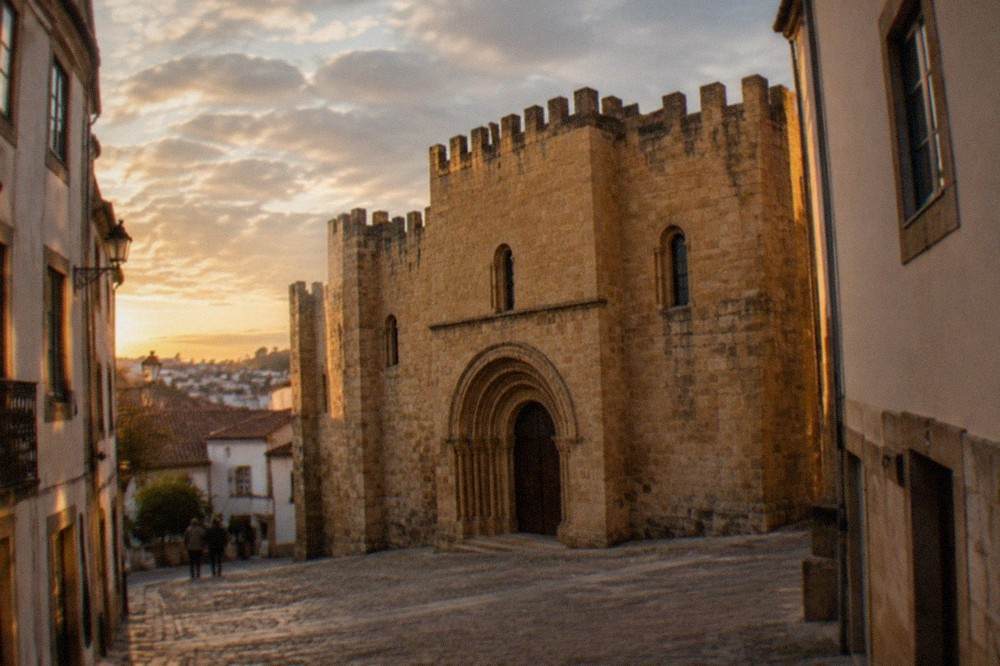
The Sé Velha is the city's Romanesque cathedral and one of the few Portuguese cathedrals that still reads as a fortress, which it was. The parish's own page lists the individual ticket and the summer and winter hours, and it closes to visitors during services, so a Sunday morning arrival needs a plan B. Santa Cruz, a short walk away in the Baixa, holds the tombs of Afonso Henriques and Sancho I, Portugal's first two kings, and the 5.00 EUR ticket covers the sacristy, cloister and chapter room beyond the church itself.
Is a guided visit worth adding? For the university hill, yes, because the timed Joanina slot and the two-day ticket are easier to handle with someone who books them daily. The rest of the old town works fine on foot.
Which Coimbra Day Trips Should Not Be Missed?
Conímbriga is the day trip the official record supports best: a Roman town about 16 km south in Condeixa-a-Velha, with a 10.00 EUR adult ticket covering both museum and ruins, open 10:00 to 18:00 every day of the week, which matters because most national monuments close on Mondays. Further out, the schist villages of the Serra da Lousã and the Bussaco forest are the two inland alternatives, both reachable on half-day and full-day tours from the city.
Conímbriga's daily opening is the detail worth planning around. The national museums portal lists its closures as 1 January, Easter Sunday, 1 May, 24 July and 25 December, and the ticket office shuts at 17:15, so a Monday visit is not just possible but the smart move. The site's museum is now the Museu Nacional de Conímbriga, and the combined ticket covers the ruins' mosaics and the museum collection together.
The Lousã schist villages, stone hamlets built into the mountain slopes, are the second inland option, and the tour roster lists several four-hour options from Coimbra, including private tours with wild deer watching and a soft canyoning trip on the river Ceira. For visitors basing themselves in the city rather than driving, these guided options are the practical route in, since the villages sit on narrow mountain roads.
When Should You Visit Coimbra to Miss the Crowds and the Rain?
September is the best-kept window: IPMA's 1991 to 2020 normals for the Coimbra / Bencanta station show a September mean maximum of 27.4 C, higher than June's 26.3 C, with only 49.9 mm of rain, while the autumn rain holds off until October, when the monthly total jumps to 114.5 mm. July at 8.9 mm is effectively dry, August is the hottest month, not July, and November is the wettest at 121.5 mm.
That September reading is the one most guides get backwards, because it looks like summer should fade into autumn evenly. It does not: the station data shows the rain arriving almost overnight in October, so a late-September visit gets summer temperatures with a fraction of the summer students still in the city. The record extremes at the same station, 41.2 C on 7 August 2016 and minus 4.3 C on 20 January 2017, frame the range.
| Month | Mean max C | Rain mm | Verdict for visitors |
|---|---|---|---|
| June | 26.3 | 26.0 | Warm and dry, student city at full throttle |
| July | 28.5 | 8.9 | Effectively dry, hot afternoons |
| August | 29.1 | 14.8 | Hottest month, 10.9 days above 30 C |
| September | 27.4 | 49.9 | Summer warmth, thinner crowds |
| October | 23.2 | 114.5 | The rain arrives, roughly doubling September's total |
| November | 18.0 | 121.5 | The wettest month of the year |
What Should You Skip or Rethink in Coimbra Right Now?
Three things should come off a current plan: the Museu Nacional de Machado de Castro, closed for conservation work with its reopening price unpublished, the Torre da Universidade, which the University states is closed, and the Mosteiro de Santa Clara-a-Velha, which has been closed for requalification works since October 2025 and should be checked before any visit. None of the three has a bookable ticket today, and any guide quoting a price or a climb for them is working from old information.
The Machado de Castro closure is the one that disappoints most visitors, because the museum sits over a mid-1st-century Roman cryptoporticus that is normally part of the visit route. The museum's own portal page carries the closure line twice, and a 10.00 EUR figure circulates in dated press for its reopening, but the official page publishes no price while the works run, so it should not be printed as current. The clock tower's closure is stated just as flatly by the University.
That leaves a clear itinerary: the university hill and the Joanina on a booked slot, the Sé Velha and Santa Cruz in the old town below, the riverside and the Baixa between them, and Conímbriga or the schist villages on the spare day. Readers weighing the city against other stops in the country can start with what should you not miss in Portugal or a broader what not to miss in Portugal, and those deciding how long to stay will find the timing question answered in how many days do you need in Coimbra. The essential background on the city itself is in what is special about Coimbra Portugal, and this page's planning sits alongside the wider coverage at Coimbra Travel Guide.
Common Questions About Coimbra
What not to miss in Coimbra?
The Biblioteca Joanina inside the 16.50 EUR combined University ticket, the Paço das Escolas, the Sé Velha at 3.00 EUR, the Mosteiro de Santa Cruz at 5.00 EUR, and the Roman ruins of Conímbriga about 16 km south. The Joanina is the one to book ahead: the University admits 50 people every 20 minutes and refuses entry outside the printed slot.
Can you visit the Biblioteca Joanina without the full University ticket?
No. The University's own programme page states the Joanina Library exists only inside the combined ticket, there is no standalone option, and the time printed on the ticket is the fixed library entry slot.
Is the Coimbra university tower open to climb?
No. The University's visitor information page states the facility is closed, with no price, no hours and no reopening date published. The 184 steps are mentioned only as background to the closure.
Is the Machado de Castro museum open in 2026?
No, it is closed for conservation work, and its own page publishes no ticket price while the works run. Its Roman cryptoporticus, normally part of the visit route, is inaccessible with it.
How much is the tourist tax in Coimbra?
1.00 EUR per guest per overnight stay, capped at three consecutive nights, from age 16, paid to the accommodation. A rise to 2.00 EUR was approved as a proposal in July 2026 but is not the published rate until the municipality's own tax pages change.
What is open on a Monday around Coimbra?
Conímbriga, which the national museums portal lists as open every day from 10:00 to 18:00, making it the reliable Monday day trip when other national monuments close.