What Should I Not Miss in Portugal?
What should you not miss in Portugal? The honest shortlist from a Coimbra-first perspective: the university hill, the Biblioteca Joanina, Conimbriga, the schist villages, and the sights that are actually closed in 2026.
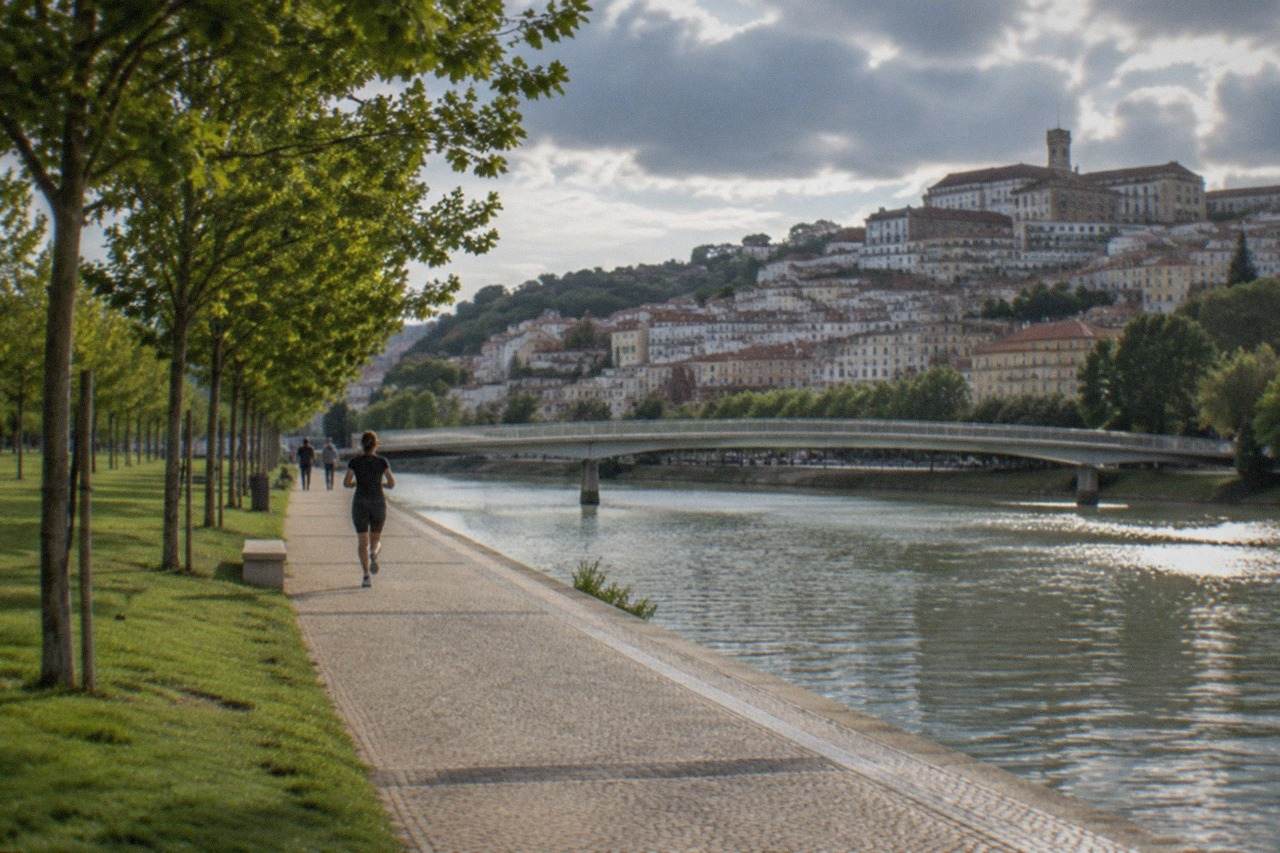
Coimbra, Portugal, the university city on the River Mondego, is the answer most people do not expect when they ask what to see in this country. The question usually produces Lisbon, Porto and the Algarve, in that order, and those are fine answers. But the single most common factual error in guides to this destination is the claim that Coimbra is a UNESCO World Heritage city. It is not. UNESCO inscribed "University of Coimbra - Alta and Sofia" in 2013, list reference 1387, covering two components inside the old town: the university hill and the college street of Rua da Sofia. That inscription is precise, and it is also the strongest argument for why this city belongs on a Portugal itinerary at all. The University's own published figure is about 31,000 students, and the municipality's own reporting counted 698,151 overnight stays in 2025, so this is a working academic city that visitors are only beginning to discover in numbers.
What Should I Not Miss in Portugal?
If you see only five things in Portugal, make them the University of Coimbra's hill with the Biblioteca Joanina, the Roman ruins of Conímbriga about 16 km south, the schist villages of the Lousã mountain, the old cathedral district of Coimbra's Alta, and one full afternoon walking the Baixa and the river. Lisbon and Porto deserve their reputations, but the experiences above are the ones with hard capacity limits, verified prices and a documented reason to plan ahead, and three of them sit in or beside this one city.
That answer is deliberately Coimbra-first, because this site is written about Coimbra and because the planning logic holds either way. The Biblioteca Joanina admits 50 people every 20 minutes, cannot be bought on its own, and exists only inside the University's 16.50 EUR combined ticket, where the time printed on the ticket is the library slot specifically. A visitor who leaves that to the last morning can be turned away. Almost nothing else on a Portugal first-timer's list has that constraint.
The wider shortlist, for balance: Lisbon's riverside core, Porto's historic centre, and one beach day somewhere on the coast. But note the geography discipline: the district of Coimbra reaches the Atlantic and contains Figueira da Foz, while the city itself does not touch the sea and has no beach. If a beach is on your list, it is a separate trip from the city, not a neighbourhood of it.
For the Coimbra portion of that list in detail, see the companion piece on what not to miss in Coimbra, which goes sight by sight through the city itself.
Why Does Coimbra Belong on a Portugal Route?
Coimbra belongs on a Portugal route because it holds the country's oldest university experience in a compact, walkable hill town, and because three of Portugal's most distinctive things, the Joanina Library, the student traditions and the fado of Coimbra, only exist here. The University's own visit pages sell a 16.50 EUR combined ticket covering the Joanina, the Royal Palace, St Michael's Chapel and the science spaces, valid two days except the fixed library slot, and the whole circuit is reachable on foot from the Baixa.
The honest version of the pitch is that Coimbra is not bigger than Porto or more beautiful than Lisbon. What it has is density. The Paço das Escolas sits on top of the hill, the Sé Velha and the Baixa sit below it, and the whole vertical stack is a twenty-minute walk end to end, steep but short. The Sé Velha charges 3.00 EUR for an individual ticket, summer hours 09:30 to 18:30, Sundays 11:00 to 17:30, per the parish body that manages it. Mosteiro de Santa Cruz, the burial church of Portugal's first two kings, charges 5.00 EUR individual and opens 09:30 to 16:30.
The student layer is not decoration. The University publishes about 31,000 students across 434 courses, and the Repúblicas, the student houses, the capa e batina gown tradition and the May festivals all shape the city's calendar in ways a visitor feels. The University closes its visitor circuit on 24 May, and Santa Cruz suspends visits on the Cortejo da Queima das Fitas, a moveable Sunday, so late May is both the most atmospheric and the most complicated time to visit.
Two ways to see the hill efficiently: a guided option or a walk with a local.
The budget end of that band is real: the top-attractions walking tour runs from $5.85 per person, rated 5 from 151 reviews, two and a half hours. The private option runs from $81.95, rated 4.8 from 72 reviews, two to three hours, and its late university visit is designed around the Joanina slot system, which is the single most useful practical fact on this site.

What Should I Not Miss in Coimbra Itself?
Do not miss the Biblioteca Joanina, the Paço das Escolas and the view from the university hill, the Sé Velha, the Baixa between Arco de Almedina and the river, and Mosteiro de Santa Cruz. The combined UC ticket at 16.50 EUR is the only way into the Joanina, entry is capped at 50 people every 20 minutes, and the time on your ticket is the library slot, so book that first and build the day around it.
Three warnings that most guides will not give you, because they are current and specific:
- Museu Nacional de Machado de Castro is closed for conservation work. Its own page on the national museums portal says so twice, and then prints a normal-looking opening-hours table directly below the closure line. Do not plan around that table. The museum sits above a mid-1st-century Roman cryptoporticus, and it will be worth visiting when it reopens, but no reopening price is published on an official page.
- The Torre da Universidade, the clock tower, is closed. The University's own information page states the facility is closed. There is no ticket, no climb and no price to quote.
- Mosteiro de Santa Clara-a-Velha has no page at all on the national monuments portal, consistent with closure for requalification works since October 2025. Check before you go; do not put it in an itinerary.
That still leaves a full two days of genuinely open sights, which is why the answer to how many days you should stay in Coimbra is almost always "more than one".
| Sight | Adult price | Status in 2026 | Key rule |
|---|---|---|---|
| Biblioteca Joanina + University + Science Museum | 16.50 EUR | Open | Timed slot, 50 people per 20 minutes, ticket valid 2 days except the Joanina slot |
| University + Science Museum (no Joanina) | 12.50 EUR | Open | Valid 2 days |
| Sé Velha de Coimbra | 3.00 EUR | Open | Summer 09:30-18:30, Sundays 11:00-17:30 |
| Mosteiro de Santa Cruz | 5.00 EUR | Open | 09:30-16:30, suspended on the Cortejo Sunday |
| Museu Nacional de Machado de Castro | No published price | Closed for conservation | Do not plan around the hours table on its page |
| Torre da Universidade | None | Closed | The University's own page states the facility is closed |
If the hill, the slots and the closures feel like a lot to sequence, a private walk that ends with a late university visit takes the logistics off your plate. The full index of guides sits on Coimbra Travel Guide.
The listing for this private tour shows from $81.95 per person, rated 4.8 from 72 reviews, two to three hours. Check availability if a late Joanina slot on a fixed date matters to you, because those slots are the scarce thing.
Which Day Trips from Coimbra Should Not Be Missed?
Do not miss Conímbriga, the Roman town about 16 km south in the parish of Condeixa-a-Velha, municipality of Condeixa-a-Nova, where a 10.00 EUR ticket covers both the museum and the ruins, open daily 10:00 to 18:00. Second, the schist villages of the Lousã mountain, a landscape of slate-walled hamlets that exists nowhere else on a standard Portugal route. Third, the Bussaco forest, and Fátima if the shrine is on your list.
Conímbriga earns its place on a national shortlist, not just a local one. It is one of the largest Roman sites in the Iberian peninsula, its museum and ruins are covered by one 10.00 EUR adult ticket, and, unusually for Portugal's national monuments, it is open seven days a week, which makes it the reliable Monday option when other DGPC sites close. Writers repeatedly get its location wrong in both directions: it is not in Coimbra, and it is not simply "near Coimbra". It is in Condeixa-a-Nova's municipality, roughly 16 km south of the city. The question is Conímbriga worth visiting gets a full treatment elsewhere on this site.
The schist villages are the other standout. The Lousã mountain holds a string of villages, Talasnal among the best known, built of the slate the mountain is made of, many restored in recent decades. Guided day trips from Coimbra run at a range of prices depending on length and group size, and the eight-hour version that reaches the village of Piodão is the most complete one on this site's roster.
What Should I Not Miss in Portugal If I Have a Week?
With a week, do not miss this shape: two nights in Porto, three in Coimbra with a Conímbriga or Lousã day trip, and two in Lisbon, using the train between them. Coimbra sits between the two big cities, the two stations named Coimbra-B and Coimbra-A exist and are in different places, and CP, the national rail operator, is where to confirm which trains call where and how the connection between the two stations works.
The reason to give Coimbra the middle and longest block is the slot system. The 16.50 EUR combined ticket is valid two days except the fixed Joanina slot, so a two-day stay absorbs a sold-out first choice, a closure day at one monument, and the university's own interruption dates, which in the current cycle include 24 May and 4 October. A one-night stop cannot absorb any of that.
Timing matters more than most guides admit, and the official climate record is more interesting than the folklore. IPMA's 1991 to 2020 normals for the Coimbra / Bencanta station show September with a mean maximum of 27.4 C, higher than June's 26.3 C, on only 49.9 mm of rain, with the real rain holding off until October, when the monthly total jumps to 114.5 mm. July, at 8.9 mm, is effectively dry. August is the hottest month, not July, averaging 10.9 days above 30 C. So the quiet, warm, cheap window is late September, not the peak of summer.
| Month | Mean max C | Rain mm | Days 1mm+ | Why it matters |
|---|---|---|---|---|
| June | 26.3 | 26.0 | 3.7 | Warm, dry, but student city is quiet |
| July | 28.5 | 8.9 | 1.7 | Effectively the driest month |
| August | 29.1 | 14.8 | 2.2 | Hottest month, 10.9 days above 30 C |
| September | 27.4 | 49.9 | 5.2 | Warmer than June, crowds gone |
| October | 23.2 | 114.5 | 10.3 | The autumn rain arrives in earnest |
For the full city-by-city sequencing question, what is special about Coimbra, Portugal covers what each block of the week actually buys you.
For the day-trip layer around the city, the strongest guided options cluster around the schist villages and the Roman site.
The eight-hour Piodão option in that band is the one that reaches the cascades and the far villages in a single day, rated 5 from 48 reviews on the listing. The full list of guided options, including free GuruWalk tours of the city centre, is on the things to do in Coimbra overview.
Common Questions About Not Missing Portugal's Highlights
What should I not miss in Portugal?
Do not miss the University of Coimbra's hill and the Biblioteca Joanina, the Roman ruins of Conímbriga, the schist villages of the Lousã mountain, the Sé Velha and Santa Cruz in Coimbra, and, beyond this city, Lisbon and Porto. Book the Joanina first: it admits 50 people every 20 minutes and only exists inside the 16.50 EUR combined ticket.
Is Coimbra a UNESCO World Heritage city?
No. UNESCO inscribed "University of Coimbra - Alta and Sofia" in 2013, list reference 1387: two components inside the old town, the university hill and the Rua da Sofia colleges. The city as a whole is not inscribed.
What is closed in Coimbra right now?
Three things: the Museu Nacional de Machado de Castro, closed for conservation work; the Torre da Universidade, which the University's own page states is closed; and Mosteiro de Santa Clara-a-Velha, which has no page on the national monuments portal and has been closed for requalification works. None of the three should carry a price or hours in your plan.
How much time do I need in Coimbra?
Two days is the practical minimum, because the combined university ticket is valid two days except the fixed Joanina slot, and one blocked slot or one closure day otherwise wrecks a one-night stop.
What is the best month to visit?
IPMA's 1991 to 2020 normals for the Coimbra / Bencanta station show September with a mean maximum of 27.4 C, warmer than June, on 49.9 mm of rain, before the autumn rain jumps to 114.5 mm in October. Late September is the verified sweet spot.
Is there a tourist tax in Coimbra?
Yes: 1.00 EUR per guest per overnight stay, capped at three consecutive nights, from age 16, paid to the accommodation at check-in or check-out. The 2.00 EUR figure in circulation is an approved municipal proposal, not the current rate.
The short version of all of this: build the Portugal trip around the things that have hard limits, and the Biblioteca Joanina's 50-people-per-20-minutes rule is the one that decides everything else about your days in Coimbra.