The Repúblicas: Coimbra's Student Houses
Coimbra, Portugal's university city on the River Mondego, runs on a student tradition most visitors walk past without noticing: the Repúblicas, communal houses where students live, cook, argue and sing together.
Short answer
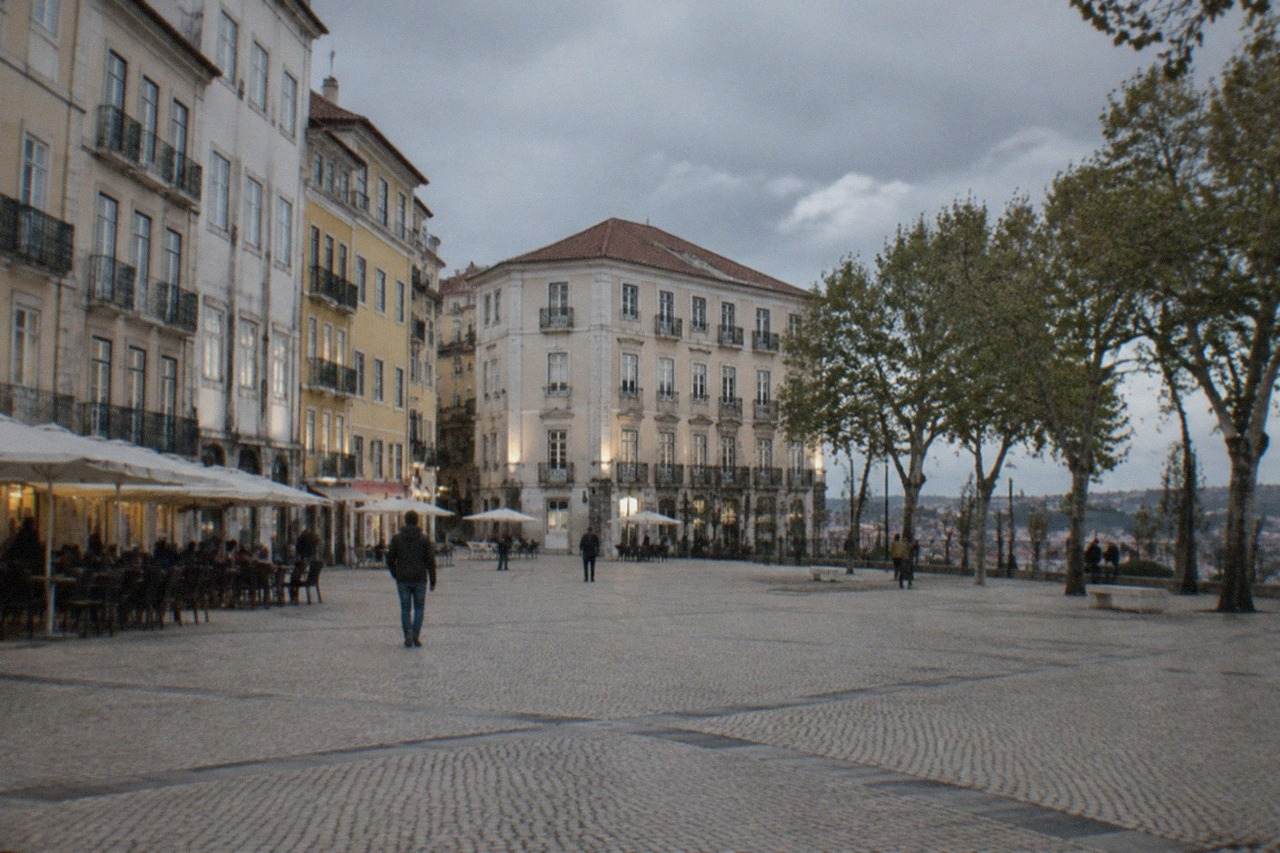
The Repúblicas are self-governing student houses in Coimbra, Portugal, run by their residents under university tradition. They are the engine of the city's academic culture, its fado and its May festivals, and several of the oldest sit in the Alta and Baixa around the university hill.
Coimbra, Portugal, the university city on the River Mondego, is home to one of Europe's most distinctive student institutions: the Repúblicas, communal houses where students live together, govern themselves and keep traditions that reach back through the centuries of the University of Coimbra. The University's own published figures put its current student body at about 31,000 students, and the Repúblicas are the most visible, loudest and most loved expression of how those students inhabit the city. They are not halls of residence and they are not rented flats. They are something older and stranger, and you will pass their painted facades and scrawled banners within minutes of arriving in the old town.
This guide, from the Coimbra Travel Guide editorial desk, explains what the Repúblicas are, where to find them, how they connect to the city's fado and festivals, and what a visitor can legitimately see of them. Nobody on this desk has been to Coimbra, so every operational fact below is drawn from what the University, the municipality and the parish bodies publish, and where something is not verifiable, it says so.
What Exactly Are the Repúblicas of Coimbra?
The Repúblicas are self-governing student houses in Coimbra, Portugal, in which the residents themselves set the rules, manage the house and admit new members, independent of the University's administration and of any landlord. Each house has its own name, its own rituals, its own banner and its own personality, and together they form the social backbone of the University of Coimbra's student life, which the University currently puts at about 31,000 students.
The word means "republics", and the name is the institution in miniature. Each República is a small state with its own laws, its own elected officers, its own founding story and a fierce loyalty that alumni carry for life. A student does not simply rent a room; they are received into the house, often through an initiation process, and they become part of a lineage that in some houses runs back for generations. The houses cook communally, eat together, decorate their walls with decades of graffiti and photographs, and throw open their doors for parties that are famous across the city.
What makes them unlike anything in most European universities is that they are not organised by the institution. The University of Coimbra publishes its student numbers on its own homepage, but the Repúblicas sit beside that institution, not under it, in a relationship of mutual affection and occasional friction that is centuries old. The houses are where the academic traditions described in our guide to student traditions and the capa e batina are actually lived rather than performed: the black cape, the serenades, the pranks, the rivalry between faculties.
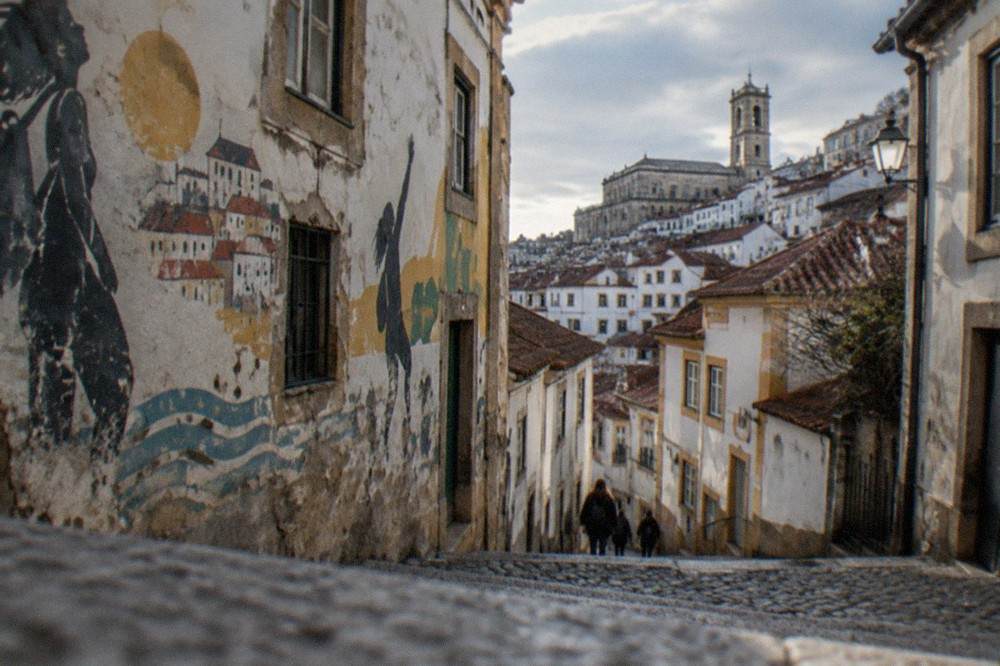
You will recognise a República by its facade long before anyone tells you. The walls are typically covered in paint: the house name in huge letters, slogans, jokes aimed at rival houses, dates of memorable parties, murals that have been repainted and overpainted by successive generations. In a city whose old stone is otherwise dignified and baroque, the Repúblicas are deliberately, joyously untidy.
The Repúblicas in the Landscape of the City
| Where | Character of the streets | What you notice as a visitor |
|---|---|---|
| The Alta, the upper town around the university hill | Steep lanes close to the Paço das Escolas | Painted facades, banners, students in capes heading uphill |
| The Baixa, the downtown below | Busier streets near the commercial heart | House entrances between shops, posters for student events |
| Streets between the two | The connecting slopes of the old town | The uphill climb that defines student daily life |
| The riverside quarter of Santa Clara, across the Mondego | Quieter, residential | Traditional houses, a different pace from the student core |
The geography matters. The University's visitor pages describe the Paço das Escolas, the Royal Palace complex on the hill, as the heart of the inscribed World Heritage property, and the Repúblicas cluster on the slopes around it, above and below, in the Alta upper town and down towards the Baixa downtown. A walk between the two, which every visitor makes because the city is built on a hill, takes you past house after house.
Where Can You See Repúblicas on a Walk Around Coimbra?
The Repúblicas are easiest to see on the slope between the Baixa and the university hill in central Coimbra: walk up through the old town towards the Paço das Escolas and you will pass painted house facades on the lanes of the Alta and its approaches, and further houses scattered through the Baixa's side streets, all within a compact area that the city's own layout funnels every visitor through.
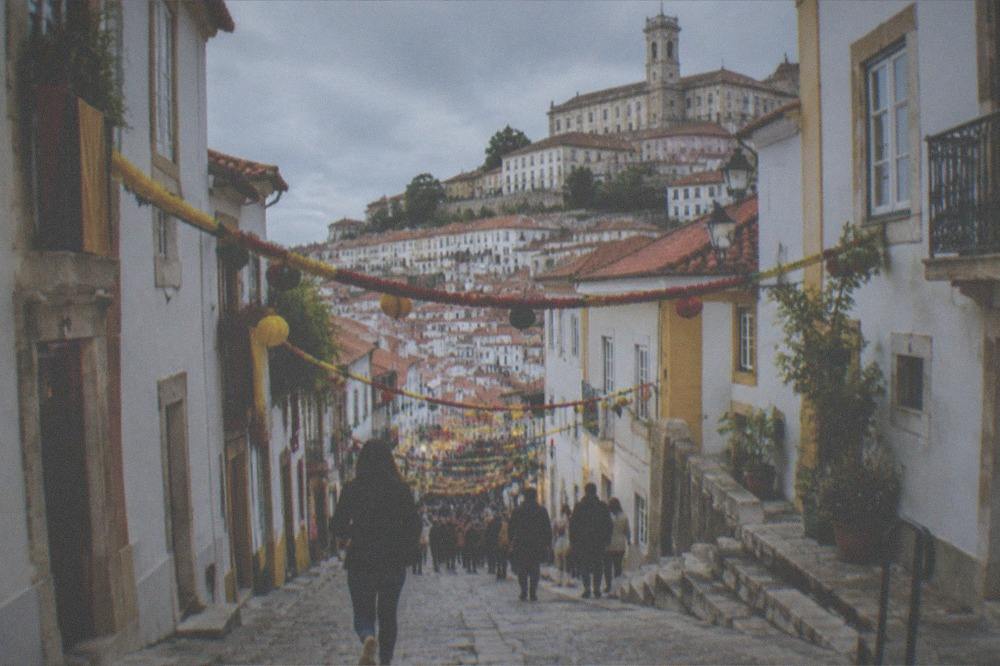
You do not need a map, and honestly you should not use one for this. The old town of Coimbra is a hill with a university on top and a river at the bottom, and every route between the two threads past the student houses. Start low, in the Baixa, where the commercial streets give way to older lanes, and climb. The painted facades begin appearing well before you reach the top. The climb is real, the city is famous for it, and our page on the Elevador do Mercado hill lift covers the public funicular that exists precisely because of this slope.
A guided walk adds context that a facade cannot. The University of Coimbra Guided Tour with Tickets, from $67 per person and rated 4.9 from 193 reviews on the operator's live listing, is led by a former student in a group of up to ten, which means the guide will have lived inside the traditions the houses represent, and the tickets are included. For a broader sweep of the city that takes in the old town lanes where the houses sit, the Coimbra Top Attractions Walking Tour, from $5.85 per person and rated 5 from 151 reviews, runs two and a half hours through the centre. You can also read our overview of the university's guided tours and its tickets before choosing.
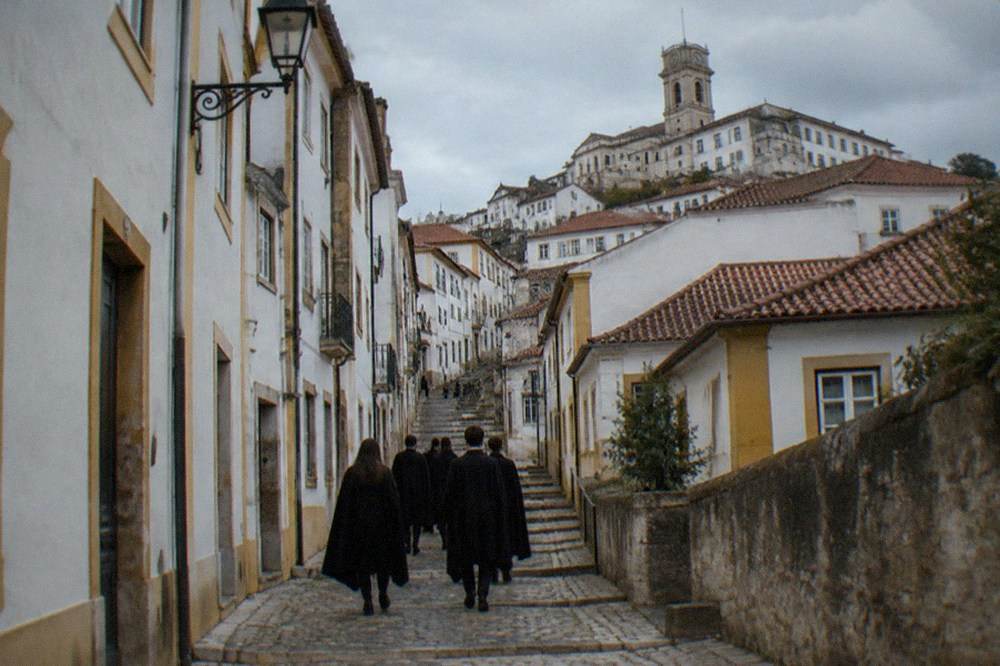
The best time to see the houses doing what they do is simply when students are around: term time, daytime or early evening. In summer, when much of the student population leaves, the facades remain but the streets quieten. The houses themselves are private homes, and this is the single most important thing to understand before you go.
Can You Go Inside a Coimbra República?
No, not as an ordinary visitor: the Repúblicas are private student houses, not attractions, and none offers public tours or opening hours, so what you can legitimately do is look at the facades, read the painted walls from the street, and attend only events that are explicitly publicised as open, such as festival events or street serenades, rather than treating a student's home as a sight to enter.
This is worth saying plainly because the internet is full of photographs of República interiors, painted from floor to ceiling, and it is tempting to assume they are visitable. They are homes. The students who live there cook, sleep and study in them, and a visitor walking in uninvited is a visitor walking into someone's kitchen. The public face of the Repúblicas is the street: the murals, the banners, the parties that spill outdoors during the academic festivals, and the serenades.
The student traditions the houses keep, however, are on public display constantly, and the best-documented window into them is the university itself: the black academic cape, the burning of the ribbons and the other rituals the houses live by are covered in our traditions guide, and the guided visit below puts a former student in front of you to explain them.
For evening, the public expression of student culture you can actually buy a ticket to is fado. The Coimbra: Live Fado Show with Glass of Port Wine, from $18 per person and rated 4.7 from 1,234 reviews on the listing, runs fifty minutes and includes a glass of port; it is the commercial, sit-down cousin of the street serenades the houses themselves perform.
What Is Public and What Is Private
| The house facade and painted walls | Fully public, viewable from the street at any time |
|---|---|
| The house interior | Private, no public access, no tours |
| Street serenades and open-air singing | Public when they happen in public space |
| Ticketed fado shows in venues | Public, bookable, hours and prices on the operator's listing |
| Festival parades and processions | Public, on the public streets of the city |
How Do the Repúblicas Shape Coimbra's Fado?
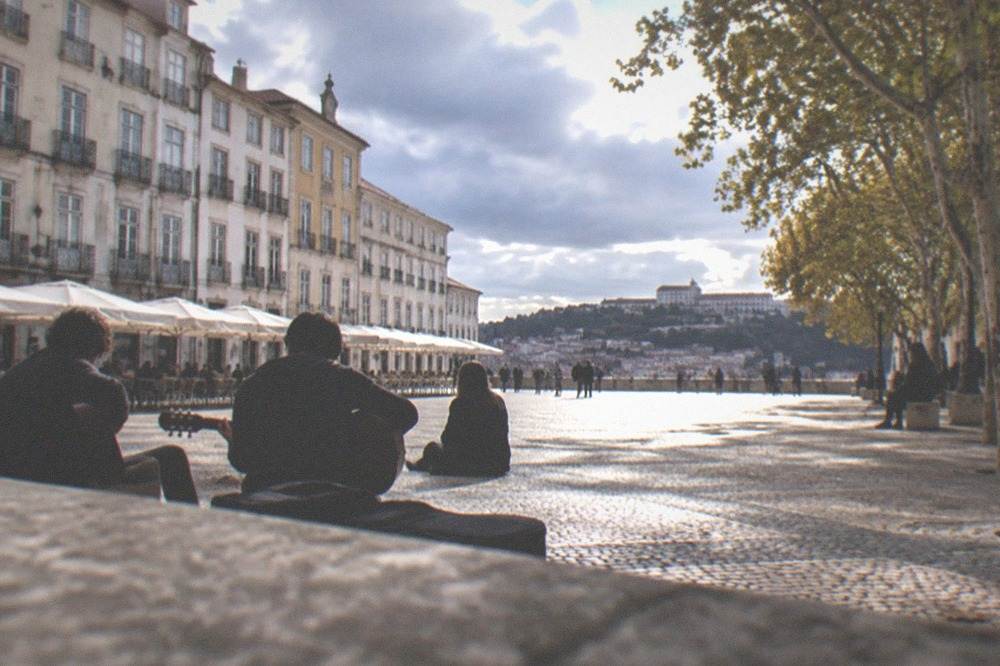
Coimbra's fado grew out of the university's student tradition rather than out of the Lisbon tavern tradition: it is historically sung by men, it is tied to the black academic cape, and the Repúblicas are one of its natural homes, since the houses sing, serenade under windows and pass songs between generations of residents in a tradition that continues today both in venues and in the street.
This is the part of the story visitors most often miss. Fado de Coimbra is not Lisbon fado with a different accent. It is a distinct tradition with its own repertoire, its own posture, its own guitar tunings and its own social origin: the academic world of the university and its houses. Our full guide to fado de Coimbra covers the form in detail, but the connection to the Repúblicas is direct. The serenade, a group of caped students singing beneath a window at night, is a courtship and a protest and a party all at once, and the houses are where those groups form and rehearse.
One thing this site will not do is publish operational details for any fado venue or República: nothing in this site's research verified a show time, a ticket price, a capacity or an address for any individual fado house or student house. What is verifiable is the tradition itself: men singing, the cape, the university origin, the street serenades. For the ticketed experience, the listing holds the details, and the show above is the one this site's roster carries.
What Happens to the Repúblicas During Queima das Fitas?
In May, during the Queima das Fitas, the Repúblicas move their whole life outdoors: the houses are the organising cells of the festival, and two officially documented closures follow from it, since the University of Coimbra closes its entire visitor circuit on 24 May and Mosteiro de Santa Cruz suspends visits on the day of the Cortejo parade, a moveable Sunday, so a visitor in May finds the city either transformed by the festival or shut at its most famous monuments.
The Queima das Fitas, the burning of the ribbons, is the great academic festival of the Coimbra year, and the Repúblicas are its infrastructure. The houses host parties, the streets fill with caped students, and the Cortejo parade, in which students process through the city, is the public centrepiece. This site's research could not verify exact festival dates: the Associação Académica de Coimbra's own site refused automated access during this build, and no official page with the 2026 or 2027 dates could be read. What the University's own visit page does state, and what you can plan around, is that the tourist circuit at the Paço das Escolas closes on 24 May, and the parish body that runs Santa Cruz states that visits there are suspended on the Cortejo day. Our Queima das Fitas guide covers the festival as fully as verified sources allow.
Planning a Visit Around the Academic Year
| Period | What the verified sources say | What it means for a visitor |
|---|---|---|
| Term time, autumn to spring | About 31,000 students, per the University's published figures | The houses are alive, the streets are full |
| May, the festival period | University visitor circuit closed 24 May; Santa Cruz closed on Cortejo day | Book around the closures or come for the festival knowingly |
| Summer | The University's summer hours run 09:00 to 20:00, 1 April to 30 September | Quieter streets, easier monument access, fewer students |
| Winter, from 1 October | The University's winter hours run 09:00 to 17:30 | Shorter days, the city's wettest months |
The weather table matters here more than visitors expect, because the Repúblicas live outdoors. IPMA's 1991 to 2020 normals for the Coimbra / Bencanta station show November as the wettest month at 121.5 mm of rain, with October at 114.5 mm and January at 113.5 mm, while July, at 8.9 mm, is effectively dry. September, at 27.4 C mean maximum, is actually hotter than June at 26.3 C, and the autumn rain does not arrive properly until October. Anyone planning to walk the student streets in the evening should read our weather guide first.
Are the Repúblicas Part of Coimbra's World Heritage?
Partly, and only indirectly: the UNESCO inscription of 2013 covers "University of Coimbra - Alta and Sofia", the university hill and the college street, and not the city as a whole, so the Repúblicas sit inside and around a World Heritage property without themselves being inscribed, and the common claim that Coimbra is a UNESCO World Heritage city is simply false.
This is the single most repeated error in guides to this city, and it is worth being precise. UNESCO's list entry 1387, inscribed in 2013 under criteria (ii), (iv) and (vi), names two components inside the old town: the Alta, the university hill with the Royal Palace, the Joanina Library and the chapel, and the Sofia, the college street below. The student houses cluster on the slopes in and around that inscribed area. The distinction is not pedantry: it tells you where the protected fabric actually is, and it is the reason our UNESCO World Heritage guide exists as a separate page.
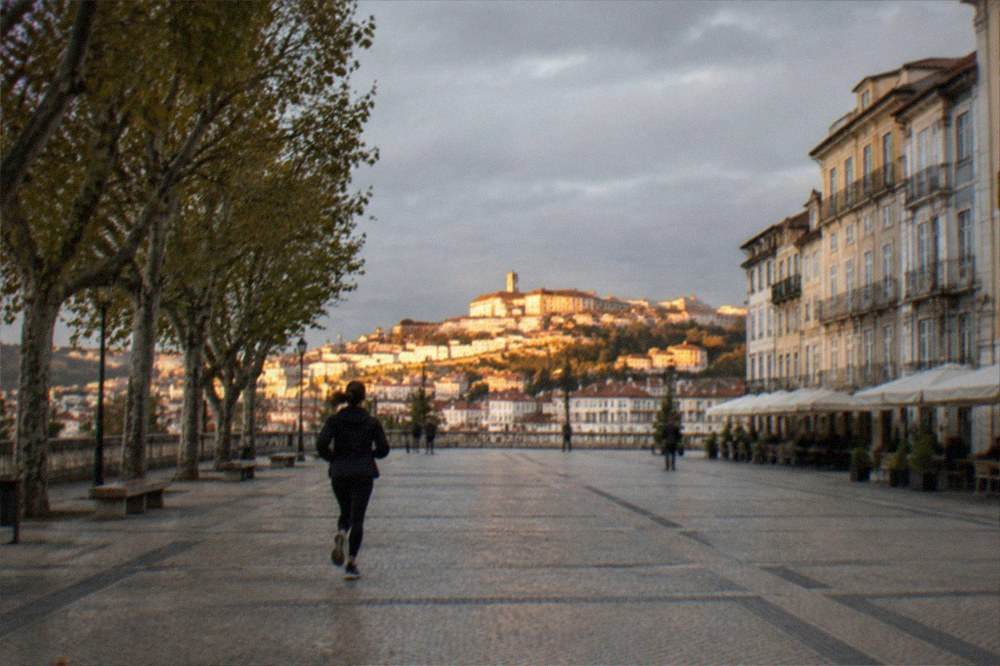
The practical consequence for a visitor is pleasant: the walk that takes you past the Repúblicas is the same walk that takes you through the inscribed property. Climb from the Baixa to the Paço das Escolas and you cover the student houses, the old town lanes and the university hill in one continuous route, ending at the viewpoint over the River Mondego. Our self-guided walking tour and one-day itinerary pages lay out exactly this line.
What Should a Visitor Actually Do with All This?
Treat the Repúblicas as atmosphere rather than as a checklist: walk the slopes between the Baixa and the university hill in the late afternoon, look at the painted facades, read the walls, go to a ticketed fado show in the evening, and time your visit around the two documented May closures if you also want to see the monuments, because the houses reward a slow walk and a long evening far more than they reward a scheduled stop.
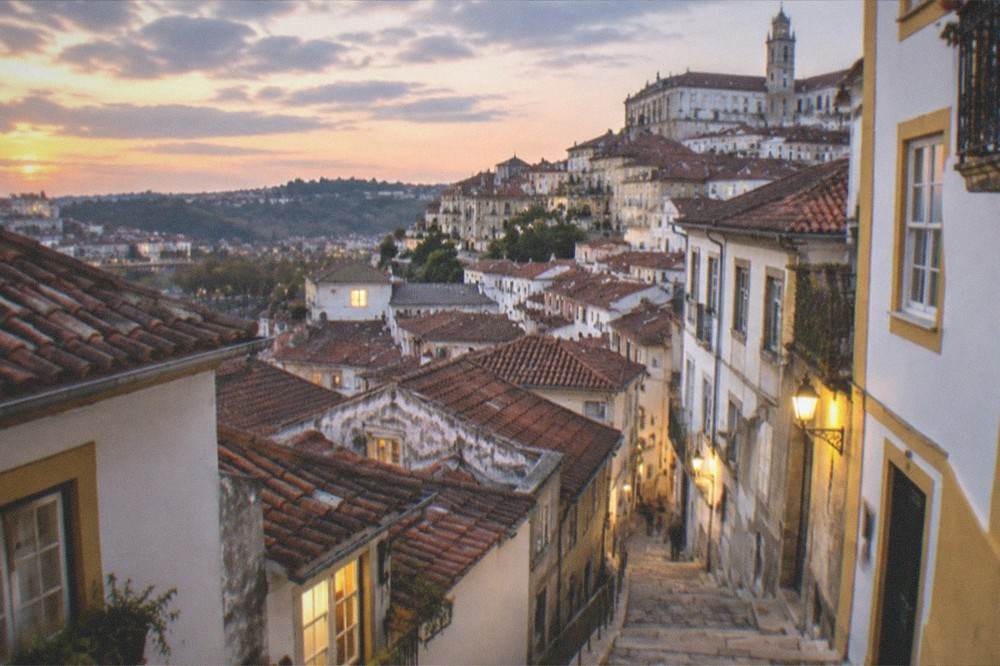
The late afternoon is the hour. Students come and go, the capes appear as the light drops, and the painted walls photograph best when the sun is low across the hill. Finish in the Baixa, where our restaurants guide and historic cafes guide cover the city's food and its old café culture, both of which are woven into student life. The student city and the visitor city are the same city, and the Repúblicas are where the two meet.
A walking tour is the most efficient way to place the houses in context, and the roster carries a strong one. The Coimbra Top Attractions Walking Tour, from $5.85 per person and rated 5 from 151 reviews on the operator's live listing, covers the old town core in two and a half hours at the lowest price on this site's roster. Pair it with the university tour above for the hill, and the evening fado show for the tradition at full voice.
A Suggested Evening Built Around the Student City
| Time of day | Where | Why |
|---|---|---|
| Late afternoon | The lanes between Baixa and the Alta | Painted facades in the best light, students coming and going |
| Early evening | A café in the Baixa | The city's café culture, covered in our historic cafés guide |
| Dusk | The university hill viewpoint | The classic view over the Mondego and the rooftops |
| Night | A ticketed fado show | The student tradition in its formal, public form |
Common Questions About Coimbra's Repúblicas
What are the Repúblicas in Coimbra?
The Repúblicas are self-governing communal student houses in Coimbra, Portugal, associated with the University of Coimbra. Residents run the house themselves, set their own rules and admit their own members, and each house has its own name, banner and traditions. They are the social backbone of the city's student life, which the University currently puts at about 31,000 students.
Can you visit a República in Coimbra?
No. The Repúblicas are private homes, not attractions, and none offers public tours or opening hours. You can look at the painted facades from the street, and you can attend events that are explicitly public, such as festival processions or street serenades, but the interiors are students' homes.
Where are the Repúblicas located?
They cluster on the slopes of Coimbra's old town, in and around the Alta, the upper town around the university hill, and down towards the Baixa, the downtown. Walking uphill from the Baixa towards the Paço das Escolas passes many of them.
Are the Repúblicas part of the UNESCO site?
Not directly. The 2013 UNESCO inscription covers "University of Coimbra - Alta and Sofia", the university hill and the college street, not the whole city and not the student houses as such. The houses sit inside and around the inscribed area.
Do the Repúblicas sing fado?
Yes, in the sense that Coimbra's fado grew out of the university's student tradition, is historically sung by men, is associated with the black academic cape, and the houses are one of the places the tradition lives, through street serenades as well as ticketed shows in venues.
When is the best time to see the Repúblicas?
Term time, in the late afternoon and early evening, when students are coming and going and the painted facades are in the best light. In May the student festival Queima das Fitas fills the streets, but note that the University closes its visitor circuit on 24 May and Santa Cruz suspends visits on the Cortejo day, a moveable Sunday.
The Repúblicas are the part of Coimbra you cannot ticket, and that is exactly their value: a living institution, painted onto the walls of the old town, that explains why this small city on the Mondego sings the way it does. Walk slowly uphill, read the walls, and come back down with the students.