What Is the Most Famous Library in Coimbra?
The most famous library in Coimbra, Portugal is the Biblioteca Joanina, the baroque library of the University of Coimbra. Here is what it is, why it matters, and how its timed tickets work in 2026.
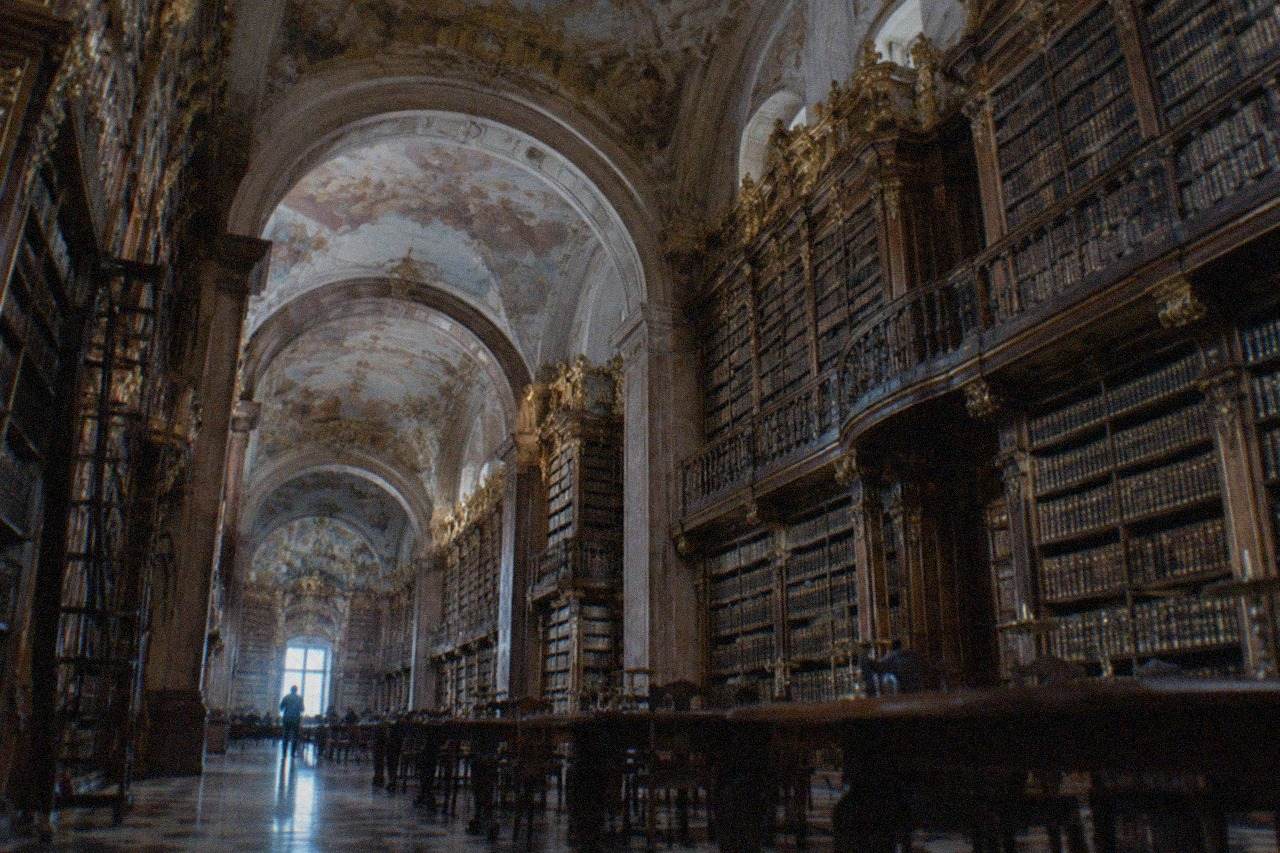
Coimbra, Portugal, the university city on the River Mondego, holds one library that appears on almost every list of the world's most beautiful reading rooms: the Biblioteca Joanina, the baroque library of the University of Coimbra, sitting inside the Royal Palace on the university hill above the old town. It is not just the most famous library in Coimbra. For many visitors it is the single reason they climbed the hill at all, and the University's own ticketing treats it that way, because the Joanina is the only part of the visitor circuit that runs on a strict, pre-booked, timed slot. This page from Coimbra Travel Guide covers what the library is, why it is famous, and the practical rules that decide whether you get in.
What Is the Most Famous Library in Coimbra?
The most famous library in Coimbra is the Biblioteca Joanina, the 18th-century baroque library of the University of Coimbra, located inside the Royal Palace on the Paço das Escolas in the city's Alta district in Portugal. It forms part of the "University of Coimbra, Alta and Sofia" UNESCO World Heritage inscription of 2013, and it can only be visited on a timed slot inside the University's 16.50 EUR combined ticket, which admits 50 people every 20 minutes.
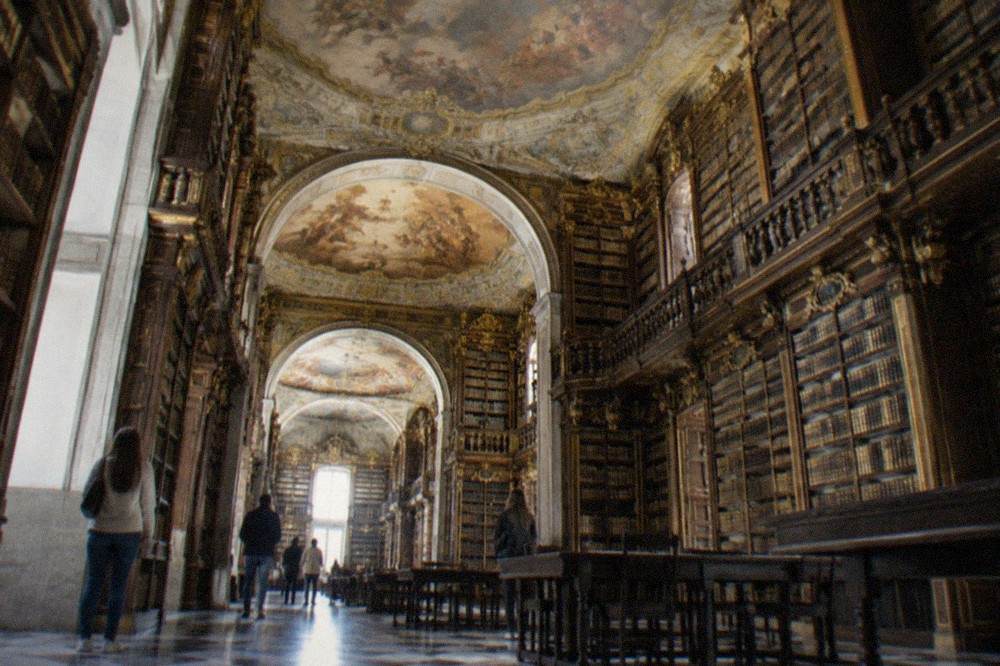
The library takes its name from King João V, who commissioned it in the first half of the 18th century, and the building's official name still carries the royal connection. The University's own visitor pages describe a noble floor of three rooms, walls of bookshelves in gilded and painted wood, and a painted ceiling, all executed by artists working under the king's patronage. The books themselves, tens of thousands of volumes printed between the 16th and 18th centuries, line the shelves behind gilded lattice doors.
What makes the Joanina unusual among famous libraries is that it is a working survivor. It was built as a royal library and it still holds its original collection in its original building, in the original reading rooms, with the original protective measures in place. Those protective measures include the library's most talked-about residents, a colony of bats that lives behind the shelves and emerges at night to eat the insects that would otherwise damage the books. The University's own page for the space confirms the bat colony, and it is one of the few cases where a guide's strangest-sounding claim is also the most checkable one. The full story is on the page why bats live in the Joanina Library.
The library also sits inside a UNESCO property, and the scope of that inscription matters. UNESCO inscribed "University of Coimbra, Alta and Sofia" in 2013 under criteria (ii), (iv) and (vi), covering two components of the old town: the university hill and the college street below. Coimbra is not a World Heritage city, a distinction guides get wrong constantly. The Joanina is a named component of the inscribed property, alongside the Royal Palace of Alcáçova, the Capela de São Miguel and the Rua da Sofia colleges.
Why Is the Biblioteca Joanina So Famous?
The Biblioteca Joanina is famous for three things together: its baroque interiors, described by the University as gilded, painted and frescoed rooms built under King João V; its colony of insect-eating bats, confirmed on the University's own page for the library; and its strict timed-entry regime, which limits visits to 50 people every 20 minutes and makes it one of the hardest walk-up tickets in Portugal.
The interiors are the first reason. The noble floor is a sequence of three rooms decorated in gold leaf, exotic woods and painted ceilings, and the shelves hold a collection of printed volumes from the 16th to the 18th century. The overall effect is closer to a palace state room than to a working study, which is why the library appears so often in photographs of Portugal. The comparison is not idle: readers deciding which library deserves the country's top spot can weigh the candidates on the page about which library in Portugal is considered the most beautiful.
The bats are the second reason, and they are not folklore. The University's own description of the Joanina states that the building houses bats that eat insects which would otherwise damage the books, and that staff protect the volumes with leather covers each night. A colony of protected bats living inside a national monument, doing conservation work for free, is the kind of fact that travels.
The third reason is scarcity, and it is the one that affects your visit. The University's ticketing page states, verbatim, that entries through the Academic Prison are limited to 50 people every 20 minutes. That ceiling is why the library sells out in peak season, why a visitor without a pre-booked slot can be turned away at the door, and why every practical guide to Coimbra starts with the same advice: book the Joanina slot before you book anything else.
How do You Get Tickets to the Biblioteca Joanina?
You cannot buy the Biblioteca Joanina on its own. The library exists only inside the University's combined ticket at 16.50 EUR for adults, valid for the 2026 season, which also covers the Royal Palace, the Capela de São Miguel, the Chemistry Laboratory, the Academic Museum, the Cabinet of Curiosities and the Mineral Gallery. The date and time printed on that ticket is the Joanina slot specifically, entry outside the slot is refused, and online purchase closes 20 minutes before the visit time.
That is the full rule set, and every clause of it comes from the University's own ticketing pages. The ticket is otherwise valid for two days, so you can visit the other spaces before or after your library slot, but the Joanina slot itself is fixed. If you arrive at 14:20 for a 14:00 slot, you do not get in. Counter purchase is possible subject to slot availability, but in summer the safe assumption is that the popular slots are gone.
The University's official 2026 price list, stamped valid from 1 January to 31 December 2026, looks like this:
| Ticket (official visit.uc.pt list) | Adult price | Duration | Includes the Joanina? |
|---|---|---|---|
| Joanina Library + University + Science Museum | 16.50 EUR | 3h | Yes, on a fixed timed slot |
| University + Science Museum | 12.50 EUR | 2h30 | No |
| Guided tour, Palace of Schools | 25.00 EUR | 1h30 | No, Science Museum spaces excluded |
| Science Museum + UC Exploratório | 16.00 EUR | 3h | No, and no Royal Palace or chapel either |
| Guided tour, Botanical Garden | 10.00 EUR | 1h30 | No |
Visitor hours run 09:00 to 20:00 from 1 April to 30 September and 09:00 to 17:30 from 1 October to 31 March. The published closing dates in the current cycle are 24 and 25 December 2026, 31 December 2026 and 1 January 2027, plus 24 May and 4 October. The University also warns that religious, official and academic ceremonies can interrupt the normal tourist circuit, and that the Cabinet of Curiosities and the Physics Cabinet close for two days every three months for disinfestation. A fuller walk-through of the buying process is on the Joanina Library tickets guide, and the step-by-step version is at how to visit the Coimbra University Library.
If you would rather not manage the slot yourself, a guided visit can handle it. The University of Coimbra guided tour with tickets is led by a former student, runs with a group of ten, and includes admission, so the ticketing and the timing sit with the operator rather than with you. Check availability if that arrangement suits your dates.
What Can You Actually See Inside the Joanina Library?
Inside the Joanina you see the noble floor: three baroque rooms with gilded and painted bookshelves, frescoed ceilings, and shelves of 16th to 18th century printed volumes behind gilded lattice doors, entered through the former Academic Prison. The visit lasts about 20 minutes, photography is restricted on the noble floor, and the 50-person ceiling per slot keeps the rooms from crowding, which is why the visit feels short and why the building survives.
The route matters, because the entrance is not the front door. Visitors enter through the Academic Prison, the university's former detention cells in the building's lower level, and climb up to the noble floor from there. The prison spaces are part of the visit in their own right, a reminder that this was a self-governing institution with its own rules and its own punishments, and the University's pages treat it as a named stage of the circuit rather than a corridor.
The noble floor is the part people come for. The University describes walls of bookshelves executed in gilt and painted wood, ceilings decorated by court painters, and tables in exotic hardwoods. The collection behind the lattice doors covers printed works from the 16th to the 18th centuries, and the Joanina Digital project, whose pilot results were reported in October 2025 with a mass digitisation phase announced in April 2026, is progressively putting roughly 30,000 of those volumes online by 2030. The digitisation does not affect physical visits, but it does mean the collection is becoming readable without a plane ticket.
Twenty minutes is short, and it is short for a reason. The University caps the noble floor at 50 people every 20 minutes, and the printed slot on your ticket exists to enforce that cap. The upside is that the rooms never feel like a crush, and the downside is that the visit is closer to a viewing than to a browse. Plan the rest of the Paço das Escolas, the Royal Palace, the Capela de São Miguel and the terrace views over the River Mondego, around the slot, not the other way round.
How Does the Joanina Compare with Coimbra's Other Libraries?
The Joanina is Coimbra's most famous library but not its only notable one: the University of Coimbra publishes a count of 22 libraries across its four campuses, and the city also holds the General Library's modern reading rooms and the municipal network, none of which carry timed slots or the 16.50 EUR ticket. The Joanina's combination of baroque interiors, a bat colony and a 50-person-per-20-minute entry cap is what separates it from every other reading room in the city.
The University's own "University in Numbers" block on its homepage lists 22 libraries, 2 museums and 1 botanic garden across 4 campuses, alongside a current published total of about 31,000 students. That scale is the context a single famous room sits inside: the Joanina is the ceremonial heart of a library system that serves a working university, not a museum piece standing alone. The students who fill the modern reading rooms are the reason the old collection is still curated, digitised and protected rather than sealed.
For a visitor choosing where to spend limited time, the practical split is simple. The Joanina is the monument: book the slot, pay the combined ticket, take the 20 minutes. The other libraries are infrastructure, and you will not tour them. What you can tour, on the same hill and often on the same ticket, is the rest of the Paço das Escolas circuit, and the wider set of options is laid out on the Joanina Library attraction page. If your question is really about the city as a whole, the pages on why Coimbra is famous and what is famous about Coimbra cover the ground beyond the hill.
One caution belongs here, because the hill is full of things you cannot currently do. The Torre da Universidade, the clock tower beside the library, is closed: the University's own information page states "We regret to inform you that this facility is closed", and no price or opening time exists for a tower climb. The Museu Nacional de Machado de Castro, down the hill and built above a mid-1st-century Roman cryptoporticus, is likewise closed for conservation work, with no reopening price published on an official page. Neither belongs in a plan for 2026 until their own pages say otherwise.
Common Questions About the Joanina Library
What is the most famous library in Coimbra?
The Biblioteca Joanina, the 18th-century baroque library of the University of Coimbra, inside the Royal Palace on the Paço das Escolas. It is a named component of the "University of Coimbra, Alta and Sofia" UNESCO inscription of 2013 and is visited on a timed slot inside the University's 16.50 EUR combined ticket.
Can you buy Biblioteca Joanina tickets on their own?
No. The University's ticketing sells the Joanina only inside the combined ticket at 16.50 EUR for adults, which also covers the Royal Palace, the Capela de São Miguel and the Science Museum spaces. The 12.50 EUR ticket covers the same spaces without the library.
How long can you stay inside the Joanina Library?
About 20 minutes. Entry is limited to 50 people every 20 minutes, the time printed on your ticket is your fixed entry slot, and entry outside that slot is refused. The rest of the combined ticket stays valid for two days.
Do bats really live in the Joanina Library?
Yes. The University's own page for the library confirms a colony of bats that eats the insects which would otherwise damage the books, with staff covering the volumes at night to protect them from droppings.
When is the Biblioteca Joanina open?
The University's visitor hours run 09:00 to 20:00 from 1 April to 30 September and 09:00 to 17:30 from 1 October to 31 March, with published closures on 24 and 25 December 2026, 31 December 2026 and 1 January 2027, plus 24 May and 4 October. Ceremonies can also interrupt the normal circuit at short notice.
If the slot logistics still feel like the hard part, that is the signal to let a guided visit carry them. A tour with tickets included means the timed entry, the meeting point and the combined ticket are the operator's problem, and yours is only showing up on the hill on time.
The short version: the Biblioteca Joanina is the most famous library in Coimbra, Portugal, and one of the few monuments whose hardest problem is not getting there but getting in. Book the slot first, build the day around it, and the rest of the university hill, from the Capela de São Miguel to the terrace above the Mondego, falls into place around the twenty minutes that brought you up the hill.