What to Eat in Coimbra, Portugal: The Dishes and Traditions That Matter
Coimbra, Portugal, the university city on the River Mondego, eats from two larders at once: the student traditions of the old town and the pig, wine and mountain produce of the surrounding Bairrada and Lousã country.
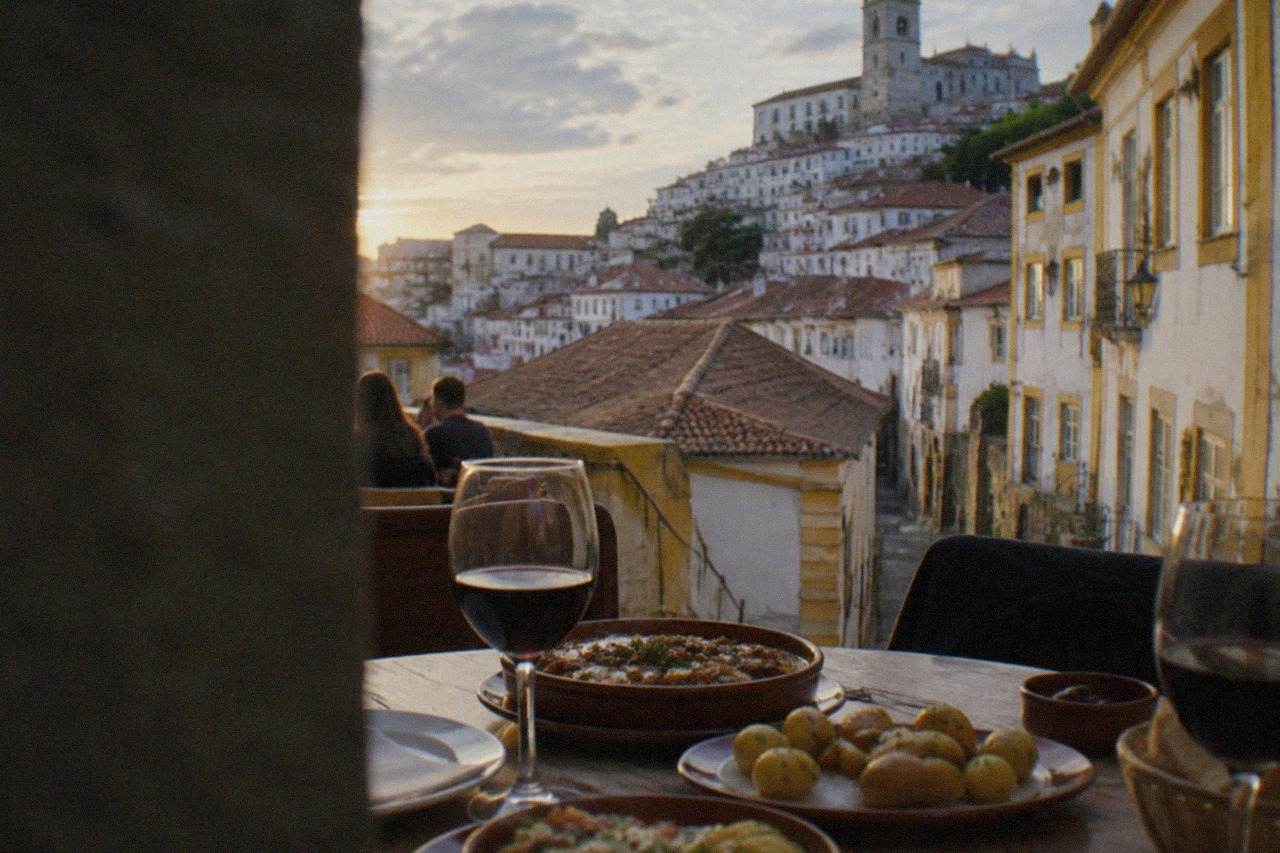
Short answer
Eat leitão da Bairrada, chanfana, bacalhau dishes and the arrufadas of Coimbra's cafés, then drink Bairrada reds and sparkling wines, and time your visit between June and September when the terraces are driest.
Coimbra, Portugal, the university city on the River Mondego, has a food culture shaped by two forces that most visitors never separate. The first is the student population: the University publishes a figure of about 31,000 students, and a city that size, with that many young appetites and a centuries-old academic ritual calendar, develops cheap, generous, ceremonial eating. The second is the countryside around it. Within a short drive south and west lie the Bairrada, a region defined by its pig dishes and its wines, and the Lousã mountains, whose schist villages and streams supplied game, chestnuts, goat and river fish for generations. What ends up on a plate in Coimbra is almost always the meeting point of those two worlds.
This guide walks through what to eat in Coimbra in the order a visitor actually meets it: the signature dishes, the leitão da Bairrada tradition, a realistic eating day, the wine region, the sweets and café rituals, the weather question that decides where you sit, and the guided experiences that tie it together. It is written by an editorial desk, not by someone claiming to have tasted their way through the city, so where a fact matters it comes from what the University, the municipality and the national weather service publish, and where a place recommendation would require unverified prices or hours, you get the distinguishing features of the kind of place instead.
What Are the Dishes Coimbra Is Known For?
The four anchors of eating in Coimbra are leitão da Bairrada, the slow-cooked goat and lamb stews of the inland hills, bacalhau in its many regional preparations, and the arrufada, the city's own sweet brioche-style bun, and around them sit a web of student traditions, river fish from the Mondego and the chestnut and goat cooking of the Lousã schist country. None of these is a single restaurant's invention; they are regional cooking, and the city's versions of them are the reason food-motivated travellers come.
The honest way to describe Coimbra's food identity is regional rather than spectacular. Lisbon has its custard tarts and Porto its tripe stew, both attached to a single named dish. Coimbra's claim is broader: it is the place where the cooking of central Portugal, Bairrada pig farming, Beira mountain produce and the Atlantic-influenced district all pass through, because the city sits at the junction of them. The district of Coimbra reaches the Atlantic at Figueira da Foz, though the city itself does not touch the sea, so salt cod and grilled fish arrive from the coast while the inland dishes arrive from the hills.
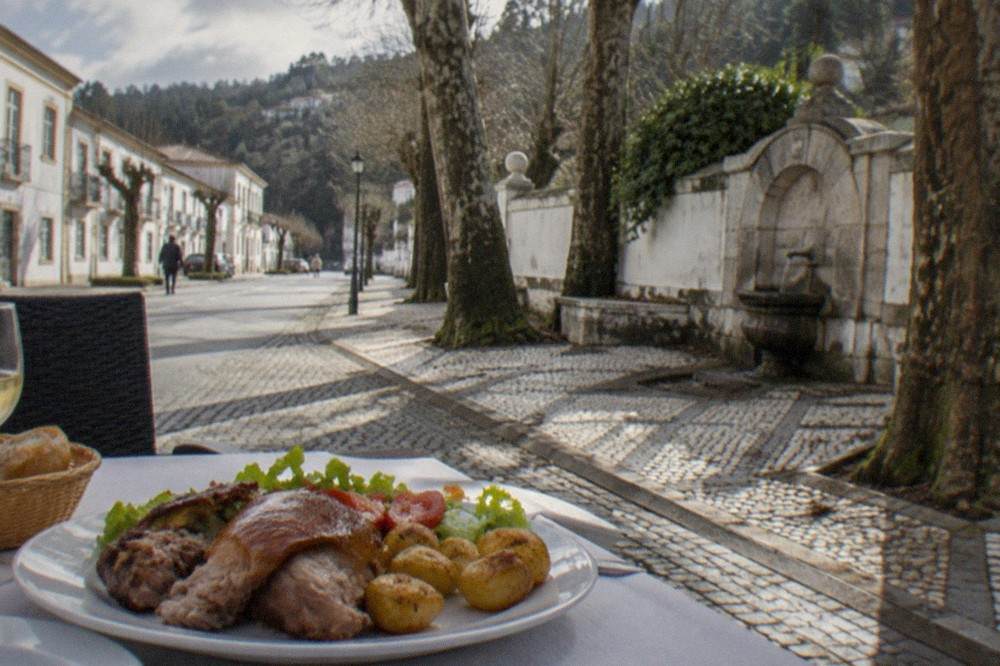
A short overview of the main things to look for:
| Dish | What it is | Where the tradition comes from |
|---|---|---|
| Leitão da Bairrada | Whole suckling pig, seasoned with garlic, pepper, bay and coarse salt, roasted until the skin cracks | The Bairrada region, immediately west and south of the city |
| Chanfana | Goat or lamb slow-cooked in red wine, often for hours in a clay pot | The Lousã, Miranda do Corvo and Ceira valley villages inland |
| Bacalhau | Salt cod, dried and reconstituted, cooked in dozens of regional ways | The Atlantic coast, via the district's fishing towns |
| Arrufadas de Coimbra | Sweet, round, brioche-like buns, often split and filled | Coimbra's own café and student tradition |
| Peixe do Mondego | River fish, historically eel and lamprey from the Mondego | The river the city stands on |
| Castanhas and mountain cooking | Chestnuts, game and goat dishes from the schist villages | The Serra da Lousã, about a short drive inland |
What binds the list together is that every dish is working food. Chanfana began, by the strongest regional account, as a way to preserve and use older animals slowly enough to make them tender. Leitão was celebration food, the dish served at baptisms and festivals across the Bairrada. Arrufadas were student fuel. None of it was invented for tourism, which is exactly why it has survived.
For choosing where to eat in the evening, the practical planning page on where to eat dinner in Coimbra goes deeper on the decision, and the fuller Coimbra restaurants guide covers the kinds of place to look for in each neighbourhood. No restaurant, café, market or bakery in Coimbra had its prices, opening hours or address verified for this site, so this guide deliberately describes dishes and traditions rather than asserting facts about named venues.
What Is Leitão da Bairrada and Why Is It the Region's Signature?
Leitão da Bairrada is a whole suckling pig roasted with garlic, coarse salt, pepper and bay until the skin shatters like glass and the meat underneath stays soft and fatty, and it is the single most famous dish of the region surrounding Coimbra, protected by its own regional certification and served in dedicated restaurants that often do little else. It is eaten hot, carved in front of you, with the skin served as deliberately as the meat.
The Bairrada, the region west and south of the city, is pig country in the way some places are wine country or cheese country. The tradition is old enough that the dish carries protected regional status in Portugal, and the villages along the old roads between Coimbra and the coast are lined with restaurants whose whole identity is the pig. This is not a hidden thing: driving that route, you see the dish painted on walls and the wood-fired ovens visible from the road.
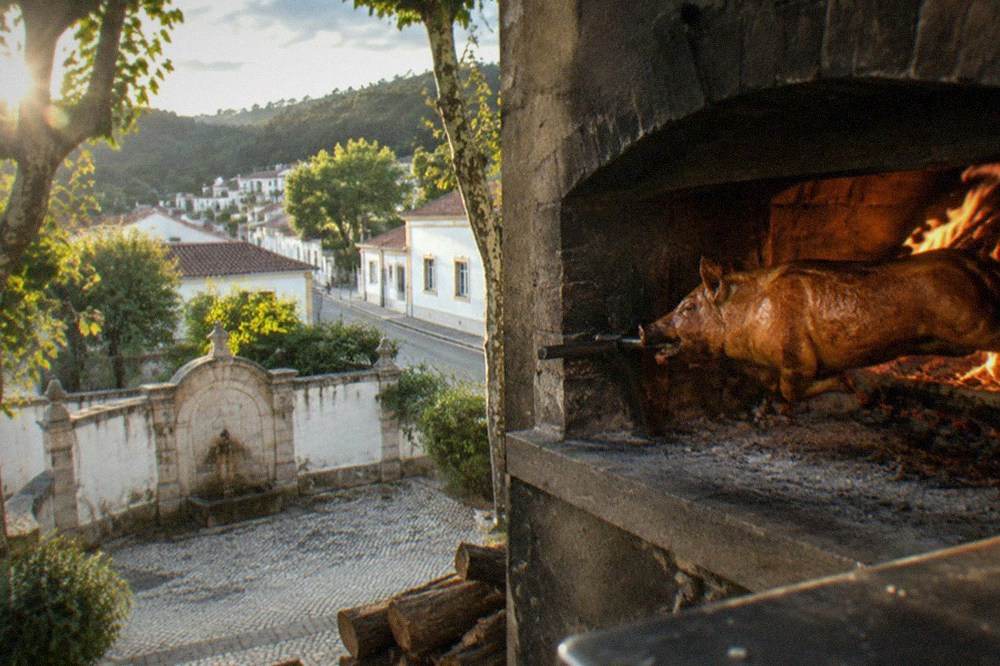
How the dish works explains why the dedicated restaurants exist. A whole pig is roasted, traditionally in a wood oven, and the timing is unforgiving: the skin must crisp without the meat drying, and a pig cooked for a table of six cannot be cooked half a pig at a time. That pushes the dish toward restaurants that cook in quantity and carve continuously through the service. The practical consequence for a visitor is simple: the leitão houses of the Bairrada are destination restaurants, the kind you drive to, rather than places you stumble into, and the drive from Coimbra passes through the heart of the region.
The full story of the dish, its region and the wine that goes with it has its own page: read the leitão da Bairrada guide for the tradition in depth and the Bairrada wine route guide for what is in the glass beside it. The two are not really separable: the same region that perfected the pig also built its reputation on a red grape, and the local instinct is to drink the region's wine with the region's meat.
What Does a Day of Eating in Coimbra Actually Look Like?
A realistic food day in Coimbra runs coffee and an arrufada or a simple pastry in the morning, a market-fuelled or student-priced lunch in the Baixa around the lower town, a late-afternoon coffee stop in one of the city's historic cafés, and dinner late, after eight, when the Portuguese table fills, with the biggest meal of the day usually at lunch rather than at night. The rhythm is southern European, and fighting it makes every meal worse.
The morning belongs to the cafés. Coimbra's café culture is a student culture at root: the city has hosted the University's population for centuries, and the historic cafés around the old town grew up as places where students argued, wrote and procrastinated. The arrufada, the city's own round sweet bun, is the classic pairing. This site has a separate guide to the historic cafés of Coimbra and one to pastries and arrufadas, because the subject is genuinely its own chapter: several of these cafés are institutions with their own literary history.
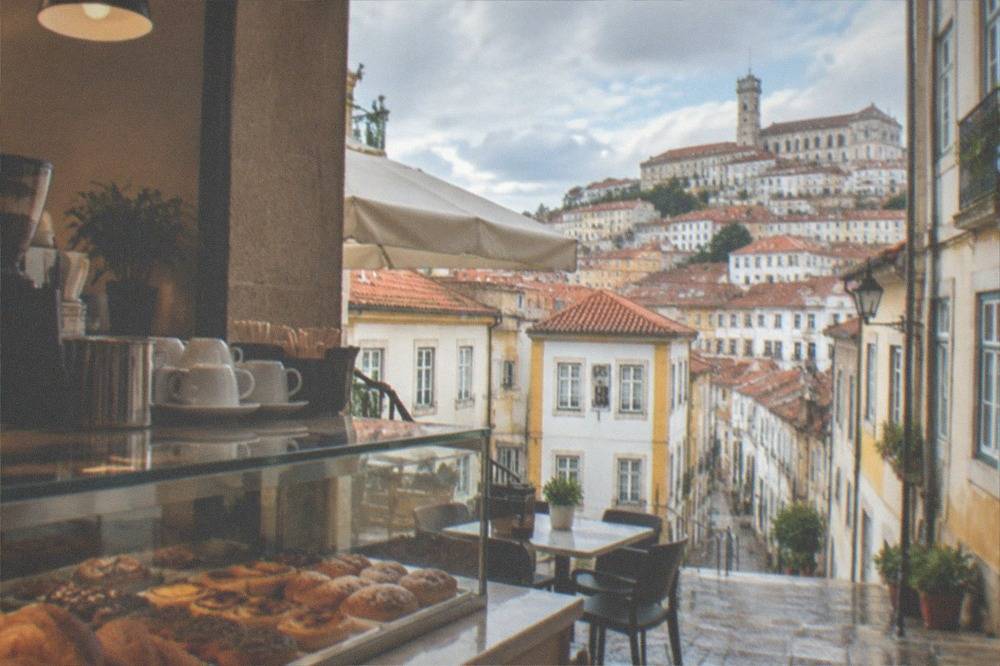
Lunch is the serious meal. Portuguese eating habits put the main plate in the middle of the day, and Coimbra's Baixa, the downtown grid between the river and the university hill, is full of the prato do dia pattern: a fixed daily menu, often chalked up, built around whatever the market and the season offer. This is where bacalhau, grilled fish from the coast, and the slow stews appear at their best value. The traditional dishes guide unpacks the plates you will meet, and the markets page covers how the city's market tradition feeds the restaurant kitchens.
Dinner runs late and light by comparison, though leitão and chanfana restaurants are the exception: those are dinner destinations. The Portuguese table generally fills after eight, and kitchens in the student quarter stay open accordingly. If you are planning the rest of the day around the meals, the one day itinerary and the self-guided walking tour both slot the eating stops into a sensible route between the university hill and the river.
How Does the Bairrada Wine Region Fit Into Eating in Coimbra?
The Bairrada, one of Portugal's established wine regions, sits directly west and south of Coimbra and gives the city its everyday reds, its rosés and its traditional-method sparkling wines, and the regional pairing habit is firm: Bairrada wine with Bairrada pig, sparkling wine with everything else, and the Baga grape as the local red that defines the region's character. The wine is not an add-on to the food culture, it is half of it.
Baga is the grape to know. It is a thick-skinned, late-ripening red that makes wines with real tannin and structure, historically sometimes austere, increasingly made in a fruitier modern style. The same region is also one of Portugal's homes of espumante, traditional-method sparkling wine, which is a natural companion to the fat and crackle of leitão. The Bairrada wine route guide covers the wineries and the driving logic of the region, and the wine tasting page covers how a tasting visit works in practice.
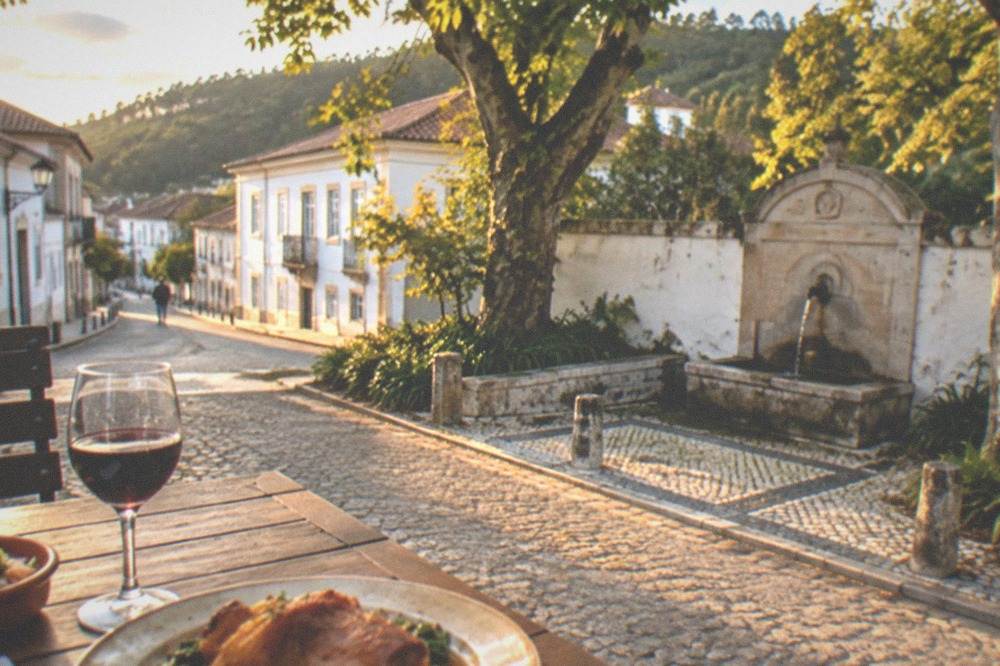
What no verified source on this build establishes is the price of a tasting flight at any named winery, or which specific producers are open on which days. Those details change seasonally and this site has not verified them, so treat any specific figure you read elsewhere with suspicion and check the producer's own current arrangements. What can be said with confidence is structural: the Bairrada is close enough to Coimbra that wine country and city can share a single day, and the region's restaurants and wineries cluster along the same corridors, which is why the food day trip and the wine day trip are usually the same trip.
The wider drinking culture deserves one note of its own: Coimbra's fado tradition, the student fado sung in cape and ribbon rather than the Lisbon style, is a night out built around small rooms, wine and silence during the songs. The Coimbra fado guide and the page on where to hear fado cover it, and a fado night is one of the few evenings where the drinking genuinely is the meal.
When Is the Best Time of Year to Eat Outdoors in Coimbra?
The driest and warmest stretch for terrace and outdoor eating in Coimbra runs from June through September, with July the driest month at 8.9 mm of rain and August the hottest at a 29.1 C mean maximum, while September is the sleeper pick: its mean maximum of 27.4 C is actually higher than June's 26.3 C, and its 49.9 mm of rain is still modest, so the weather holds while the summer crowds thin.
These are not impressions. IPMA's 1991 to 2020 climate normals for the Coimbra / Bencanta station, the city's own weather station about 3 km from the centre, give the full picture, and the table below is drawn straight from it. The point that surprises people is the autumn: the rain does not really arrive until October, when the monthly total jumps to 114.5 mm, and November is the wettest month of the year at 121.5 mm. September is not a compromise month, it is a good month.
| Month | Mean max C | Rain mm | Days with 1 mm+ rain | Terrace verdict |
|---|---|---|---|---|
| May | 23.3 | 64.7 | 8.5 | Pleasant, occasionally showery |
| June | 26.3 | 26.0 | 3.7 | Reliable outdoor eating |
| July | 28.5 | 8.9 | 1.7 | Driest month of the year |
| August | 29.1 | 14.8 | 2.2 | Hottest month, 10.9 days above 30 C |
| September | 27.4 | 49.9 | 5.2 | Warm, quieter, still very usable |
| October | 23.2 | 114.5 | 10.3 | Rain arrives in earnest |
The record extremes at the same station, a highest maximum of 41.2 C on 7 August 2016 and a lowest minimum of -4.3 C on 20 January 2017, frame the range: this is a city of hot, dry summers and cool, wet winters, and the eating calendar follows. The best time to visit guide and the month-by-month weather guide take this further if you are choosing dates.
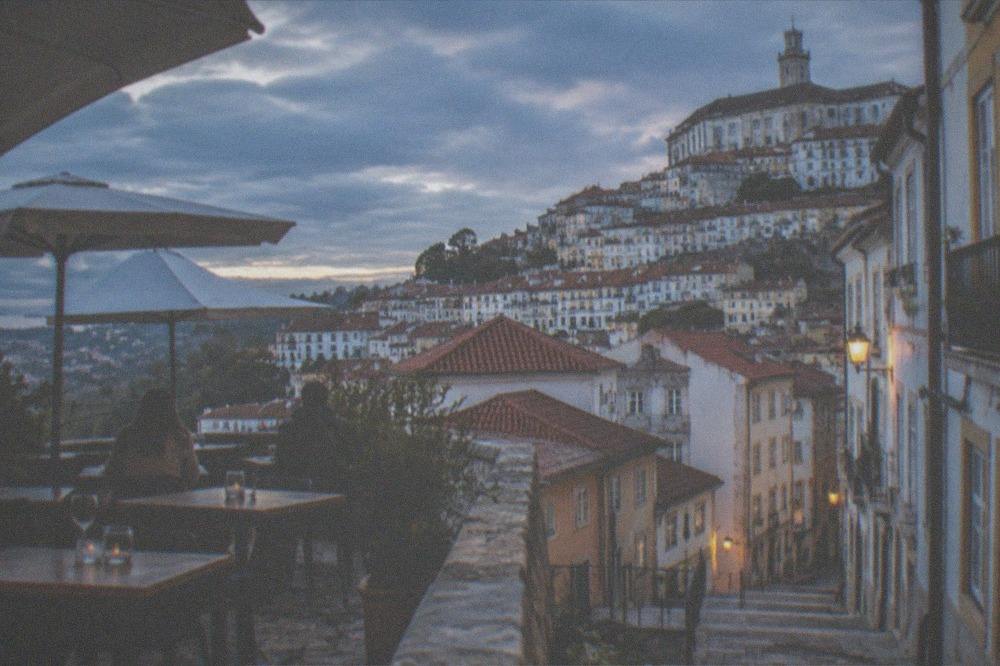
One food-specific timing note is worth planning around. May in Coimbra is Queima das Fitas season, the great student festival, and it reshapes the city's eating for the week it runs: the University closes its visitor circuit on 24 May, and Mosteiro de Santa Cruz suspends visits on the Cortejo da Queima das Fitas, a moveable Sunday. Exact festival dates are not published on an official page this site could verify, so check the Associação Académica's channels before planning a May trip around it, and read the Queima das Fitas guide for what the festival is.
What Sweets, Snacks and Café Traditions Should You Know About?
Beyond the arrufada, Coimbra's sweet and snack traditions run through the pastries of the historic cafés, the convent-style sweets that Portuguese baking is famous for, the chestnut-based cooking of the Lousã hills, and the queijo and smoked-meat traditions of the inland villages, and the café itself, as an institution, is as much a part of the food culture as anything on the plate.
Portugal's convent sweets, the egg-and-sugar pastries developed historically in convent kitchens, exist across the country, and Coimbra's café tradition absorbed them into everyday eating rather than treating them as museum pieces. The distinguishing feature of a Coimbra café, as a type, is longevity and student life: the great ones are places with decades of accumulated habit, where the order is half the ritual. This site has not verified the opening hours of a single café in the city, so the honest advice is about types rather than names, and the pastries and arrufadas page is the deep dive.
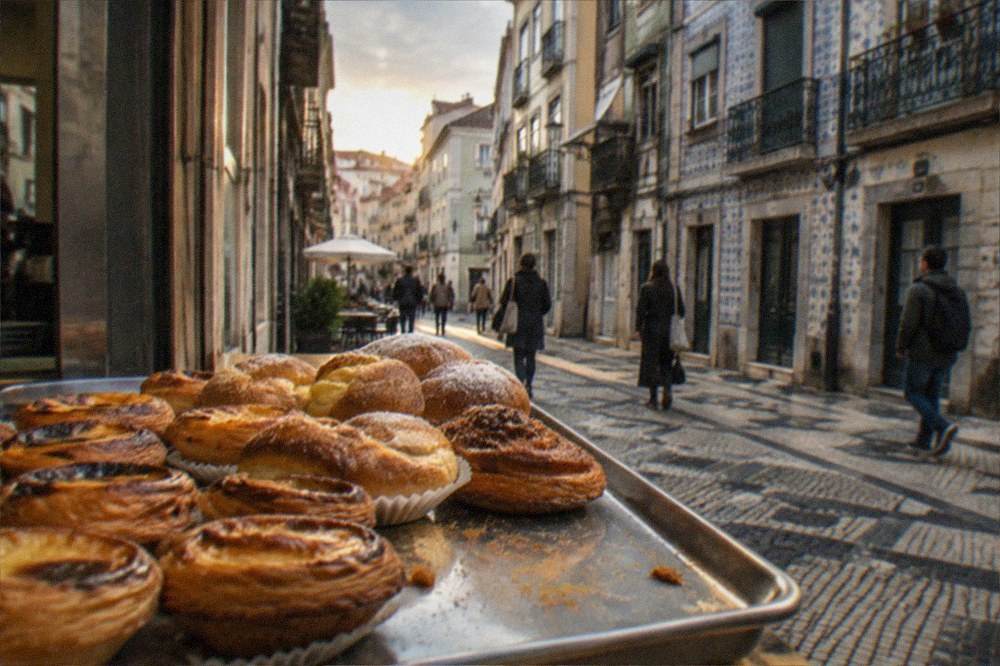
The snack tradition is undervalued by visitors. The petiscos pattern, Portugal's answer to tapas, works especially well here because the regional larders are so distinct: Bairrada pork products, mountain cheeses from the inland villages, and the olives and bread that anchor every table. A petiscos evening with Bairrada sparkling wine is arguably the most Coimbra way to eat without committing to a full restaurant dinner, and it fits the late-night student rhythm of the city.
For shopping rather than eating, the markets guide covers the city's market tradition, and the foodstuffs worth carrying home, from Bairrada wine to the ceramics the region is also known for, are covered fully in the Coimbra pottery and ceramics guide.
Which Food and Culture Experiences Are Worth Booking in Coimbra?
The most useful bookable experiences for a food-motivated visit are a guided walk with a local that covers the city's history and hidden corners, a budget walking tour of the top attractions that leaves your evenings free for long dinners, and a private tour into the Lousã mountains where the schist villages and the wild landscape that produced half the region's cooking are the destination, with the three-hour local-led experience rated 4.9 from 55 reviews at from $40 per person.
The guided options divide cleanly by what you want out of the day. In the city, the Coimbra Adventure, Discovery & Learning with a Local tour is the strongest fit for a food-motivated visitor, because a local guide who knows the stories behind the dishes and the neighbourhoods is exactly what turns a list of plates into an understanding of the city. Check availability on the operator's live listing.
For a lighter commitment, the Coimbra Top Attractions Walking Tour covers the essential sights in two and a half hours at from $5.85 per person, rated 5 from 151 reviews, which leaves the afternoon and evening entirely for the eating plan.
And for the day when the city has fed you enough, the Lousã direction is the natural excursion, because it is the landscape behind the chanfana and the chestnut cooking described earlier. The Lousa Mountain Private Tour runs four hours at from $105.37 per person, rated 5 from 88 reviews, with wild deer watching as part of the draw.
A comparison of the three:
| Experience | Decision name | Price | Rating | Duration |
|---|---|---|---|---|
| Coimbra Adventure, Discovery & Learning with a Local | Three Hours, Learning With Local | from $40 per person | 4.9 from 55 reviews | 3 hours |
| Coimbra Top Attractions Walking Tour | Budget Walk, Top Attractions | from $5.85 per person | 5 from 151 reviews | 2 hours 30 minutes |
| Lousa Mountain Private Tour | Private Tour, Wild Deer Watching | from $105.37 per person | 5 from 88 reviews | 4 hours |
How Much Should You Budget for Eating in Coimbra?
For the verified public costs, the University's combined ticket including the Biblioteca Joanina is 16.50 EUR, the Sé Velha charges 3.00 EUR and Mosteiro de Santa Cruz 5.00 EUR, Conímbriga's museum and ruins ticket is 10.00 EUR, and the municipal tourist tax adds 1.00 EUR per guest per night capped at three nights, while restaurant and café prices in the city are unverified on this build, so treat any specific menu figure you see elsewhere as unconfirmed.
The honest position of this site is that no restaurant, café, bakery or market in Coimbra had its prices verified, so a per-meal budget table would be invented. What can be published is the fixed, officially verified cost layer of a food trip to the city, the part that does not vary by venue:
| Verified fixed cost | Amount | Source detail |
|---|---|---|
| University combined ticket with Biblioteca Joanina | 16.50 EUR | Includes the timed Joanina slot, valid two days except the slot |
| University ticket without the Joanina | 12.50 EUR | Same spaces, no library |
| Sé Velha individual ticket | 3.00 EUR | Groups over 10 pay 2.50 EUR each |
| Mosteiro de Santa Cruz individual ticket | 5.00 EUR | Burial church of Portugal's first two kings |
| Conímbriga museum and ruins ticket | 10.00 EUR | Open seven days, the reliable Monday option |
| Tourist tax | 1.00 EUR per guest per night | Capped at 3 nights, from age 16, paid at the accommodation |
Two warnings attach to that table. The Biblioteca Joanina admits 50 people every 20 minutes, the time on your ticket is the library slot specifically, and entry outside the slot is refused, so book the slot before you plan the rest of the day around it; the Joanina Library tickets guide covers the mechanics. And the tourist tax is genuinely one euro: the two-euro figure in circulation is a proposal approved by the municipal executive in July 2026, not the rate in force.
Common Questions About What to Eat in Coimbra
What Is the Most Famous Dish in Coimbra?
Leitão da Bairrada, the whole roasted suckling pig of the surrounding Bairrada region, is the single most famous dish associated with Coimbra, followed by the city's own arrufada buns and the slow goat and lamb stews of the Lousã hills. None of these belongs to one restaurant; they are regional traditions served across the city and the countryside around it.
Is Coimbra Good for Food?
Yes. Its position at the junction of the Bairrada wine and pig country, the Beira mountain larders and the Atlantic-reaching district gives it a wider regional table than most cities its size, and a student population of about 31,000 keeps generous, inexpensive eating widely available. The best restaurants guide covers the kinds of place to seek out.
What Is an Arrufada?
An arrufada is Coimbra's own round, sweet, brioche-style bun, historically the classic café pairing of the city's student culture, often split and filled. It is one of the few foods that is genuinely of the city rather than of the wider region.
What Wine Should You Drink with Bairrada Food?
Bairrada reds from the Baga grape and the region's traditional-method sparkling wines are the local answers, and the sparkling in particular is the classic partner for leitão. The Bairrada wine route guide covers the region and its producers.
When Should You Visit Coimbra for Outdoor Eating?
Between June and September. July is the driest month at 8.9 mm of rain, August the hottest at a 29.1 C mean maximum, and September remains warm at a 27.4 C mean maximum before the rain returns in earnest in October. The best time to visit guide has the full comparison.
Do You Need to Book Ahead for Food in Coimbra?
This site has verified no booking requirement for any named venue, so no honest instruction can be given here. As a general pattern, the dedicated leitão restaurants of the Bairrada are destination venues where weekend booking is prudent, while the Baixa's daily-menu places and the historic cafés operate on a walk-in basis.
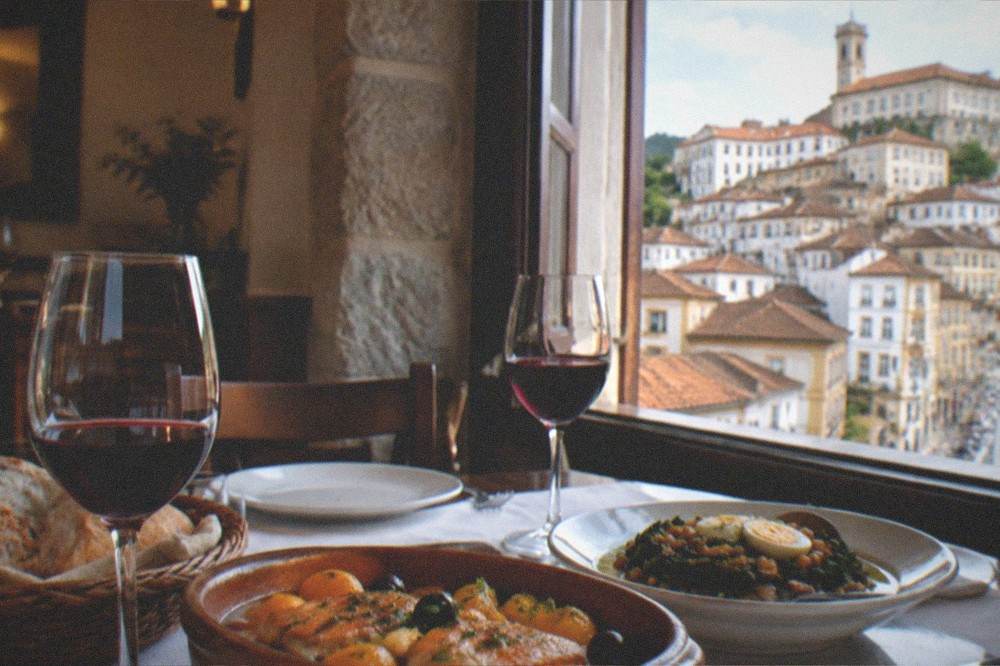
Eating in Coimbra is really an exercise in geography: the pig and the wine from the Bairrada to the west, the goat, chestnuts and schist-village cooking from the Lousã to the east, the fish from a district that reaches the Atlantic, and the student café tradition holding it all together in the middle. Plan the dishes, book the Joanina slot before anything else because 50 people every 20 minutes is a hard ceiling, and let the Coimbra Travel Guide planning pages handle the rest of the route.