Coimbra in Summer: Weather, Crowds and What to Do
Coimbra, Portugal, the university city on the River Mondego, runs hot and dry from June to September. IPMA's own normals show August, not July, as the hottest month, and the Biblioteca Joanina's 50-people-per-20-minutes rule is the one constraint that should shape any summer itinerary.

Short answer
Summer in Coimbra is hot and mostly dry, with a mean maximum of 29.1 C in August and only 14.8 mm of rain that month. Book the Biblioteca Joanina slot in advance, plan the university hill for morning, and use the river, the Botanical Garden and the Alta's shade for the midday hours.
Coimbra, the university city on the River Mondego in central Portugal, spends its summer on a hill. The old town climbs from the river in tiers, and the climb plus the heat is the combination that shapes every good summer plan for this city. IPMA's 1991 to 2020 normals for the Coimbra / Bencanta station, the city's own station 3 km from the centre, give the honest picture: hot, dry months, an August that out-heats July, and a September that most guides get wrong. This page lays out the numbers, the crowds, the timed-slot rule at the Biblioteca Joanina, and the places that stay walkable when the thermometer passes 30 C.
How Hot Does Coimbra Actually Get in Summer?
IPMA's 1991 to 2020 normals for the Coimbra / Bencanta station put the summer mean maximums at 26.3 C in June, 28.5 C in July, 29.1 C in August and 27.4 C in September, with July the driest month at 8.9 mm of rain and August close behind at 14.8 mm. August, not July, is the hottest month on both the mean and the mean maximum, averaging 10.9 days above 30 C.
The record maximum at this station is 41.2 C, set on 7 August 2016.
Those figures come from the city's own station, station number 707 at 40.2134N 8.4552W, altitude 26.6 m, not from a coastal proxy. That distinction matters: the district of Coimbra reaches the Atlantic, but the city does not, and a coastal figure belongs to a different place. Coimbra's summer heat is inland heat, held in the river valley and released up the hill.
The practical reading of the table is straightforward. June and September are warm rather than punishing, with mean minimums of 14.2 C and 14.1 C, so evenings on a terrace stay comfortable. July and August are the months where the midday hours belong indoors, to shade or to the river. The 30 C-plus day counts climb steeply through the season, from 6.2 days in June to 10.9 in August, before falling back to 7.8 in September.
| Month | Mean max C | Mean C | Mean min C | Rain mm | Days 30 C+ | Days 25 C+ |
|---|---|---|---|---|---|---|
| June | 26.3 | 20.3 | 14.2 | 26.0 | 6.2 | 17.8 |
| July | 28.5 | 22.0 | 15.6 | 8.9 | 8.9 | 26.1 |
| August | 29.1 | 22.4 | 15.7 | 14.8 | 10.9 | 28.0 |
| September | 27.4 | 20.7 | 14.1 | 49.9 | 7.8 | 21.9 |
The monthly detail behind these numbers, including the spring and autumn shoulder months, is on the site's full Coimbra weather guide, and the month-by-month breakdown helps if the trip dates are still flexible. For choosing between seasons altogether, the best time to visit Coimbra comparison covers the trade-offs.
When Is Coimbra's Summer Peak, and How Bad Are the Crowds?
Coimbra's visitor peak sits in July and August, the two months with the strongest heat and the weakest rain, and the pressure point is not the streets but the Biblioteca Joanina, where the University caps entry at 50 people every 20 minutes. That ceiling, published on the University's own visit pages, is what turns a busy month into a sold-out month: the timed slots go first, and a visitor who arrives without a pre-booked slot in high summer can be turned away at the door.
The city itself absorbs crowds better than most. Coimbra is not a beach town and does not empty in August the way Lisbon does; it is a working university city with about 31,000 students on the University's own published count, and the summer is the students' holiday, which frees up the old town's rhythm. The streets are busy but rarely gridlocked.
The crowd logic is therefore a booking logic. The Paço das Escolas circuit, the Sé Velha and the Mosteiro de Santa Cruz all take walk-up visitors, but the Joanina slot is the scarce item, and scarcity is honest here: the University's own page states the 50-per-20-minutes limit verbatim, and online purchase closes 20 minutes before the visit time. Book the slot before anything else, then build the day around it.
A morning walking tour solves the structure problem neatly: the Coimbra Top Attractions Walking Tour covers the university hill and the historic centre in one cooler morning block, from $5.85 per person with a 5 rating from 151 reviews on the operator's live listing. Check availability
What Are the Best Things to Do in Coimbra in Summer?
The best summer days in Coimbra pair the university hill in the morning with the river in the afternoon: the Paço das Escolas and the Biblioteca Joanina before the heat builds, the Sé Velha and the shaded lanes of the Alta and the Baixa around midday, and the Mondego riverside, the Parque Verde do Mondego or a river cruise once the afternoon peaks. The University's summer schedule runs 09:00 to 20:00 from 1 April to 30 September, so the morning window is generous.
The University's combined ticket at 16.50 EUR covers the Joanina Library, the Royal Palace, the Capela de São Miguel, the Chemistry Laboratory, the Academic Museum, the Cabinet of Curiosities and the Mineral Gallery, and it is valid two days except for the fixed Joanina slot. The 12.50 EUR version drops the Joanina. The University's own visit pages state all of this, and the detail is unpacked on the site's University tickets guide.
One closure to plan around: the Torre da Universidade, the clock tower, is closed, per the University's own information page, which states plainly that the facility is closed. No price, no climb, no view from the top; the photo spots on the hill terraces do that job instead.

| Summer activity | Where | Why it works in heat | Cost basis |
|---|---|---|---|
| Paço das Escolas circuit | University hill | Opens 09:00; do it first | 16.50 EUR with Joanina |
| Sé Velha de Coimbra | Alta | Thick Romanesque walls stay cool | 3.00 EUR individual |
| Mosteiro de Santa Cruz | Baixa | Cloister shade, royal tombs | 5.00 EUR individual |
| Mondego river cruise | Riverside | Breeze on the water mid-afternoon | from $11 on the listing |
| Botanical Garden | East of the Alta | Mature tree canopy | Garden walk, see University pages |
| Fado show with port wine | Baixa, evening | Starts after the heat breaks | from $18 on the listing |
The evening belongs to fado. Coimbra's fado tradition is its own, distinct from Lisbon's, sung in the dark and tied to the student cape; the site's fado de Coimbra guide explains the tradition and the where to hear fado page lists the rooms. The Coimbra: Live Fado Show with Glass of Port Wine listing, from $18 per person and rated 4.7 from 1,234 reviews, runs about 50 minutes, which fits neatly after dinner.
How Does the Biblioteca Joanina's Timed-Entry Rule Work in Summer?
The Biblioteca Joanina admits 50 people every 20 minutes, the slot is the time printed on the ticket, and entry outside that slot is refused, per the University's own program page. The library cannot be bought on its own at all: it exists only inside the 16.50 EUR combined ticket, online purchase closes 20 minutes before the visit time, and the rest of the ticket's spaces stay valid for two days around the fixed library slot.
This is the single most useful practical fact on this page, and it is the reason summer planning in Coimbra is different from planning in Porto or Lisbon. The ceiling is real and published: the University's own wording limits entries to 50 people every 20 minutes. On a July day, with the full two-day-validity ticket drawing visitors, the slots go in order.
The mechanics are simple once stated. Buy online, pick a slot, arrive at the Prisão Académica entrance for that slot, and use the rest of the combined ticket, the Royal Palace, the chapel, the science spaces, before or after. The full breakdown of ticket tiers, the two-day rule and the bats that protect the books is on the Joanina Library tickets guide.
A guided option absorbs the booking problem entirely. The Coimbra: A Local's Tour of the University + Skip-the-Line listing, from $86 per person and rated 4.9 from 87 reviews, puts the queue problem in a guide's hands on a 90-minute circuit.

Where Can You Escape the Heat in Coimbra?
The reliable summer escapes are the Botanical Garden's tree canopy on the east side of the old town, the Parque Verde do Mondego and the river itself at the bottom of the hill, the shaded cloister of the Mosteiro de Santa Cruz in the Baixa, and the Museu Nacional de Machado de Castro's cryptoporticus, though the museum itself is closed for conservation work. The University's Botanical Garden guided tour runs at 10.00 EUR per person for 90 minutes.
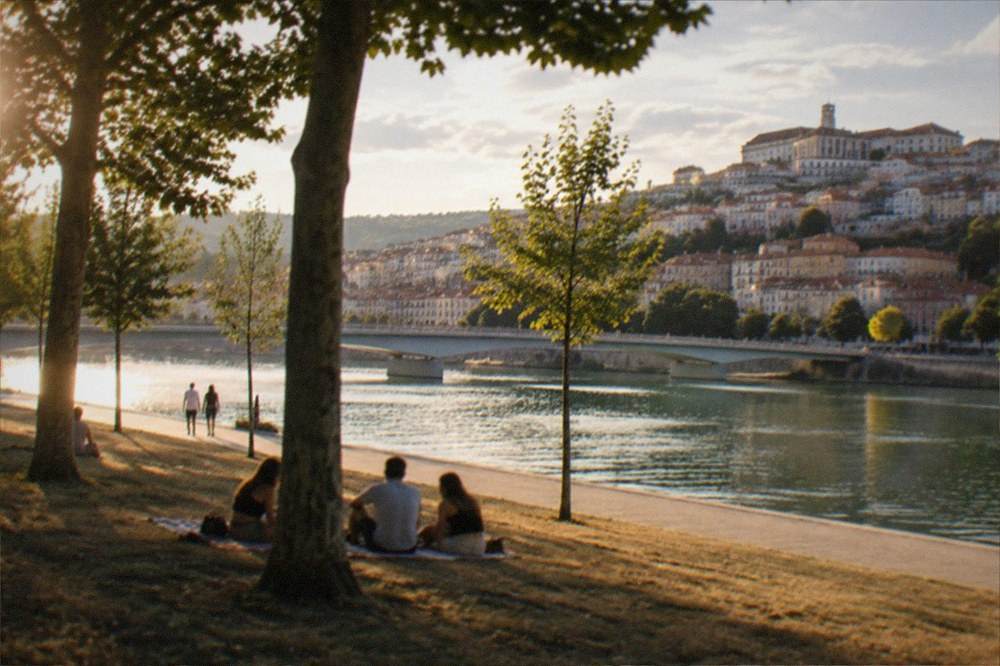
The river is the city's natural air conditioner. The Mondego runs wide and slow past the old town, and the parkland on both banks keeps the late afternoon walkable when the stone of the Alta is still radiating. A boat puts a breeze into the equation: the Coimbra: Mondego River Cruise with City Views listing runs 50 minutes from $11 per person, rated 4.2 from 43 reviews, and the traditional Barca Serrana boat trip covers the same stretch from $15, rated 4.6 from 171 reviews.
The museum situation needs honesty. The Museu Nacional de Machado de Castro, built above a Roman cryptoporticus of the mid-1st century, is closed for conservation work per its own page on the national museums portal, and no reopening date or current price is published. Do not plan around it. The same applies to the Mosteiro de Santa Clara-a-Velha across the river, which has been closed for requalification works since October 2025; check before walking out there.

For a full-day escape with altitude, the schist villages of the Serra da Lousã sit in forested hills south of the city, and the Lousã day trip guide covers them. The Schist Villages at Lousa Mountain listing, from $105.37 per person and rated 4.9 from 133 reviews, runs four hours, which fits a summer day if the start is early enough to be back before the evening.
| Heat escape | Type | Summer note |
|---|---|---|
| Botanical Garden | Garden, shade canopy | University guided tour 10.00 EUR, 1h30 |
| Parque Verde do Mondego | Riverside park | Flat, shaded paths, evening use |
| Mondego river cruise | On the water | 50 minutes, breeze and city views |
| Mosteiro de Santa Cruz cloister | Monument interior | 5.00 EUR, visits 09:30 to 16:30 |
| Sé Velha de Coimbra | Monument interior | 3.00 EUR, thick walls, dark interior |
| Serra da Lousã schist villages | Day trip, altitude | Four-hour tours from Coimbra |
What Should You Pack for a Coimbra Summer?
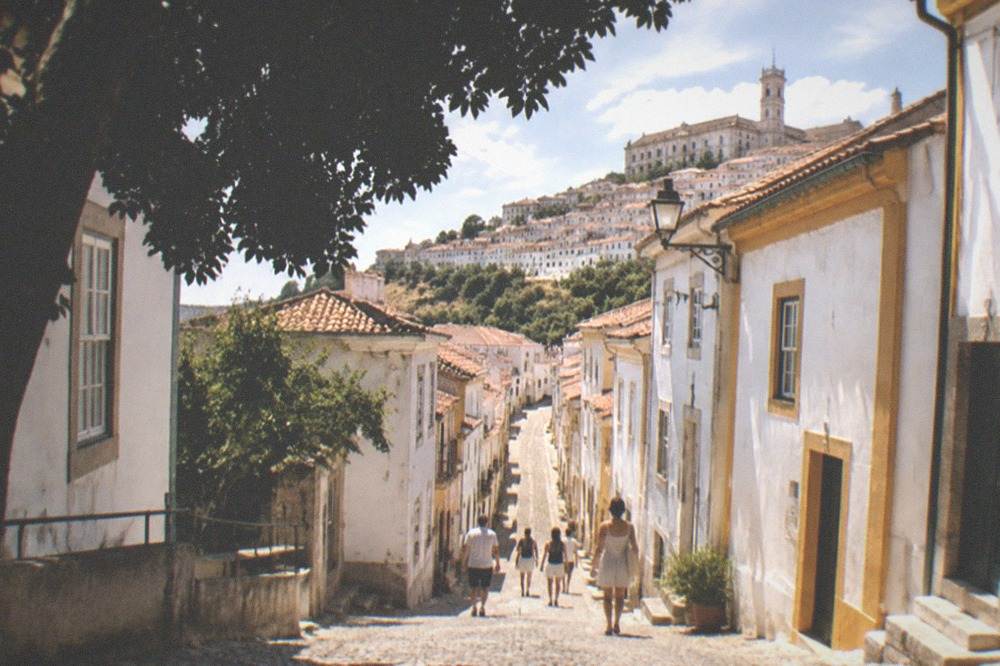
Pack for hot days and mild evenings: IPMA's normals put summer mean minimums between 14.1 C and 15.7 C, so a light layer for late evenings covers the range, while the day calls for sun protection, serious walking shoes for the hill's stone steps and cobbles, and a refillable bottle, since the climb from the Baixa to the Paço das Escolas is steep and unshaded in stretches. August averages 10.9 days above 30 C, so heat gear is not optional.
The hill is the packing decider. Coimbra's old town is vertical, and the streets between the river and the university are stone steps and polished cobbles that hold heat and turn slick. Footwear that grips beats footwear that photographs. The full kit list, including what changes between June and September, is on the site's what to pack guide and the general Coimbra travel guide.
| Item | Why, on the numbers |
|---|---|
| Sun hat and high-SPF sunscreen | 28.0 days per summer average a maximum above 25 C |
| Gripping walking shoes | Cobbles and steps on the climb to the Paço das Escolas |
| Refillable water bottle | 10.9 days above 30 C in August alone |
| Light evening layer | Mean minimums 14.1 to 15.7 C across the season |
| Small daypack | Joanina slot is fixed; the rest of the ticket is two-day |
| Rain shell for September | 49.9 mm that month, nearly twice June's 26.0 mm |
Does Coimbra's Summer Calendar Have Any Big Events?
The one date that matters to visitors is 24 May, when the University closes its entire visitor circuit, and the Cortejo da Queima das Fitas, a moveable Sunday in May, when Mosteiro de Santa Cruz suspends visits; both closures are published by the University and the parish that runs the monastery. Exact Queima dates for any given year are not published on an official page this site could verify, so confirm the week with the organisers before planning a May trip.
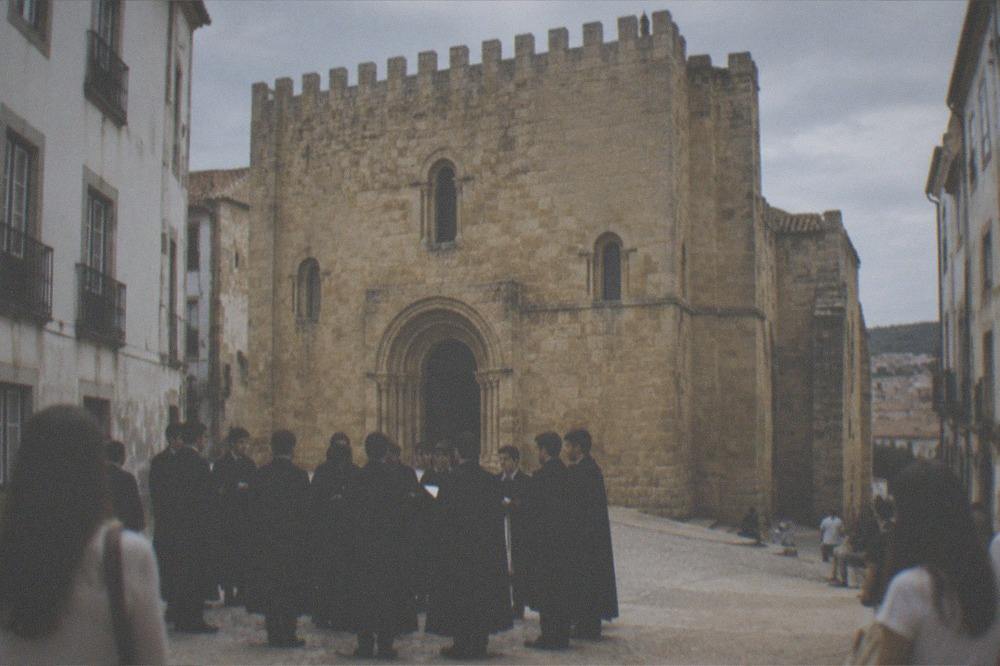
Note that the festival itself falls in late spring rather than summer. The Queima das Fitas is Coimbra's student festival, a week of serenatas, parades and concerts that takes over the old town, and it closes the two biggest monuments on its key days. The University also closes its circuit on 4 October, and it warns that religious, official and academic ceremonies interrupt the normal tourist circuit at other times, so a summer visit should carry a small margin of flexibility. The full picture is on the Queima das Fitas guide.
Summer proper, June through August, is quieter on the official-closure front: the University's published closing dates in the current cycle are 24 and 25 December 2026, 31 December 2026 and 1 January 2027, 24 May and 4 October, none of them in the summer months. The Cabinet of Curiosities and the Physics Cabinet close for two days every three months for disinfestation, which can touch a summer visit on the wrong week.
Is September a Better Month Than June for Coimbra?
September is hotter than June, with a mean maximum of 27.4 C against June's 26.3 C, and wetter too, at 49.9 mm against June's 26.0 mm, so it is neither cooler nor drier; what September offers instead is thinner crowds after the August peak, and the fact that the real autumn rain holds off until October, when the monthly total jumps to 114.5 mm. November is the wettest month of the year at 121.5 mm.
This is the point most guides invert. September does not get "a third of June's rain"; it gets nearly twice June's rain, and it is hotter, not milder. The honest case for September is timing: the school holidays end, the student year restarts and the old town regains its own rhythm, while the weather stays solidly summer, with 21.9 days averaging a maximum above 25 C and only 5.2 days with 1 mm or more of rain.
The June-versus-September comparison, month by month with the full normals table, is on the weather guide, and the seasonal trade-offs more broadly are covered on the best time to visit page. Whichever month wins, the booking advice does not change: the Joanina slot first, everything else second.
How Should You Structure a Hot Day in Coimbra?
Structure the day around the sun and the slot: take the Joanina and the Paço das Escolas in the first hours after the 09:00 opening, descend through the Sé Velha and the shaded lanes of the Alta before noon, spend the early afternoon indoors or on the river, and come back up for the golden light on the terraces in the evening, when the mean minimums of 14 to 16 C make the old town pleasant again.
The University's summer schedule runs to 20:00, so late entries are possible. A worked shape, using the verified figures only:
| Time block | Plan | Basis |
|---|---|---|
| 09:00 to 11:00 | Paço das Escolas, Joanina slot | University opens 09:00, summer to 20:00 |
| 11:00 to 13:00 | Sé Velha, Capela de São Miguel, Alta lanes | Sé Velha 3.00 EUR, summer hours from 09:30 |
| 13:00 to 16:00 | Long lunch, Baixa shade, Santa Cruz cloister | Santa Cruz 5.00 EUR, 09:30 to 16:30 |
| 16:00 to 18:00 | River: cruise, park, or both banks | 50-minute cruises from $11 on the listing |
| 19:00 onward | Terraces, fado show | Fado listings from $18, about 50 minutes |
The two-day ticket validity is the quiet advantage of this structure. The Joanina slot is fixed, but the Royal Palace, the chapel and the science spaces can be split across two days, which converts one punishing hot-day circuit into two comfortable halves. The University's own pages state the two-day rule, and it rewards anyone who reads the ticket before planning.
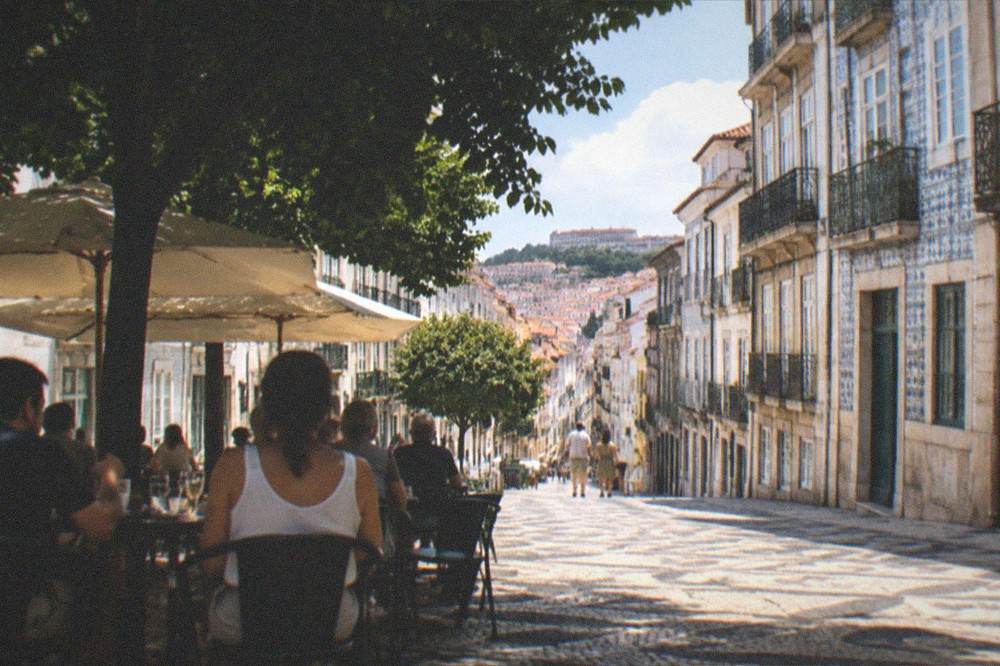
For the food that fills the long lunch, the Coimbra restaurants guide covers the city's tables, and the leitão and Bairrada guide covers the roast the region is known for. Getting there and away is covered on the Porto to Coimbra and Lisbon to Coimbra pages, and the station-name trap, Coimbra-B against Coimbra-A, has its own explanation on the train stations guide. More seasonal planning, from itineraries to where to stay, is across the rest of Coimbra Travel Guide.
Common Questions About Coimbra in Summer
How hot is Coimbra in summer?
IPMA's 1991 to 2020 normals for the Coimbra / Bencanta station put the mean maximums at 26.3 C in June, 28.5 C in July, 29.1 C in August and 27.4 C in September. August is the hottest month, not July, and averages 10.9 days above 30 C. The record maximum at the same station is 41.2 C, set on 7 August 2016.
Is September drier than June in Coimbra?
No, and this is the most common error in guides to the city. September is both hotter than June, 27.4 C against 26.3 C mean maximum, and wetter, 49.9 mm against 26.0 mm. What September actually offers is thinner crowds, and the fact that the heavy autumn rain holds off until October, when the monthly total jumps to 114.5 mm.
Do I need to book the Biblioteca Joanina in advance in summer?
Yes. The University caps entry at 50 people every 20 minutes, the time printed on the ticket is the library slot specifically, and entry outside that slot is refused. Online purchase closes 20 minutes before the visit time, and counter purchase depends on slot availability, which in July and August is not a safe bet.
Can you climb the university tower in Coimbra?
No. The Torre da Universidade is closed, per the University's own information page, which states that the facility is closed. The page notes the tower's 184 steps and narrow passage but sells no ticket and publishes no reopening date.
Is the Machado de Castro museum open in summer?
No. The Museu Nacional de Machado de Castro is closed for conservation work, per its own page on the national museums portal, with no published reopening date or current ticket price. The Mosteiro de Santa Clara-a-Velha across the river has also been closed for requalification works since October 2025; check both before walking to them.
What is the best time of day to visit the university hill in summer?
The morning. The University's summer schedule runs 09:00 to 20:00 from 1 April to 30 September, and the climb from the Baixa to the Paço das Escolas is steep and partly unshaded, so the first two hours after opening are the coolest and least crowded of the day.
Coimbra in summer rewards anyone who books the Joanina slot early, walks the hill in the morning and gives the afternoon to the river, and the official numbers say the reward is real: a dry, hot season with a September that stays warm long after the crowds have gone home.