A Short History of Coimbra
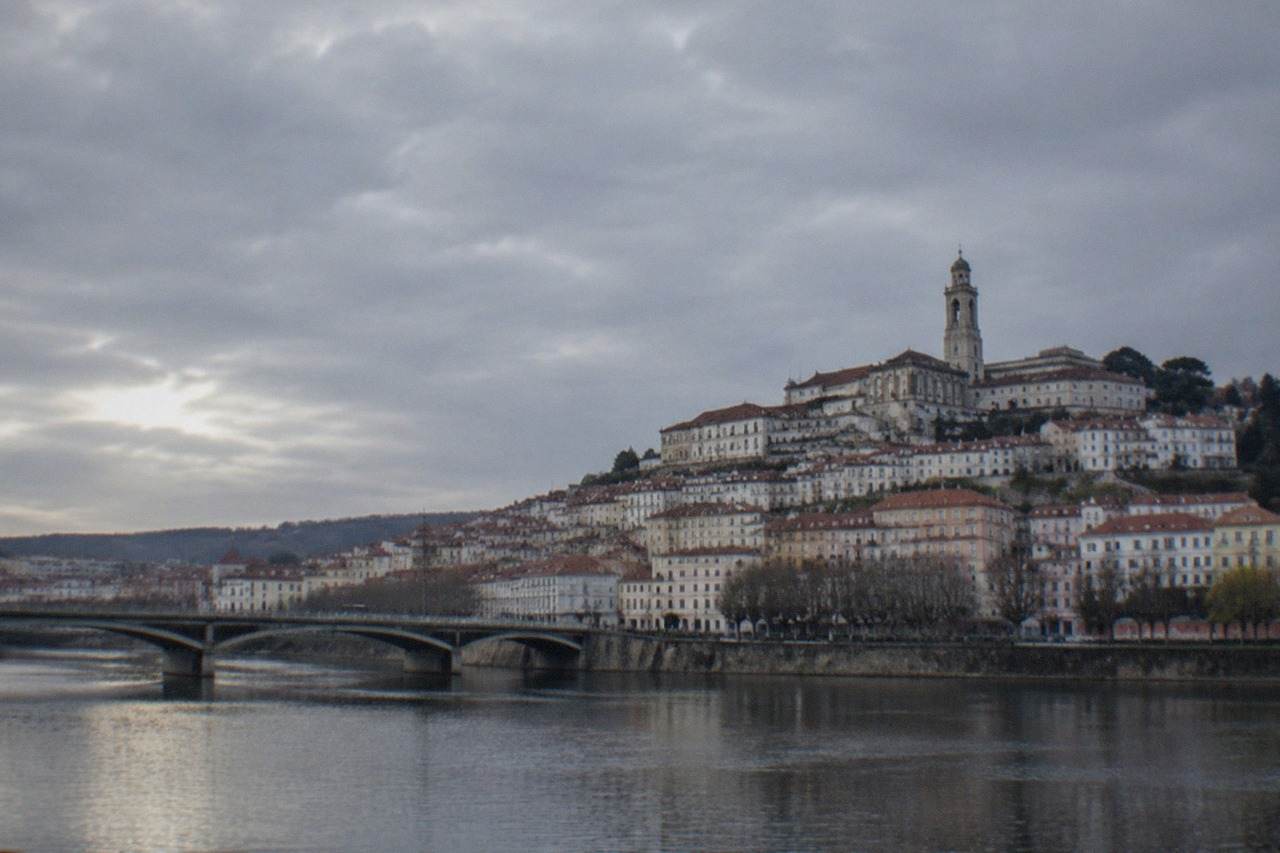
Coimbra, Portugal, the university city on the River Mondego, carries its history in stone: a Roman cryptoporticus under one museum, a monastery holding the tombs of Portugal's first two kings, and a hilltop university whose 2013 UNESCO listing changed how the world sees it.
Short answer
Coimbra's history turns on three verified anchors: a Roman past visible in the cryptoporticus under the Museu Nacional de Machado de Castro and the ruins of Conímbriga about 16 km south, a royal burial church at Mosteiro de Santa Cruz, and the University of Coimbra, whose Alta and Sofia were inscribed on the UNESCO World Heritage list in 2013.
Coimbra, Portugal, the university city on the River Mondego, is a place where the history is not behind glass but underfoot, overhead and, on the university hill, still in daily use. The city that visitors walk today is layered: a Roman cryptoporticus of the mid-1st century sits beneath the Museu Nacional de Machado de Castro, the ruins of the Roman town of Conímbriga lie about 16 km south in Condeixa-a-Velha, and the hill above the river has been shaped for centuries by one of Europe's oldest universities, whose Alta and Sofia were inscribed on the UNESCO World Heritage list in 2013. This guide sticks to what primary sources actually support, and says plainly where the record runs out.
What Is the Historical Significance of Coimbra, Portugal?
Coimbra's historical significance rests on three verifiable pillars: it sits on a Roman past embodied in the mid-1st-century cryptoporticus under the Museu Nacional de Machado de Castro and the nearby ruins of Conímbriga; it holds the burial church of Portugal's first two kings at Mosteiro de Santa Cruz; and it is dominated by the University of Coimbra, whose Alta and Sofia components were inscribed on the UNESCO World Heritage list in 2013 as list reference 1387. Anything beyond those anchors, a foundation date, a reconquest year, a period as a capital, is the subject of legend and repeated error, and this guide will not state it as fact.
That restraint is not a weakness. The verified story is rich enough, and it is the one a careful reader can check. The University of Coimbra publishes its own numbers: about 31,000 students, 434 courses, 1,935 professors, four campuses, 22 libraries, two museums and one botanic garden. Those figures describe an institution that is not a monument but a working city within the city, and they explain why Coimbra's history is still being written every autumn when the academic year begins.
The municipality publishes its own tourism data too, and it is unusually candid. Its 2026 report records 698,151 overnight stays in Coimbra in 2025 at the municipality level, and estimates the municipal cost of tourism at 3.49 EUR per overnight stay, against a tourist tax of 1.00 EUR. A city that measures itself this precisely is a city whose history is documented, and the rest of this guide leans on that documentation.
For a first visit oriented around the historic core, things to do in Coimbra covers the practical side, and the Coimbra travel guide pulls the whole picture together.
What Can You Still See of Roman Coimbra Today?
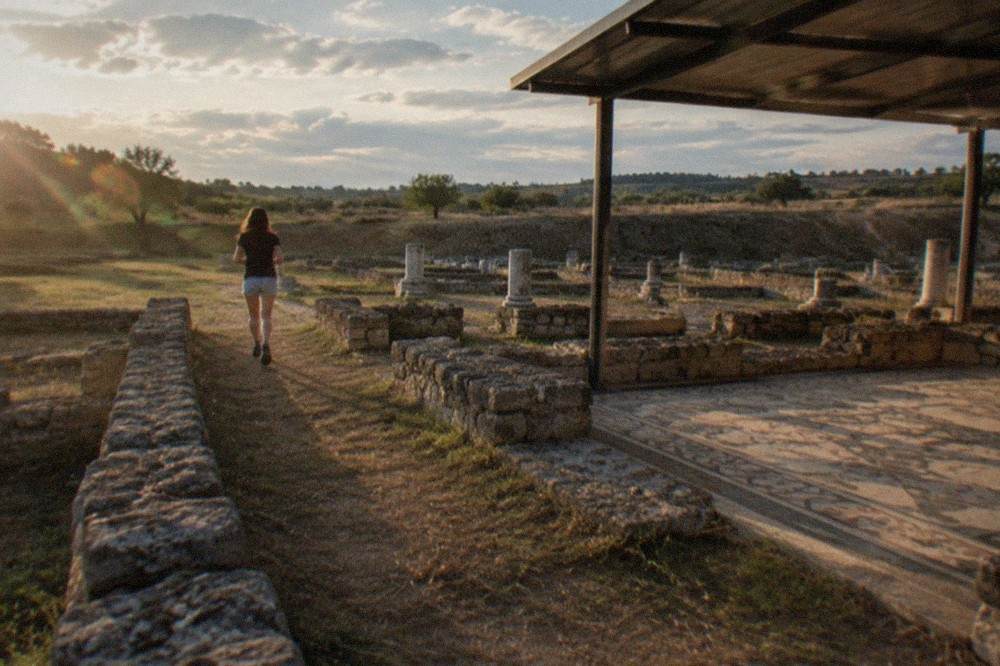
The Roman past survives in two places you can visit: the cryptoporticus of the mid-1st century beneath the Museu Nacional de Machado de Castro, which forms part of the museum's visit route, and the excavated Roman town of Conímbriga, roughly 16 km south of Coimbra in the parish of Condeixa-a-Velha, in the municipality of Condeixa-a-Nova, where a single 10.00 EUR adult ticket covers both the museum and the ruins. The museum itself, however, is currently closed for conservation work, so check its status before planning a visit around the cryptoporticus.
Conímbriga deserves the emphasis. The national museum there publishes daily hours of 10:00 to 18:00, with the ticket office closing at 17:15, and it is open seven days a week, which makes it the reliable Monday option when other national monuments close. It shuts only on 1 January, Easter Sunday, 1 May, 24 July and 25 December. The site's address, published by the museum itself, is Rua Professor Vergílio Correia, Condeixa-a-Velha, and writers and visitors alike routinely misplace it in Coimbra, which it is not.
The distinction matters beyond pedantry. Coimbra is a city, a municipality and a district, three different things, and the district reaches the Atlantic while the city does not. Conímbriga is in none of the three Coimbras: it is in Condeixa-a-Nova. Getting the geography right is the first step to getting the history right.
The practical comparison between the two Roman sites is worth a table:
| Site | What it is | Current status | Adult ticket |
|---|---|---|---|
| Cryptoporticus under Museu Nacional de Machado de Castro | Mid-1st-century Roman structure, part of the museum visit route | Museum closed for conservation work | No price published while closed |
| Conímbriga, Museu Nacional de Conímbriga | Excavated Roman town and museum, about 16 km south | Open daily 10:00 to 18:00, ticket office to 17:15 | 10.00 EUR, museum and ruins together |
A guided excursion makes Conímbriga easy from the city. The Conímbriga and Roman ruins guide has the detail, and a half-day option is the walk, which covers the ruins with a guide in four hours. The city options in the band below are worth a look as well if the Roman side of the trip is already covered.
Why Is the University of Coimbra So Central to the City's Story?
The University of Coimbra is central because it is not a building but the organising force of the whole old town: about 31,000 students study there, its Paço das Escolas circuit sells a 16.50 EUR combined adult ticket whose Biblioteca Joanina slot admits only 50 people every 20 minutes, and its presence explains the student traditions, the fado, the Repúblicas and the calendar of closures that every visitor runs into. The University's own visit pages state all of this, and they are the authority to follow.
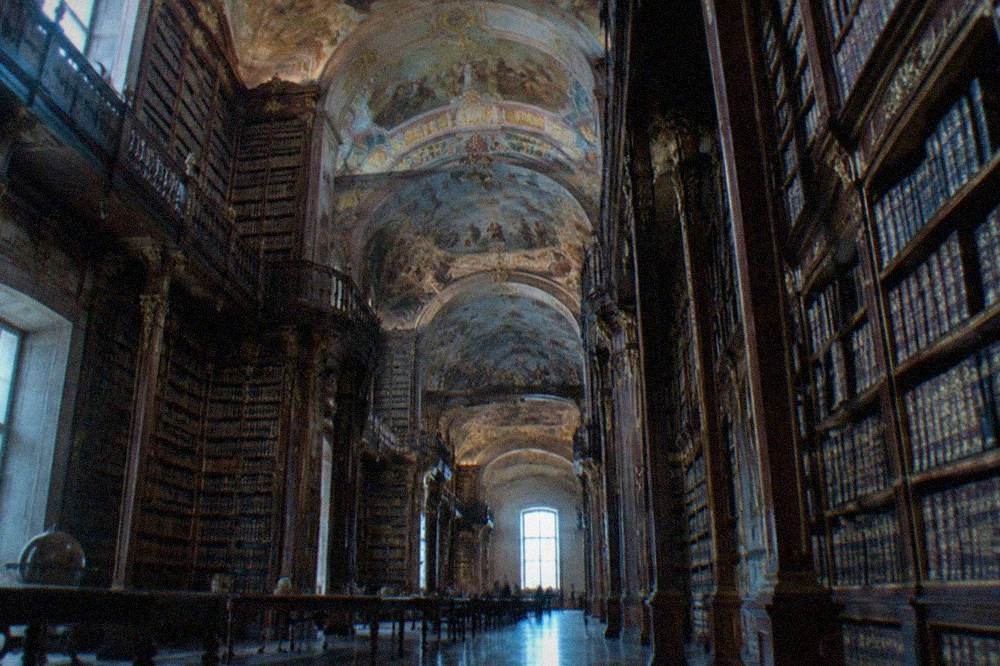
The Biblioteca Joanina rule is the single most practical historical fact on this site. The library cannot be bought on its own; it exists only inside the combined ticket, and the time printed on that ticket is the Joanina slot specifically, with entry refused outside it. The other spaces on the ticket, the Royal Palace, St Michael's Chapel, the Chemistry Laboratory, the Academic Museum, the Cabinet of Curiosities and the Mineral Gallery, remain valid for two days. The University also publishes its closing dates: 24 and 25 December, 31 December and 1 January, 24 May and 4 October.
The Joanina holds a detail that sounds like legend but is documented on the University's own pages: a colony of bats lives in the library and eats the insects that would otherwise damage the books. The library's capacity rule, 50 people every 20 minutes, is the University's own wording, and it is the one genuine scarcity fact in Coimbra tourism. Slots sell out in summer, and online purchase closes 20 minutes before the visit time.
The University's published ticket structure, valid for the 2026 season, looks like this:
| Ticket | Adult price | What it includes |
|---|---|---|
| Joanina Library + University + Science Museum | 16.50 EUR | Joanina with timed slot, Royal Palace, St Michael's Chapel, Chemistry Laboratory, Academic Museum, Cabinet of Curiosities, Mineral Gallery |
| University + Science Museum | 12.50 EUR | The same spaces without the Joanina Library |
| Guided tour, Palace of Schools | 25.00 EUR | Guide-led visit, 1h30, science spaces not included |
| Science Museum + UC Exploratório | 16.00 EUR | Science spaces only, explicitly no Palace of Schools spaces |
The full detail on tickets, hours and the timed-slot system is in the University of Coimbra tickets guide and the Biblioteca Joanina tickets guide. A guided visit with a former student, the , bundles the ticket into the walk.
What Is the UNESCO World Heritage Listing, Exactly?
The inscription is "University of Coimbra, Alta and Sofia", list reference 1387, inscribed in 2013 under criteria (ii), (iv) and (vi), and it covers two components inside the old town: the Alta, the university hill, and Rua da Sofia, the college street below. It is not the city of Coimbra, not the Baixa, not the riverside, and calling Coimbra a UNESCO World Heritage city is the single most common factual error in guides to this destination.
The named components are specific. UNESCO's listing includes the Royal Palace of Alcáçova, St Michael's Chapel, the Joanine Library, the colleges of Jesus, Holy Trinity, St Jerome, St Benedict, St Anthony of the Quarry and St Rita on the hill, the Rua da Sofia colleges, the 18th-century Chemistry and other laboratories, the Botanical Garden, the University Press and the 1940s University City. The property is managed by the association RUAS, founded by the University, the City Hall, the Regional Delegation of the Ministry of Culture and Coimbra Viva.
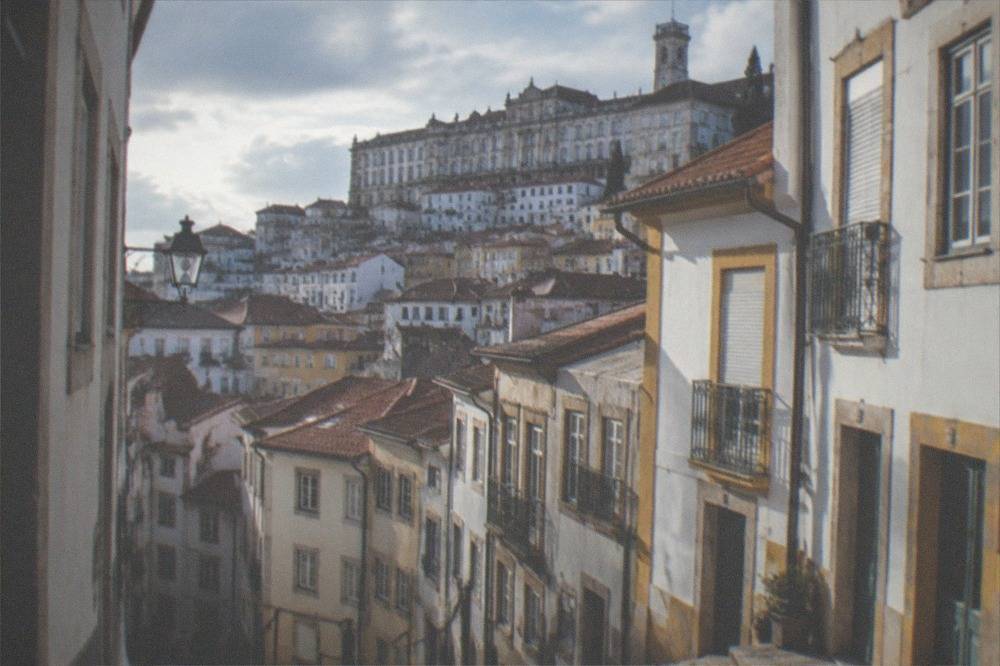
The practical consequence for a visitor is simple: the World Heritage walk is a defined route, not the whole town. It runs from the Paço das Escolas at the top of the hill down to Rua da Sofia, and every component on it is reachable on foot. The old town guide and the self-guided walking tour cover the ground street by street.
Why Is Mosteiro de Santa Cruz Important to Portuguese History?
Mosteiro de Santa Cruz is the burial church of Portugal's first two kings, which makes it a national monument in the fullest sense, and it is visitable today for a published 5.00 EUR individual ticket, with hours of 09:30 to 16:30 and a separate Sunday schedule, according to the Unidade Pastoral Aeminium, which manages it and publishes the figures. The monastery's church, sacristy, cloisters and chapter room are all on the visit route.
The parish's own page also records the closures that matter to history-minded visitors: visits are suspended on Easter Sunday and on the Cortejo da Queima das Fitas, a moveable Sunday in May when the student parade takes over the streets. The University, for its part, closes its whole visitor circuit on 24 May. Those two verified closures bracket the city's biggest annual historical event, and they are the only officially published facts about it: the exact festival dates are not on an official page this site could verify, so they are not stated here. The wider set of guides lives on Coimbra Travel Guide.
The other church of the same management, Sé Velha de Coimbra, the Old Cathedral, charges 3.00 EUR per person individually, or 2.50 EUR for groups over ten, with summer hours of 09:30 to 18:30 and Sunday hours from 11:00. The Sé Velha guide and the Santa Cruz guide carry the full detail.
| Monument | Adult ticket | Hours published | Manager |
|---|---|---|---|
| Mosteiro de Santa Cruz | 5.00 EUR individual, 3.50 EUR group of 12+ | 09:30 to 16:30, Sundays separate | Unidade Pastoral Aeminium |
| Sé Velha de Coimbra | 3.00 EUR individual, 2.50 EUR group of 10+ | Summer 09:30 to 18:30, Sundays 11:00 | Unidade Pastoral Aeminium |
| Paço das Escolas, University of Coimbra | 16.50 EUR with Joanina, 12.50 EUR without | Summer 09:00 to 20:00, winter 09:00 to 17:30 | University of Coimbra, visit.uc.pt |
What Role Did the Students and Their Traditions Play in Coimbra's History?
Student culture is not decoration in Coimbra, it is the mechanism by which the university's history stays alive: the fado of Coimbra is sung by students in the capa e batina, the Repúblicas, the student houses of the old town, are part of the lived fabric of the historic centre, and the Queima das Fitas in May is big enough that the University closes its entire visitor circuit on 24 May and Santa Cruz suspends visits on the parade Sunday. Those closures are the official, verifiable footprint of the tradition.
The fado of Coimbra is a distinct tradition from Lisbon's, tied to the academic costume and the male student voice, and it is heard in the Baixa's fado houses on performance nights. The fado de Coimbra guide and the where to hear fado guide cover where to listen, and a live performance with a glass of port wine, the , is the easiest structured introduction.
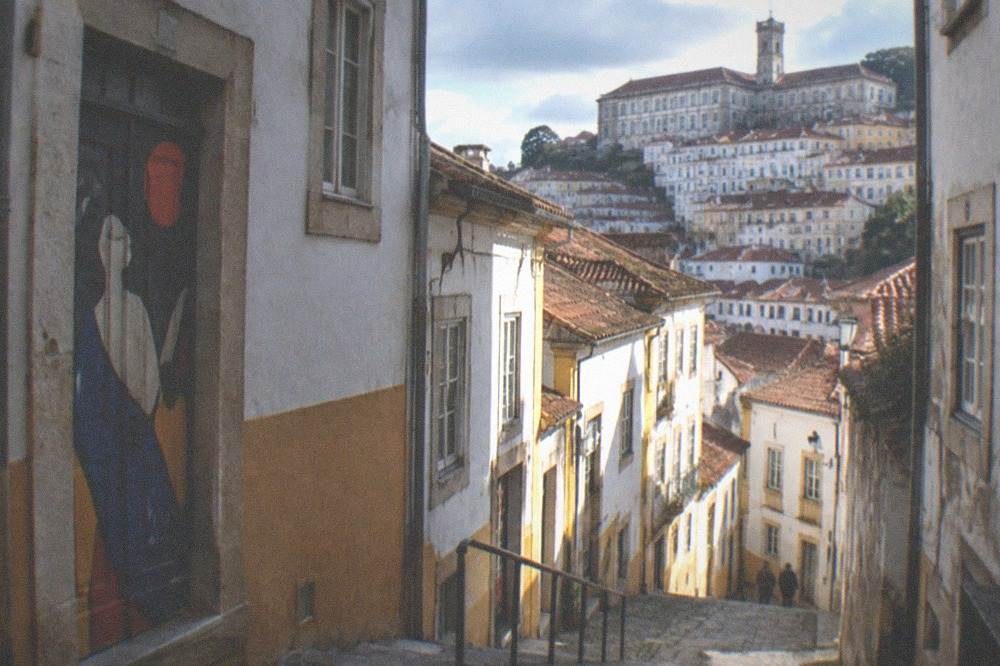
The Repúblicas are worth seeking out on any walk through the old town. Their painted facades and doorways are among the most photographed features of the historic centre, and they represent a student housing tradition that has survived into the era of purpose-built residences. The Repúblicas guide explains the institution, and the student traditions guide covers the costume and its meaning.
What Happened to Coimbra in the 20Th Century?
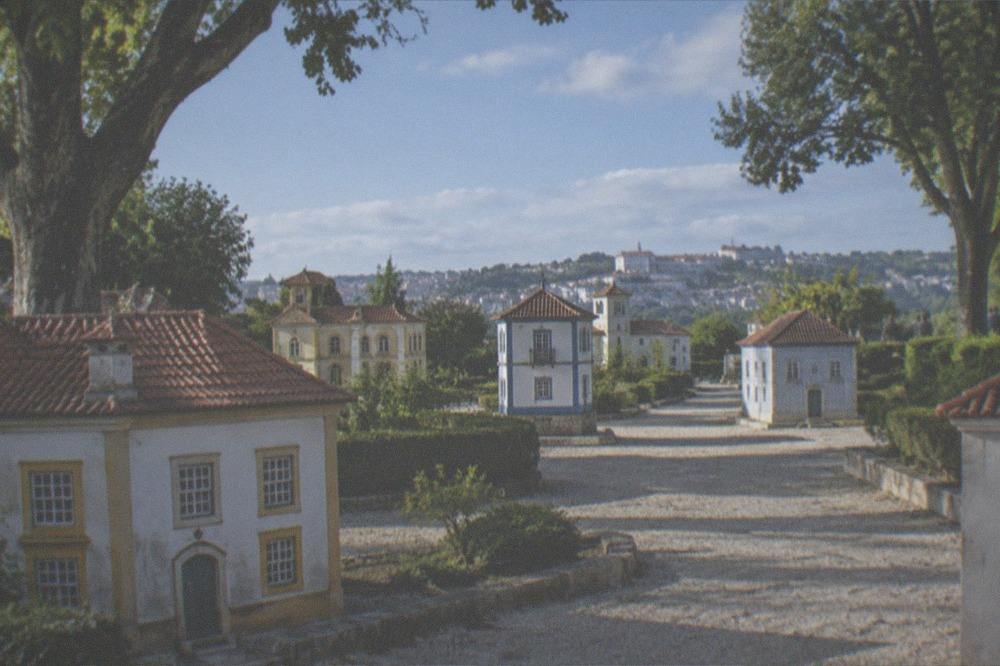
The 20th century reshaped the city around the university's expansion: the 1940s University City grew on the hill, Portugal dos Pequenitos opened in 1940 to a design by the architect Cassiano Branco, and the Alta's expansion is now part of the UNESCO inscription as the 1940s University City component, one of the named elements of the 2013 listing. These are the 20th-century facts the record supports.
Portugal dos Pequenitos, the miniature park operated by the Fundação Bissaya Barreto, remains a family fixture. Its own horário page publishes hours of 10:00 to 17:00 in the winter period and 10:00 to 19:00 from 1 March to 15 October, closed on Christmas Day. Its price page renders client-side and publishes no euro amount in the served HTML, so this site prints the hours and points to the venue's own ticket page rather than a number. The Portugal dos Pequenitos guide has the visiting detail.
The 1940s University City is the least-discussed part of the UNESCO inscription and the most interesting one for anyone who has read the standard guides. Most coverage of the listing stops at the baroque library. The actual inscribed property explicitly includes the 20th-century expansion, which means UNESCO's reasoning valued the university's continued growth, not just its oldest showpieces. That is a genuine point of information gain for a reader who wants to understand why the listing was made.
How Has Coimbra Changed in Recent Years?
The recent changes are concrete: a municipal tourist tax of 1.00 EUR per guest per overnight stay, capped at three nights, from age 16, has been in force since 5 April 2023, with a two-euro rise approved as a proposal in July 2026 but not yet the published rate; the Museu Nacional de Machado de Castro is closed for conservation work; and the Metro Mondego bus rapid transit network has been opening in stages since August 2025, with SMTUC tickets valid on it under the 2026 tariff.
The tax is a good example of why this site reads primary sources twice. The municipality's service portal says 1.00 EUR; its newsroom reported an approved proposal to double it on 21 July 2026, describing the tax as currently fixed at one euro per overnight stay. Both are municipal and both are current. The published rate is 1.00 EUR, paid to the accommodation at check-in or check-out, charged all year, with exemptions only for medical stays, a companion of a medical traveller, and guests with a disability of 60% or more.
The transport change is the one returning visitors will notice most. The SMTUC 2026 tariff, in force since 1 April 2026, sells titles marked valid on both the SMTUC and Metro Mondego networks, so a city bus ticket works on the new system. The driver-bought single is 2.00 EUR, and pre-purchased trips in packs of three or more work out at 0.90 EUR each, with one trip valid 90 minutes on the urban network including transfers. The route-by-route detail of the Metrobus is still settling, so check the operator before relying on a specific line.
| Change | Year | Status |
|---|---|---|
| Tourist tax in force, 1.00 EUR per night, max 3 nights | Since 5 April 2023 | Current published rate |
| Two-euro tourist tax approved as a proposal | 21 July 2026 | Not yet the published rate |
| Metro Mondego partial operation begins | From August 2025 | Opening in stages |
| SMTUC tariff with Metro Mondego validity | In force 1 April 2026 | Current |
| Museu Nacional de Machado de Castro closed for works | As of September 2026 | Phased reopening expected |
Where Does Coimbra's History Show Up in Daily Life Today?
Coimbra's history is lived rather than displayed: the university's about 31,000 students fill the same hilltop spaces the 2013 UNESCO listing protects, the SMTUC buses climb the same streets the colleges were built on, and the municipality's own 2025 figure of 698,151 overnight stays shows a historic centre that is a working tourist economy measured to the cent, at an estimated municipal cost of 3.49 EUR per overnight stay. The past and the present share the same pavement.
The climate shapes this daily life too, and the official IPMA normals for the city's own station, Coimbra / Bencanta, for 1991 to 2020, show a pattern most guides get wrong. September's mean maximum of 27.4 C is higher than June's 26.3 C, and September is wetter than June, 49.9 mm against 26.0 mm. The rain holds off until October, when it jumps to 114.5 mm. August, not July, is the hottest month, averaging 10.9 days above 30 C. November is the wettest at 121.5 mm, and July, at 8.9 mm, is effectively dry.
| Month | Mean max C | Mean min C | Rain mm | Days max 30 C+ |
|---|---|---|---|---|
| May | 23.3 | 11.8 | 64.7 | 3.5 |
| June | 26.3 | 14.2 | 26.0 | 6.2 |
| July | 28.5 | 15.6 | 8.9 | 8.9 |
| August | 29.1 | 15.7 | 14.8 | 10.9 |
| September | 27.4 | 14.1 | 49.9 | 7.8 |
| October | 23.2 | 11.9 | 114.5 | 2.0 |
The best months on this data are late spring and September: warm, comparatively dry, and outside the August peak. The weather guide and the best time to visit guide carry the month-by-month picture.
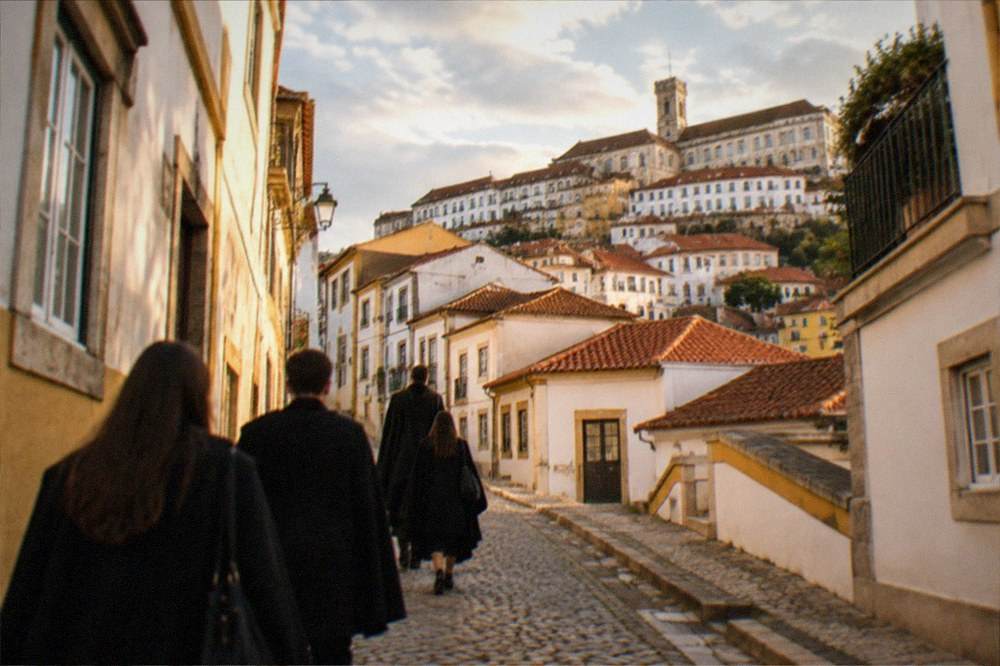
A walk with a guide is the most efficient way to put the layers in order, and the covers the historic core's main sights in two and a half hours. The options in the band below cover the same ground at different depths, from a budget city walk to a university-and-city combination to a half-day escape into the schist villages of the Lousã mountains.
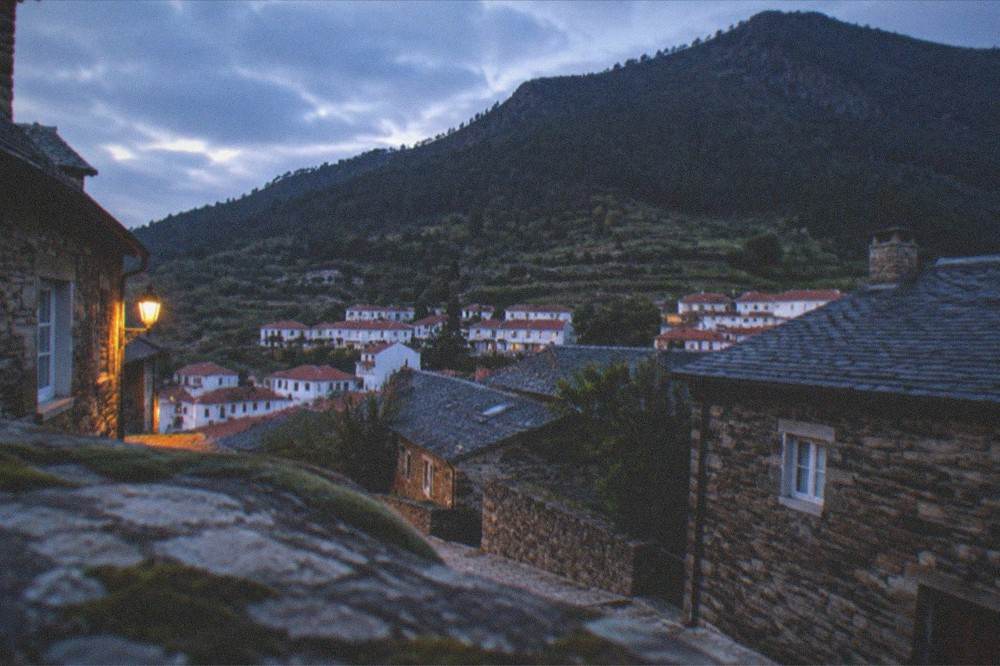
The schist villages deserve their place in a history article because they are the rural counterweight to the university city: stone villages of the Lousã mountain range, reachable on a half-day tour, where the building material and the landscape tell a different, older regional story. The schist villages guide and the Lousã day trip guide cover them properly.
Common Questions About the History of Coimbra
Is Coimbra a UNESCO World Heritage City?
No. The UNESCO inscription is "University of Coimbra, Alta and Sofia", list reference 1387, inscribed in 2013 under criteria (ii), (iv) and (vi). It covers two components inside the old town, the university hill and Rua da Sofia, not the city as a whole.
What Roman Remains Can You See in and Around Coimbra?
Two verified sites: the mid-1st-century cryptoporticus beneath the Museu Nacional de Machado de Castro, which is part of the museum's visit route though the museum is currently closed for conservation work, and the Roman town of Conímbriga, about 16 km south in Condeixa-a-Velha, open daily with a 10.00 EUR combined museum-and-ruins ticket.
Why Is Mosteiro de Santa Cruz Historically Important?
It is the burial church of Portugal's first two kings. It is open to visitors for a published 5.00 EUR individual ticket, with visits suspended on Easter Sunday and on the Cortejo da Queima das Fitas, a moveable Sunday in May.
Can You Visit the Biblioteca Joanina?
Yes, but only as part of the University's 16.50 EUR combined ticket, and only in the 20-minute slot printed on the ticket. The University's own page limits entries to 50 people every 20 minutes, and entry outside the printed slot is refused.
How Old Is the University of Coimbra?
This site does not publish a foundation date, because no primary source for one was verified in its research passes. What is verified: the University's Alta and Sofia were inscribed by UNESCO in 2013, and the institution today publishes figures of about 31,000 students, 434 courses and 1,935 professors.
What Is the Tourist Tax and When Did It Start?
Coimbra's municipal tourist tax is 1.00 EUR per guest per overnight stay, capped at three consecutive nights, from age 16, payable to the accommodation. It came into force on 5 April 2023. A two-euro rate was approved as a proposal in July 2026 but is not the published rate.
The history of Coimbra, Portugal, is best read the way this guide has read it: through the primary sources the city and its institutions publish themselves, from the University's 50-per-20-minutes library rule to the municipality's 698,151 overnight stays, with legend left where it belongs, in the street songs and the student stories rather than in the record.