Braga vs Coimbra
Coimbra, Portugal, the university city on the River Mondego, and Braga, the cathedral city of the Minho, are the two most-argued-about mid-size destinations in northern Portugal. Here is what the verified record supports on each side.
Short answer
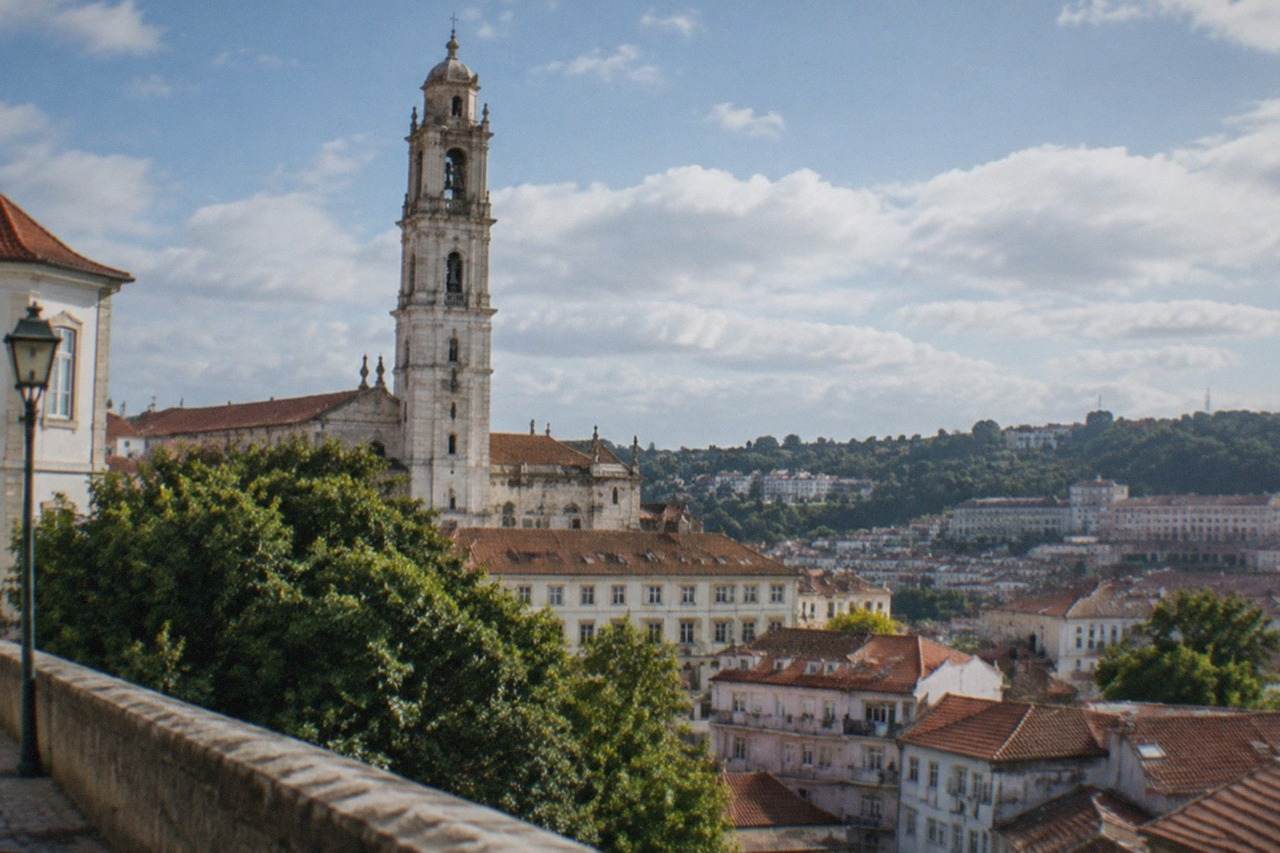
Choose Coimbra for the University, the Biblioteca Joanina and the Mondego river setting; choose Braga for a compact ecclesiastical old town closer to Porto and the Minho. This build verified prices, weather and tax facts for Coimbra only, so every number on this page belongs to Coimbra.
Coimbra, Portugal, the university city on the River Mondego, gets compared with Braga more often than with anywhere else in the country, and the comparison is a fair one: both are mid-size, historic, student-scarred northern cities that sit in the shadow of Porto and Lisbon in most itineraries. This build verified facts for Coimbra and for Conímbriga only. Nothing on this page states a population, a ticket price, a visitor number or a journey time for Braga, because none was verified from an official source, so the comparison runs on what each city is and on the hard numbers this pack supports for the Coimbra side.
Which Is Better, Braga or Coimbra?
Neither city wins outright, and the honest answer is that they reward different travellers: Coimbra, Portugal, is the choice for the University of Coimbra, the Biblioteca Joanina and a river-straddling old town, while Braga is the choice for a dense concentration of churches, a smaller and flatter historic centre, and a position deeper into the green Minho. Coimbra's headline monument is a working university of about 31,000 students whose hill is inscribed on the UNESCO list, and that gives the city a living, term-time energy no museum city can copy. Braga's identity is ecclesiastical and older-feeling, an archbishop's city where the main sights are churches rather than faculties. If the question is which single day out of Porto is more dramatic, opinions differ and no verified ranking exists. If the question is which city has the more singular, less replaceable monument, the Biblioteca Joanina, admitting 50 people every 20 minutes, is the strongest card on the table.
The two cities are not substitutes for each other. A traveller with four or five days in northern Portugal can reasonably do both, and Coimbra Travel Guide covers how the city fits into a wider route. What the comparison actually decides is which one gets the overnight stay, because both work as day trips but only one of them will hold you past dinner.
How Do the Two Cities Feel Different on the Ground?
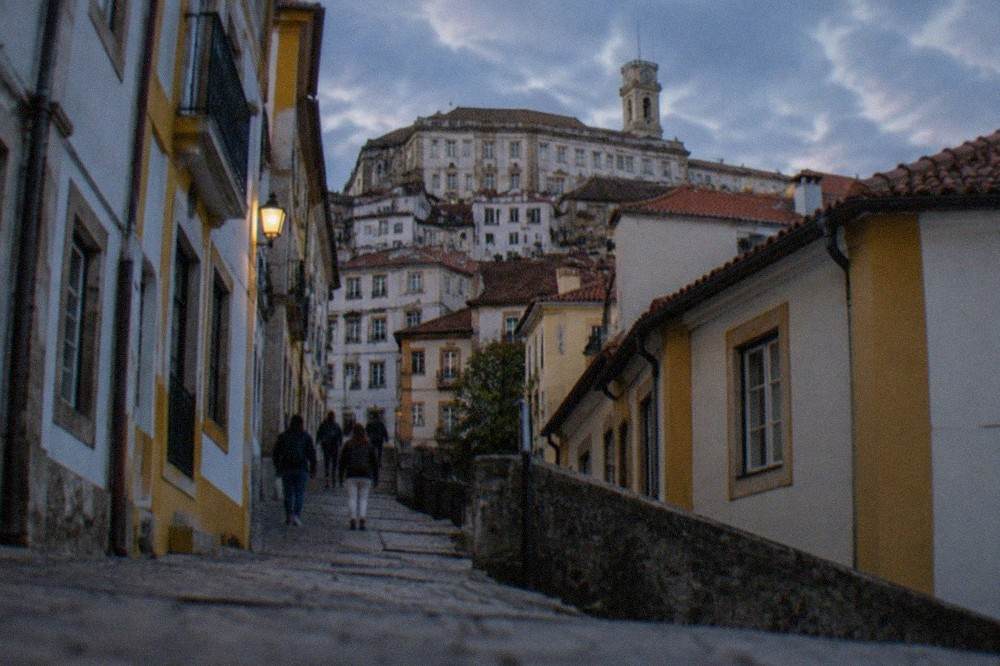
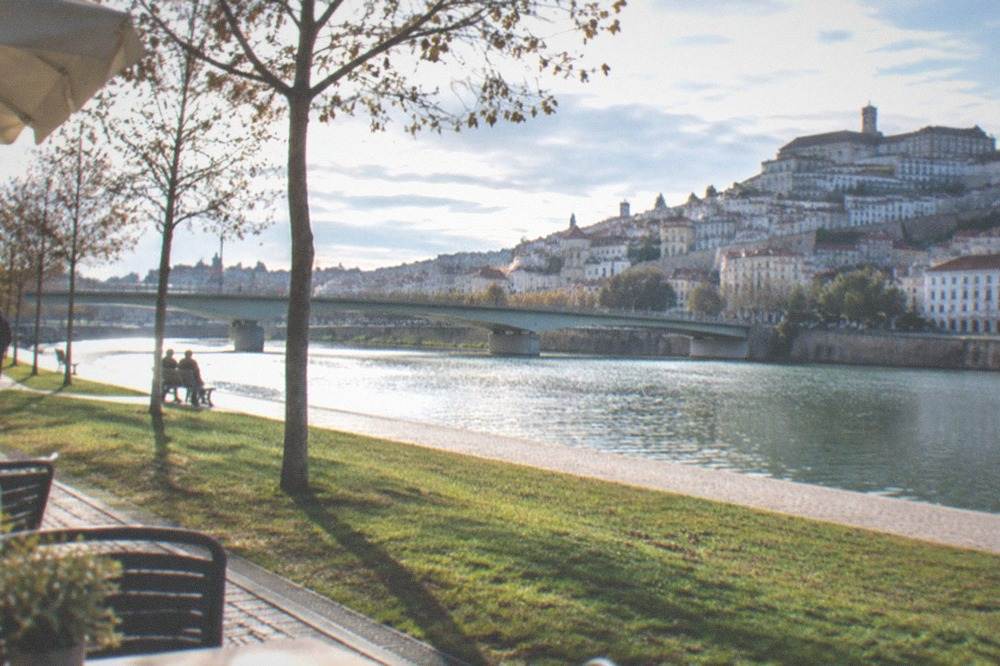
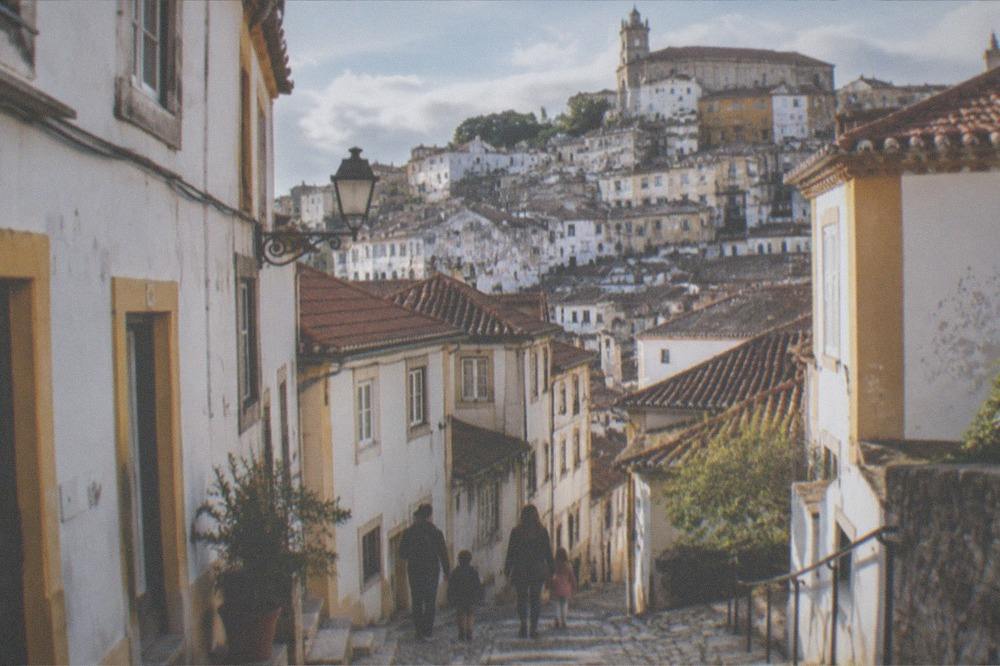
Coimbra is a steep, split-level city built on a hill above the River Mondego, with the university at the top, the Baixa at the bottom and the two joined by lanes and stairways, while Braga's historic core is far more compact and gentle underfoot, organised around its cathedral square and a short radius of pedestrian streets. The University of Coimbra's own published figures give a sense of the engine at the top of the hill: about 31,000 students, 434 courses, 1,935 professors and 4 campuses. That population shapes everything, from the Repúblicas, the student houses, to the black capa e batina gowns still worn in the streets. Braga's centre runs on a different rhythm, one that visitors experience as calm, processional and church-scented rather than academic.
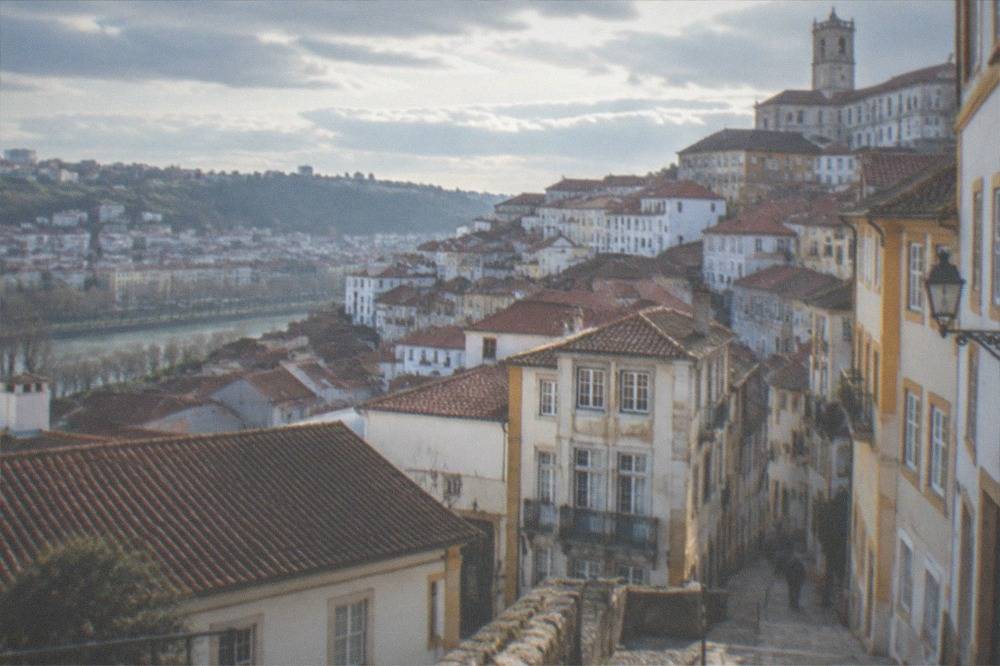
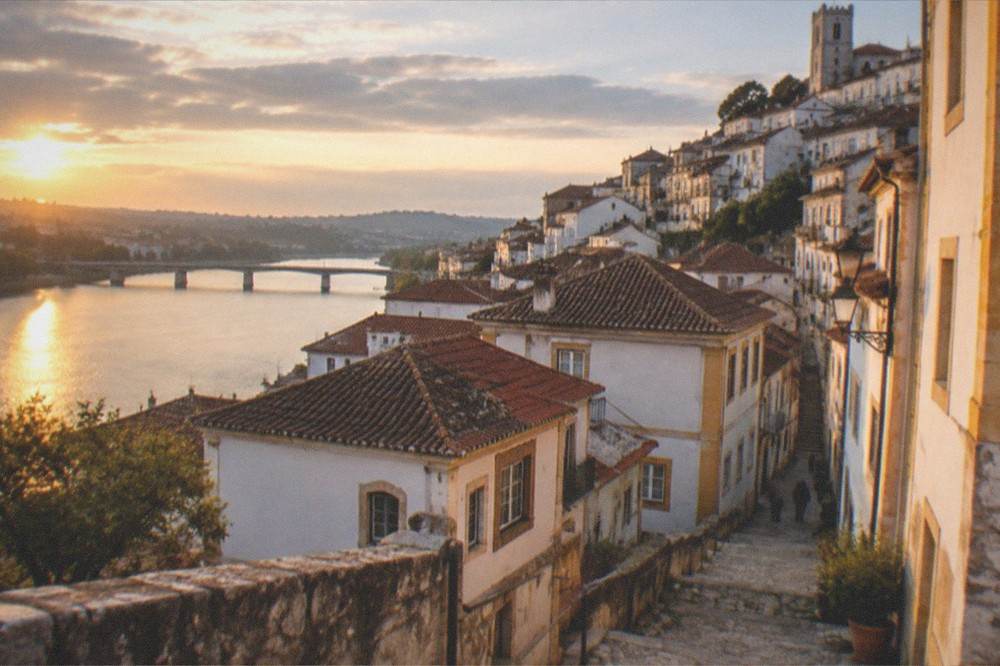
Practically, the slope matters in Coimbra. The climb from the Baixa to the Paço das Escolas is real, and it is the single most common complaint in visitor reviews of the city's accessibility. Braga asks much less of your calves. The trade is that Coimbra's verticality produces its views: the old town stacked above the Mondego, seen from the far bank or from the terrace in front of the university, is the image both cities are judged against, and only one of them has it.
A guided walk is the efficient way to handle Coimbra's hill, because a route that takes in the university, the Sé Velha and the riverside in the right order saves a lot of retraced steps. The Coimbra Top Attractions Walking Tour runs two and a half hours from $5.85 per person and is rated 5 from 151 reviews, and the operator's live listing carries the current departure times. For anyone whose knees are already objecting to the map, it is the cheapest insurance available.
What Does Each City Cost to Visit?
Coimbra's costs are documented and modest: a 1.00 EUR per-night tourist tax capped at three nights, a 16.50 EUR combined University ticket that includes the Biblioteca Joanina, a 3.00 EUR ticket to the Sé Velha and a 5.00 EUR ticket to Mosteiro de Santa Cruz, while Braga's equivalent figures were not verified on this build and cannot honestly be printed here. The tax detail is the one that surprises people. Coimbra charges 1.00 EUR per guest per overnight stay, from age 16, payable to the accommodation, capped at three consecutive nights, in force since 5 April 2023; the municipality's own worked example has a couple staying seven nights paying 3.00 EUR each. A two-euro rise was approved as a proposal in July 2026 but the published rate remains one euro. Whether Braga levies a comparable tax, and at what rate, is a question for Braga's own municipal pages, and this site will not guess at it.
The Coimbra ticket stack is worth setting out precisely, because it is the main paid layer of a visit and the prices are stamped on the University's own site as valid through 2026.
| Coimbra ticket or fee | Price | What it covers |
|---|---|---|
| University combined ticket with Biblioteca Joanina | 16.50 EUR | Joanina Library (timed slot), Royal Palace, Capela de São Miguel, Chemistry Laboratory, Academic Museum, Cabinet of Curiosities, Mineral Gallery |
| University ticket without the Joanina | 12.50 EUR | The same spaces minus the library |
| Sé Velha de Coimbra | 3.00 EUR | Old cathedral and cloister, individual ticket |
| Mosteiro de Santa Cruz | 5.00 EUR | Sacristy, cloister and the tombs of Portugal's first two kings |
| Tourist tax | 1.00 EUR per night | Max 3 nights per person, from age 16, paid at the accommodation |
Two warnings attached to that table. The Biblioteca Joanina cannot be bought on its own at any price: it exists only inside the 16.50 EUR combined ticket, the time printed on the ticket is the library slot specifically, and entry outside that slot is refused. The Joanina Library tickets guide explains the mechanics. Second, the Museu Nacional de Machado de Castro is closed for conservation work, so its cryptoporticus is off the menu for now, and this site publishes no reopening price because none appears on an official page.
Beyond the monuments, day-to-day costs in Coimbra behave like a mid-size Portuguese city rather than a capital. The municipality's own 2025 numbers, published in its tax justification, record 698,151 overnight stays in the municipality in 2025 and an estimated municipal cost per overnight stay of 3.49 EUR, which is the arithmetic behind the tax. Food costs are covered in the restaurants guide, and the leitão da Bairrada country east of the city in the Bairrada guide, but no verified price for any individual Braga establishment appears anywhere on this site.
How Easy Are Braga and Coimbra to Reach?
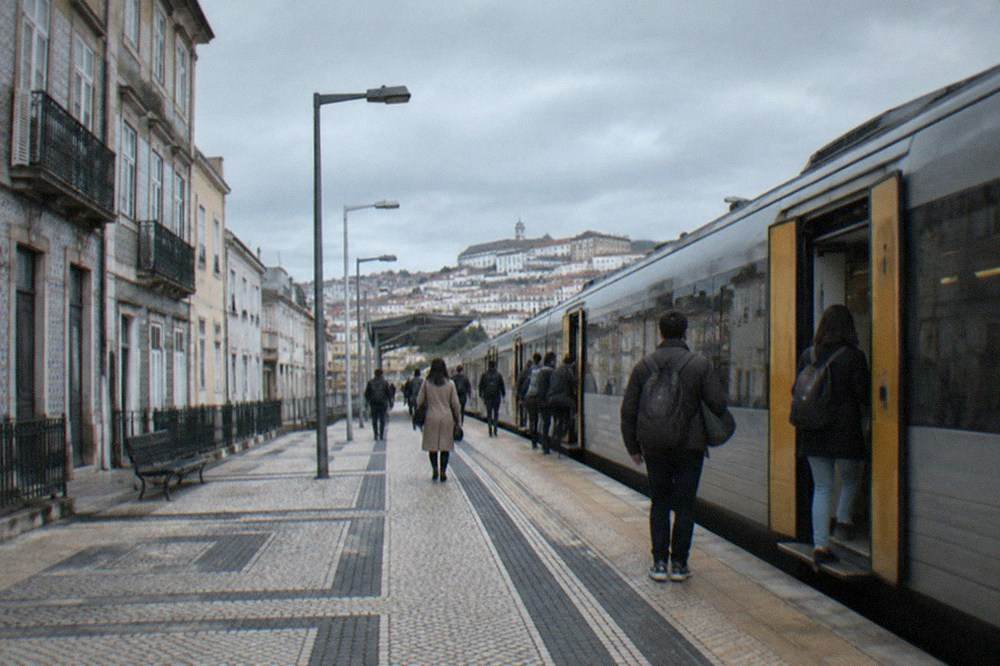
Both cities are reachable by train and bus from Porto and Lisbon, and both sit on Portugal's main north-south rail spine, but only Coimbra's side of the story can be told with verified detail: it has two stations with confusingly similar names, Coimbra-B and Coimbra-A, in different places, and CP, the national operator, is where the stopping pattern and the connection between them must be checked. This build could not verify which trains call at which Coimbra station, the distance between them, or whether the shuttle between them is free with a long-distance ticket, because the operator's own station pages soft-404 under automated checking, and a wrong answer here is worse than none. The train stations A and B guide lays out exactly what is and is not confirmed.
For Braga, the same honesty applies. No journey time from Porto, no fare and no frequency was verified for Braga on this build, so none appears. What can be said is structural: Braga lies further north than Coimbra, deeper into the Minho, which makes it the shorter hop from Porto and the longer one from Lisbon, while Coimbra sits roughly midway between the country's two biggest cities on the main line. Travellers coming from the south should read the Lisbon to Coimbra guide, and those coming down from Porto the Porto to Coimbra guide.
Within Coimbra, ground transport is cheap and documented. The 2026 SMTUC tariff lists a driver-bought single at 2.00 EUR, pre-purchased trips at 0.90 EUR each in packs of three or more, and a single ticket valid 90 minutes on the urban network with transfers included. The same tariff marks its titles valid on the Metro Mondego network too, the new bus-rapid system opening in stages, so a bus ticket is not stranded when the network changes under it. Day-pass prices exist in the tariff but the row mapping is inferred rather than confirmed, so this site does not print them.
What Are the Main Sights in Each City?
Coimbra's sights are dominated by the university hill, inscribed as "University of Coimbra – Alta and Sofia" on the UNESCO World Heritage list in 2013 under criteria (ii), (iv) and (vi), together with the Sé Velha, Mosteiro de Santa Cruz and the Mondego riverside, while Braga's centre is organised around its cathedral and a tight cluster of religious buildings whose individual details this build did not verify. The UNESCO point needs care, because it is the most-misstated fact in any guide to this city: the inscription covers two components inside the old town, the Alta, the university hill, and Sofia, the college street below. It does not cover the whole city, and Coimbra is not "a UNESCO World Heritage city". The named components include the Royal Palace of Alcáçova, St Michael's Chapel, the Joanine Library, the Rua da Sofia colleges, the 18th-century laboratories, the Botanical Garden and the University Press.
The practical sightseeing stack in Coimbra, with what is verified for each, looks like this.
| Coimbra sight | Verified status |
|---|---|
| Paço das Escolas and Biblioteca Joanina | Open, 16.50 EUR combined ticket, Joanina slots of 50 people every 20 minutes |
| Torre da Universidade | Closed, per the University's own information page |
| Sé Velha de Coimbra | Open, 3.00 EUR individual, summer hours 09:30 to 18:30 |
| Mosteiro de Santa Cruz | Open, 5.00 EUR, visits suspended on the Cortejo da Queima das Fitas Sunday |
| Museu Nacional de Machado de Castro | Closed for conservation work |
| Mosteiro de Santa Clara-a-Velha | Closed for works since October 2025, no verified reopening details |
| Portugal dos Pequenitos | Open, hours published on the venue's own page, prices not verified |
Braga's sights can be named honestly, because names are not statistics: the cathedral, the Sé, the Bom Jesus sanctuary on its staircased hill above the city, and a baroque church core that gives the city its character. What this site will not do is print Braga opening hours, admission figures or a "top three" ranking, because none of that was verified. Readers weighing Braga on its own terms should start with is Braga Portugal worth visiting? and the companion piece on whether it is worth going to Braga.
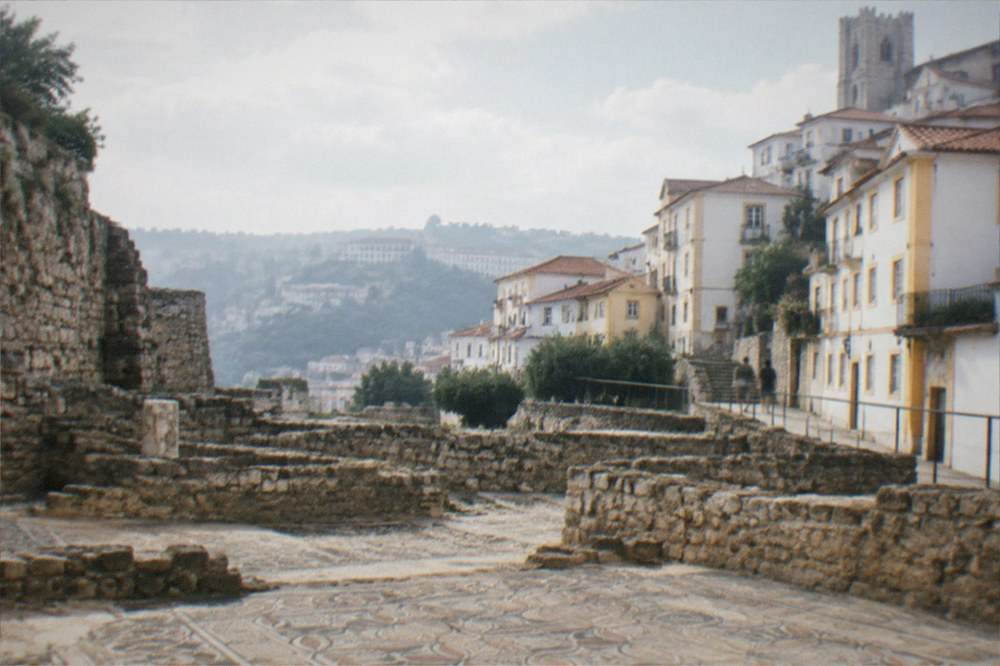
Around Coimbra, the verified day trips give the city a hinterland Braga cannot match from this site's evidence. Conímbriga, the Roman town about 16 km south in the parish of Condeixa-a-Velha, in the municipality of Condeixa-a-Nova, charges 10.00 EUR for one ticket covering museum and ruins, opens daily 10:00 to 18:00, and is the reliable Monday option when other monuments close. The schist villages of the Lousã mountain and the Bussaco forest lie within a half-day's reach, and the day trips guide maps the full ring.
Which City Has the Better Student Life and Traditions?
Coimbra's student traditions are a documented, living institution, centred on the Associação Académica, the capa e batina gowns, the Queima das Fitas festival each May and Coimbra's own style of fado sung by male students in academic dress, while Braga's traditions are religious and processional in character, and this build verified none of their specifics. The Queima das Fitas deserves a careful paragraph. Its exact dates are not published on an official page this build could read, so none appear here. What is verified is the shadow the festival throws on tourism: the University closes its whole visitor circuit on 24 May, and Mosteiro de Santa Cruz suspends visits on the Cortejo, a moveable Sunday, which means a May visit can collide with closed monuments and a city full of past-and-present students. The Queima das Fitas guide covers the mechanics.
Coimbra fado is its own genre, distinct from Lisbon's, and the city's live fado show with a glass of port wine runs 50 minutes from $18 per person, rated 4.7 from 1,234 reviews, with the operator's listing carrying current times. Where to hear it properly is covered in the where to hear fado guide. Braga's evenings run on different fuel entirely, church calendars and café squares, and no verified comparison of the two nightlife scenes exists, so the honest verdict is that Coimbra is the city with the documented, year-round student engine.
When Is the Best Time to Visit Each City?
For Coimbra the verified answer comes from the IPMA 1991 to 2020 climate normals for the Coimbra / Bencanta station: September is the sweet spot, with a mean maximum of 27.4 C, higher than June's 26.3 C, on only 49.9 mm of rain, while the rain arrives properly in October at 114.5 mm and November is the wettest month at 121.5 mm, and July at 8.9 mm is effectively dry. That September figure is the comparison's best-kept secret: the mean maximum is higher than June's, the crowds have gone, and the rain has not arrived. August, not July, is the hottest month on both mean and mean maximum, at 29.1 C mean max and 10.9 days above 30 C, and the station's record high is 41.2 C on 7 August 2016, which is worth knowing before booking an August attic room on the university hill.
| Month | Mean max C | Rain mm | Days 1mm+ rain |
|---|---|---|---|
| May | 23.3 | 64.7 | 8.5 |
| June | 26.3 | 26.0 | 3.7 |
| July | 28.5 | 8.9 | 1.7 |
| August | 29.1 | 14.8 | 2.2 |
| September | 27.4 | 49.9 | 5.2 |
| October | 23.2 | 114.5 | 10.3 |
For Braga, no station normals were verified on this build, so this site prints no Braga temperature, no Braga rainfall and no Braga month ranking. What can be said structurally is that Braga sits further north and closer to the Atlantic-facing Minho, the greenest corner of the country, and travellers should check Braga's own meteorological data rather than assume Coimbra's table transfers. The full Coimbra month-by-month picture, including the winter months, is in the weather guide.
One timing trap applies to Coimbra whatever the month: the University's own pages list closure dates in the current cycle, including 24 and 25 December, 31 December and 1 January, 24 May and 4 October, and warn that academic and religious ceremonies interrupt the normal circuit. Check the University tickets guide before pinning a date.
How Many Days do You Need in Each City?
Coimbra justifies two full days on the verified evidence: day one for the university hill and the Joanina slot, day two for the Baixa, the Sé Velha, Santa Cruz and the riverside, with Conímbriga or the schist villages as a third day, while Braga is commonly treated as a one-day city from Porto, though this build verified no Braga itinerary data and the honest framing is that Coimbra's sight list is simply longer and documented. The Joanina's timed-entry rule is the reason a night in Coimbra earns its keep. With 50 people admitted every 20 minutes, the library's slots sell out, the time on your ticket is the time you enter, and online purchase closes 20 minutes before the slot. A day-tripper arriving at midday in July may find the afternoon gone. A visitor staying overnight picks a morning slot the evening before and builds the day around it.
The rest of the Coimbra stack is generous for a second day, and the two-day itinerary sequences it. Braga's one-day reputation is real in the sense that its core is compact, but the sanctuary staircases above the city take time, and no verified hour count for Braga exists here.
Braga vs Coimbra: Which Should You Actually Choose?
Choose Coimbra if the Biblioteca Joanina, the university hill and a documented, affordable city break matter most, especially with two nights available and a September or June date; choose Braga if the trip is Porto-based, the interest is churches and sanctuary architecture, and the budget of time is a single day. The decision rarely comes down to quality, because both cities deliver what they promise. It comes down to position and pace. A Porto-centred trip makes Braga the easy add-on. A Lisbon-to-Porto rail journey puts Coimbra directly on the line, with the river, the hill and the 16.50 EUR ticket stack waiting at the station end of that spine.
For families, the comparison has one verified data point: Portugal dos Pequenitos, the miniature Portugal park operated by the Fundação Bissaya Barreto, is a Coimbra institution with published hours, and a day can be built around it. Its prices were not verified from an official page, so the venue's own ticket page is the place to check.
And for the traveller who refuses to choose, the geography cooperates: both cities can share a northern Portugal week, with Coimbra as the overnight base and its verified hinterland, Conímbriga, the Lousã schist villages, the Bussaco forest, filling the days between. The Conímbriga and the Roman Tour runs four hours from $105.37 per person, rated 4.8 from 136 reviews, and the operator's live listing carries the current schedule and meeting point.
The comparison pages continue if Braga was the easy half of the decision: Coimbra vs Aveiro, Coimbra vs Tomar and Coimbra vs Évora run the same honest method against three more rivals, printing only what the verified record supports and saying so when a figure does not exist.
Common Questions About Braga vs Coimbra
Is Braga or Coimbra better for a day trip from Porto?
No verified journey time for Braga was published on this build, so the honest answer is positional: Braga lies further north, deeper into the Minho, and Coimbra sits roughly midway between Porto and Lisbon on the main rail spine. Both work as day trips from Porto; only Coimbra's side of the logistics is documented here, in the Porto to Coimbra guide.
Is Coimbra a UNESCO World Heritage city?
No. UNESCO inscribed "University of Coimbra – Alta and Sofia" in 2013, list reference 1387, criteria (ii), (iv) and (vi), covering two components inside the old town: the university hill and the college street. The city as a whole is not inscribed, and saying it is remains the most common error in guides to Coimbra.
Is Coimbra more expensive than Braga?
Coimbra's costs are verified and modest: a 1.00 EUR per-night tourist tax capped at three nights, the 16.50 EUR combined University ticket with the Biblioteca Joanina, 3.00 EUR at the Sé Velha and 5.00 EUR at Santa Cruz. Braga's equivalent figures were not verified on this build, so no honest comparison of the two cost stacks can be printed here.
Can you visit the Biblioteca Joanina without the full University ticket?
No. The Joanina cannot be bought on its own at any price. It exists only inside the 16.50 EUR combined ticket, admits 50 people every 20 minutes, and the time printed on the ticket is the library entry slot specifically, with entry outside the slot refused.
How many days do you need in Coimbra?
Two full days cover the university hill, the Joanina slot, the Baixa, the Sé Velha, Santa Cruz and the riverside, with a third day for Conímbriga or the Lousã schist villages. The timed Joanina slots are the main reason an overnight stay beats a day trip in high season.
When is the best month to visit Coimbra?
September, on the verified IPMA 1991 to 2020 normals for the Coimbra / Bencanta station: a mean maximum of 27.4 C, higher than June's 26.3 C, on only 49.9 mm of rain, with the heavy rain holding off until October's 114.5 mm. June and July run close behind, and July at 8.9 mm of rain is effectively dry.
The final word belongs to the evidence. Braga is a fine cathedral city in the green north, and nothing on this page argues otherwise; it is simply a city this build verified nothing for, while Coimbra, Portugal, the university city on the River Mondego, comes with a fully documented price list, a measured climate and a library that admits 50 people every 20 minutes, which is the kind of scarcity that tells you which city needs the booking and which one can wait until you arrive.