Where to Sleep in Coimbra?
Where to sleep in Coimbra, Portugal: the best areas to stay, what each neighbourhood is like, the verified tourist tax, and how to match your bed to your trip.
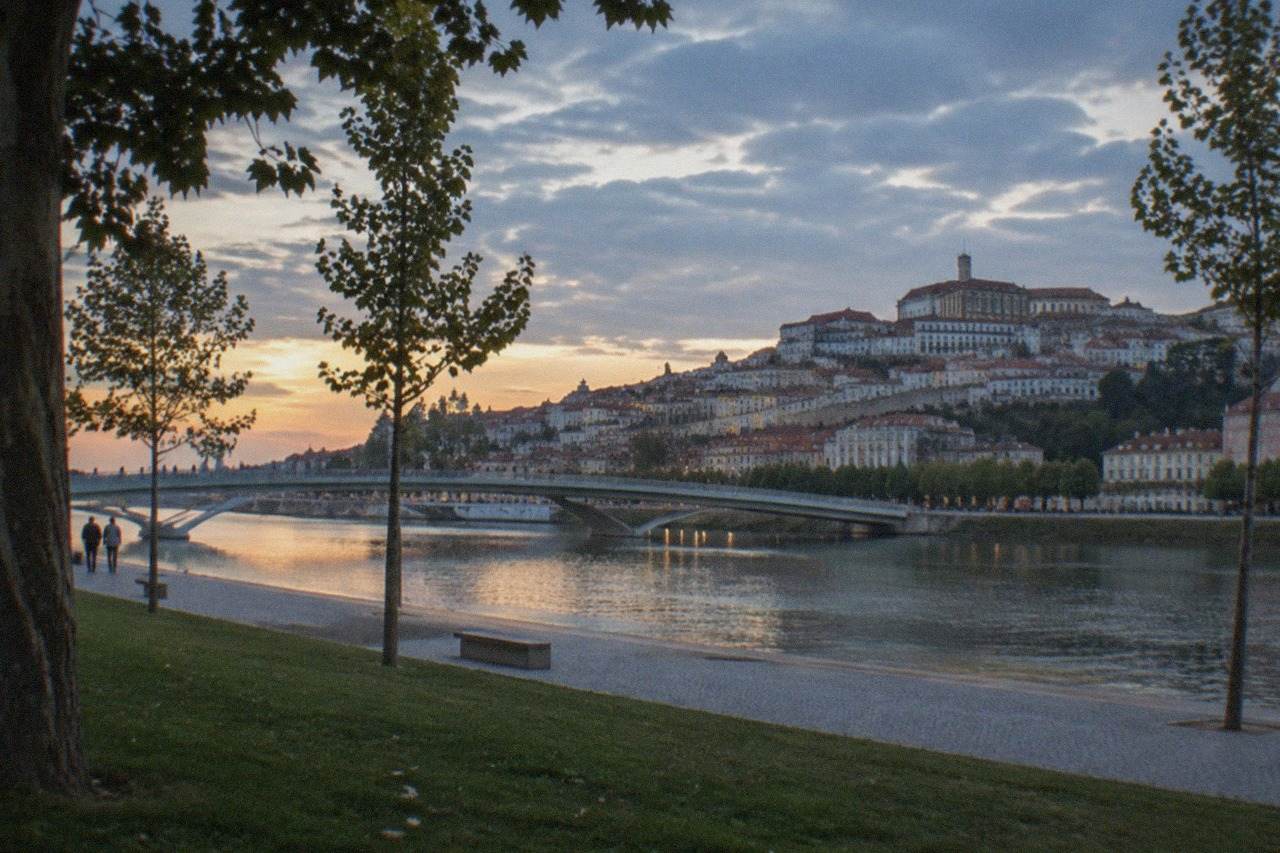
Coimbra, Portugal, the university city on the River Mondego, is small enough that almost any bed is within walking distance of the main sights, and steep enough that the choice of neighbourhood still matters. The city sits on a hill that climbs from the river at the Baixa, the low downtown, up through the old town to the university at the top, and the slope between the two is the single biggest factor in where you should sleep. The district of Coimbra, which is a different thing entirely and reaches the Atlantic, does not concern you here: this page is about the city, and every figure on it is a city or municipality figure. The municipality's own reporting counted 698,151 overnight stays in Coimbra in 2025, so plenty of people face this exact decision every year.
Where to Sleep in Coimbra?
Sleep in the Baixa, the low downtown between the river and the hill, if you want restaurants, transport and flat walking, and sleep up in the Alta, the upper town near the university, if you want views, quiet nights and the monuments on your doorstep. Santa Clara, across the River Mondego, is the budget and green-space option with the city skyline as your view. All three are within a short walk of each other, so there is no wrong answer, only a better one for your legs.
That is the honest summary, and it survives contact with the city's geography. Coimbra's old town is a hillside, and the municipality publishes nothing that changes that. The Baixa is the commercial heart, built on the flat ground beside the Mondego, where the shopping streets, the market and most of the evening life sit. The Alta is the university end, the high part of the UNESCO-inscribed "University of Coimbra, Alta and Sofia" property, which was inscribed in 2013 and covers the university hill and the college street, not the whole city. Santa Clara is on the south bank, reached by the bridge, and it holds the Parque Verde do Mondego, the riverside park that gives the city its best flat ground.
One thing to weigh before anything else: the university's own published figure of about 31,000 students means the city's population swells and empties on an academic rhythm. Term time brings noise, life and packed cafés to the centre; holidays bring calm and shorter queues. Neither is wrong, but it changes what a given street sounds like at midnight.
Which Area of Coimbra Suits Your Trip?
Match the area to the shape of your trip rather than to a star rating. One night passing through: the Baixa, close to the stations and the restaurants. Two or three days of sightseeing: the Alta or the upper edge of the Baixa, so the university hill is a walk and not a commute. A family or a long stay: Santa Clara or the riverside, where the park absorbs children and the walking is flat. A quiet break out of season: the Alta, which empties when the students leave.
The differences are practical, not cosmetic. The Baixa is where most of the city's restaurants and shops are, and it is where the flat ground is, which matters in a city whose old town is a staircase with buildings attached. The Alta trades convenience for atmosphere: you sleep inside the historic fabric, a few minutes from the Paço das Escolas, the university's ceremonial heart, and you pay for it with the climb whenever you want dinner downhill. Santa Clara gives you the postcard view of the city from across the water, plus the park, at the cost of crossing the bridge to reach the old town.
| Area | Character | Best for | Trade-off |
|---|---|---|---|
| Baixa (downtown, low town) | Flat, commercial, lively, most restaurants | First visits, one-night stops, anyone who hates hills | Less picturesque, some street noise |
| Alta (upper town, university hill) | Historic, monumental, quiet at night | Monument-focused trips, photographers | Steep climbs to and from dinner |
| Rua da Sofia edge | Old college street, part of the UNESCO inscription | History readers who want the inscription's full scope | Fewer hotels than the other areas |
| Santa Clara (south bank) | Residential, green, across the river | Families, longer stays, budget travellers | Bridge crossing to the old town |
For a first visit of one or two days, the Baixa is the default that suits the most people, and the question how many days do you need in Coimbra is worth settling before you book, because the answer changes the area. A single night argues for the Baixa; a slow week opens up Santa Clara.
What Does Sleeping in Coimbra Actually Cost Beyond the Room?
Coimbra charges a municipal tourist tax of 1.00 EUR per guest per overnight stay, capped at three consecutive nights, payable from age 16, paid directly to your accommodation at check-in or check-out, in force since 5 April 2023. A couple staying seven nights pays 3.00 EUR each, 6.00 EUR total, because of the three-night cap. The municipality has approved a proposal to raise the tax to two euros per night, but the published rate remains one euro until the municipal tax pages say otherwise.
That tax is the one accommodation cost this site can state with certainty, because the municipality publishes it, along with an interesting justification for it. The same municipal reporting that gave the 2025 overnight-stay figure estimates the city's annual cost associated with tourism at 2.44 million EUR, against roughly 1.94 million EUR of direct municipal tourism spending, which works out to a cost per overnight stay of 3.49 EUR. The one-euro tax, and even the proposed two-euro tax, sit below that cost. It is a rare case of a city publishing the arithmetic behind its own tourist tax, and it is why the two-euro proposal exists.
There is no exemption for business travel, internships, students or research fellows, which matters in a university city: a visiting academic pays it too. Exemptions exist only for stays motivated by medical treatment, one companion of such a traveller, and guests with a disability of 60% or more, each on production of a document. The tax is charged all year, with no low-season exclusion, and it is not subject to VAT.
Beyond the tax, the verified entrance costs of the sights you will walk to from your bed are the honest way to budget a night in the city:
| Item | Verified price | Notes |
|---|---|---|
| Municipal tourist tax | 1.00 EUR per guest per night | Max 3 consecutive nights, age 16+, paid at the accommodation |
| University combined ticket with Biblioteca Joanina | 16.50 EUR adult | Timed Joanina slot, valid two days for the other spaces |
| Sé Velha de Coimbra | 3.00 EUR individual | Group rate 2.50 EUR for more than 10 people |
| Mosteiro de Santa Cruz | 5.00 EUR individual | Burial church of Portugal's first two kings |
This site publishes no hotel, hostel or apartment prices, because none were verified from an official source, and a plausible-sounding room rate is exactly the kind of number that rots. Check the room itself before booking, and treat the figures above as the fixed costs you can plan around.
Where to Sleep in Coimbra Near the University?
Sleep on the Alta, the upper town, if being near the university is the priority: the Paço das Escolas, the Biblioteca Joanina, the Capela de São Miguel and the Botanical Garden are all on or below this hill, and the university's own visitor pages place the summer opening window at 09:00 to 20:00 from 1 April to 30 September. The trade is the climb, which you will do at least twice a day if you eat in the Baixa.
The university hill is the reason most people come to Coimbra at all, and the practical detail that matters most to a sleeper is the Biblioteca Joanina's entry rule. The library admits 50 people every 20 minutes, the time printed on your ticket is the library slot specifically, entry outside that slot is refused, and the library cannot be bought on its own: it exists only inside the 16.50 EUR combined ticket. If you sleep on the Alta, you can be at the gate for a morning slot before the day-trippers arrive from Porto and Lisbon, which is the single best argument for a bed on the hill. More of these guides are collected on Coimbra Travel Guide.
The hill also carries the calendar. The University closes its visitor circuit on 24 May and on 4 October in the current cycle, plus the late-December holidays, and it warns that academic and religious ceremonies interrupt the normal tourist circuit without much notice. In a city of about 31,000 students, the academic calendar is the city's calendar. The Mosteiro de Santa Cruz, downhill, suspends visits on the Cortejo da Queima das Fitas, a moveable Sunday in May when the student parade takes over the centre, so a May weekend near the university can mean either the year's best atmosphere or a closed monument, depending on your taste.

Is Coimbra Walkable Enough to Sleep Anywhere?
Yes, with a hill-shaped caveat: the whole historic centre is walkable in fifteen to twenty minutes end to end, so no bed in the Baixa, Alta or Santa Clara is far from anything, but the vertical distance between the river and the university is real, and the flat answer is no for anyone with mobility limits. The city's buses and the new Metro Mondego network exist, and the 2026 SMTUC tariff confirms its tickets are valid on both.
The walkability question is really a slope question. Everything a visitor wants is packed into a compact area: the Baixa at the bottom, the old town on the hillside, the university at the top, the river along the north edge. The horizontal distances are trivial. The vertical ones are not, and the streets between are cobbled, stepped in places, and unforgiving in rain. The fuller treatment of this question, including what it means for luggage and mobility, is on the page is Coimbra a walkable city.
The public transport facts that are verified: the 2026 SMTUC tariff lists a driver-bought on-board ticket at 2.00 EUR, pre-purchased trips at 0.90 EUR each when bought in packs of three or more, and a single validation covering 90 minutes of transfers on the urban network. The same tariff is explicitly headed as valid on both the SMTUC and Metro Mondego networks, so a bus ticket works on the new BRT system that is opening in stages. This site publishes no standalone price for the Elevador do Mercado, the funicular that serves the hill, because the tariff does not give it one.
For weather, plan around what the IPMA 1991 to 2020 normals for the Coimbra / Bencanta station actually show, not around folklore. July is effectively dry at 8.9 mm of rain, August is the hottest month rather than July, averaging 10.9 days above 30 C, and November is the wettest month at 121.5 mm, marginally ahead of October's 114.5 mm. If you are sleeping on the hill in autumn, the cobbles get slick, and the rain arrives in earnest in October, not September.
Where to Sleep in Coimbra If Day Trips Matter?
Sleep in the Baixa, close to the transport spine, if your Coimbra bed is a base for day trips to Conímbriga, the schist villages of the Lousã, Tomar or Fátima, because the buses and the city's two train stations sit at the bottom of the hill.
Conímbriga, the Roman town about 16 km south in Condeixa-a-Velha, in the municipality of Condeixa-a-Nova, is the reliable Monday option, because its museum and ruins are open seven days a week while the state monuments close on Mondays.
A base-for-day-trips decision inverts the usual logic. The picturesque bed on the Alta is the worst choice for early departures, because you start every trip with the descent, and the worst for late returns, because you end every trip with the climb. The flat Baixa, near the stations and the bus stops, is the practical pick, and the riverside park in Santa Clara is the pleasant one if you do not mind the bridge.
Conímbriga deserves its place in any day-trip plan: the site's own listing gives a combined adult ticket of 10.00 EUR covering museum and ruins, open 10:00 to 18:00 daily, closed on a short list of holidays. The schist villages of the Lousã, the Buçaco forest and the Convent of Christ at Tomar are the other classic radiating trips, and guided tours to all of them run from the city, which removes the need to sleep anywhere but the centre. The question where is the best place to stay in Coimbra covers the neighbourhood detail, and what is special about Coimbra Portugal covers why the city rewards the extra nights in the first place.
What to Check Before You Book a Bed in Coimbra
Check three things: the hill between the bed and the old town, the tourist tax line in your booking, and the academic calendar. The tax is 1.00 EUR per guest per night for a maximum of three nights, paid to the accommodation, and it is never collected by a booking platform. The calendar matters because the University closes its visitor circuit on 24 May and 4 October, and the Queima das Fitas parade in May closes Santa Cruz for the day.
The tax point is worth repeating because it is the one that surprises people at check-in. It is charged all year, there is no low-season exemption, and it applies from age 16. The municipality's own worked example is a couple staying seven nights who pay 3.00 EUR each, 6.00 EUR total, because of the three-night cap. Budget it as a flat few euros per person, not per night beyond three.
Beyond that, the honest checklist is short. Read where the bed sits relative to the river, because "historic centre" can mean the flat Baixa or a street of steps in the Alta. Look at what the things to do in Coimbra list actually involves, which is mostly the university hill, and ask whether you want to climb to it once or climb to it every day. And if you are coming for the Biblioteca Joanina, book the timed slot before you book the bed: 50 people every 20 minutes is the ceiling, and no neighbourhood solves a sold-out library.
Common Questions About Sleeping in Coimbra
Where to sleep in Coimbra?
Sleep in the Baixa for flat walking, restaurants and transport; sleep in the Alta, the upper town, for the university and the views; sleep in Santa Clara, across the River Mondego, for the park, the skyline and quieter nights. All three areas are within a short walk of each other, so the choice is about slope and atmosphere rather than distance.
Is Coimbra too hilly to sleep in the old town?
The old town is a hillside, so the answer depends on your legs and luggage. The Baixa is flat; the Alta is steep and stepped in places. Anyone with mobility limits should stay low and use the buses, whose 2026 tariff confirms tickets are valid on the Metro Mondego network too.
Do I pay a tourist tax on my hotel in Coimbra?
Yes. Coimbra charges 1.00 EUR per guest per overnight stay, capped at three consecutive nights, from age 16, paid directly to the accommodation at check-in or check-out. A two-euro rate has been proposed but is not the published rate.
Is it better to stay in Coimbra or visit on a day trip?
Staying overnight is what lets you take a morning slot at the Biblioteca Joanina, which admits only 50 people every 20 minutes and refuses entry outside the printed time. A day trip can work, but the timed library slot and the evening atmosphere of the old town both favour a bed in the city.
Which area is quietest at night in Coimbra?
The Alta empties after the day visitors leave, and Santa Clara is residential and separated from the centre by the river. The Baixa is the liveliest, especially in term time with about 31,000 students in the city.
Where should I sleep in Coimbra if I am taking day trips?
Sleep in the Baixa, near the stations and bus stops at the bottom of the hill, so early departures and late returns avoid the climb. Conímbriga, the Lousã schist villages, Tomar and Fátima all radiate from the city centre.
Sleeping well in Coimbra is mostly a matter of choosing your relationship with the hill, and the rest, from the one-euro tax to the 50-per-20-minute library ceiling, is verified, published and easy to plan around.