Is Coimbra a Walkable City?
Is Coimbra a walkable city? A direct answer for Coimbra, Portugal: the old town is compact and best on foot, but the climb to the university hill is steep, and here is how to handle it.
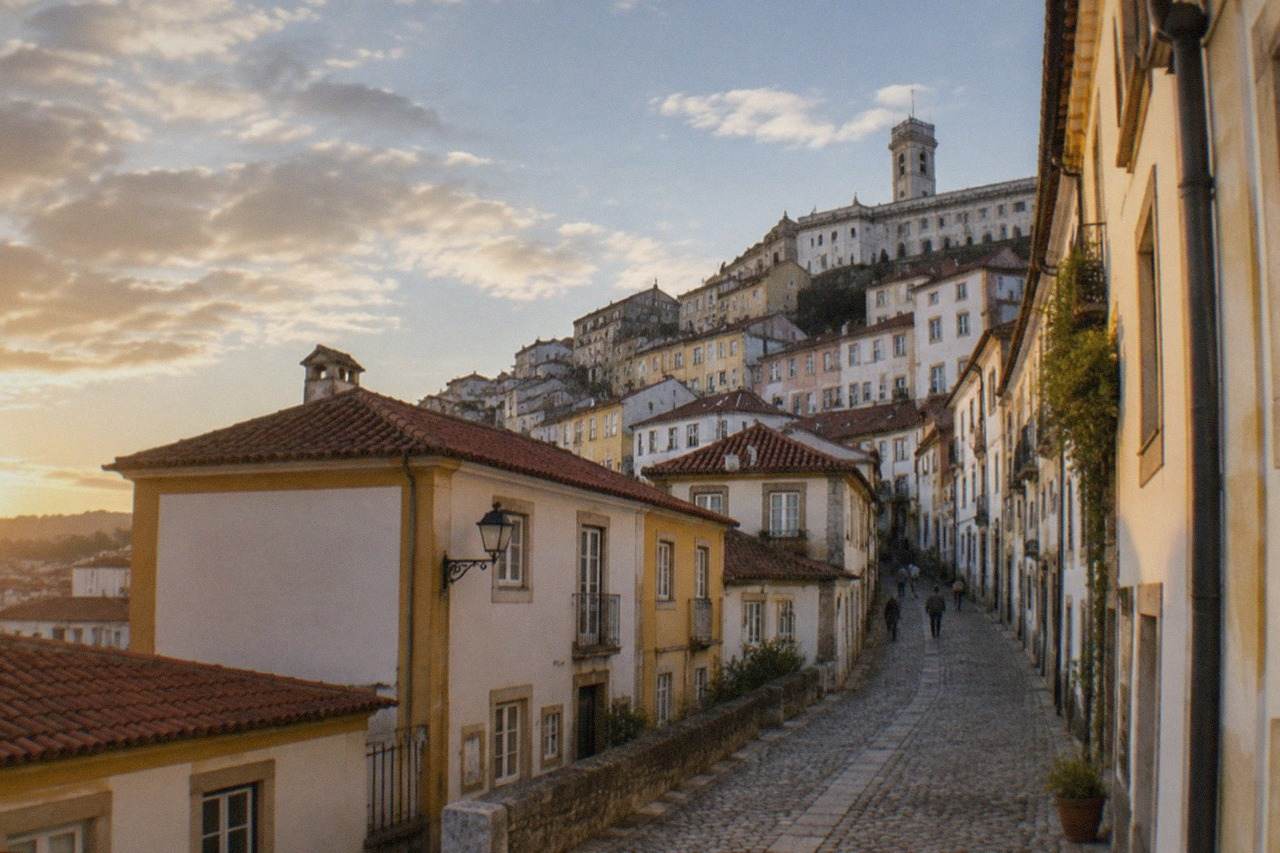
Coimbra, Portugal, the university city on the River Mondego, is genuinely a walking city: the historic core is compact, the riverside park is flat, and almost everything a visitor wants to see sits within an area you can cross on foot in well under an hour. The one thing every walker needs to know before arriving is that the city is built on a hill, and the most famous part of it, the University of Coimbra's Paço das Escolas, sits at the top.
Is Coimbra a Walkable City?
Yes, Coimbra is a walkable city, and walking is the normal way to see it. The old town is compact enough that the Baixa, the riverside and the university hill can all be covered on foot in a single day. The catch is vertical rather than horizontal: the climb from the Baixa up to the Paço das Escolas is steep, sustained and cobbled, so the answer is walkable, but plan the uphill part rather than drifting into it.
That single hill shapes everything about visiting Coimbra. The lower city, the Baixa, is the flat commercial quarter around the Rua da Sofia and the river, and it is where most of the hotels, restaurants and shops are. The upper city, the Alta, is where the university sits, on the site of the former royal palace, and UNESCO inscribed "University of Coimbra - Alta and Sofia" in 2013, criteria (ii), (iv) and (vi), precisely because the two levels form one connected historic landscape: the university hill above and the college street below.
A common mistake is to treat the whole thing as flat because the map looks small. The horizontal distances are short. The vertical distance between the river and the university terrace is not, and the streets connecting them, around the Arco de Almedina and the Quebra Costas stairways, are stepped, cobbled and unshaded in summer. Walk down from the university, not up to it, and you will finish the day tired in the right way. More on that in a moment.
For anyone weighing the city against other stops, the is Coimbra worth visiting question and the what is special about Coimbra question both come back to this same geography: a working university of about 31,000 students, published by the University on its own homepage, wrapped around a hill above a river.
How Steep Is the Climb to the University?
The climb from the Baixa to the Paço das Escolas is short in distance but genuinely steep, on cobbled and partly stepped streets, and the University's own visitor pages make no secret of it: the site is the former Royal Palace on the Alta, reached from the lower town by narrow medieval lanes. There is no lift, no funicular on this route and no gentle alternative, so anyone with limited mobility should read the access notes before planning the walk.
The lanes in question are old, stepped in places, and in summer they hold heat. IPMA's 1991 to 2020 normals for the Coimbra / Bencanta station show August averaging a mean maximum of 29.1 C with 10.9 days above 30 C, and those cobbles reflect it. The practical fix is timing: do the uphill section in the morning, do the Baixa and the riverside in the heat of the afternoon, and use the shade of the buildings on the way down. The University's summer schedule runs 09:00 to 20:00 from 1 April to 30 September, so a 09:00 start at the top is entirely possible and it is the coolest hour of the visiting day.
One thing you cannot do at the top, whatever the guidebooks say: the Torre da Universidade, the clock tower, is closed. The University's own information page states "We regret to inform you that this facility is closed", and mentions the 184 steps and narrow passage as facts of the building, not as an activity on offer. No tour on this site sells a tower climb, because there is no tower climb to sell.
The other closure worth knowing on the hill's edge: the Museu Nacional de Machado de Castro, the national museum built over a mid-1st-century Roman cryptoporticus, is closed for conservation work, per its own page on the national Museus e Monumentos portal. Do not build a walking day around it until its own page says otherwise.
The university visit itself is the reason most people make the climb, and the Biblioteca Joanina is the part with a hard capacity limit: 50 people every 20 minutes, per the University's own program page, with the time printed on your ticket being the library slot specifically. A guided visit removes the slot-choosing guesswork.
Do You Need a Bus, or Is Everything Walkable?
For the historic core, no bus is needed: the Baixa, the riverbank, the Sé Velha, Mosteiro de Santa Cruz and the university hill are all within walking range of each other. The 2026 SMTUC tariff exists for the rest: an on-board single costs 2.00 EUR, a pre-purchased trip on a card of three or more costs 0.90 EUR, and one ticket is valid 90 minutes on the urban network with transfers included. The same tariff states its titles are valid on the Metro Mondego network too.
The SMTUC network is the city bus operator, and its 2026 tariff, in force since 1 April 2026, is the honest answer to the "do I need transport" question. If your hotel is in the Baixa or the riverside and your days are spent in the old town, you can genuinely skip it. If you are staying further out, or your knees have opinions about the hill on the way back up, the bus is cheap and the ticket outlasts a single ride.
| SMTUC ticket (2026 tariff, in force since 01/04/2026) | Price | Notes |
|---|---|---|
| Single, bought on board | 2.00 EUR | Valid 90 minutes on the urban network, transfers included |
| Pre-purchased, 3 or more trips | 0.90 EUR per trip | Loaded on a card, cheaper per ride |
| MOVE-C support card | 3.00 EUR youth / 6.00 EUR others | One-off card cost |
| Viagem ConVIDA support card | 0.50 EUR | For occasional and pre-purchased tickets |
| Large-family 1-day ticket, 7 trips | 1.00 EUR | Specific family scheme |
| Fare evasion fine | 120.00 to 350.00 EUR | The tariff publishes the range |
The tariff's own heading is "Títulos de Transporte Intermodais - Utilização SMTUC e Metro Mondego", and it repeatedly marks titles as valid on both networks. So a new BRT network, the Metro Mondego, is opening in stages across the municipality, and the bus ticket you buy works on it. The route-by-route detail is still settling, so check the operator rather than trusting a printed map from a blog.
Two stations also exist, Coimbra-A and Coimbra-B, with confusingly similar names and different locations, and which trains call at which is a question for CP, Comboios de Portugal, whose passenger site is where the stopping pattern and any shuttle arrangement should be checked. This site does not publish that detail because the official source could not be confirmed on this build, and a wrong answer here strands someone at midnight.
Should You Take a Walking Tour Instead?
A guided walk is the most efficient way to cover the old town if your time is short, and the roster backs this up: the Coimbra Top Attractions Walking Tour runs 2 hours 30 minutes from 5.85 per person with a 5 rating from 151 reviews, and a free, tip-based option exists on GuruWalk, the Coimbra tour covering downtown, historic centre, university and botanic garden, rated 4.91 from 662 reviews. Both cover ground you would otherwise walk alone, but with the context attached.
The free walks on this site are GuruWalk tours, which means free or pay what you want, with the tip going to the individual guru, and naming the platform is part of the honesty of recommending one. The paid walk is a small-group sightseeing format. Either way, the physical experience is the same city you would walk unguided, so the choice is about interpretation, not about avoiding the hill.
What About the River and the South Bank?
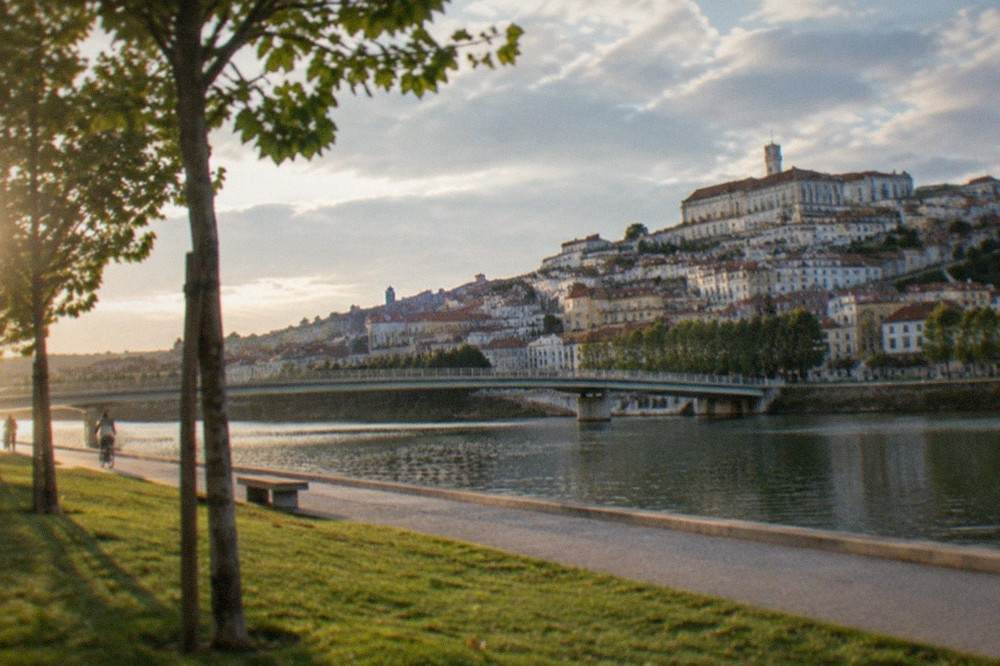
The River Mondego is the flat half of the walking city, and it is the part people underestimate in the other direction: the Parque Verde do Mondego on the west bank and the Santa Clara side across the river are level, open and pleasant, a genuine change of pace from the cobbles above. The riverbank is where a walking day recovers, and the boat trips that run on the Mondego, from 11 per person for a 50-minute city-views cruise, let you see the hill without climbing it again.
Crossing the river changes the whole character of the walk. The south bank is where the Mosteiro de Santa Clara-a-Velha sits, and that monument should be treated as "check before you go": it has been closed for requalification works, and this site publishes no price or opening time for it because no official page confirms it is currently visitable. The Parque Verde do Mondego, by contrast, is open municipal parkland, flat, and the standard evening stroll for locals and students.
The hill from across the water is also the classic view of Coimbra, the one on every postcard: the university buildings stacked above the old town with the river in front. Photographers should read the best views and photo spots guide for the specifics, but the general principle holds, the best views of the walkable city are from the part you did not walk up.
When Is Walking Coimbra a Bad Idea?
Walking Coimbra is hardest in the wettest months, and the IPMA 1991 to 2020 normals for the Coimbra / Bencanta station put those months firmly in autumn and winter: November is the wettest at 121.5 mm of rain, followed by October at 114.5 mm and January at 113.5 mm, each with more than ten days of 1 mm-plus rain. The cobbles that are merely tiring in August are slick in November, and the steep lanes around the Arco de Almedina deserve dry shoes and honest caution.
| Month | Mean max (C) | Rain (mm) | Days with 1 mm+ rain | Walking verdict |
|---|---|---|---|---|
| January | 15.0 | 113.5 | 11.3 | Cool but wet |
| April | 20.5 | 84.6 | 10.6 | Mild, showers likely |
| June | 26.3 | 26.0 | 3.7 | Warm and dry |
| July | 28.5 | 8.9 | 1.7 | Hot but effectively dry |
| August | 29.1 | 14.8 | 2.2 | Hottest month, 10.9 days over 30 C |
| September | 27.4 | 49.9 | 5.2 | Warm, crowds thinner, still dry-ish |
| October | 23.2 | 114.5 | 10.3 | The rain arrives in earnest |
| November | 18.0 | 121.5 | 11.5 | Wettest month, indoor days |
The table carries a surprise worth repeating because so many guides get it backwards: September is hotter than June, a mean maximum of 27.4 C against 26.3 C, and it is also wetter, 49.9 mm against 26.0 mm. What is actually true is that the real rain holds off until October, when the monthly total jumps to 114.5 mm. September remains one of the best walking months of the year: the students are back, the heat has eased from the August peak, and the autumn rain has not started.
For anyone with mobility constraints, the honest summary is that the Baixa and the riverbank are manageable and the Alta is hard, and the University's own visitor pages are the place to check current access arrangements rather than relying on a third-party guide. The city's hills are permanent; the access details change.
Common Questions About Walking in Coimbra
Is Coimbra a walkable city?
Yes. The historic core of Coimbra, Portugal is compact and pedestrian-friendly, covering the Baixa, the riverside and the university hill on foot in a day. The one caveat is the steep, cobbled climb from the Baixa up to the Paço das Escolas, which is short in distance but sustained in gradient and best done in the morning.
Do I need a car in Coimbra?
No. Within the city, walking plus the SMTUC bus network covers it: an on-board single is 2.00 EUR, a pre-purchased trip 0.90 EUR, valid 90 minutes with transfers, and the same tickets are valid on the Metro Mondego network per the 2026 tariff. A car is only worth having for day trips into the wider region, and even then guided day tours cover the schist villages, Conímbriga and Buçaco without one.
Is the walk up to the University of Coimbra hard?
It is steep but short, on cobbled and partly stepped medieval lanes, with no lift or funicular on the route. Most walkers manage it in ordinary shoes at an ordinary pace. Do it in the morning in summer, when IPMA's normals show August averaging a 29.1 C mean maximum, and come down through the Arco de Almedina rather than repeating the same lane twice.
Can you walk along the river in Coimbra?
Yes, and the riverbank is the flattest walking in the city. The Parque Verde do Mondego on the west bank and the Santa Clara side across the Mondego are level, open parkland, and the classic postcard view of the university on its hill is from the far bank, which you reach without any climb at all.
What is the best month for walking in Coimbra?
May, June and September. IPMA's 1991 to 2020 normals for the Coimbra / Bencanta station show June at a 26.3 C mean maximum with only 26.0 mm of rain and 3.7 rain days, and September at 27.4 C with 49.9 mm before the October jump to 114.5 mm. Avoid November if you dislike rain: at 121.5 mm it is the wettest month of the year.
If the hill is the only thing giving you pause, remember the shape of the day that works: up early, the Joanina Library slot booked in advance because the 50-people-per-20-minutes ceiling is real, the rest of the Paço das Escolas on the same 16.50 EUR combined ticket which is valid two days, then down through the old town to the flat riverbank for the afternoon. That is Coimbra walked properly, and this Coimbra Travel Guide exists to help you do exactly that.