What Is the Old Town of Coimbra Known For?
The old town of Coimbra, Portugal, is known for the UNESCO-inscribed University hill, the Biblioteca Joanina, the Sé Velha, fado and medieval lanes. A full answer with prices and closures.
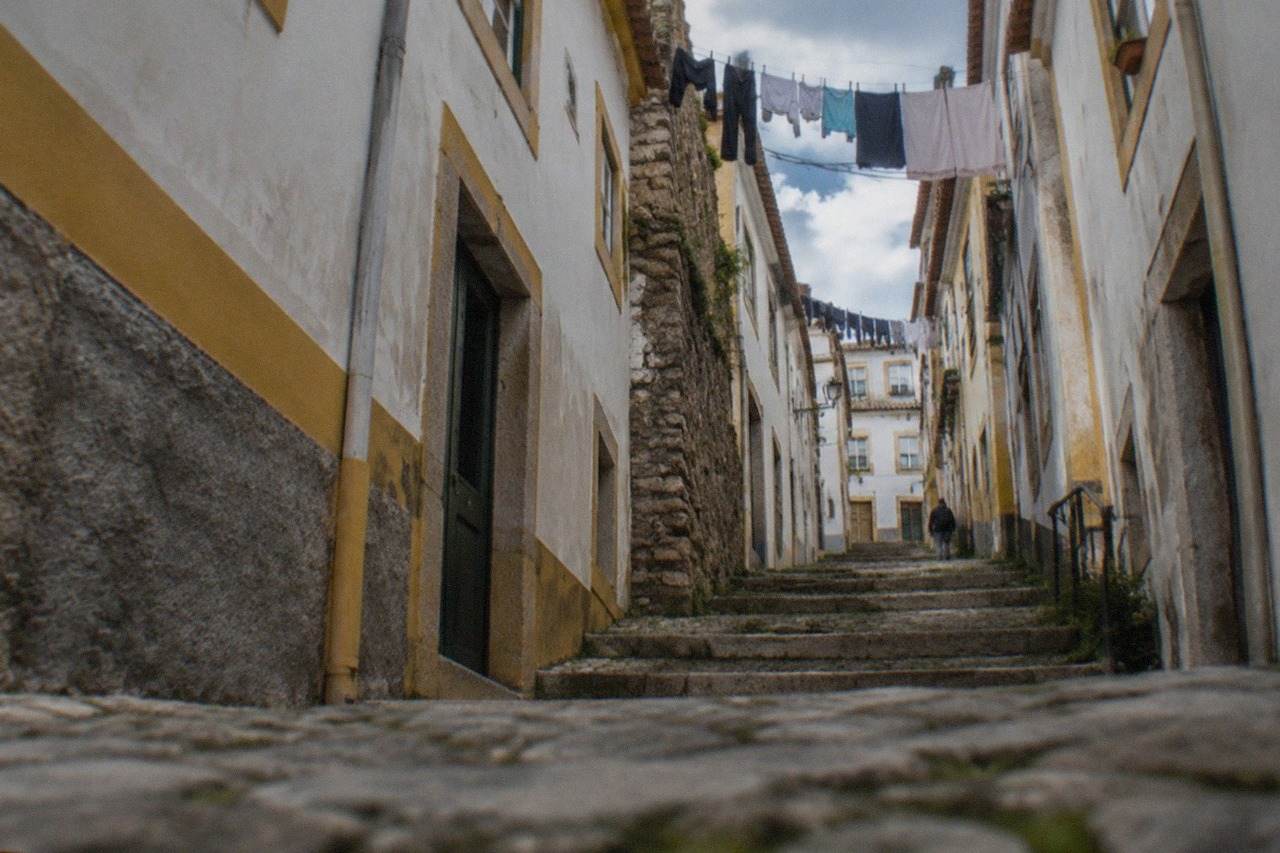
Coimbra, Portugal, the university city on the River Mondego, keeps its old town on a hill that has carried a school of some kind since the university arrived in the city, and almost everything the old town is known for flows down from that single fact. The UNESCO inscription of 2013, the baroque library that admits only 50 people every 20 minutes, the black-caped students singing fado at night, the two cathedrals facing each other across the ridge: all of it belongs to the same slope. This page answers the question directly, then walks through each thing the old town is actually known for, with the verified prices, closures and rules that most summaries get wrong.
What Is the Old Town of Coimbra Known For?
The old town of Coimbra, Portugal, is known for the University of Coimbra's hilltop Paço das Escolas, inscribed by UNESCO in 2013 as "University of Coimbra – Alta and Sofia", together with the Biblioteca Joanina, the Sé Velha, the Mosteiro de Santa Cruz burial church of Portugal's first two kings, and the student fado sung in black capes through the medieval lanes of the Alta and Baixa above the River Mondego.
That is the honest one-paragraph answer, and each part of it deserves its own section. One correction matters before anything else, because it is the single most common error in guides to this city: Coimbra is not a UNESCO World Heritage city. The inscription, list reference 1387, covers two components inside the old town, the Alta, the university hill, and Sofia, the college street below. The Baixa, the riverside and everything else in the city are outside it.
The University publishes its own numbers on its homepage: about 31,000 students, 434 courses, 1,935 professors. That student mass is what makes the old town feel different from other Portuguese hill towns. It is not a museum piece. It is a working campus inside a medieval street plan, and the black-caped students walking between the Repúblicas, the historic student houses, are part of what the lanes are known for rather than an obstacle to the view.
For a first visit structured around exactly these sights, the Coimbra Top Attractions Walking Tour covers the hill and the old town's core in two and a half hours, from $5.85 per person, rated 5 from 151 reviews. Check availability
What Is the University Hill and the Biblioteca Joanina Known For?
The Paço das Escolas, the university's royal palace courtyard on the crest of the hill, is known for the Biblioteca Joanina, a baroque library that admits only 50 people every 20 minutes, cannot be visited on any ticket other than the University's 16.50 EUR combined ticket, and houses a colony of bats that protects the books by eating the insects that would damage them.
The University's own visit page states the library's entry rule in plain terms: entries are limited to 50 people every 20 minutes, and the time printed on your ticket is the library slot specifically, not a general admission time. Entry outside that slot is refused. The ticket, at 16.50 EUR adult, also covers the Royal Palace, the Capela de São Miguel, the Chemistry Laboratory, the Academic Museum, the Cabinet of Curiosities and the Mineral Gallery, and it is valid for two days except for the fixed Joanina slot. Online purchase closes 20 minutes before the visit time.
The bat colony is not folklore. The University's own page for the Joanina confirms it: the bats come out at night and eat the insects that would otherwise attack the book bindings, which is why the library's wooden tables are still covered in leather cloths after dark. It is one of the few working 18th-century book-preservation systems still running anywhere.
One thing the hill is known for that a visitor cannot currently do: the Torre da Universidade, the clock tower that defines the old town's skyline, is closed. The University's own information page states "We regret to inform you that this facility is closed", and the same page notes the 184 steps and the narrow passage. No price, no hours, no climb. The tower's silhouette from the Paço das Escolas terrace is still the most photographed view in the old town.
What Are the Sé Velha, the Sé Nova and the Santa Cruz Monastery Known For?
The old town's churches are known for the Sé Velha, a fortress-like Romanesque cathedral at 3.00 EUR individual entry, the Sé Nova a short walk away, and the Mosteiro de Santa Cruz, the burial church of Portugal's first two kings, at 5.00 EUR individual entry with visits suspended on the Queima das Fitas parade Sunday.
The Sé Velha sits on the ridge with the look of a castle, which is what a 12th-century cathedral in a contested frontier city had to be. The parish body that manages it, the Unidade Pastoral Aeminium, publishes the prices and hours: 3.00 EUR per person individually, 2.50 EUR for groups over 10, and summer visiting hours of 09:30 to 18:30, Sundays 11:00 to 17:30. The Sé Nova, the "new" cathedral, is a short walk across the ridge and the two are usually seen together, one old-town lane apart.
The Mosteiro de Santa Cruz, down in the Baixa, is the one church in the old town with national-history weight: it holds the tombs of Portugal's first two kings. The same parish body publishes its tariff: 5.00 EUR individually, 3.50 EUR for groups of 12 or more, school groups at 2.00 EUR, and hours of 09:30 to 16:30, with Sunday visits on a separate schedule. The detail most guides miss is that visits are suspended on the Cortejo da Queima das Fitas, a moveable Sunday in May when the student parade takes over the streets.
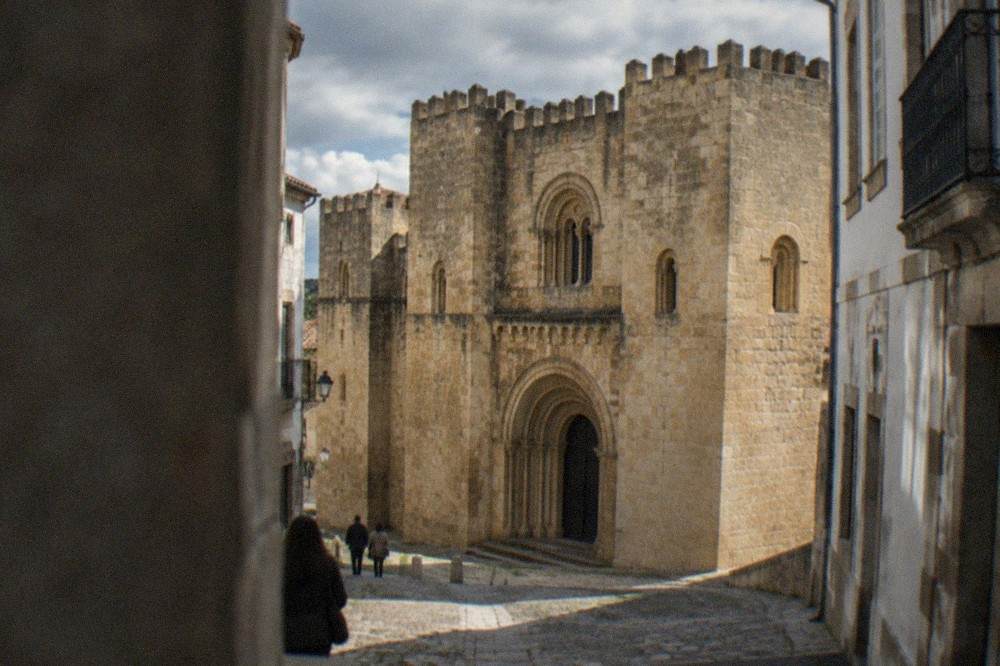
What Are the Medieval Lanes of the Alta and Baixa Known For?
The lanes are known for the Arco de Almedina, the surviving Moorish-era gate into the walled town, the steep stepped streets of the Alta below the university, and the Baixa's grid of commercial streets running from the Praça do Comércio down to the River Mondego, together with the fado de Coimbra sung by students in the old town's bars.
The Arco de Almedina is the old town's most honest monument: a gate that has let people through the wall at the same spot for close to a thousand years, now with a city street still flowing through it. From the gate, the lanes climb steeply toward the Paço das Escolas. The old town area guide covers the layout street by street, and the question of whether the city is manageable on foot, which on this hill it genuinely is, is answered in is Coimbra a walkable city.
Fado de Coimbra deserves its own note because it is not Lisbon fado with a student accent. It is sung by men, historically by students in the black capa e batina, and the old town's fado houses are where the tradition lives. The guide to where to hear fado and the fado de Coimbra guide cover the venues and the etiquette, including the fact that the audience stays silent through a song.
The old town is also known for what is currently closed inside it. The Museu Nacional de Machado de Castro, built over a mid-1st-century Roman cryptoporticus, is closed for conservation work; its own page on the national museums portal says so twice. The Mosteiro de Santa Clara-a-Velha, across the river, has been closed for requalification works since October 2025. Neither should appear on a 2026 itinerary without a check first.
| Old-town sight | What it is known for | Verified entry figure | Current status |
|---|---|---|---|
| Paço das Escolas and Biblioteca Joanina | Baroque library, 50 people per 20-minute slot, bat colony | 16.50 EUR combined ticket | Open, timed slots |
| Sé Velha | Romanesque fortress cathedral | 3.00 EUR individual | Open |
| Mosteiro de Santa Cruz | Tombs of Portugal's first two kings | 5.00 EUR individual | Open, closed on Queima parade Sunday |
| Museu Nacional de Machado de Castro | Roman cryptoporticus below the museum | No published price | Closed for conservation work |
| Torre da Universidade | Clock tower, 184 steps | No ticket sold | Closed |
What Is the Old Town of Coimbra Known for Beyond the Monuments?
Beyond the monuments, the old town is known for its student traditions, the Repúblicas, the centuries-old shared student houses, the Queima das Fitas festival each May, and the views over the River Mondego from the terrace walls, with the Penedo da Saudade garden and the riverside Parque Verde do Mondego framing the hill from below.
The Repúblicas are the old town's living institution. These shared student houses, some centuries old, are where the university's traditions are actually maintained, and their painted facades and door banners are a visible layer of the streetscape that no other Portuguese old town has in the same form. The student traditions guide explains the capa, the burning of the ribbons and what the Queima actually is; the festival's exact dates are not published on an official page this site could verify, but the University's own closure of the visitor circuit on 24 May is the corroborating official signal that the Cortejo falls on that Sunday.
The views are the other half of the answer. The terrace on the university's west side drops sheer toward the river, and the Penedo da Saudade garden on the hill's flank is the locals' version of the same outlook. Down at water level, the Parque Verde do Mondego gives the old town a green riverside frame that most hill cities lack. The best views and photo spots guide maps them.
For a walk that ties the whole answer together, hill, gates, cathedrals and lanes, the options below are the ones that cover the old town itself, and the Coimbra Travel Guide homepage collects the rest of the city's coverage, from what Coimbra is best known for to the practical pages on stations, parking and day trips.
Of the walks above, the budget option deserves a second look for this specific question, because the old town's layout is the one thing a map does not solve. The lanes between the Arco de Almedina and the Paço das Escolas fork and reconnect in ways that cost a first-time visitor real time, and a two-and-a-half-hour guided walk from $5.85 per person, rated 5 from 151 reviews, spends that time on the sights instead. Check availability
Common Questions About the Old Town of Coimbra
What is the old town of Coimbra known for?
The old town of Coimbra, Portugal, is known for the University of Coimbra's hilltop Paço das Escolas with the Biblioteca Joanina, the Sé Velha, the Mosteiro de Santa Cruz where Portugal's first two kings are buried, the Moorish-era Arco de Almedina gate, and the student fado sung in the lanes of the Alta and Baixa.
Is the whole city of Coimbra a UNESCO World Heritage site?
No. UNESCO inscribed "University of Coimbra – Alta and Sofia" in 2013, list reference 1387, covering two components inside the old town: the university hill and the Rua da Sofia college street. The city as a whole is not inscribed.
Can you visit the Biblioteca Joanina on its own?
No. The Joanina Library exists only inside the University's 16.50 EUR combined ticket, which admits 50 people every 20 minutes, and the time printed on the ticket is the fixed library slot. Entry outside that slot is refused.
Can you climb the university clock tower?
No. The Torre da Universidade is closed; the University's own visitor information page states that the facility is closed, and no ticket for it is sold.
What is closed in the Coimbra old town right now?
The Museu Nacional de Machado de Castro is closed for conservation work, the Mosteiro de Santa Clara-a-Velha has been closed for requalification works since October 2025, and the university clock tower is closed. Check official pages before planning around any of the three.
How much do the old town's main sights cost?
From the verified official figures: the University combined ticket with the Joanina is 16.50 EUR, the Sé Velha is 3.00 EUR individually, and the Mosteiro de Santa Cruz is 5.00 EUR individually. Portugal dos Pequenitos publishes hours but its price page does not serve a verifiable euro figure.