What Is the Most Underrated City in Portugal?
The most underrated city in Portugal is Coimbra, the university city on the River Mondego: what makes it overlooked, what it costs, and when to go.
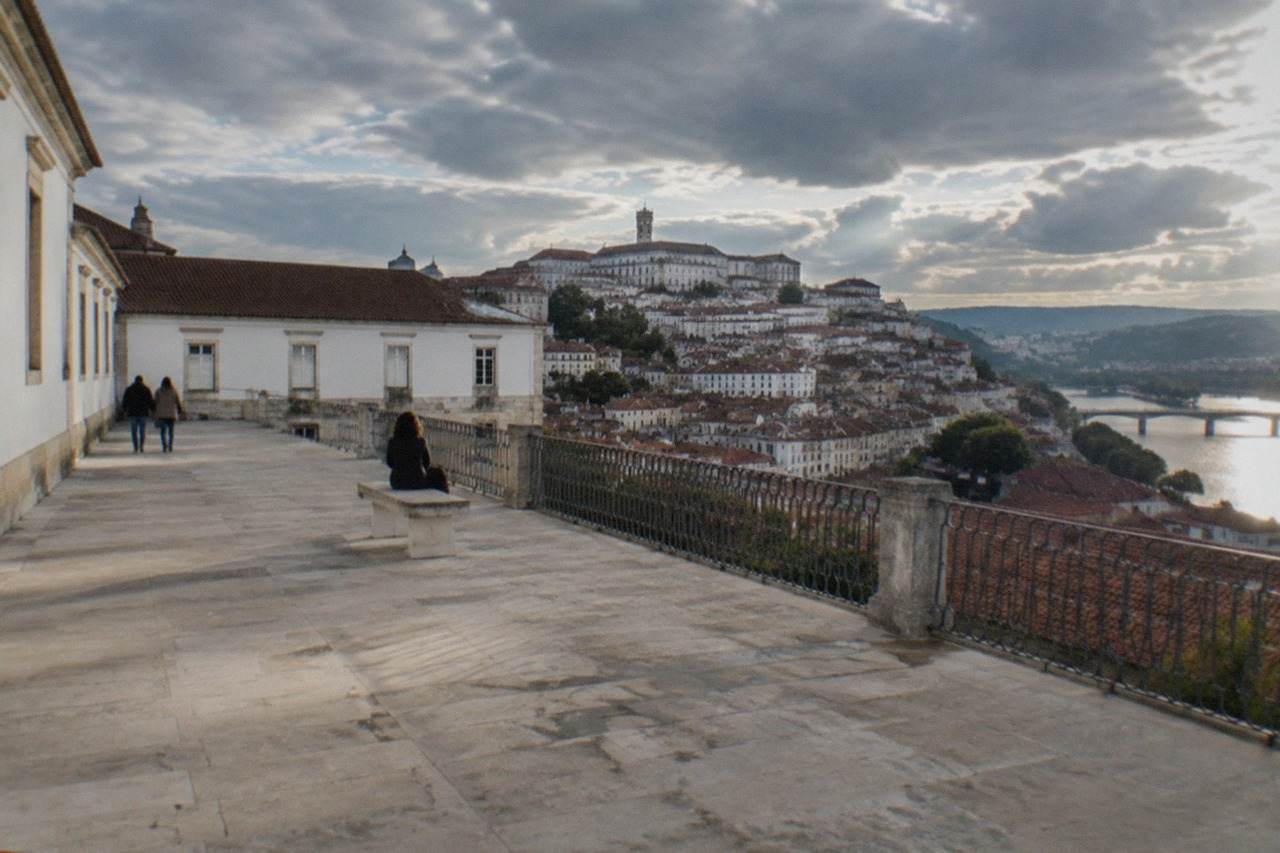
Ask which Portuguese city deserves far more attention than it gets, and the honest answer is Coimbra, Portugal: the old university city on the River Mondego, roughly midway between Porto and Lisbon. The city, not the district, which is a separate thing that reaches the Atlantic, and not the surname, and not the places in Brazil and Angola that share the name. Coimbra the city holds a World Heritage university hill, a baroque library that admits only 50 people every 20 minutes, and a student tradition that has been running for two centuries, yet it sits permanently in the shadow of the two big coastal cities. This page makes the case with verified figures rather than impressions, because the underrated label is only interesting if it survives contact with the numbers.
What Is the Most Underrated City in Portugal?
The most underrated city in Portugal is Coimbra, the university city on the River Mondego in the Centro region. UNESCO inscribed University of Coimbra, Alta and Sofia, in 2013, list reference 1387, yet the city still receives a fraction of the attention paid to Porto and Lisbon. The University publishes a figure of about 31,000 students, and the municipality recorded 698,151 overnight stays in 2025, real tourism, but at a scale that leaves the old town breathable.
Two clarifications matter before the case gets stronger. First, the World Heritage inscription is not the whole city: UNESCO inscribed two components inside the old town, the Alta, the university hill, and Sofia, the college street below, under criteria (ii), (iv) and (vi). Guides that call Coimbra "a UNESCO World Heritage city" are wrong, and the error is the single most common one in writing about this city. Second, the 698,151 overnight stays figure is the municipality's own number, published in its 2026 report on the tourist tax, and it comes with a companion figure almost nobody else has: the municipality's estimated cost per overnight stay of 3.49 EUR, against a tourist tax of 1.00 EUR per night. The city is spending more on tourism than it collects from it, which is a decent working definition of a place that has not yet been optimized for mass visitors.
That is the underrated mechanism in one paragraph. Coimbra has the heritage inventory of a first-rank city and the visitor flow of a second-rank one. The Joanina Library alone, a baroque hall finished in the 18th century with a resident bat colony that protects the books by eating the insects, is the kind of monument that would anchor a weekend in a better-known destination. Here it sits inside a 16.50 EUR combined university ticket that also covers the Royal Palace, St Michael's Chapel and the science collections, and it still sells out because the ceiling is 50 people every 20 minutes. If you want to see it with a guide rather than fighting for a slot alone, the Joanina Library expert tour question is covered elsewhere on this site, and the guided option is worth it for the timed entry alone.
The expert-guided visit to the Joanina Library and the university runs about 90 minutes and is led by a guide who has been doing it since 2012, which matters at a monument where the time printed on your ticket is the library slot and entry outside the slot is refused. Check availability if the library is the reason you are coming, because that is the one genuinely scarce ticket in the city.
Why Does Coimbra Get Overlooked?
Coimbra gets overlooked because Portugal's tourism story is told as a two-city story, Porto and Lisbon, and Coimbra sits between them without a coastline of its own. The city does not touch the sea: the district of Coimbra reaches the Atlantic, but the city does not, so it loses the beach-and-wine itinerary that fills the Algarve, Porto and Lisbon. Its card is a centuries-old university, and universities sell less well in a brochure than beaches.
The geography point is worth being precise about, because sloppy writing gets it wrong constantly. Coimbra is a city, a municipality and a district, and the three are different sizes. The district contains Figueira da Foz on the coast; the city has no beach. A traveller who arrives expecting one will be disappointed by the other, and a guide that blurs them is misleading both.
The second reason is harder to quantify but obvious on the ground: the city's identity is student life, not a visitor economy. The University publishes about 31,000 students, 434 courses and 8 academic museums and collections on its own numbers page, and the student traditions, the black capes, the fado sung only by men in the old style, the Queima das Fitas festival each May, belong to the students first. Visitors are welcome to watch, but the city does not perform for them the way a resort town does. For many people that is the appeal. The why is Coimbra famous page unpacks the traditions in detail, and the is Coimbra a walkable city answer covers the practical side: the answer is yes, with hills.
What Can You Actually See and Do in Coimbra?
A Coimbra visit runs from the university hill down to the river: the Paço das Escolas with its 16.50 EUR combined ticket, the Joanina Library with its 50-per-20-minute slots, Sé Velha at 3.00 EUR, Mosteiro de Santa Cruz at 5.00 EUR, and the riverside parks below. Two major monuments are currently closed for works, the Machado de Castro museum and the university clock tower, so plan around them rather than around what older guides promise.
The closures deserve their own sentence, because most published guides have not caught up. The Torre da Universidade, the clock tower with the famous view over the red roofs, is closed: the University's own visitor page states "We regret to inform you that this facility is closed", and no ticket is sold for it. The Museu Nacional de Machado de Castro, the national museum built above a mid-1st-century Roman cryptoporticus, is likewise closed for conservation work, and no reopening price has been published on an official page. Mosteiro de Santa Clara-a-Velha across the river has been closed for requalification works since October 2025. None of this breaks a Coimbra itinerary; it just means the itinerary is the university, the two cathedrals, Santa Cruz, the Botanical Garden and the river, not the tower.
What is open is genuinely strong. The University's combined ticket, valid for two days except the fixed library slot, covers the Joanina Library, the Royal Palace, St Michael's Chapel, the Chemistry Laboratory, the Academic Museum, the Cabinet of Curiosities and the Mineral Gallery. Sé Velha, the Romanesque old cathedral, charges 3.00 EUR. Mosteiro de Santa Cruz, the burial church of Portugal's first two kings, charges 5.00 EUR, and a live fado show with a glass of port wine runs most evenings. For families, Portugal dos Pequenitos, the miniature village designed by Cassiano Branco and opened in 1940, publishes seasonal hours of 10:00 to 19:00 from 1 March to 15 October, though its price page renders only in a browser and no verified figure belongs on this page.
The question worth asking before anything else is whether the Joanina Library slot is secured, because that is the one thing in Coimbra that genuinely runs out. Everything else can be decided on the day.
How Much Does a Coimbra Trip Cost?
A Coimbra trip costs less than the headline cities on every line that can be verified: the university combined ticket with the Joanina Library is 16.50 EUR, Sé Velha is 3.00 EUR, Santa Cruz is 5.00 EUR, and the tourist tax is 1.00 EUR per night capped at three nights from age 16. A two-and-a-half-hour walking tour of the top attractions starts from 5.85 EUR. Every figure comes from the venue's own published tariff.
| What | Adult price | Source detail |
|---|---|---|
| University combined ticket with Joanina Library | 16.50 EUR | Includes Royal Palace, St Michael's Chapel, science collections; valid 2 days, library slot fixed |
| University ticket without the library | 12.50 EUR | Same spaces, no Joanina |
| University guided tour of the Palace of Schools | 25.00 EUR | Guide-led, 1h30 |
| Sé Velha de Coimbra | 3.00 EUR | Individual; groups over 10 pay 2.50 EUR |
| Mosteiro de Santa Cruz | 5.00 EUR | Individual; includes the royal tombs |
| Conímbriga museum and Roman ruins | 10.00 EUR | One ticket covers both; open daily 10:00 to 18:00 |
| Tourist tax | 1.00 EUR per night | Max 3 nights per person, from age 16, paid at the accommodation |
The tourist tax line carries a footnote no competitor guide will have: in July 2026 the municipality's Executive approved a proposal to double it to 2.00 EUR per night, but the municipal tax pages still confirm 1.00 EUR as the current rate, in force since 5 April 2023, and the two-euro figure is a proposal until the official pages change. The municipality's own justification for the rise is the interesting part: it estimates its annual cost associated with tourism at 2.44 million EUR against 698,151 overnight stays in 2025, which is where the 3.49 EUR cost per overnight stay comes from. A city charging 1.00 EUR against a 3.49 EUR cost is, arithmetically, subsidising its visitors. That is what underrated looks like on a balance sheet. Everything else covered here is indexed on Coimbra Travel Guide.
For day trips, the Conímbriga line deserves emphasis: the Roman ruins, about 16 km south in Condeixa-a-Velha in the municipality of Condeixa-a-Nova, are open seven days a week, 10:00 to 18:00, which makes them the reliable Monday option when other monuments close. The is Conímbriga worth visiting answer goes deeper on that.
When Is the Best Time to Visit Coimbra?
The best time to visit Coimbra is September, and the official climate data proves the counterintuitive part: IPMA's 1991 to 2020 normals for the Coimbra / Bencanta station show September's mean maximum at 27.4 C, higher than June's 26.3 C, with only 49.9 mm of rain. The crowds of the summer are gone, the university's new academic year fills the streets with life again, and the heavy rain does not arrive until October, when the monthly total jumps to 114.5 mm.
| Month | Mean max C | Rain mm | Days 30 C+ |
|---|---|---|---|
| May | 23.3 | 64.7 | 3.5 |
| June | 26.3 | 26.0 | 6.2 |
| July | 28.5 | 8.9 | 8.9 |
| August | 29.1 | 14.8 | 10.9 |
| September | 27.4 | 49.9 | 7.8 |
| October | 23.2 | 114.5 | 2.0 |
Two corrections to the folklore that the table settles. August, not July, is the hottest month in Coimbra, on both the mean and the mean maximum, and it averages 10.9 days above 30 C. And September is both hotter and wetter than June, 27.4 C against 26.3 C and 49.9 mm against 26.0 mm, so any guide selling September as a cooler, drier June has it backwards; the true point is that the rain holds off until October, when it more than doubles. July, at 8.9 mm across the whole month, is effectively dry. November is the wettest month at 121.5 mm, marginally ahead of October and January.
May has its own logic: the Queima das Fitas student festival falls then, and it is the one time of year when the city is at its loudest and most itself. The exact dates are published by the Associação Académica, but two verified signals mark the window: the University closes its visitor circuit on 24 May, and Mosteiro de Santa Cruz suspends visits on the Cortejo parade, a moveable Sunday. If your trip lands in late May, book the university ticket around those closures.
What Makes Coimbra Different from Porto and Lisbon?
Coimbra differs from Porto and Lisbon in scale and in subject: it is a small inland university city of one hill and one river, roughly 31,000 students strong, where the two coastal capitals are metropolitan port cities built on trade and empire. Nothing on this page ranks the three cities, because no verified measurement of them exists. The practical difference is that Coimbra is walkable end to end in a day, and its single unmissable monument, the Joanina Library, admits only 50 people every 20 minutes.
The honest version of the comparison avoids the league-table framing entirely. No official source ranks Portuguese cities by beauty or by visitor satisfaction, and this site publishes no survey of its own, so "better" is not a claim anyone can check. What can be checked is the texture: Porto and Lisbon have the scale, the airports and the beach-adjacent settings; Coimbra has the density, a World Heritage university hill you can climb in twenty minutes from the river, a fado tradition that is distinct from Lisbon's, sung in the academic style, and prices that read like a decade-old version of the big cities. The tourist tax comparison alone, 1.00 EUR against the big-city rates, tells part of the story.
The underrated label is not a consolation prize, and it has a shelf life. The municipality's own numbers show overnight stays at 698,151 in 2025 and a cost per stay it cannot cover at the current tax, which is why a rise to 2.00 EUR has been proposed. The Joanina Library's 50-per-20-minutes ceiling is the other clock: it caps the city's most famous experience no matter how demand grows. The window in which Coimbra is both excellent and uncrowded is not permanent, and September, at 27.4 C mean maximum with the students back and the October rain still a month away, is the month that shows it at its best.

Of the three options above, the budget walking tour is the one that surprises people: two and a half hours covering the top attractions from the university hill down through the old town, at a price that leaves room in the day and the budget for the fado show in the evening. The lunch-included castles tour goes the other direction, out to the schist villages and medieval castles of the Lousã mountains, which is the day trip that most visitors never hear about because the guidebooks stop at the city limits. More on that angle in what not to miss in Coimbra.
Common Questions About Underrated Coimbra
What is the most underrated city in Portugal?
Coimbra, the university city on the River Mondego in Portugal's Centro region. UNESCO inscribed University of Coimbra, Alta and Sofia in 2013, the Joanina Library admits only 50 people every 20 minutes, and the municipality's own 2025 figures show 698,151 overnight stays, real tourism at a scale that still leaves the old town uncrowded.
Is Coimbra worth visiting compared to Porto and Lisbon?
Coimbra offers a different trip rather than a smaller version of the same one: a walkable university hill, a World Heritage library, the burial church of Portugal's first two kings and a distinct academic fado tradition, at prices from 3.00 EUR for Sé Velha to 16.50 EUR for the full university ticket. No verified ranking of the three cities exists, and this site claims none.
What is closed in Coimbra right now?
The university clock tower, the Torre da Universidade, is closed per the University's own visitor page, and the Museu Nacional de Machado de Castro is closed for conservation work with no reopening price published. Mosteiro de Santa Clara-a-Velha has been closed for works since October 2025. The university circuit, Sé Velha, Santa Cruz and Conímbriga are all open.
How much is the tourist tax in Coimbra?
1.00 EUR per guest per overnight stay, capped at three consecutive nights, from age 16, paid to the accommodation, in force since 5 April 2023. A rise to 2.00 EUR was approved as a proposal in July 2026, but the municipal pages still confirm 1.00 EUR as the current rate.
Can you visit the Joanina Library on its own?
No. The Joanina Library exists only inside the University's 16.50 EUR combined ticket, the time printed on the ticket is the fixed library entry slot, entry outside the slot is refused, and the ceiling is 50 people every 20 minutes, which is why the slot sells out.
When is the best month to visit Coimbra?
September. IPMA's 1991 to 2020 normals for the Coimbra / Bencanta station show a mean maximum of 27.4 C, higher than June's 26.3 C, with 49.9 mm of rain, and the heavy rain does not arrive until October, when the monthly total jumps to 114.5 mm.
The case, in the end, is not that Coimbra is secretly grander than Porto or Lisbon; it is that a city with a World Heritage university, a baroque library guarded by bats, a 3.00 EUR Romanesque cathedral and a September that beats June on the official climate record should not be a footnote between two train timetables, and for now, while the tower and the museum are closed and the tax is still one euro, it is exactly that.