Coimbra Tourist Information
Everything a visitor to Coimbra, the university city on the River Mondego in central Portugal, needs before arriving: what tickets cost, how the buses and the new metrobus work, what the tourist tax is, and which sites are closed for works in 2026.
Short answer
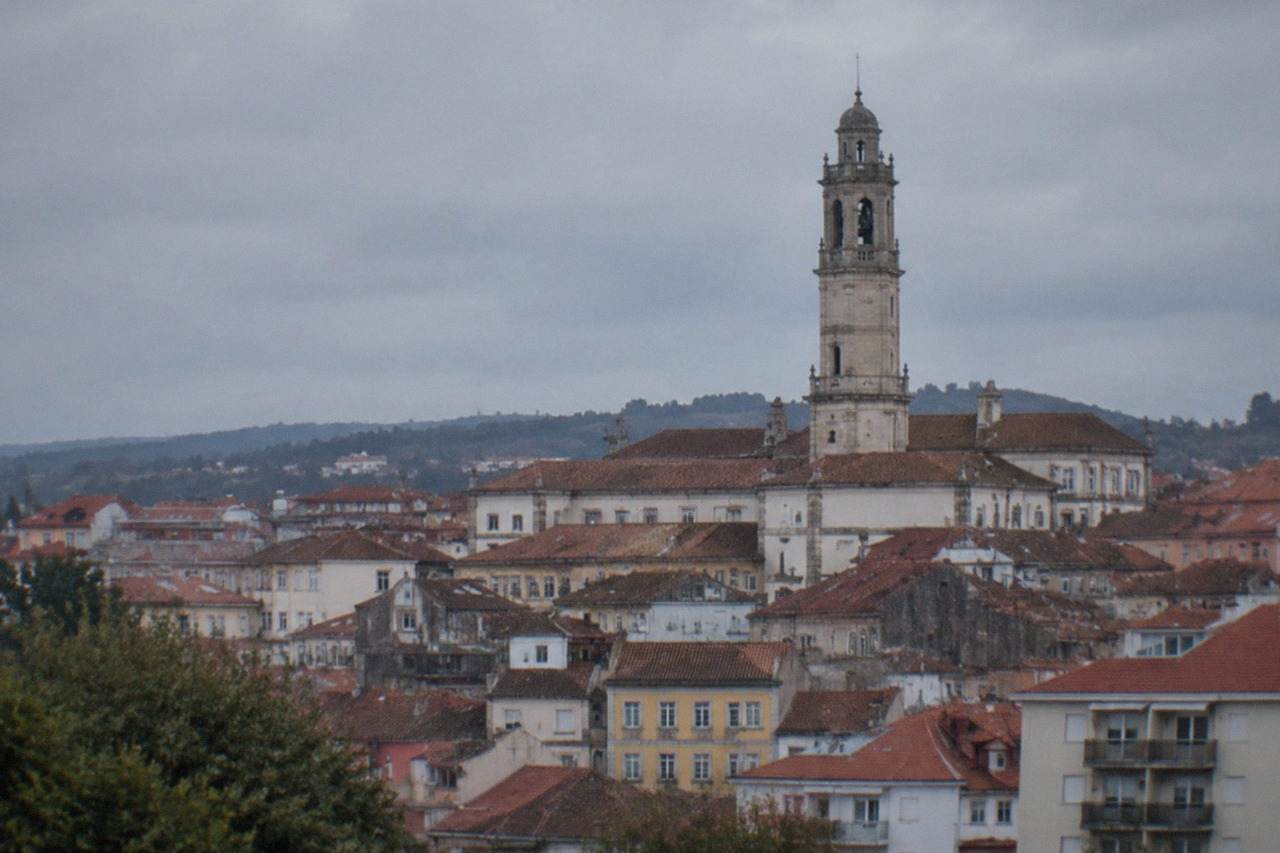
Coimbra, Portugal is a compact university city on the River Mondego. The two key facts for any visitor: the Biblioteca Joanina admits only 50 people every 20 minutes and cannot be bought on its own, and the municipal tourist tax is 1.00 EUR per night, capped at three nights, paid at your accommodation.
Coimbra, Portugal, the university city on the River Mondego, is small enough to walk across in a morning and steep enough that the walk leaves a memory. This page gathers the practical information a visitor actually needs, and every figure on it comes from an official source: the University's own visit pages, the municipality's tax and tariff documents, the national museums portal and the IPMA climate station at Bencanta. Where something was not verified on this build, it says so plainly, because a confident wrong number is worse than an honest gap.
Where Can You Find Reliable Tourist Information for Coimbra, Portugal?
The most dependable sources for Coimbra, Portugal are the University's own visit pages at visit.uc.pt, the municipality at coimbra.pt, the SMTUC bus operator's tariff PDF and the national Museus e Monumentos portal, and each publishes its own prices and hours directly. No tourist-information desk, shop, pharmacy or luggage-storage point in Coimbra had its address, hours or phone number verified for this site, so none is listed here. That is not a gap worth apologising for. In a city where the University runs its own ticketing and the parish runs the cathedrals, the operator's own page is always more current than any printed leaflet, and it is where a price change appears first.
The practical habit to build is simple: before setting out for any monument, check the venue's own page for that day. The University closes its visitor circuit entirely on 24 May and on 4 October for academic ceremonies, and it warns that religious, official and academic events interrupt the normal tourist circuit without much notice. Mosteiro de Santa Cruz suspends visits on the Cortejo da Queima das Fitas, a moveable Sunday. A visitor who checks the venue page the night before avoids every one of these.
For orientation once you arrive, the Coimbra map and city layout guide shows how the city stacks up: the Alta, the university hill, sits above the Baixa, the commercial low town, and the climb between them is short but steep. The full Coimbra travel guide covers the wider picture, and the one-day itinerary turns it into a plan.
If you would rather have a local walk you through the layout on day one, the Coimbra Top Attractions Walking Tour covers the university hill, the old cathedral and the Baixa in two and a half hours, from $5.85 per person, rated 5 from 151 reviews. Check availability, or read more about the top attractions walking tour.
What Do the Main Monuments in Coimbra Cost to Visit?
The University of Coimbra's combined ticket with the Biblioteca Joanina costs 16.50 EUR adult, the version without the Joanina 12.50 EUR, Sé Velha charges 3.00 EUR, Mosteiro de Santa Cruz 5.00 EUR, and Conímbriga's museum-and-ruins ticket 10.00 EUR, all prices published by the venues themselves for 2026. The Joanina Library cannot be bought on its own under any circumstances: it exists only inside the 16.50 EUR combined ticket, which also covers the Royal Palace, St Michael's Chapel, the Chemistry Laboratory, the Academic Museum, the Cabinet of Curiosities and the Mineral Gallery, and is valid for two days except the fixed Joanina slot.

The single most useful practical fact in the city is the Joanina's entry ceiling. The University's own program page states that entries are limited to 50 people every 20 minutes, and the time printed on your ticket is the Joanina slot specifically, not a general admission time. Entry outside the printed slot is refused, in the University's own wording. Online purchase closes 20 minutes before the visit time. In summer, a visitor who turns up without a pre-booked slot can simply be turned away, and the 50-per-20-minutes ceiling is the reason.
| Monument | Adult price | Source detail |
|---|---|---|
| University of Coimbra, combined ticket with Joanina Library | 16.50 EUR | Valid 2 days, timed Joanina slot, 50 people per 20 minutes |
| University of Coimbra, without Joanina Library | 12.50 EUR | Same spaces, no library, valid 2 days |
| University guided tour, Palace of Schools | 25.00 EUR | Guide-led, 1h30, science spaces not included |
| Sé Velha de Coimbra | 3.00 EUR | Groups over 10 pay 2.50 EUR each |
| Mosteiro de Santa Cruz | 5.00 EUR | Groups of 12+ pay 3.50 EUR, audioguide 4.00 EUR |
| Conímbriga, museum and ruins | 10.00 EUR | One ticket covers both, open daily 10:00 to 18:00 |
Two warnings sit beside that table. Portugal dos Pequenitos publishes its hours (10:00 to 17:00 in the winter stretch, 10:00 to 19:00 from 1 March to 15 October) but its price page renders client-side, so no verified euro figure appears on this site: check the venue's own ticket page. And the Torre da Universidade, the clock tower, is closed, full stop. The University's own information page states the facility is closed; there is no price, no hours and no climb to describe.
The Joanina Library tickets guide and the University tickets guide break the ticket tiers down further, including the 16.00 EUR Science Museum plus UC Exploratório option that does not include the Palace of Schools spaces at all.
A ticket plan follows from the table. One day covers the University combined ticket in the morning, Sé Velha and Santa Cruz in the afternoon, all within a ten-minute walk of each other. Conímbriga is a separate half-day, roughly 16 km south in the parish of Condeixa-a-Velha, in the municipality of Condeixa-a-Nova, and its museum is open seven days a week, which makes it the reliable Monday option when other monuments shut.
How do You Get Around Coimbra: Buses, Metrobus and the Hill?
Coimbra's SMTUC city buses charge 2.00 EUR for a ticket bought from the driver and 0.90 EUR per trip when pre-purchased in packs of three or more, one trip is valid 90 minutes with transfers included, and the same tickets are valid on the new Metro Mondego metrobus network. Those figures come from the SMTUC tariff in force since 1 April 2026. The tariff is explicitly headed as intermodal, covering SMTUC and Metro Mondego together, so a visitor holding a valid SMTUC ticket is holding a metrobus ticket too.
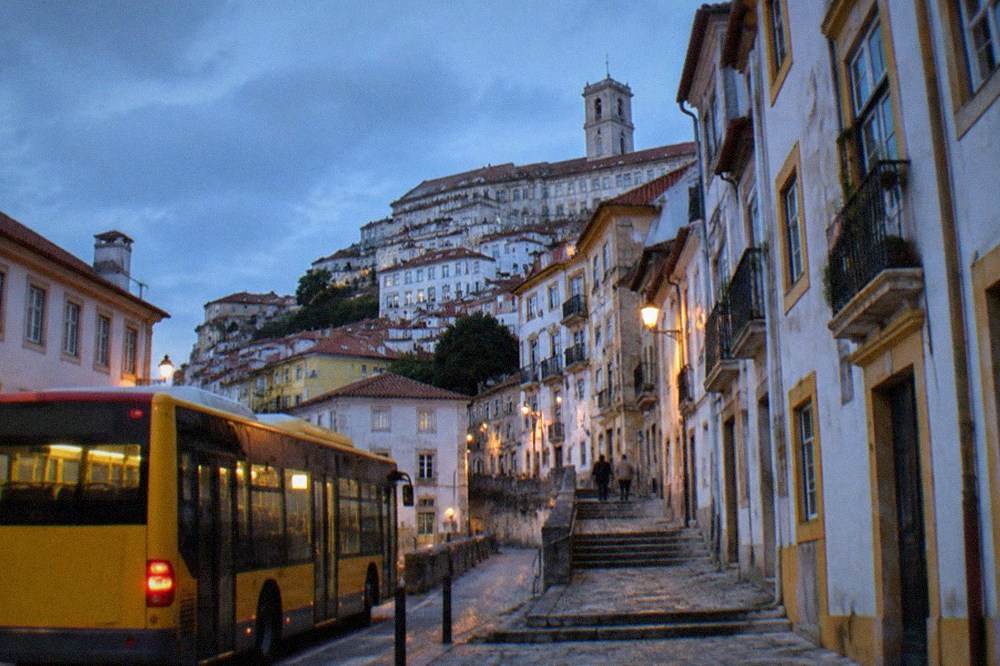
The Metro Mondego is a bus-rapid-transit system opening in stages. Dated Portuguese press describes partial urban operation from August 2025, the Serpins line from December 2025 and extensions toward Coimbra-B station and Praça da República in late summer 2026, but the operator's own site refused automated access during this build's research, so no line map or station list appears here. What is verified is the ticketing: the SMTUC tariff sells titles marked valid on both networks. Treat the metrobus as a bonus your bus ticket already covers, and check the operator's site for the current route map.
| SMTUC ticket type | Price | Notes |
|---|---|---|
| Single ticket from driver | 2.00 EUR | Bought on board |
| Pre-purchased, packs of 3+ trips | 0.90 EUR per trip | Rechargeable card |
| Trip validity | 90 minutes | Transfers included within the window |
| Viagem ConVIDA support card | 0.50 EUR | For occasional and pre-purchased tickets |
| Large-family 1-day ticket, 7 trips | 1.00 EUR | Specific family option |
| Fare evasion fine | 120.00 to 350.00 EUR | Stated in the tariff |
The hill is the other transport fact. The Alta is reached on foot up a steep climb from the Baixa, and the city's verticality is the one thing every visitor underestimates. The getting around guide and the elevador do Mercado hill lift guide cover the options; the lift's standalone single-ride price is not stated in the tariff PDF, so check with SMTUC before relying on it.
For arrivals, the train stations A and B guide explains the classic trap: Coimbra has two stations with confusingly similar names, in different places, and CP, the national rail operator, is where to confirm which trains call where and how the two stations connect. The Porto to Coimbra guide and Lisbon to Coimbra guide cover the two main arrival corridors.
Which Coimbra Sites Are Closed or Restricted Right Now?
Three sites are affected in 2026: the Museu Nacional de Machado de Castro is closed for conservation work, the Torre da Universidade is closed with no reopening announced, and Mosteiro de Santa Clara-a-Velha has been closed for requalification works since 20 October 2025 with no current official page. The Machado de Castro's own entry on the national museums portal carries the closure line at the top, which matters because the same page prints a normal-looking opening-hours table below it; the hours describe the museum when open, not today. Its reopening ticket price is unsourced, so no figure appears here.
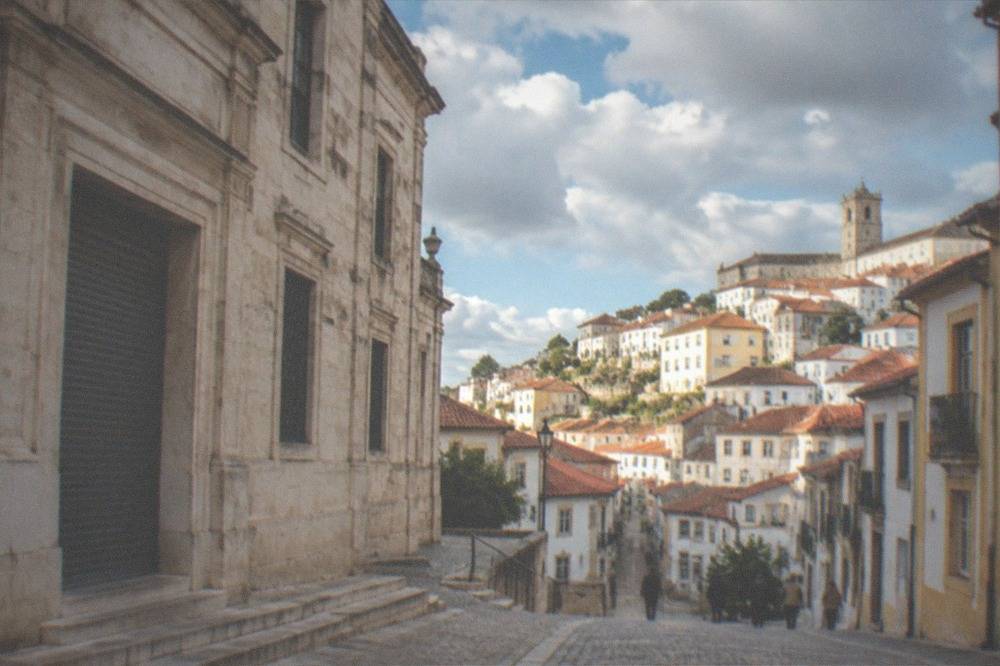
Santa Clara-a-Velha is the quietest of the three. The monument has no page at all on the national museums portal, consistent with the closure for works reported in dated Portuguese sources. Prices in circulation for it are unsourced. Write it off for this trip and check the DGPC ticketing portal before a future one.
| Site | Status in 2026 | What is verified |
|---|---|---|
| Museu Nacional de Machado de Castro | Closed for conservation work | Own portal page states closure; Roman cryptoporticus is part of the route when open |
| Torre da Universidade | Closed | University's own info page states the facility is closed |
| Mosteiro de Santa Clara-a-Velha | Closed for works since 20 Oct 2025 | No page on the museums portal; no verified price or hours |
| Sé Velha de Coimbra | Open | 3.00 EUR, summer hours 09:30 to 18:30 |
| Mosteiro de Santa Cruz | Open, with suspensions | Closed on the Cortejo da Queima das Fitas and Easter Sunday |
| Conímbriga | Open daily | 10:00 to 18:00, ticket office closes 17:15 |
The pattern to notice is that the closed sites are the ones a 2019 guidebook would have called essential. A 2026 visitor's Coimbra is still full: the University circuit, two cathedrals, Santa Cruz, the Botanical Garden, the riverside park and the fado houses are all operating. The attractions guide and the what to see guide re-rank the city around what is actually open.
The Machado de Castro closure has one silver lining worth knowing. The museum building sits above a Roman cryptoporticus of the mid-1st century, part of the visit route when the museum reopens, and that structure is the reason the building exists where it does. When it reopens, it will be the deepest historical layer in the city centre.
What Is the Tourist Tax in Coimbra and When do You Pay It?
Coimbra charges a municipal tourist tax of 1.00 EUR per guest per overnight stay, capped at three consecutive nights, applying from age 16, paid directly to the accommodation at check-in or check-out, in force since 5 April 2023. The municipality's own worked example: a couple staying seven nights pays 3.00 EUR each, 6.00 EUR total. It is charged all year with no low-season exclusion, it is not subject to VAT, and it never goes through a booking platform.
One nuance matters for accuracy. On 21 July 2026 the municipality reported that its Executive approved a proposal to raise the tax from one euro to two euros per overnight stay, describing the tax in that same notice as currently fixed at one euro. Until the municipality's own tax pages state 2.00 EUR, the published rate is 1.00 EUR, with the rise noted as proposed. A guide that prints two euros today is printing a decision that has not taken effect. Everything else covered here is indexed on Coimbra Travel Guide.
| Tourist tax rule | Detail |
|---|---|
| Rate | 1.00 EUR per guest per overnight stay |
| Cap | Maximum 3 consecutive overnight stays per person |
| Minimum age | 16, birthday itself excluded, proven by ID |
| Where paid | Directly to the accommodation, at check-in or check-out |
| In force since | 5 April 2023 |
| Exemptions | Medical stays and one companion, disability of 60% or more, with documents |
| Not exempt | Professional travel, internships, students, research fellows |
| Pending change | Two-euro proposal approved by the Executive, 21 July 2026, not yet in force |
The municipality's own justification for the rise is the figure almost no competing guide carries. Coimbra recorded 698,151 overnight stays in 2025, a municipality-level count, and the municipal study put the annual cost of tourism at 2.44 million EUR, which works out to 3.49 EUR per overnight stay. Even the proposed two-euro tax sits below the municipality's own cost estimate, which is the entire argument of the proposal.
When Is the Best Time to Visit Coimbra?
The best months for Coimbra are May, June, September and early October, when the IPMA normals for the city's own Bencanta station show mean maximums of 23.3, 26.3, 27.4 and 23.2 C respectively, with June the driest of them at 26.0 mm of rain, and July at 8.9 mm is effectively dry but the hottest stretch arrives in August. August, not July, is the hottest month on both mean and mean maximum, averaging 29.1 C and 10.9 days above 30 C. September is the quiet prize: its mean maximum of 27.4 C is higher than June's, the crowds thin with the academic calendar, and the rain has not arrived.
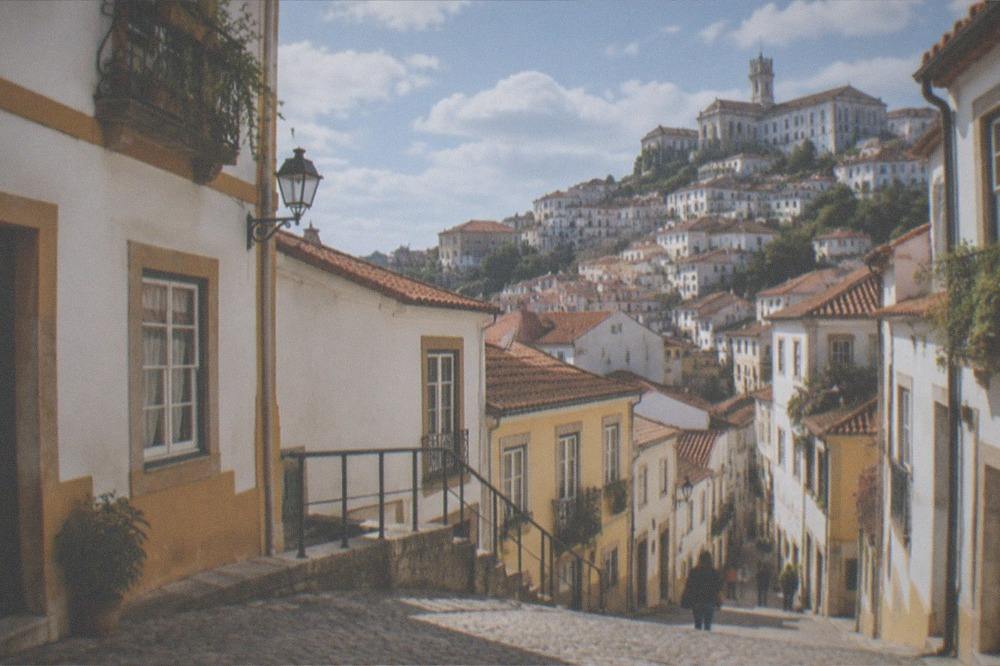
The autumn rain holds off until October, when the monthly total jumps from 49.9 mm to 114.5 mm, and November is the wettest month of the year at 121.5 mm, marginally ahead of October and January. Coimbra's rain is autumn and winter rain. Anyone planning a November-to-February visit should expect over 110 mm per month in the deepest stretch and pack for it.
| Month | Mean max C | Rain mm | Days 1mm+ rain | Character |
|---|---|---|---|---|
| Mar | 19.1 | 75.4 | 9.4 | Mild, showers easing |
| May | 23.3 | 64.7 | 8.5 | Warm, Queima month |
| Jun | 26.3 | 26.0 | 3.7 | Warm and dry |
| Jul | 28.5 | 8.9 | 1.7 | Effectively dry |
| Aug | 29.1 | 14.8 | 2.2 | Hottest month, 10.9 days above 30 C |
| Sep | 27.4 | 49.9 | 5.2 | Warmer than June, quiet |
| Oct | 23.2 | 114.5 | 10.3 | Rain arrives in earnest |
| Nov | 18.0 | 121.5 | 11.5 | Wettest month |
The record extremes at the same station put the range in perspective: 41.2 C on 7 August 2016, and -4.3 C on 20 January 2017. The weather guide and the best time to visit guide expand on this, month by month.
One calendar fact belongs beside the climate table. The University closes its visitor circuit on 24 May, and Santa Cruz suspends visits on the Cortejo da Queima das Fitas, a moveable Sunday in May. The Queima das Fitas guide explains what the festival is and why exact dates should be confirmed with the Associação Académica, whose calendar is the only official one. A May visit is glorious, but book the Joanina slot around the student calendar.
What Day Trips Can You Take from Coimbra?
The strongest day trips from Coimbra are Conímbriga's Roman ruins roughly 16 km south in Condeixa-a-Nova, the schist villages of the Lousã mountain, and the town of Tomar with its Convent of Christ, and each has guided tours from the city running four hours or so. Conímbriga is the easiest to reach and the most reliable to plan, because its museum and ruins are open daily, 10:00 to 18:00, on a single 10.00 EUR combined ticket. The schist villages need a car or a tour; the mountain roads are part of the point.
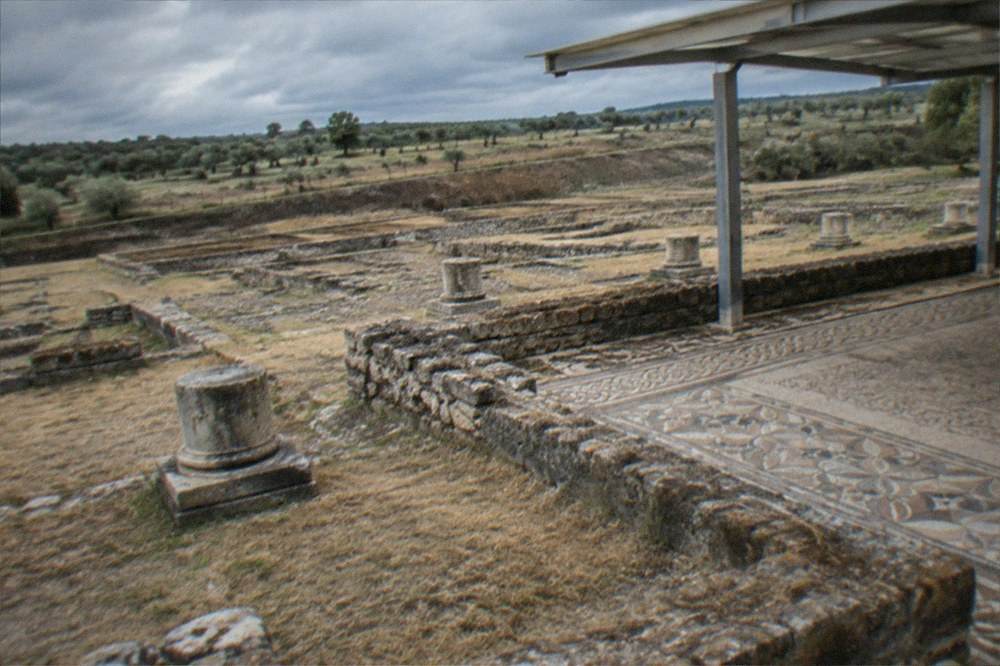
The Conimbriga and the Roman Tour runs four hours from $105.37 per person, rated 4.8 from 136 reviews, and pairs the ruins with the museum's mosaics. The Schist Villages at Lousa Mountain tour, also four hours from $105.37, rated 4.9 from 133 reviews, reaches the stone villages of the Serra da Lousã. Both appear in the tour selection below, where current availability and live pricing are shown on each operator's listing.
| Day trip | Distance and status | Tour option from the roster |
|---|---|---|
| Conímbriga Roman ruins | Roughly 16 km south, open daily, 10.00 EUR | Conimbriga and The Roman Tour, 4 hours |
| Schist villages, Serra da Lousã | Mountain roads south of the city | Schist Villages at Lousa Mountain, 4 hours |
| Tomar, Convent of Christ | Day trip outside the city | Time travel at the Convent of Christ Tomar, 1 to 3 hours |
| Fátima shrine | Day trip outside the city | Fátima Private Tour: Shrine, Sacred Way and Shepherds' Hometown, 3 hours |
| Buçaco forest | Day trip outside the city | An adventure through the Forest and Palace of Bussaco, 4 hours |
The day trips guide and the Conímbriga Roman ruins guide cover the destinations in depth. Note the geography: Conímbriga is in the municipality of Condeixa-a-Nova, not in Coimbra at all, and the district of Coimbra is a different, much larger thing that reaches the Atlantic at Figueira da Foz. The city has no beach; the district does.
What Else Should You Know Before You Arrive in Coimbra?
Coimbra is a walkable, safe-feeling university city of about 31,000 students where fado is sung differently from Lisbon, the old town climbs steeply from the river, and the practical friction points are the Joanina slot system, the two train stations and the hill, in that order. The University publishes about 31,000 students as its current figure, and that population is the engine of everything visitor-facing: the fado, the Repúblicas, the black-caped student dress, the May festival that closes monuments. The fado de Coimbra guide and the where to hear fado guide explain the city's own fado tradition, which is sung by men in student dress and is a distinct tradition from Lisbon's.
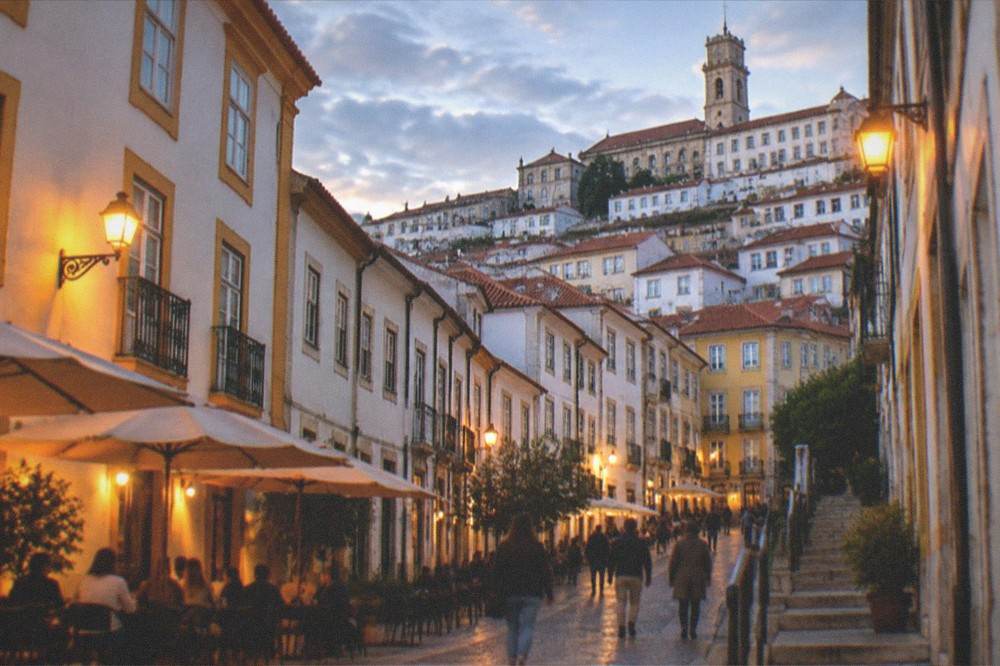
For a first visit, three pages do most of the planning work: where to stay for the neighbourhood choice between the Baixa's flat convenience and the Alta's views, restaurants for the eating, and is Coimbra worth visiting for the honest case for and against. The UNESCO fact worth getting right: "University of Coimbra, Alta and Sofia" was inscribed in 2013, list reference 1387, and it covers two components inside the old town, the university hill and the college street. Coimbra is not itself a UNESCO World Heritage city, whatever a shelf of guidebooks says.
The final planning note is the one this whole page keeps returning to. The Joanina's 50 people every 20 minutes is the only genuine scarcity fact in the city, and it is real: book the library slot before you book anything else, then build the day around it. Everything else in Coimbra forgives a late decision, and that one does not.
Common Questions About Coimbra Tourist Information
Where can I find tourist information in Coimbra, Portugal?
The most reliable sources are the University's own visit pages at visit.uc.pt, the municipality at coimbra.pt, the SMTUC tariff for transport and the national Museus e Monumentos portal for monuments. No tourist-information desk in Coimbra had its address or hours verified for this site, so check the venue's own page for anything current.
How much is the tourist tax in Coimbra?
The municipal tourist tax is 1.00 EUR per guest per overnight stay, capped at three consecutive nights, from age 16, paid directly to the accommodation. A two-euro increase was approved as a proposal by the municipal Executive on 21 July 2026 but is not yet the published rate.
Can I buy a Biblioteca Joanina ticket on its own?
No. The Joanina Library exists only inside the University's 16.50 EUR combined ticket, admits 50 people every 20 minutes, and the time printed on the ticket is the fixed library slot. Entry outside that slot is refused.
Do SMTUC bus tickets work on the Metro Mondego?
Yes. The SMTUC tariff in force since 1 April 2026 sells titles marked valid on both the SMTUC and Metro Mondego networks, so a valid bus ticket covers the metrobus too.
Is the Machado de Castro museum open in Coimbra?
No. The Museu Nacional de Machado de Castro is closed for conservation work, per its own page on the national museums portal, with a phased reopening targeted for late 2026. The Torre da Universidade and Mosteiro de Santa Clara-a-Velha are also closed.
What is the best month to visit Coimbra?
May, June and September, per the IPMA 1991 to 2020 normals for the Coimbra / Bencanta station. September is the quiet pick: a mean maximum of 27.4 C, warmer than June, with only 49.9 mm of rain before the October jump to 114.5 mm.