Christmas and Winter in Coimbra, Portugal: Markets, Weather and What's Open
Coimbra, Portugal, the university city on the River Mondego, is at its quietest from December to February. This guide covers the real winter numbers from the city's own weather station, which sights keep winter hours, and how to plan around the season.
Short answer
Winter in Coimbra is mild but wet: IPMA's 1991-2020 normals for the city's own Bencanta station show December and January mean maximums of 15.6 C and 15.0 C, with over 110 mm of rain each. The university's visitor circuit runs on a shorter 09:00 to 17:30 winter schedule, and the low season means the Joanina Library's 50-people-per-20-minute slots are far easier to book.
Coimbra, Portugal, the university city on the River Mondego, slows down in a way few Portuguese cities do once the academic term ends and the winter rain settles in. The student population of about 31,000 that the University publishes on its own homepage thins out over the holidays, the tour buses all but vanish, and the city's hillside lanes belong to locals again. Winter here is not a shutdown: it is the season when the Joanina Library's strict ceiling of 50 people every 20 minutes stops being a constraint and becomes a formality, and when the sights that stay open run on shorter, published hours you can plan around.
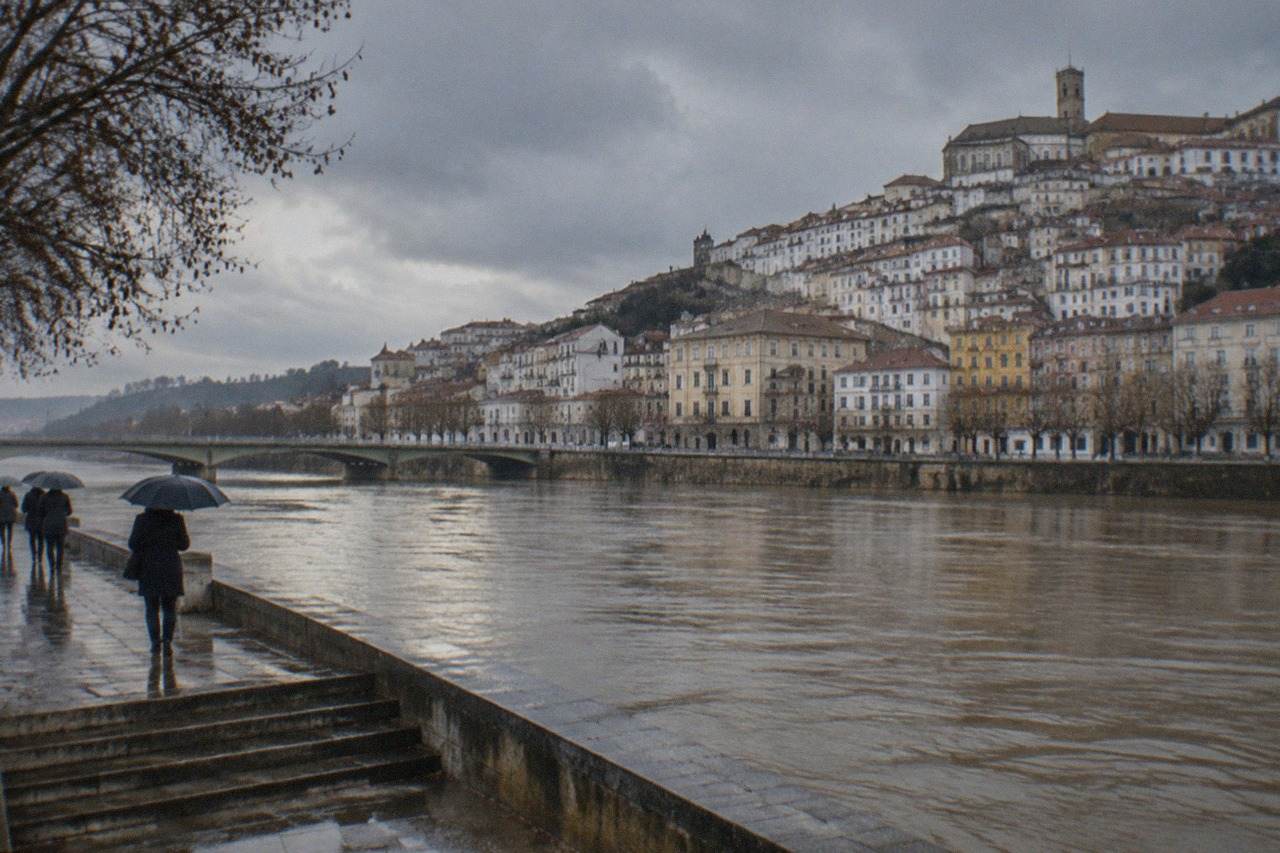
What Is Winter Actually Like in Coimbra, Portugal?
Winter in Coimbra is mild on the thermometer and wet underfoot: IPMA's 1991 to 2020 normals for the city's own Bencanta station, number 707, three kilometres from the centre, show a December mean maximum of 15.6 C and a January mean maximum of 15.0 C, but both months average over 110 mm of rain. Nights fall to mean minimums of 5.2 C in January and 6.2 C in December.
Those figures come from the station that actually measures Coimbra city, not a coastal proxy, and the distinction matters: the district of Coimbra reaches the Atlantic, but the city does not touch the sea, so a Figueira da Foz forecast describes a different place. What the table shows is a classic Atlantic-margin winter. Daytime temperatures in the low to mid-teens mean a coat rather than thermal layers, and rain arrives in long fronts rather than short showers. The compensation is light: December averages 11.1 rain days and November is actually the wettest month of the year at 121.5 mm, so the season ramps up through November and stays damp until February, which drops to 81 mm. The record low at this same station is -4.3 C, recorded on 20 January 2017, a rare frost-snap extreme rather than a normal winter night.
| Month | Mean max C | Mean min C | Rain mm | Days 1mm+ rain |
|---|---|---|---|---|
| November | 18.0 | 8.3 | 121.5 | 11.5 |
| December | 15.6 | 6.2 | 111.3 | 11.1 |
| January | 15.0 | 5.2 | 113.5 | 11.3 |
| February | 16.4 | 5.5 | 81.0 | 8.6 |
For context on how the year shapes up, and why September is the season savvy travellers pick, see the full best time to visit Coimbra breakdown. The short version: Coimbra's rain is autumn and winter rain, and the dry window is June through August, with July at 8.9 mm effectively rain-free.
What Can You Do in Coimbra in December and January?
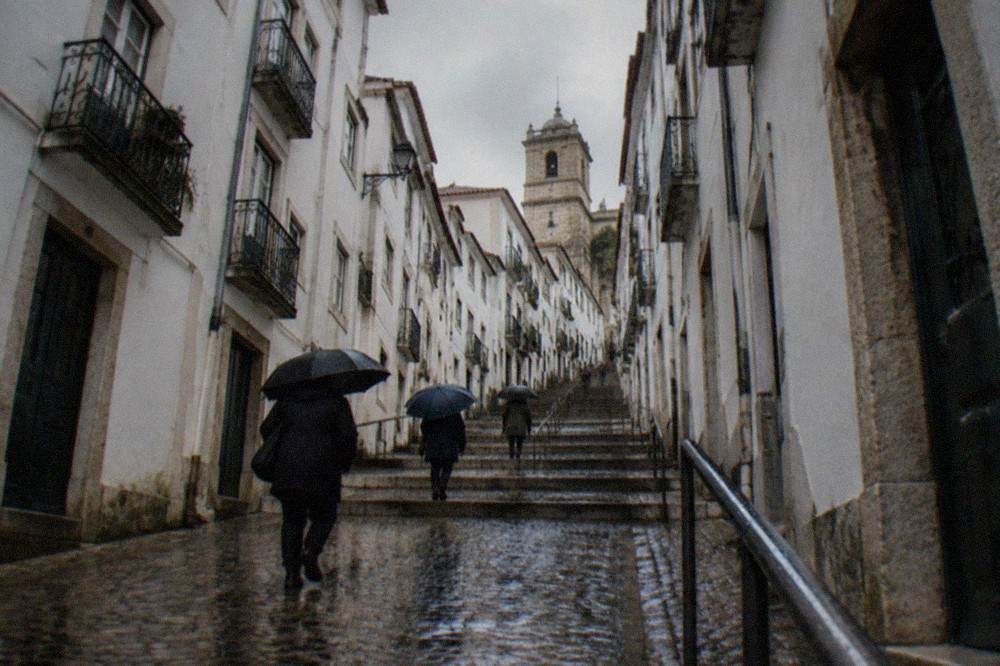
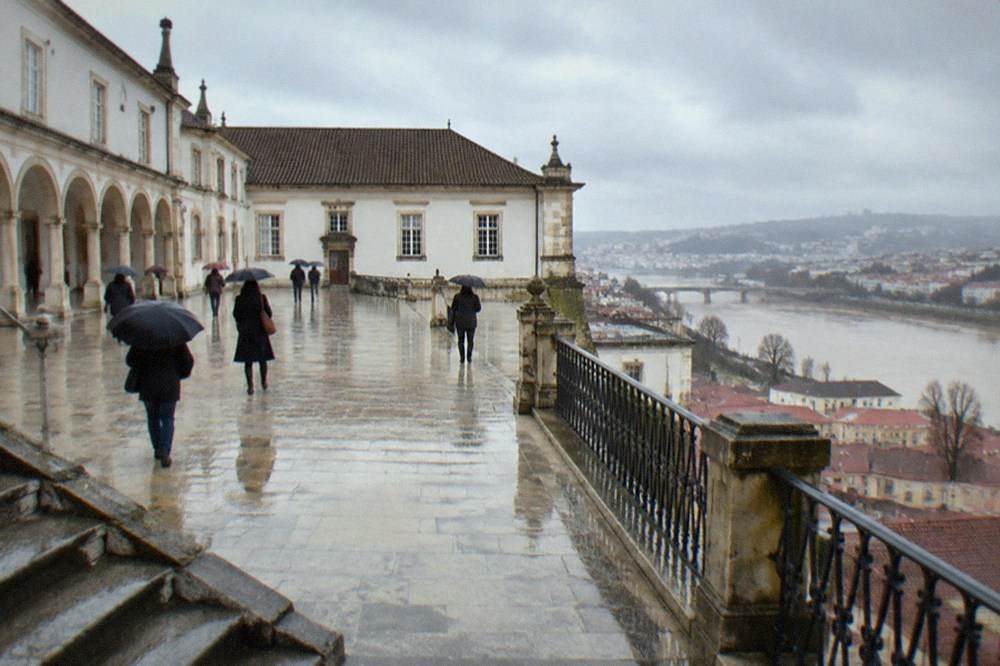
The winter visitor's Coimbra is the indoor and covered one: the University's visitor circuit on its 09:00 to 17:30 winter schedule, the Sé Velha and Mosteiro de Santa Cruz on their published winter hours, the Fado de Coimbra houses of the Baixa, and the city's museums and cafés between rain fronts. The river still runs below the hill, the Botanical Garden is open, and the low-season queues are a fraction of summer's.
The practical logic of a winter day here is to put the outdoor walking in the middle of the day and keep mornings and late afternoons for interiors. The University's own visit page states the winter schedule runs 1 October to 31 March, 09:00 to 17:30, against a summer schedule that runs to 20:00, so winter costs you the evening visit but little else. The combined ticket is valid for two days except the fixed Joanina slot, which means you can split the Paço das Escolas spaces across two damp afternoons rather than racing them in one. A two- or three-day stay works comfortably in the shorter daylight.
A guided walk solves the winter planning problem neatly, because a local guide reshuffles the route around the weather rather than around a fixed timetable. The Coimbra Top Attractions Walking Tour runs two and a half hours, is rated 5 from 151 reviews and starts from $5.85 per person, and a certified guide's free walk through the city's history and conflicts tradition covers the same lanes at no fixed price on GuruWalk, where you tip the guru at the end.
If the forecast gives you a clear afternoon, spend it on the river instead. A traditional Barca Serrana boat trip runs 50 minutes on the Mondego with the city stacked on its hill above you, and it is a different Coimbra from the water than from the lanes. For the full spread of options through the colder months, the things to do in Coimbra guide carries the year-round list.
Which Coimbra Sights Stay Open in Winter, and What Are the Hours?
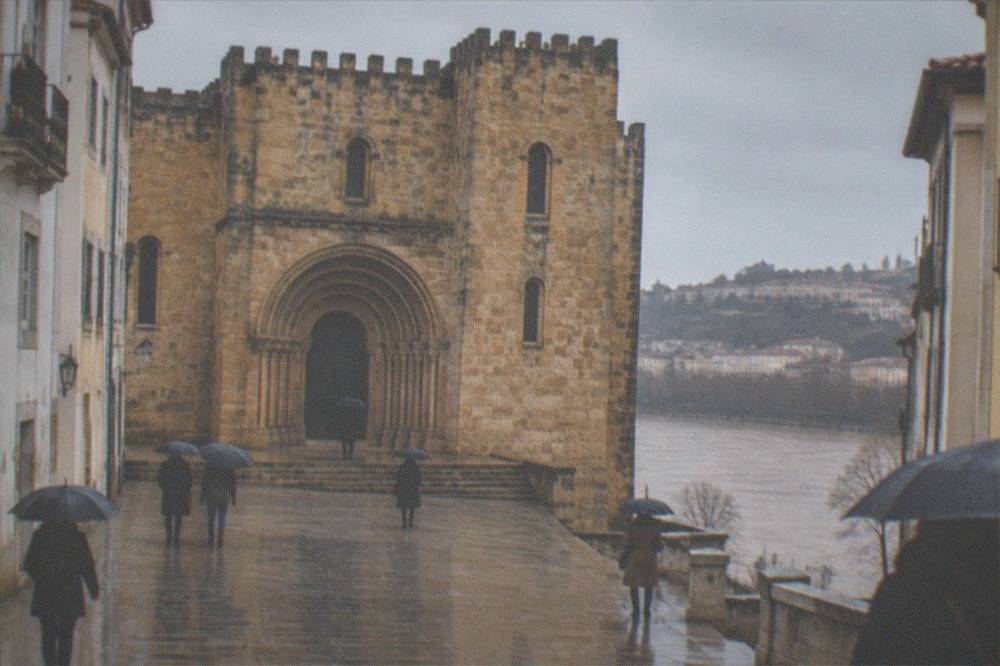
The University visitor circuit runs 09:00 to 17:30 in winter (1 October to 31 March); the Sé Velha charges 3.00 EUR and keeps winter hours of 09:30 to 17:30; Mosteiro de Santa Cruz costs 5.00 EUR and visits run 09:30 to 16:30; Portugal dos Pequenitos is open 10:00 to 17:00 from mid-October through February; and Conímbriga, 16 km south, opens daily 10:00 to 18:00 year-round.
Two things are closed and must not be planned around: the Torre da Universidade and the Museu Nacional de Machado de Castro. The University's own information page states plainly that the clock tower facility is closed, and the national museums portal carries "Closed for conservation work" at the top of the Machado de Castro page, with a phased reopening targeted after the summer of 2026. The museum's mid-1st-century Roman cryptoporticus, the part most visitors actually remember, is inaccessible while the works run. Mosteiro de Santa Clara-a-Velha has likewise been closed for requalification work since October 2025, so check its status before walking down to the river's south bank for it.
| Sight | Winter status | Adult price | Published hours |
|---|---|---|---|
| Paço das Escolas (University circuit) | Open, winter schedule | 16.50 EUR with Joanina, 12.50 EUR without | 09:00-17:30, 1 Oct-31 Mar |
| Biblioteca Joanina | Open, timed slot only | Only inside the 16.50 EUR combined ticket | Slot printed on ticket, 50 people per 20 minutes |
| Sé Velha de Coimbra | Open | 3.00 EUR | 09:30-17:30 |
| Mosteiro de Santa Cruz | Open, visits suspended on the Cortejo da Queima das Fitas Sunday | 5.00 EUR | 09:30-16:30 |
| Portugal dos Pequenitos | Open | On the venue's own ticket page | 10:00-17:00, 16 Oct-28/29 Feb |
| Museu Nacional de Conímbriga | Open daily | 10.00 EUR | 10:00-18:00, ticket office to 17:15 |
| Museu Nacional de Machado de Castro | Closed for conservation work | No price published | Reopening phased after summer 2026 |
| Torre da Universidade | Closed | No ticket | No access |
The University also closes its visitor circuit outright on a short published list of dates, including 24 and 25 December and 31 December to 1 January, so a Christmas-week visit needs the days around the holiday itself rather than the holiday. The University of Coimbra and Joanina Library tickets guides carry the full ticketing detail, including why the time printed on your ticket is the library slot and not a suggestion.
Booking the University in the Quiet Season
The one genuine scarcity fact in Coimbra is the Joanina's ceiling of 50 people every 20 minutes, and winter loosens it without repealing it. Online purchase closes 20 minutes before the visit time, entry outside the printed slot is refused, and the ticket is otherwise valid two days. A skip-the-line tour with a local guide removes even that friction, and in December you are choosing your slot rather than taking what is left.
Is There a Christmas Market in Coimbra?
Coimbra's Christmas season is real but modest, and this build could not verify a single 2026 or 2027 date for any specific Christmas market, nativity display or winter event in the city, so no dates appear on this page. What can be said with confidence is the shape of the season: the municipality publishes its festive programme each year, the city's churches hold Christmas services in buildings as old as the Sé Velha, and the Baixa lights up for December shopping.
That is a deliberately careful answer, and the reason is the site's own verification standard. The Associação Académica's site refused this build's automated requests, the municipality's event pages change year to year, and nothing dated for the 2026 season could be read from an official source. Any guide printing a firm "Coimbra Christmas market runs from late November" line is guessing. What a planner can rely on instead: the municipality is the publisher of record for the festive programme on coimbra.pt, the tourist information network in the Baixa will have the current year's leaflets, and the Christmas and winter events listings on the municipal site tradition in Portugal generally peaks in the two weekends before 25 December.
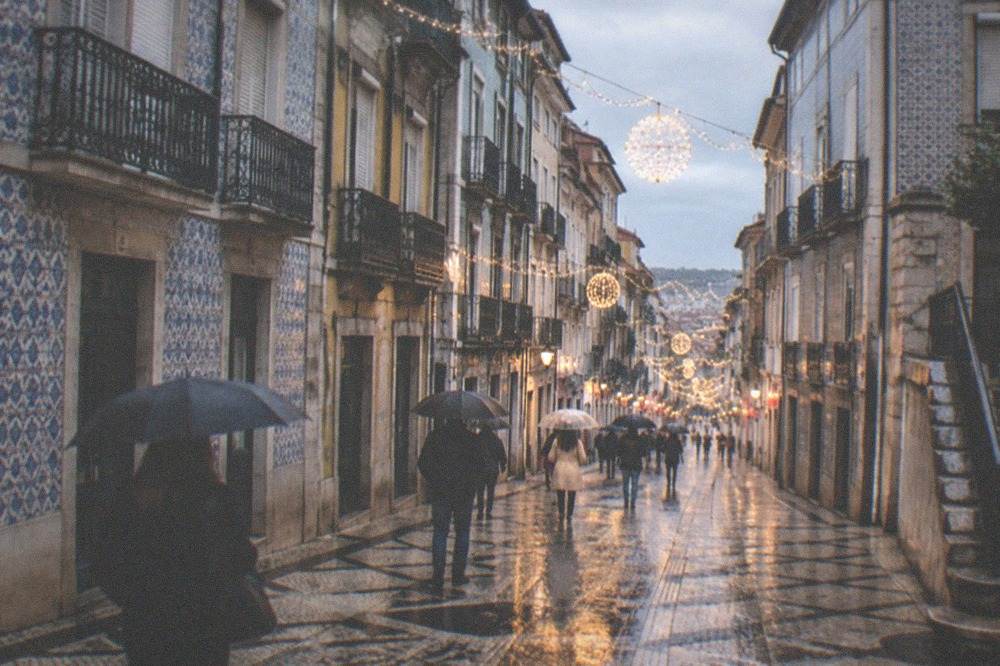
The honest framing for a December trip is this: come for the city in its quietest month, treat any Christmas programming as a bonus you confirm on arrival, and let the map of Coimbra carry the plan. The Baixa's grid, the riverbank park and the climb to the Alta are all free to wander, and the free things to do in Coimbra list survives winter intact.
What Should You Eat in Coimbra in Winter?
Winter eating in Coimbra is the season for leitão da Bairrada, the roast suckling pig of the Bairrada region to the city's west, along with the city's traditional dishes, the chanfana-style slow-cooked meats, the chestnut and caldo verde traditions of the Portuguese winter, and the arrufadas and pastries of the old cafés. No restaurant, café, bakery or market in Coimbra had its prices, hours or address verified for this page.
This guide therefore describes the food and where the traditions come from, and leaves the choice of venue to the reader on the ground. Leitão is the headline. The Bairrada wine region begins west of the city, and its roast suckling pig is the dish Coimbrians treat as a celebration meal, which is exactly what the Christmas table calls for. The leitão da Bairrada and Bairrada wine route guides cover the tradition and its sparkling wine pairing in depth. Beyond it, the traditional dishes of Coimbra run to the hearty end of Portuguese cooking, and the pastries and arrufadas of the city's old confectioners are a wet-afternoon institution in themselves.
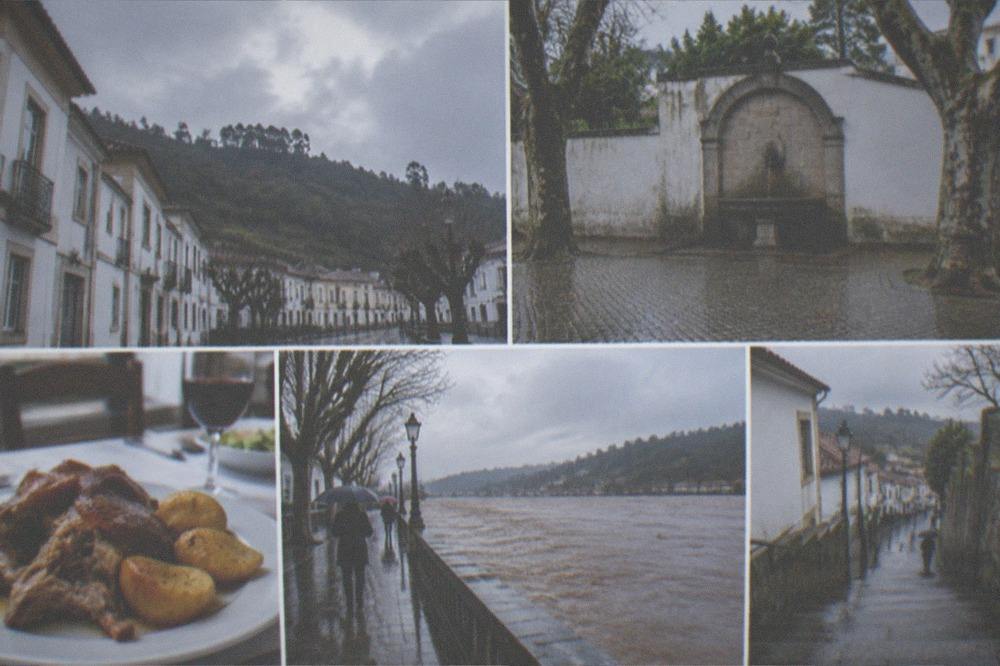
| Winter food tradition | What it is | Where the tradition sits |
|---|---|---|
| Leitão da Bairrada | Roast suckling pig, Bairrada method | Bairrada region west of the city, served across Coimbra |
| Bacalhau dishes | Salt cod, the Portuguese Christmas Eve centrepiece | Home tables and restaurants citywide in late December |
| Caldo verde | Kale and chouriço soup | The standard cold-day starter |
| Roasted chestnuts | Street food of the São Martinho season in November | Sold around the Baixa in early winter |
| Arrufadas and pastries | Coimbra's sweet confectionery tradition | The old cafés of the downtown grid |
For how to choose somewhere to eat rather than which named place, the best restaurants in Coimbra guide sets out what distinguishes the kinds of venue, from the student taverns of the Baixa to the fine-dining rooms of the hotels, without asserting unverifiable details about any single one. The markets guide does the same for the city's food halls, where winter produce is the whole show.
Does It Rain All Winter in Coimbra?
No, but it rains often: the IPMA 1991 to 2020 normals for the Coimbra / Bencanta station show December at 111.3 mm across 11.1 rain days, January at 113.5 mm across 11.3 days, and February easing to 81.0 mm across 8.6 days, against November's peak of 121.5 mm. Roughly a third of winter days see 1 mm or more of rain, which leaves two days in three dry or near-dry.
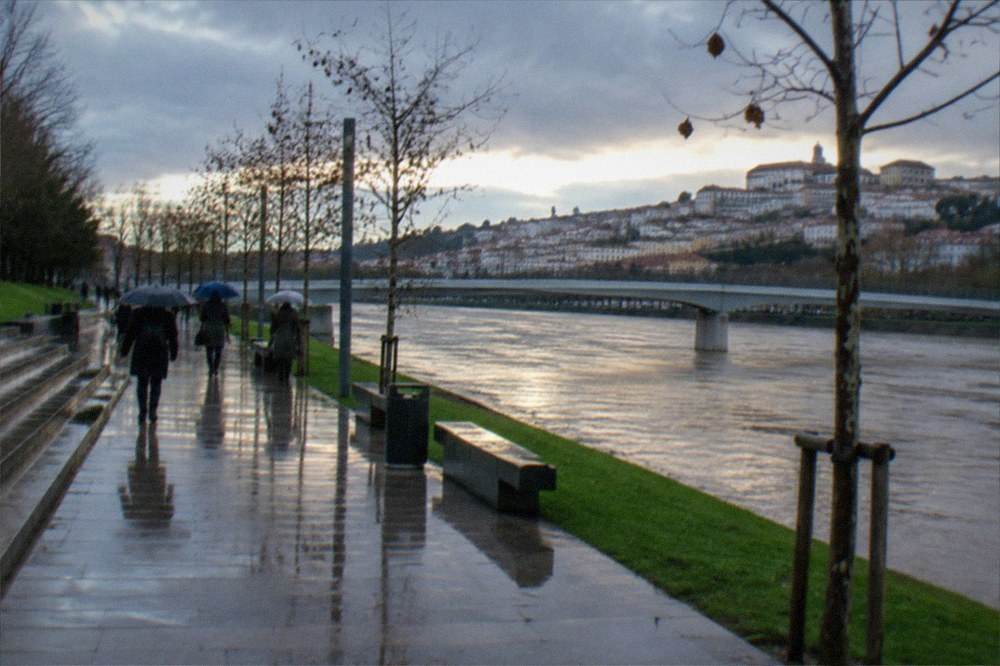
Daytime maximums hold in the low to mid-teens throughout the season. The planning consequence is about fronts, not downpours. Atlantic systems roll through in multi-hour bands, and the dry gaps between them are when the riverbank, the Choupal forest and the upper town views repay the climb. The weather in Coimbra and month-by-month weather by month guides carry the full table; the winter-specific reading is that February is the month the season relaxes, with rain days dropping by nearly three and mean maximums back up to 16.4 C before spring arrives.
| Winter planning factor | The number | What it means for a visit |
|---|---|---|
| Daytime mean maximum, Dec-Feb | 15.0 to 16.4 C | A coat weather, not ski clothing |
| Night mean minimum, January | 5.2 C | Layers for evenings outdoors |
| Rain days per month, Nov-Feb | 8.6 to 11.5 | Plan interiors for mornings, exteriors midday |
| Record low, station 707 | -4.3 C, 20 January 2017 | Cold snaps happen but are rare |
| Joanina capacity | 50 people per 20 minutes | Winter slots book easily, still book ahead |
Packing for these numbers is straightforward, and the what to pack for Coimbra guide generalises it: waterproof outer layer, shoes with grip for wet cobbles, and an umbrella that survives wind on the exposed university hill. The cobbles of the Alta dry slowly, which is a footwear point more than a clothing one. The full index of guides sits on Coimbra Travel Guide.
How do You Get Around Coimbra in Winter?
Getting around winter Coimbra is the same city as the rest of the year with better odds: the 2026 SMTUC tariff lists a 2.00 EUR driver-bought single or 0.90 EUR per trip on a pre-purchased card of three or more, each trip valid 90 minutes with transfers on the urban network, and SMTUC tickets are also valid on the Metro Mondego network. Two rail stations, Coimbra-B and Coimbra-A, sit in different places with confusingly similar names.
CP is where to check which trains call where, including the shuttle between the two stations, and this build could not source those specifics, so they get the honest version rather than a guess. The bus tariff is the verified spine of city transport, and the intermodal detail is the quiet win: the tariff's own heading marks titles as valid on both the SMTUC and Metro Mondego networks, so a bus ticket covers the new BRT system as it opens in stages. The train stations A and B guide carries what is verified and nothing else.
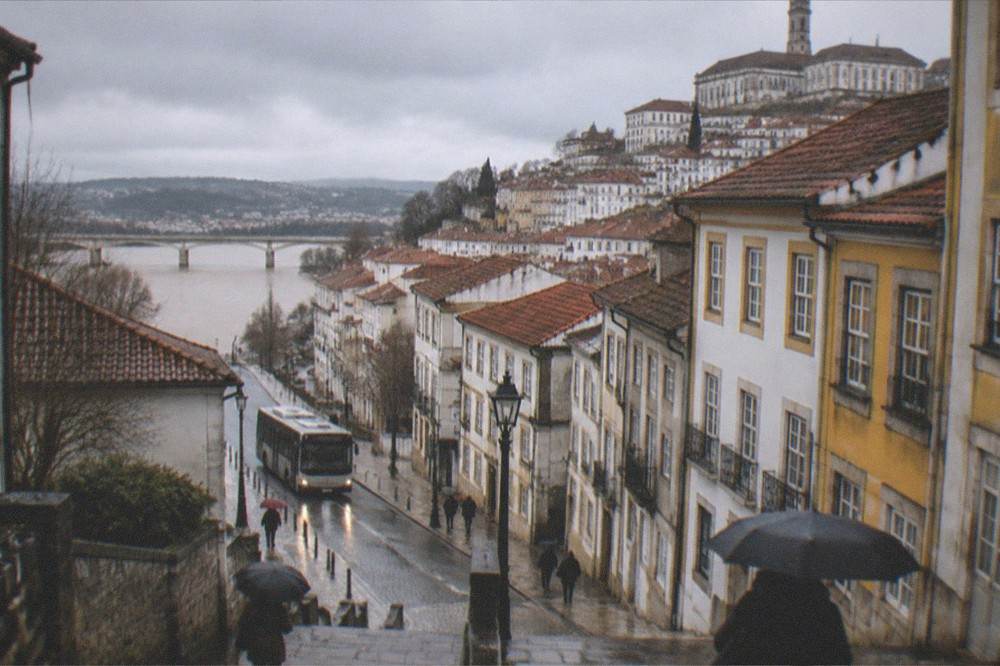
Winter barely changes the transport picture, with one exception worth naming: the steep lanes between the Baixa and the Alta are hard work in the wet, and the Elevador do Mercado exists to lift pedestrians up the hill, though its standalone fare is not published in the 2026 tariff. The getting around Coimbra guide covers the full network, and the parking one covers why a winter visit by car wants the riverside lots rather than the upper town's streets.
| Transport option | Verified figure | Source |
|---|---|---|
| SMTUC single, bought on board | 2.00 EUR | 2026 SMTUC tariff |
| SMTUC pre-purchased, 3+ trips | 0.90 EUR per trip | 2026 SMTUC tariff |
| Trip validity, urban network | 90 minutes, transfers included | 2026 SMTUC tariff |
| SMTUC tickets on Metro Mondego | Valid, per tariff heading | 2026 SMTUC tariff |
| Tourist tax, per guest per night | 1.00 EUR, max 3 nights, from age 16 | Municipal tax page |
For arriving from the two big cities, the Porto to Coimbra and Lisbon to Coimbra guides carry the rail picture, and the best hotels in Coimbra and where to stay guides handle the winter-baseline question of which part of the city suits a short cold-season stay.
Is Winter a Good Time to Visit Coimbra, Portugal?
Winter is the best-value time to visit Coimbra if you accept the rain statistics: the same sights run on shorter published hours, the Joanina Library's 50-people-per-20-minute ceiling is easy to satisfy, and the university city's indoor wealth, from the library to the Fado houses, is built for short days and wet evenings. Only a visitor needing the Machado de Castro museum or the Santa Clara-a-Velha ruins should steer away, and both are closed regardless of season.
Hotel demand reflects a city whose 698,151 overnight stays in 2025 are concentrated in the warmer months, so winter rates and availability both ease. That is the trade in one paragraph. The is Coimbra worth visiting question has a different answer in February than in August, and the honest February answer is yes, with a rain jacket. The Fado de Coimbra tradition in particular belongs to the dark half of the year, when the student singers of the Fado de Coimbra tradition perform in the candlelit rooms of the Baixa, and the where to hear Fado guide explains the difference between the city's own Fado and the Lisbon version, and why the winter calendar suits it.
A skip-the-line university tour with a local guide makes the most of the short winter window, pairing the Paço das Escolas circuit with a guide who can compress the hill's story into the daylight you actually have.
And for a dry-front day with a car, Conímbriga is the winter day trip that never closes on a Monday: the Roman site in Condeixa-a-Velha, in the municipality of Condeixa-a-Nova about 16 km south, opens daily 10:00 to 18:00, while the city's other monuments take their Monday and holiday rests. The Conímbriga Roman ruins guide covers the site, and the day trips from Coimbra guide covers the rest of the winter-reachable region, from the schist villages of the Lousã mountain to the Bussaco forest.
Common Questions About Winter in Coimbra
Does Coimbra have snow in winter?
Snow in Coimbra city is rare. IPMA's record for the city's own Bencanta station shows its lowest recorded temperature as -4.3 C on 20 January 2017, and winter mean minimums sit between 5.2 C and 6.2 C, which is cold enough for frost on clear nights but not for snow in the city. The Serra da Lousã inland gets cold enough for occasional white peaks, and that is where winter travellers go to see it.
Is there a Coimbra Christmas market?
Coimbra runs a festive season, but this site could not verify a specific date for any 2026 or 2027 Christmas market or winter event in the city, so no date appears here. The municipality publishes the annual festive programme on coimbra.pt, and the tourist information desks in the Baixa carry the current year's listings. Treat any Christmas programming as a bonus to confirm on arrival rather than the reason for the trip.
What is the coldest month in Coimbra, Portugal?
January, on the city's own station data: IPMA's 1991 to 2020 normals for the Coimbra / Bencanta station give January a mean maximum of 15.0 C and a mean minimum of 5.2 C, the lowest of the year on both measures, alongside 113.5 mm of rain across 11.3 rain days.
Is the University of Coimbra open in winter?
Yes, on a shorter schedule. The University's own visit page states the winter schedule runs 1 October to 31 March, 09:00 to 17:30, against a summer schedule to 20:00. The visitor circuit closes outright on 24 and 25 December and on 31 December to 1 January, and the Biblioteca Joanina keeps its 50-people-per-20-minute timed-entry rule all year.
What is the wettest month in Coimbra?
November, at 121.5 mm, marginally ahead of October at 114.5 mm and January at 113.5 mm, per IPMA's 1991 to 2020 normals for the Coimbra / Bencanta station. Coimbra's rain is concentrated in autumn and winter, while July, at 8.9 mm, is effectively dry.
What should I pack for Coimbra in December?
A waterproof outer layer, shoes with grip for wet cobbles, warm layers for evenings around 5 C, and an umbrella sturdy enough for wind on the exposed university hill. Daytime maximums average 15.6 C in December, so heavy winter clothing is unnecessary, but the rain days average 11.1 for the month, so the waterproof matters more than the insulation.
Winter in Coimbra, Portugal is the season the city keeps for itself, and a visitor who arrives with the rain statistics in one pocket and the winter opening hours in the other gets the Joanina Library without the queue, the Fado rooms at their most atmospheric, and the old town's steep lanes almost alone between showers.