Free Things to Do in Coimbra
Coimbra, Portugal, the university city on the River Mondego, gives away more than most visitors expect: the whole hill, the whole old town, the whole riverbank and a set of free tip-based walking tours.
Short answer
The genuinely free things to do in Coimbra are walking the Alta university hill and the Baixa old town, the Mondego riverside and Parque Verde, the monument exteriors from the Sé Velha façade to the Aqueduto de São Sebastião, and the free tip-based GuruWalk walking tours. The University's own spaces are not free: the Joanina Library sits inside a 16.50 EUR combined ticket.
Coimbra, Portugal, the university city on the River Mondego, is a city where the best experiences are structural rather than ticketed. The steep lanes of the Alta, the grid of the Baixa, the riverbank and the gardens cost nothing to enter because they are simply the city itself. That said, honesty matters here: several things a competing guide will call free are not. The University of Coimbra's indoor spaces, including the Biblioteca Joanina, sit inside a 16.50 EUR combined ticket, the Sé Velha charges 3.00 EUR and Mosteiro de Santa Cruz charges 5.00 EUR. What remains free is considerable, and this page, from Coimbra Travel Guide, separates the two cleanly.
What Is Actually Free in Coimbra, Portugal?
The genuinely free things in Coimbra are the streets and open spaces: the Alta university hill, the Baixa old town, the Mondego riverside and Parque Verde, the monument exteriors, and the free tip-based walking tours listed on GuruWalk. The University's indoor spaces are not free, the Joanina Library cannot be bought on its own at all, and the Sé Velha and Santa Cruz both charge admission, so any guide listing them as free is wrong.
The distinction matters because Coimbra's paid layer is unusually concentrated. Almost everything that charges sits on one hill or in one monastery, and everything around it is open. The municipality's own figures give a sense of scale: Coimbra recorded 698,151 overnight stays in 2025, and the city estimates its tourism-related cost at 3.49 EUR per overnight stay against a tourist tax of 1.00 EUR. A visitor spending nothing on tickets is still seeing the city most of those 698,151 visitors came for.
One paid option deserves a mention precisely because it is cheap rather than free: the Coimbra Top Attractions Walking Tour runs from $5.85 per person and is rated 5 from 151 reviews over two and a half hours. It covers the top attractions in one loop, which suits a visitor with one day who wants the route decided for them. The rest of this page is about what costs nothing at all.
Can You Walk the University Hill and Old Town for Free?
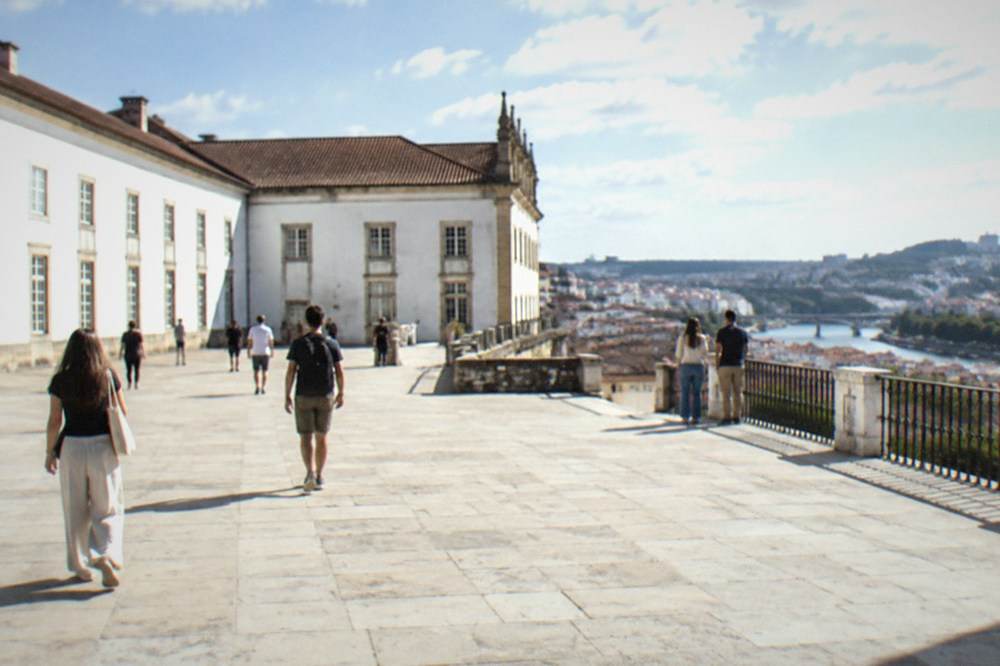
Yes, the entire University of Coimbra hill, the Paço das Escolas viewpoint, and the old town lanes of the Alta and Baixa are completely free to walk, and no ticket is required to stand in the courtyards, see the façade, or cross the Arco de Almedina. Only the indoor spaces, the Joanina Library, the Capela de São Miguel and the palace interiors, are ticketed, and those sit inside the University's combined 16.50 EUR ticket.
The UNESCO inscription makes this walk unusually rich. "University of Coimbra, Alta and Sofia", list reference 1387, inscribed in 2013 under criteria (ii), (iv) and (vi), covers two components of the old town: the university hill and Rua da Sofia with its former college buildings. Note what that does not say. Coimbra is not a UNESCO World Heritage city, a claim that appears in guide after guide and is false; the university and the college street are inscribed, not the whole city. Walking the hill, you are inside the inscribed property. The University publishes its own figure of about 31,000 students, and during term the hill is a working campus, capes and all.
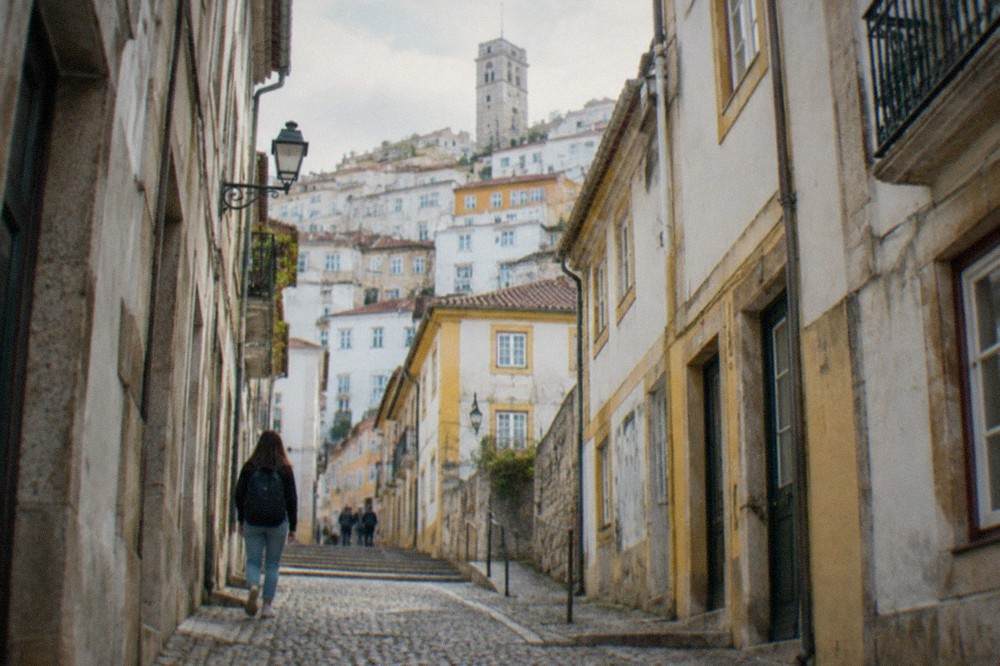
The free loop, as a route rather than a schedule: start in the Baixa, climb through the Arco de Almedina, the medieval gate that once led into the walled city, and come out onto the Paço das Escolas. The courtyard, the terrace view over the river and the exterior of the Capela de São Miguel cost nothing. Descend the other side through the Sé Velha's square, past the cathedral's Romanesque façade, and down to the Baixa again. The old town walking routes are mapped in more detail on our map page, and the first-time visit guide covers the same loop with timings.
| Space on the university hill | Free to enter? | What it costs if not |
|---|---|---|
| Paço das Escolas courtyard and terrace | Yes, free | Nothing |
| Capela de São Miguel exterior and doorway view | Yes, free | Interior inside combined ticket |
| Biblioteca Joanina | No | 16.50 EUR combined ticket only, timed slot |
| Royal Palace interiors | No | Inside the same 16.50 EUR ticket |
| University + Science Museum ticket | No | 12.50 EUR, no Joanina |
| Torre da Universidade | Closed entirely | The University's own page states the facility is closed |
The Joanina detail is worth knowing even for a free visit, because it shapes the hill's rhythms. The library admits 50 people every 20 minutes, the time printed on the ticket is the library slot specifically, and entry outside the slot is refused. The ticket itself is valid for two days except that fixed slot. If you are walking the hill for free, you will see those timed groups queuing at the former Academic Prison entrance, and that is the one genuine scarcity fact in Coimbra: the 50-per-20-minutes ceiling. Ticket details are covered in full on the Joanina Library tickets and University tickets pages.
Which Free Walking Tours Run in Coimbra?
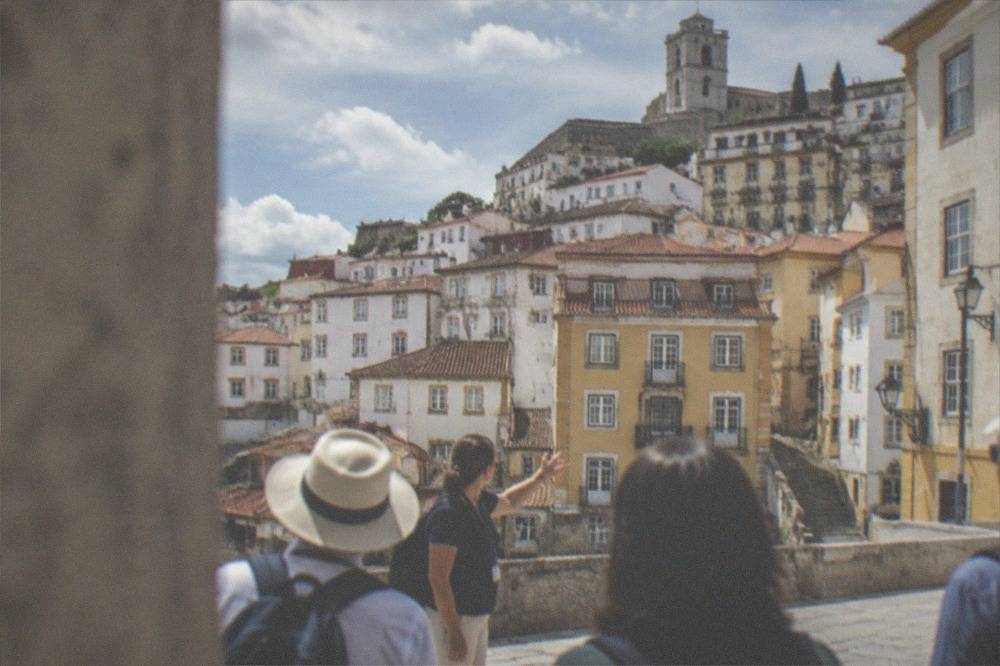
Coimbra has a large free, tip-based walking tour scene on the GuruWalk platform, including a downtown, historic center, university and botanic garden walk rated 4.91 from 662 reviews, an Essential Free Tour of History and Conflicts rated 4.89 from 374 reviews, and a Coimbra Highlights walk rated 4.95 from 226 reviews, all free to book with tips at the walker's discretion.
These are not this site's tours, and that is why the platform is named: GuruWalk walks are free or pay what you want, the guru leading them sets the route, and the price is whatever you choose to tip at the end. Never treat a figure as fixed, because there isn't one. The longest-standing option, the downtown, historic center, university and botanic garden walk, runs three hours, which makes it the most complete free introduction to the city; the shorter walks trade the botanic garden for a tighter two-hour loop.
| Free tip-based walk on GuruWalk | Length | Rating |
|---|---|---|
| Downtown, historic center, university and botanic garden | 3 hours | 4.91 from 662 reviews |
| Essential Free Tour: History and Conflicts, Art and Culture | 2 hours 30 minutes | 4.89 from 374 reviews |
| History, legends and traditions of Coimbra | 1 hour 30 minutes | 4.44 from 560 reviews |
| Coimbra Highlights, History and Traditions | 2 hours 30 minutes | 4.95 from 226 reviews |
| Top 10 Must-See Coimbra, downhill tour | 2 hours | 4.96 from 141 reviews |
Book the one that matches your energy. The downhill version starts high at the university and finishes in the Baixa, which spares you the steepest climb in a city built on a hill. The legends walk is the shortest and the cheapest to tip on, at ninety minutes. All of them cover ground this page describes as free, so the fee is really paying for the guide's knowledge, not for access.
Where Can You Enjoy the River Mondego Without Paying?
The entire Mondego riverbank in Coimbra is free: the Parque Verde do Mondego parkland on both sides, the Ponte de Santa Clara bridge with its city view, and the Santa Clara side of the river opposite the old town, all open with no ticket, no gate and no charge, and the riverside path is flat, which makes it the one part of this hilly city that is easy walking.
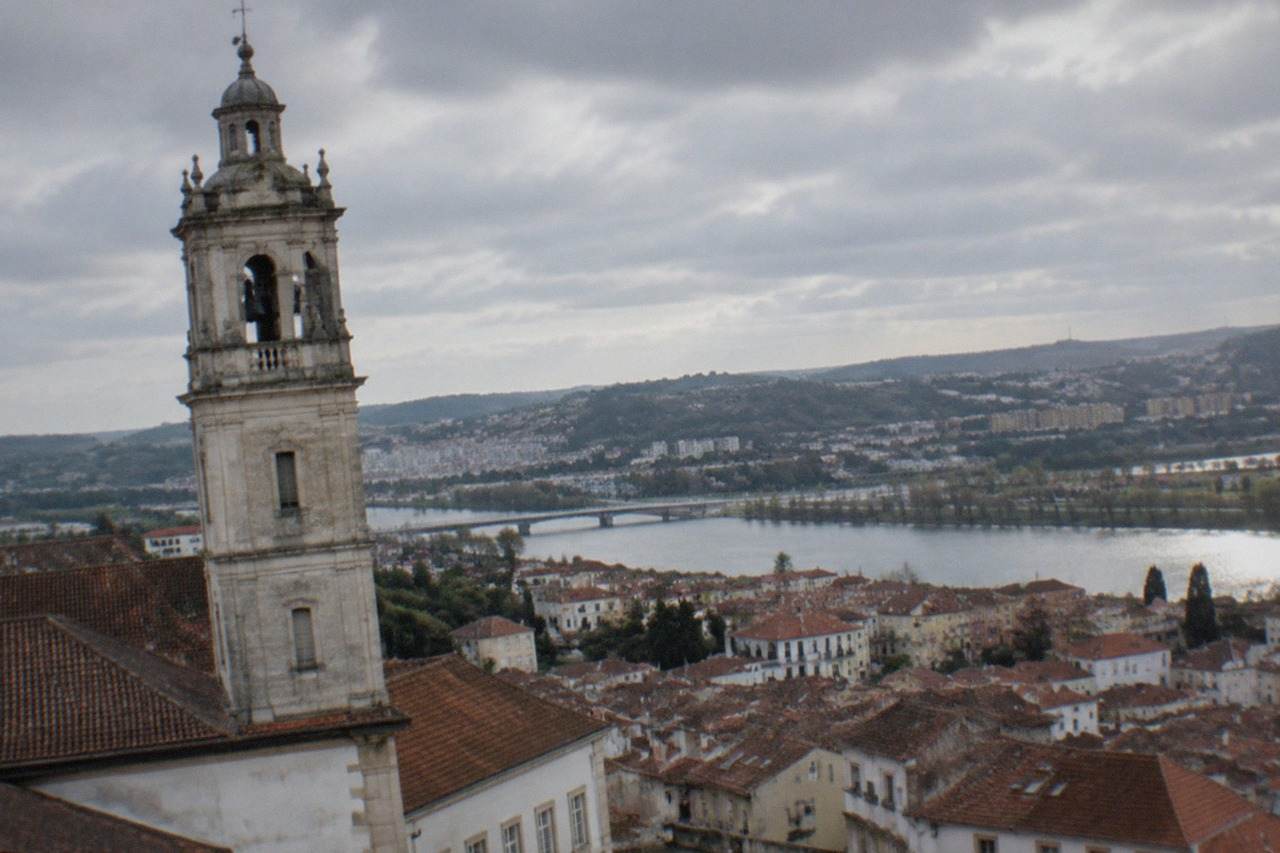
The Mondego is the reason Coimbra exists where it does, and the city treats its banks as its front garden. Cross the Ponte de Santa Clara at golden hour and the whole Alta, the university tower, the Sé Velha and the stacked rooftops, is reflected in the water; that view is the single most photographed free thing in the city. On the far bank, the Santa Clara district and the parkland stretch downstream, and the terrace of the Penedo da Saudade garden looks back at the skyline from a shaded belvedere. The Parque Verde guide covers the park's layout in the main travel guide, and the riverside features in the one-day itinerary.
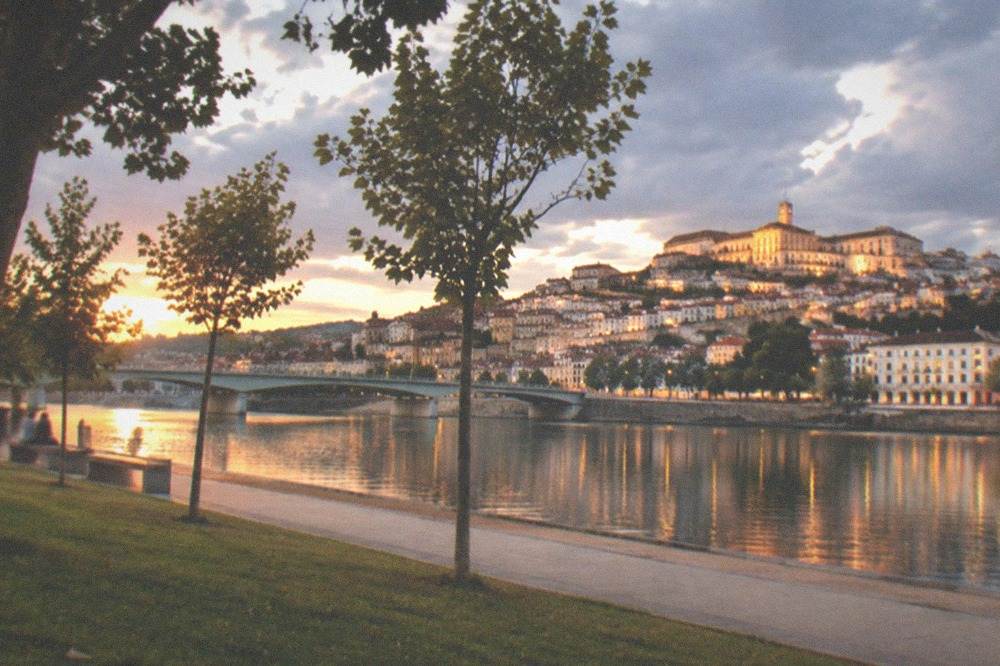
One caution the pack insists on: Mosteiro de Santa Clara-a-Velha, the ruined monastery on the Santa Clara side, has been closed for requalification works since October 2025 and no reopening price or opening time can be published, because none is confirmed on an official page. Walk past its exterior by all means, but check before you plan to enter. Likewise the Museu Nacional de Machado de Castro, the national museum built above a mid-1st-century Roman cryptoporticus, is closed for conservation work; its own page says so twice. Both closures are facts of 2026, not permanent features, but a free itinerary that assumed either was open would be wrong.
Which Monument Exteriors and Viewpoints Cost Nothing?
Every monument exterior in Coimbra is free to look at, and the best free viewpoints are the Paço das Escolas terrace, the Penedo da Saudade garden, the Ponte de Santa Clara, and the far bank of the Mondego, while the Sé Velha's Romanesque façade, the Aqueduto de São Sebastião's arches and the Sé Nova's frontage can all be seen and photographed without a ticket.
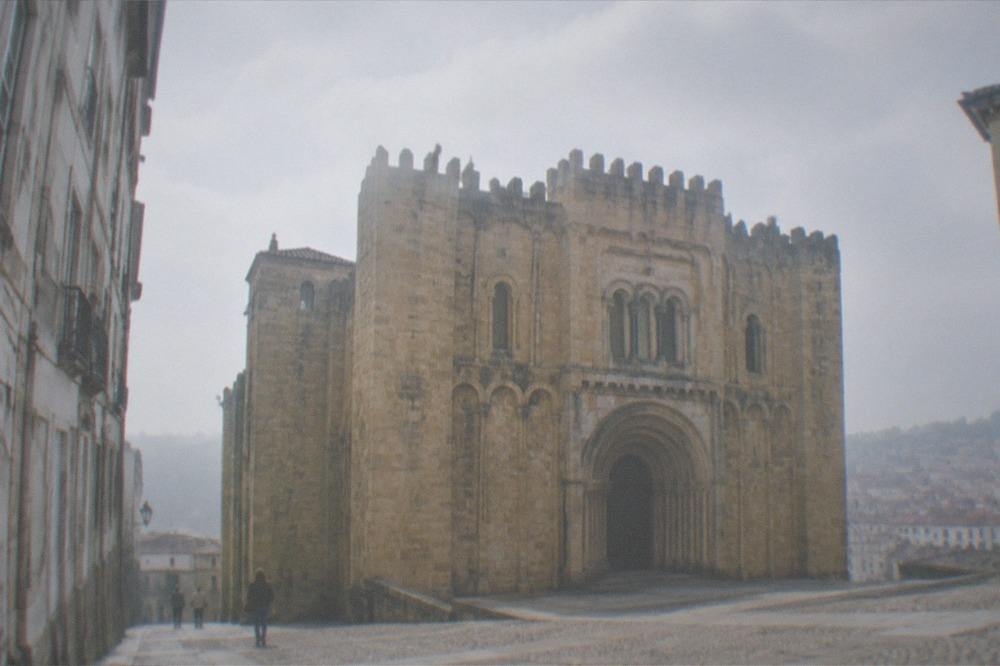
The distinction between exterior and interior is where free Coimbra lives. The Sé Velha, the old cathedral, charges 3.00 EUR per person to enter, but its fortress-like Romanesque exterior, squat, crenellated and unmistakably defensive, is one of the city's defining sights and costs nothing to stand in front of. Mosteiro de Santa Cruz, the burial church of Portugal's first two kings, charges 5.00 EUR for its visitable interior, but the façade on the Baixa square is fully public. The Aqueduto de São Sebastião strides across a hillside with its arches visible from streets that never close. The Sé Velha guide in our attractions coverage details the interior for those who choose to pay.
| Monument | Exterior, free | Interior | Notes |
|---|---|---|---|
| Sé Velha de Coimbra | Yes | 3.00 EUR | Group rate 2.50 EUR over 10 people |
| Mosteiro de Santa Cruz | Yes | 5.00 EUR | Visits suspended on the Queima Cortejo Sunday |
| University of Coimbra, Paço das Escolas | Yes, courtyard free | 16.50 EUR combined | Joanina only inside that ticket |
| Sé Nova | Yes | Not verified in this pack | Check before paying for anything |
| Aqueduto de São Sebastião | Yes, visible from public streets | Not a ticketed site | Best seen from the surrounding lanes |
| Mosteiro de Santa Clara-a-Velha | Yes, from outside | Closed for works | No reopening date confirmed |
One timing fact is worth planning around. Mosteiro de Santa Cruz suspends visits on the Cortejo da Queima das Fitas, a moveable Sunday in May, and the University closes its whole visitor circuit on 24 May. The festival itself fills the city with student processions that are free to watch from the pavement, which is the honest way to experience the Queima without a ticket: read the Queima das Fitas guide for what is verified about dates, because precise festival dates are not confirmed on the Associação Académica's own pages.
When Is the Best Free Season in Coimbra?
The best months for free sightseeing in Coimbra are May, June, September and early October, because IPMA's 1991 to 2020 normals for the Coimbra / Bencanta station show June at a 26.3 C mean maximum with only 26 mm of rain and September at 27.4 C with 49.9 mm, while July at 8.9 mm is effectively dry but the hottest, and the rain does not arrive in earnest until October, when the monthly total jumps to 114.5 mm.
September is the quiet secret in that table. Its mean maximum of 27.4 C is actually higher than June's 26.3 C, and it is wetter than June too, 49.9 mm against 26.0 mm, but both figures describe a month that is warm and mostly dry, with the student crowds of May gone. August is the hottest month, not July, on both mean and mean maximum, averaging 10.9 days above 30 C. November is the wettest month at 121.5 mm, marginally ahead of October and January. The full breakdown lives in the best time to visit and weather guides.
| Month | Mean max C | Rain mm | Days 1mm+ rain | Free-sightseeing verdict |
|---|---|---|---|---|
| May | 23.3 | 64.7 | 8.5 | Warm, lively, festival month |
| June | 26.3 | 26.0 | 3.7 | Excellent, dry |
| July | 28.5 | 8.9 | 1.7 | Effectively dry, hottest crowds |
| August | 29.1 | 14.8 | 2.2 | Hottest month, 10.9 days over 30 C |
| September | 27.4 | 49.9 | 5.2 | Best balance of warmth and quiet |
| October | 23.2 | 114.5 | 10.3 | Rain arrives, 114.5 mm |
| November | 18.0 | 121.5 | 11.5 | Wettest month |
Free sightseeing is outdoor sightseeing, so the climate table is the budget table. Every walk, viewpoint and riverbank described above is better in the 26 mm of June than the 114.5 mm of October. If you are coming in the wet months, the free layer shrinks to the walks between showers, and the paid indoor layer, the University's 16.50 EUR ticket, the museums, becomes proportionally better value; the rainy day guide in our what-to-see coverage lists indoor options.
How do You Get Around Coimbra Cheaply?
Coimbra's 2026 SMTUC tariff lists a driver-bought single ticket at 2.00 EUR and pre-purchased trips at 0.90 EUR each when bought in packs of three or more, with each trip valid 90 minutes on the urban network including transfers, and SMTUC tickets are also valid on the new Metro Mondego network, so one pre-purchased ticket covers both.
That 0.90 EUR pre-purchased trip is the budget traveller's number. The 2026 tariff, in force since 1 April 2026, prices the on-board single at 2.00 EUR, more than double the pre-purchased rate, so buying before boarding is the single cheapest transit decision available in the city. Each validation covers 90 minutes on the urban network with transfers included within that window. The tariff also confirms that its intermodal titles are valid on both the SMTUC bus network and the Metro Mondego BRT system, which has been opening in stages since 2025; a bus ticket works on it. The getting around and stations coverage explains the two railway stations, Coimbra-A and Coimbra-B, which are in different places, and why CP's own site is where to confirm which trains call where.
The tourist tax deserves a line in a budget guide because it is the one cost a free itinerary cannot avoid. It is 1.00 EUR per guest per overnight stay, capped at three consecutive nights, charged from age 16, payable at check-in or check-out, all year with no low-season exclusion. A couple staying seven nights pays 3.00 EUR each. It is small, but it is not zero, and no amount of free walking removes it.
What Free Day Trips and Nearby Outdoors Are There?
The countryside around Coimbra offers genuinely free outdoor access, including the schist villages of the Lousã mountain, the Buçaco forest walks and the Mondego valley, all open to walk without a ticket, though reaching them without a car usually means a paid tour or careful bus planning, and the ruins of Conímbriga, 16 km south in Condeixa-a-Nova, charge 10.00 EUR for museum and ruins together.
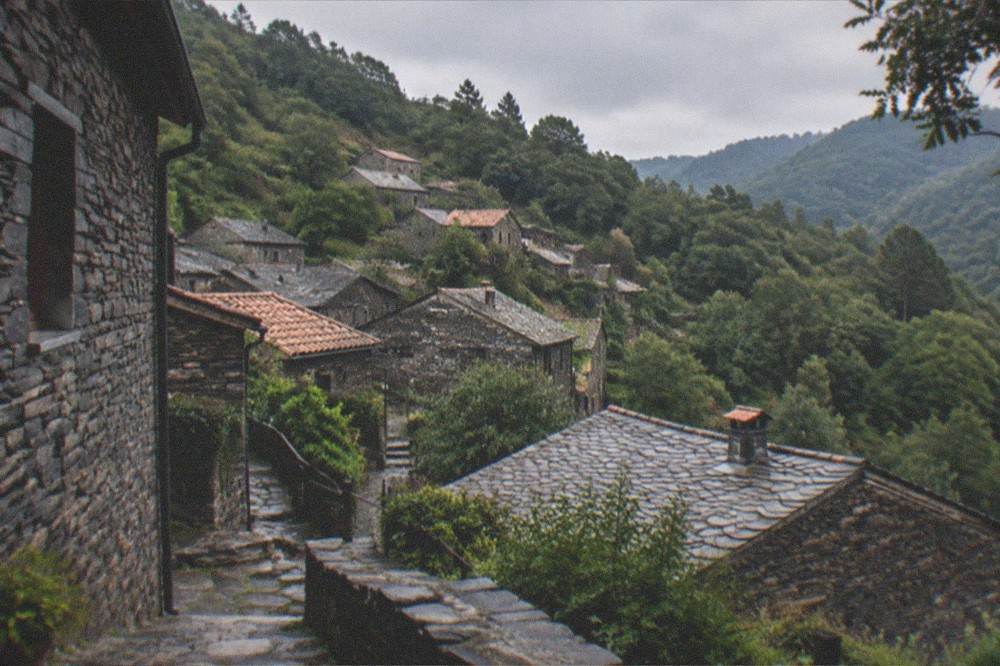
The schist villages are the standout. These stone hamlets on the Lousã mountain, Talasnal chief among them, are public spaces: you walk in, you walk the lanes, you look at the slate architecture, and nothing charges you. The cost is transport. Reaching them independently by public transport is possible but slow, which is why the paid tours exist: the four-hour Schist Villages at Lousa Mountain tour runs from $105.37 and is rated 4.9 from 133 reviews, and the private half-day version from $87.81 is rated 5 from 105 reviews. The honest framing is that the villages are free and the ride is not.
Conímbriga is the opposite case, and the geography needs stating precisely: the Roman town lies about 16 km south of Coimbra, in the parish of Condeixa-a-Velha, in the municipality of Condeixa-a-Nova. It is not in Coimbra, and it is not free: one 10.00 EUR ticket covers the museum and the ruins together, open daily 10:00 to 18:00, which makes it the reliable Monday option when the monuments that close on Mondays are shut. The free layer of a Conímbriga trip is the drive through Condeixa-a-Nova's countryside and the village itself. The Conímbriga guide and the day trips guide cover both options in full.
Common Questions About Free Things to Do in Coimbra
Is the University of Coimbra free to visit?
The courtyards, the Paço das Escolas terrace and all exteriors are free. The indoor spaces, including the Biblioteca Joanina, the Capela de São Miguel and the palace interiors, sit inside a 16.50 EUR combined ticket, and the Joanina cannot be bought on its own.
What is free in Coimbra, Portugal?
Walking the Alta university hill and the Baixa old town, the Mondego riverside and Parque Verde, all monument exteriors, the viewpoints at Penedo da Saudade and Ponte de Santa Clara, and the free tip-based walking tours on GuruWalk.
Are the free walking tours in Coimbra really free?
Yes. GuruWalk tours are free or pay what you want, and the tip goes to the guru at the walker's discretion. There is no fixed price and no booking fee for the walk itself.
Is the Biblioteca Joanina free from outside?
You can see the library's exterior as part of the free hill walk, but the noble floor admits 50 people every 20 minutes on a timed slot printed on the 16.50 EUR combined ticket, and entry outside the slot is refused.
Does Coimbra charge a tourist tax even if I only do free things?
Yes. The tax is 1.00 EUR per guest per night, capped at three consecutive nights, from age 16, charged all year and paid to the accommodation, regardless of what you visit.
What is the cheapest way to get around Coimbra?
Walking, since the city is compact and steep, and otherwise the 0.90 EUR pre-purchased SMTUC trip, valid 90 minutes with transfers and also accepted on the Metro Mondego network.
The free layer of Coimbra is not a consolation prize for the budget traveller; it is the layer the paid tickets exist to supplement. The hill, the riverbank, the Romanesque façades and a three-hour walk with a local guru deliver most of what the city is famous for, and every euro saved on the walk up can go toward the one timed slot, the Joanina at 50 people every 20 minutes, that genuinely deserves it.