Luso and Curia: Spa Towns Near Coimbra, Portugal
Luso and Curia are two old spa towns at the edge of the Buçaco mountains, and they are the gentlest day trip you can take from Coimbra, Portugal.

Short answer
Luso and Curia are historic spa towns in the Buçaco area south of Coimbra, Portugal, known for mineral water, grand parks and the nearby Buçaco forest. Most visitors combine them with a walk in the forest, using a guided day tour or public transport, and the best months are May, June and September.
Luso and Curia sit at the foot of the Buçaco mountains, and together they make up the quietest, greenest day trip on the Coimbra, Portugal menu. Coimbra itself is the university city on the River Mondego, and it is a city, a municipality and a district all at once, three different things that matter when you read any number about the region. Luso and Curia are outside the city, in the pine and eucalyptus country that climbs toward the Buçaco forest, and they have been spa destinations for well over a century. This page explains what the two towns are, what you can actually do there in a day, how to get there, what it costs and when the weather is on your side.
Where Are Luso and Curia, and Why do Coimbra Visitors Go?
Luso and Curia are two neighbouring spa towns in the Buçaco area, inland from Coimbra, Portugal, and visitors go for three things: mineral water with a long commercial history, grand belle-époque parks built around that water, and walking access to the Buçaco forest, one of the most remarkable wooded landscapes in central Portugal. They are a day trip, not a city sight, and the reason they work so well from Coimbra is that they compress a spa, a park and a forest into one compact area that can be covered on foot once you arrive.
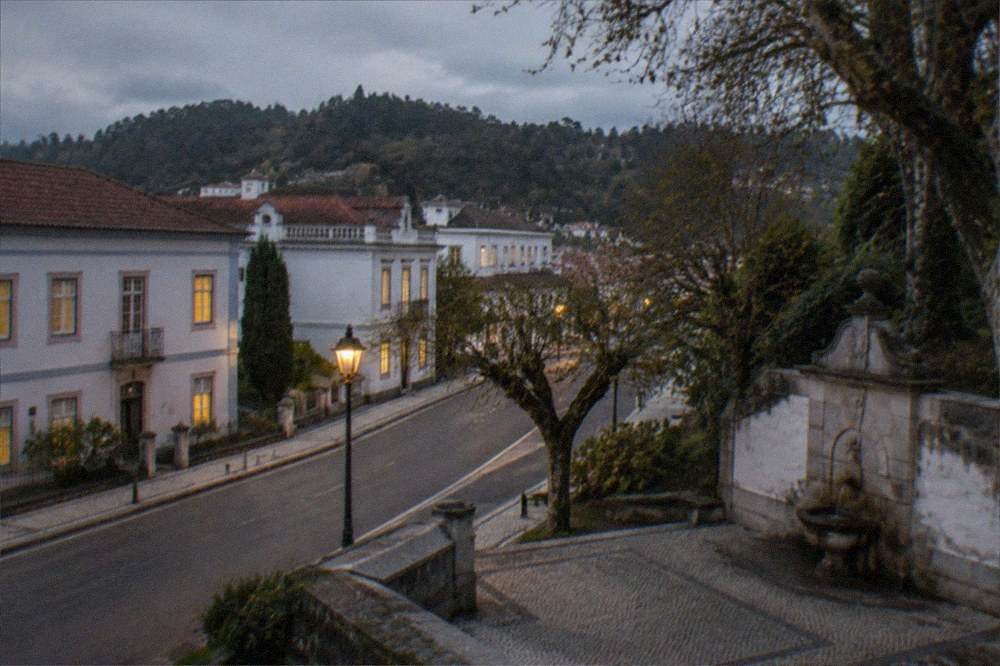
The two towns grew around their springs. Luso's water is bottled and sold across Portugal, and the town's identity is inseparable from it: the spa buildings, the park, the bottling plant and the hotels all trace back to the mineral water that made the place fashionable in the late nineteenth and early twentieth centuries. Curia is the smaller and quieter of the pair, organised around a large park with lakes, avenues and a historic hotel, built in the same era for the same reason. Neither town is a museum piece, but both carry the architecture of their spa heyday, and that is what gives them a character Coimbra itself does not have.
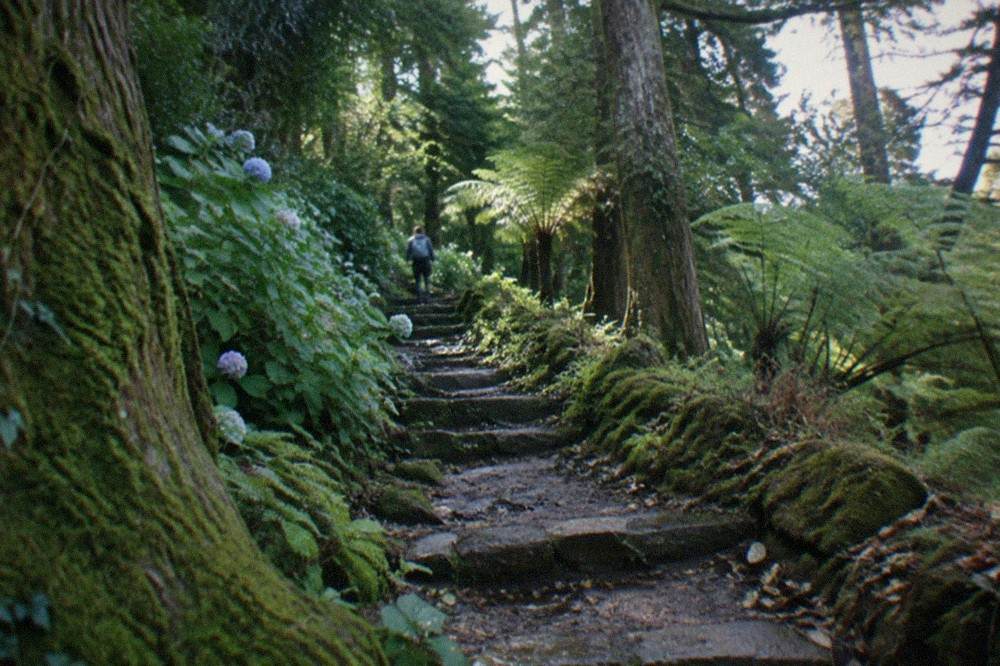
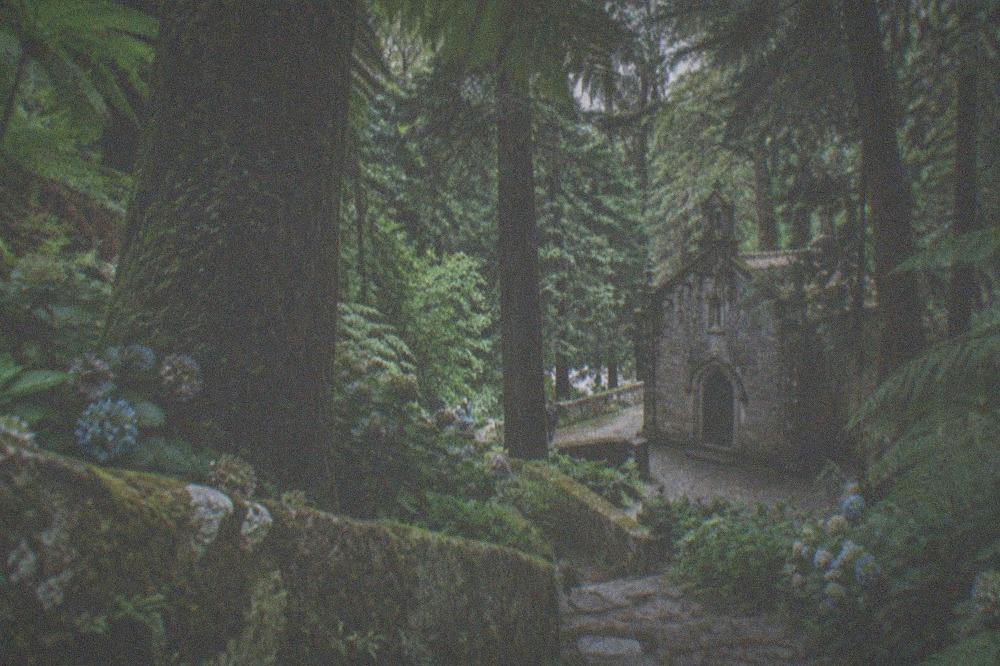
The third draw is the forest. The Buçaco forest, covered in detail on our Buçaco forest day trip guide, sits above Luso, and it is a deliberately planted woodland of native and exotic species, laid out over centuries around a walled enclosure and a former royal palace, now the Palace Hotel. Walkers come for the shade, the unusual trees and the views over the surrounding countryside. The combination is the point: a morning in the forest, an afternoon in a spa park, and a day that feels nothing like the old-town hills of Coimbra.
What Makes Luso a Spa Town in Portugal?
A spa town in Portugal, a "termas" town, is a settlement that grew around a mineral or thermal spring and built its economy, its architecture and its calendar on visitors who came to take the waters, and Luso qualifies on every count: its spring has been commercially bottled since the nineteenth century, its park and spa buildings were laid out for water-taking guests, and its hotels still trade on that heritage today. The tradition is older than tourism itself in Portugal, and Luso is one of the best-known names in it.
The word to know is "termas". Portugal has dozens of these towns, most of them small, most of them inland, and they follow a pattern: a spring, a bathhouse, a park for post-cure strolling, and grand hotels from the era when a water cure was a prescribed medical treatment rather than a wellness trend. Luso and Curia follow the pattern closely. What distinguishes Luso from many of its peers is that its water also went into bottles, so the town's name reached kitchens and café tables across the country, not just the guest books of its hotels.
Curia's version of the same idea centres on its park. It is a designed landscape of lakes, islands, bridges and tree-lined avenues, built as the pleasure ground of the spa, and it remains the reason to visit. The park is flat, shaded and made for slow circuits, which makes Curia the easier half of the pair for anyone who wants a gentle day. Luso, by contrast, is the working half: it has the more complete town centre, the bottling heritage and the walking connection up toward the forest.
A practical note on what "spa" means for your visit. Taking the waters as a nineteenth-century cure is a medical programme, booked through the spa itself, and it is not what a day tripper does. What a day tripper does is enjoy the infrastructure that cure built: the parks, the promenades, the cafés, the architecture and the walking. If a bathing or treatment programme interests you, that is a booking to make directly with the spa operator, and you should treat any price you see elsewhere as unconfirmed until the operator confirms it.
What Can You Actually Do in Luso and Curia in a Day?
A realistic day combines three things: a walk in the Buçaco forest or its approaches in the morning, a slow circuit of Curia's park or Luso's town centre and spa park in the afternoon, and a long lunch, because the region between Coimbra and the coast is Bairrada country, the home of roast suckling pig, leitão da Bairrada, and the sparkling and still wines that go with it. That is a full and satisfying day, and none of it requires a booking except lunch in peak season.
Start with the forest. The walled woodland above Luso is criss-crossed with paths, and the highlights cluster around the former royal palace, the convent remains and the hermitages scattered through the trees. The forest is the region's single most distinctive landscape, and it rewards the morning, when the light comes through the canopy and the paths are quietest. If you would rather not plan the route yourself, a guided option exists, and it is a good one:
The operator's listing describes a four-hour forest and palace itinerary, rated 5 from 50 reviews at the time of writing, and a guide removes the two hard parts of a Buçaco visit, route-finding in a large woodland and understanding what you are looking at, since the palace and the convent have a complicated shared history. Check availability on the operator's live listing for current dates and pricing.
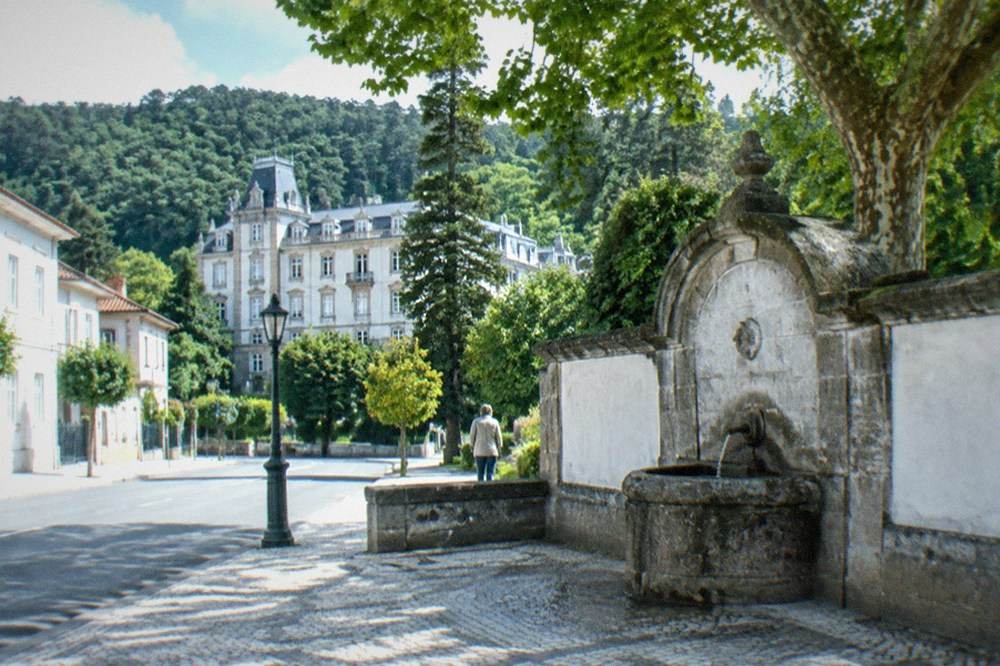
After the forest, come down to the towns. Luso's centre is compact: the spa buildings, the park, the bottling heritage and the shops around the main street can be covered in a relaxed hour or two. Curia's park is the better sit-down destination, with lakes and shaded benches made for exactly the kind of unhurried afternoon a spa town was designed around. Both towns are at their best out of peak heat, which in this region means early morning and late afternoon, and the climate table further down explains why.
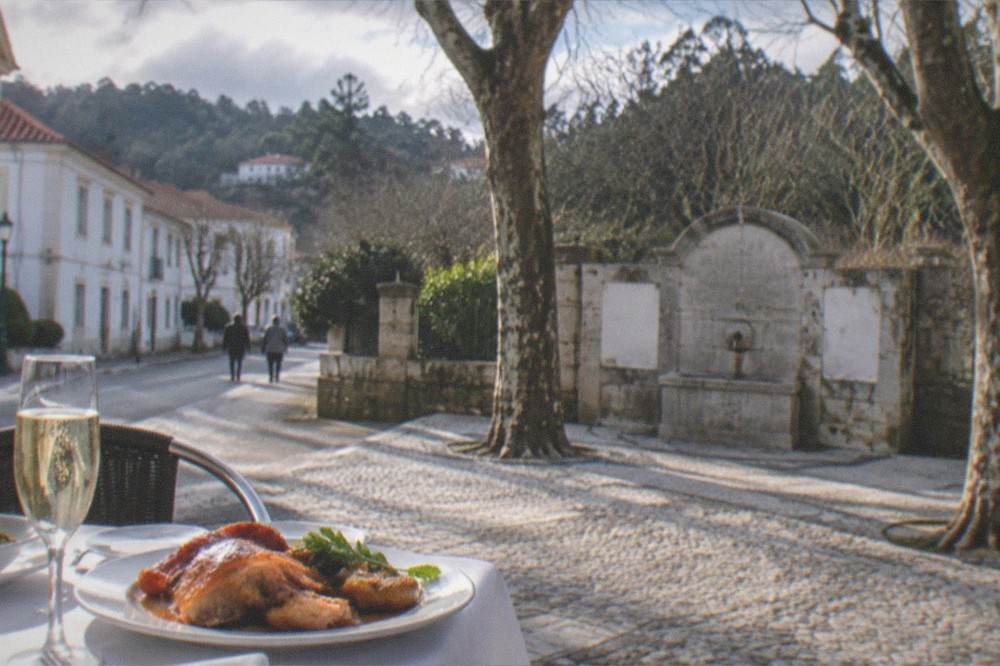
Lunch is not an afterthought here. The corridor between Coimbra and the sea is Bairrada territory, and leitão da Bairrada, roast suckling pig, is its signature dish, served with sparkling wine and bread. Our leitão and Bairrada guide covers the dish and the wine region in detail. One honest caveat: this site's research verified no opening hours, addresses or prices for any individual restaurant, café or bar anywhere in the region, so treat any specific lunch recommendation you read online, here or elsewhere, as something to confirm on the day.
For families, the day adapts well. The forest paths are walkable for children, Curia's park has open space and water to look at, and the whole area runs at a slower tempo than the city. If your trip includes more than one day out of Coimbra, our day trips overview ranks the options, and the schist villages of the Lousã and the Lousã mountain day trip make a good contrast with the spa towns: stone villages and mountain scenery instead of parks and promenades.
How do You Get to Luso and Curia from Coimbra?
Luso and Curia are reached from Coimbra by road or by rail, and the honest planning advice is this: the two towns sit on the main north-south rail line through the region, so checking current timetables on CP, the national operator, is the single most useful thing you can do, because this site's research could not verify specific journey times, frequencies or fares for this route, and inventing them would be worse than admitting the gap. What can be said with confidence is about the Coimbra end of the trip, and that is where most visitors go wrong.
Coimbra has two stations with confusingly similar names, Coimbra-B and Coimbra-A, and they are in different places. Coimbra-B sits on the main long-distance line outside the centre; Coimbra-A is the central station close to the old town. Which trains call at which station, and how you connect between them, is exactly the kind of detail that changes with timetable revisions, so take it from CP's own journey planner rather than from any guide, including this one. Our guide to Coimbra's two train stations covers the trap in detail.
Inside Coimbra itself, the city bus operator SMTUC runs the urban network, and its 2026 tariff, in force since 1 April 2026, is verified and worth knowing before you arrive in the city on your way out:
| SMTUC ticket type | Price | Notes |
|---|---|---|
| Single ticket bought on board | 2.00 EUR | From the driver |
| Pre-purchased, 3 trips or more | 0.90 EUR per trip | Rechargeable card |
| One trip validity | 90 minutes | Urban network, transfers included |
| MOVE-C support card | 3.00 EUR youth / 6.00 EUR others | One-off card cost |
| Viagem ConVIDA support card | 0.50 EUR | For occasional tickets |
The same tariff is explicitly valid on the Metro Mondego network too, which matters because the region's new BRT system is opening in stages and your bus ticket works on it. That is the verified extent of the transport picture for this page: city fares are solid, regional connections to Luso are a CP or bus-operator question, and any specific minute count you read anywhere for the Coimbra to Luso run should be checked against a current timetable before you build a day around it.
Driving is the flexible alternative, and it suits a day that mixes the forest, the towns and a lunch stop, because you control the clock. What this site will not publish is a driving distance or time from Porto or Lisbon airports, because no official source for those figures was verified. If you are renting, our car rental guide covers the practicalities of hiring in Coimbra itself, which removes the airport question entirely.
When Is the Best Time to Visit the Spa Towns?
The best months for Luso and Curia are May, June and September, because the region's own climate record shows a genuine sweet spot: June averages a 26.3 C mean maximum with only 26.0 mm of rain, September is even warmer at 27.4 C with 49.9 mm, and May sits at 23.3 C with 64.7 mm, while the rain does not arrive in force until October, when the monthly total jumps to 114.5 mm. September is the underused pick, and the data behind that is worth reading in full.
The figures come from IPMA's 1991 to 2020 climate normals for the Coimbra / Bencanta station, the city's own station, and they describe the regional climate the spa towns share. Two details in that table surprise people. First, September is hotter than June, not cooler, and it carries nearly double June's rainfall while still being a dry month in absolute terms. Second, the real weather change comes in October, when rainfall more than doubles month on month. The spa towns' parks are at their best before that switch flips.
| Month | Mean max C | Rain mm | Days with 1mm+ rain | Verdict for the spa towns |
|---|---|---|---|---|
| May | 23.3 | 64.7 | 8.5 | Green, mild, good walking |
| June | 26.3 | 26.0 | 3.7 | Warm, dry, best all-round |
| July | 28.5 | 8.9 | 1.7 | Hot, effectively dry |
| August | 29.1 | 14.8 | 2.2 | Hottest month, 10.9 days above 30 C |
| September | 27.4 | 49.9 | 5.2 | Warm, crowds gone, excellent |
| October | 23.2 | 114.5 | 10.3 | Rain arrives in force |
August deserves a caveat. It is the hottest month in the record, not July, and it averages nearly eleven days above 30 C. That matters for a day built around walking in a forest and strolling in parks: it is doable, but you will want the morning for the trees and a long shaded lunch. July, at 8.9 mm of rain, is effectively dry, and it is a legitimate choice if heat does not put you off. Our weather guide and the month-by-month breakdown cover the whole year if your travel dates are fixed.
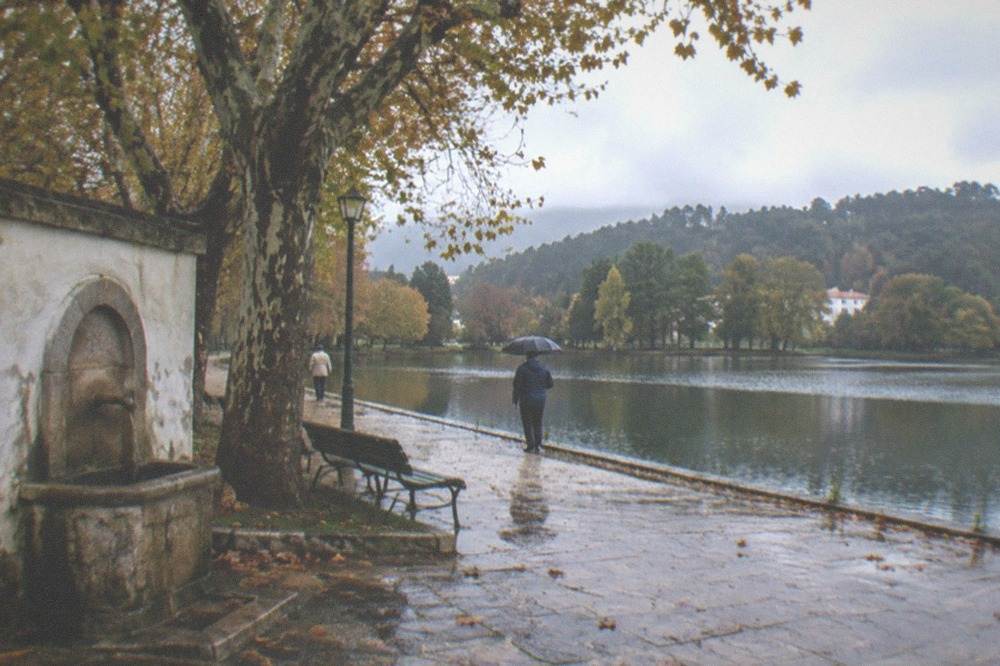
Winter is not the disaster it is on the coast-facing side of the district, but the record is blunt: November is the wettest month at 121.5 mm, marginally ahead of October and January, and the region's rain is autumn and winter rain. The spa towns were built for precisely this, though. Their indoor heritage, their hotels and their whole thermal tradition exist because people came here outside the summer, so a wet off-season day is closer to the original Luso experience than a July one.
What Does a Day Trip to Luso and Curia Cost?
The transport and entry side of this day trip is cheap, and the honest answer is that the two verified costs you can plan on are the 1.00 EUR per night Coimbra tourist tax you are already paying if you sleep in the city, capped at three nights, and the 2.00 EUR on-board SMTUC fare for any city bus you use, while everything specific to Luso and Curia, spa programmes, meals, hotel rates, is a booking-dependent price no guide should quote without the operator confirming it. The fixed, verified numbers are worth setting out precisely.
Coimbra's tourist tax is 1.00 EUR per guest per overnight stay, charged by the accommodation at check-in or check-out, from age 16, capped at three consecutive nights per person, in force since 5 April 2023. A couple staying seven nights pays 3.00 EUR each. A two-euro rise was approved as a proposal by the municipality's executive on 21 July 2026, but the published rate remains one euro until the municipal tax pages say otherwise. The municipality's own justification for that proposal is a genuinely interesting number: it recorded 698,151 overnight stays in Coimbra in 2025, its own municipality-level figure, and estimated its tourism-related cost at 3.49 EUR per overnight stay, meaning even the proposed tax sits below cost.
| Cost item | Verified figure | Notes |
|---|---|---|
| Coimbra tourist tax | 1.00 EUR per night | Max 3 nights, age 16+, paid to accommodation |
| SMTUC single, on board | 2.00 EUR | City buses, valid on Metro Mondego too |
| SMTUC pre-purchased trip | 0.90 EUR | 3 trips or more on a card |
| Bairrada lunch, leitão | Not verified by this site | Confirm on the day |
| Spa bathing programme | Not verified by this site | Book direct with the spa |
| Guided Buçaco forest tour | From $87.81 per person | Operator's listing, 4 hours |
The guided tour row is the one place where a firm price exists, because the operator publishes it. The forest and palace tour runs from $87.81 per person, rated 5 from 50 reviews, over about four hours, and it is the premium option on this route. There is also a private schist villages variant with hotel pickup from $126 per person, rated 4.9 from 56 reviews, which suits travellers staying outside Coimbra:
For the budget end, a self-guided day is mostly the cost of transport and lunch, and the towns themselves charge nothing to walk around. The parks are public space, the streets are public space, and the forest's walking access is the region's great free asset. If your Coimbra base is the old town, our free things to do page shows how much of the city itself costs nothing, which is useful context for the day you spend nothing in the countryside.
Should You Combine Luso and Curia with Anything Else?
The strongest combination is Luso, Curia and the Buçaco forest in a single day, because they are neighbours and share one story, but the second-best move is to treat the spa towns as one stop on a wider Bairrada loop that includes a leitão lunch, and the one combination to avoid is trying to bolt on a distant destination like Aveiro or the coast, because the district reaches the Atlantic but the city does not, and squeezing both into a day leaves you seeing neither properly. Choose the loop that matches your energy.
The natural pairings are close ones. The Lousã mountain day trip is the alternative if you have already done Buçaco, or the schist villages if you want stone architecture instead of spa architecture. Both are inland, both are walking days, and neither competes with the spa towns for the same mood. Travellers coming from Porto rather than Coimbra have their own set of options, covered in our Porto to Coimbra guide, and the spa towns work as a stop on a Porto-to-Coimbra itinerary better than as a detour from Lisbon.
If you are staying several days in Coimbra, a common pattern is one city day, one spa and forest day, and one day for a bigger swing, and the guided tour roster reflects that split. Here is how the main options compare, using the operators' own published figures:
| Day trip from Coimbra | Kind | From | Rating | Duration |
|---|---|---|---|---|
| Forest and Palace of Buçaco | bussaco-forest | $87.81 | 5 from 50 reviews | 4 hours |
| Schist villages with natural pool swim | schist-villages | $126 | 4.9 from 56 reviews | 4h 30m |
| Schist Villages at Lousa Mountain | schist-villages | $105.37 | 4.9 from 133 reviews | 4 hours |
| Conimbriga and The Roman Tour | roman-conimbriga | $105.37 | 4.8 from 136 reviews | 4 hours |
| Time travel at the Convent of Christ, Tomar | tomar-templars | $46.83 | 5 from 80 reviews | 1 to 3 hours |
The Buçaco option is the one that matches this page, and the Lousã options are the inland alternative. Conímbriga, the Roman town about 16 km south in the municipality of Condeixa-a-Nova, is a different flavour of day entirely, and its museum and ruins charge a verified 10.00 EUR adult combined ticket, open daily 10:00 to 18:00, which makes it the reliable Monday option when other monuments close. Tomar is the farthest of the set, a Templar-history day rather than a nature day.
One combination deserves a special mention for university visitors. If your Coimbra trip is short and the Joanina Library is on your list, be aware that the library admits only 50 people every 20 minutes, that it exists solely inside the University's 16.50 EUR combined ticket, that the time printed on that ticket is the fixed library slot, and that entry outside the slot is refused. That constraint is real and enforced, and it shapes how you schedule everything else, including day trips out of the city. A guided university visit with tickets included removes the slot-finding problem:
The listing describes a former-student-led group tour of up to ten, from $67 per person, rated 4.9 from 193 reviews, about ninety minutes. Booking it before you leave for the spa towns is the sensible order, because the library is the one thing in Coimbra that genuinely sells out.
Where Should You Stay: Luso, Curia or Coimbra?
Most visitors should stay in Coimbra and visit Luso and Curia as a day trip, because the city holds the region's transport, its restaurant scene and its sights, but two travellers should consider staying out here instead: anyone who wants the Palace Hotel experience inside the Buçaco forest, and anyone whose trip is a slow, multi-day loop of central Portugal rather than a city break with excursions. The spa towns reward staying more than almost any day trip destination in the region, but they demand a reason.
The case for Coimbra as a base is volume. The university's Paço das Escolas alone, the Royal Palace, the Capela de São Miguel and the Joanina Library, needs a scheduled slot and half a day, and the old town, the Sé Velha at 3.00 EUR individual admission, and the Mosteiro de Santa Cruz at 5.00 EUR fill the rest. Our where to stay guide covers the city's neighbourhoods in detail, and the weekend break guide shows how a two-night stay splits between city and countryside.
The case for staying in the spa towns is atmosphere. The grand hotels of Luso and Buçaco date from the era when a stay was the cure, and an evening in the forest after the day trippers have gone is a different experience from a day visit. This site has verified no hotel rates anywhere in the region, so treat any price you see as indicative until you book direct. What can be said is structural: Luso is the better base for the forest, Curia for the park, and both are quiet outside weekends and holidays.
Common Questions About Luso and Curia
Are Luso and Curia Worth Visiting from Coimbra?
For most travellers, yes, if you want a slow, green day in contrast to the city's hills and monuments. The combination of forest walking, spa-town parks and a Bairrada lunch is a genuinely different experience from the old town, and it costs little to do independently. If your Coimbra time is one day only, the university and the old town come first, and the spa towns are a second-day trip.
Can You Visit Luso and Curia Without a Car?
Yes, with planning. The towns sit on the region's rail corridor, and Coimbra's two stations connect to the national network, but this site's research could not verify specific timetables, frequencies or fares for the Coimbra to Luso run, so check CP's own journey planner before committing. A guided tour with transport included removes the question entirely, and the Buçaco forest and palace tour listed above is the one that fits this itinerary.
Is the Buçaco Forest Suitable for Children?
The main paths are wide, shaded and walkable for most children, and the palace, the hermitages and the lakes give a walk a destination every few hundred metres. The forest is large, so a route plan or a guide matters more with children than without. August heat is the main constraint: it is the hottest month in the regional record, averaging 29.1 C mean maximum and nearly eleven days above 30 C, so go early.
What Is the Difference Between Luso and Curia?
Luso is the larger and busier of the two, with the bottling heritage, the more complete town centre and the walking access up toward the Buçaco forest. Curia is smaller and quieter, organised almost entirely around its designed park of lakes and avenues. A day can comfortably include both, with Luso in the morning, the forest above it, and Curia's park for the late afternoon.
Do You Pay to Enter the Parks in Luso and Curia?
The towns' streets and public spaces are free to walk, and no entry charge for the public park areas was verified by this site's research. Spa bathing and treatment programmes are separate commercial offerings booked through the spa operators, and no price for those programmes appears in any verified source for this page, so confirm directly before assuming a cost.
What Should You Eat on a Luso and Curia Day Trip?
The regional answer is leitão da Bairrada, roast suckling pig, with the Bairrada region's sparkling wine, because the spa towns sit inside that gastronomic territory. The dish and its wine country are covered in detail elsewhere on this site. No individual restaurant's hours, address or prices were verified by this site, so pick your lunch spot on the day and confirm it is open.
The spa towns will not wow you the way the Joanina Library does, and that is their point. Luso and Curia are where Coimbra goes to slow down, a day of trees, water and long lunches that balances a trip otherwise spent on hills, tickets and time slots, and the Coimbra Travel Guide day trip collection has the rest of the region mapped out when you get back.