What Are the Top 5 Cities in Portugal?
A honest look at the cities most often named among Portugal's top five, and the verified reasons Coimbra, the university city on the River Mondego, belongs on the list.
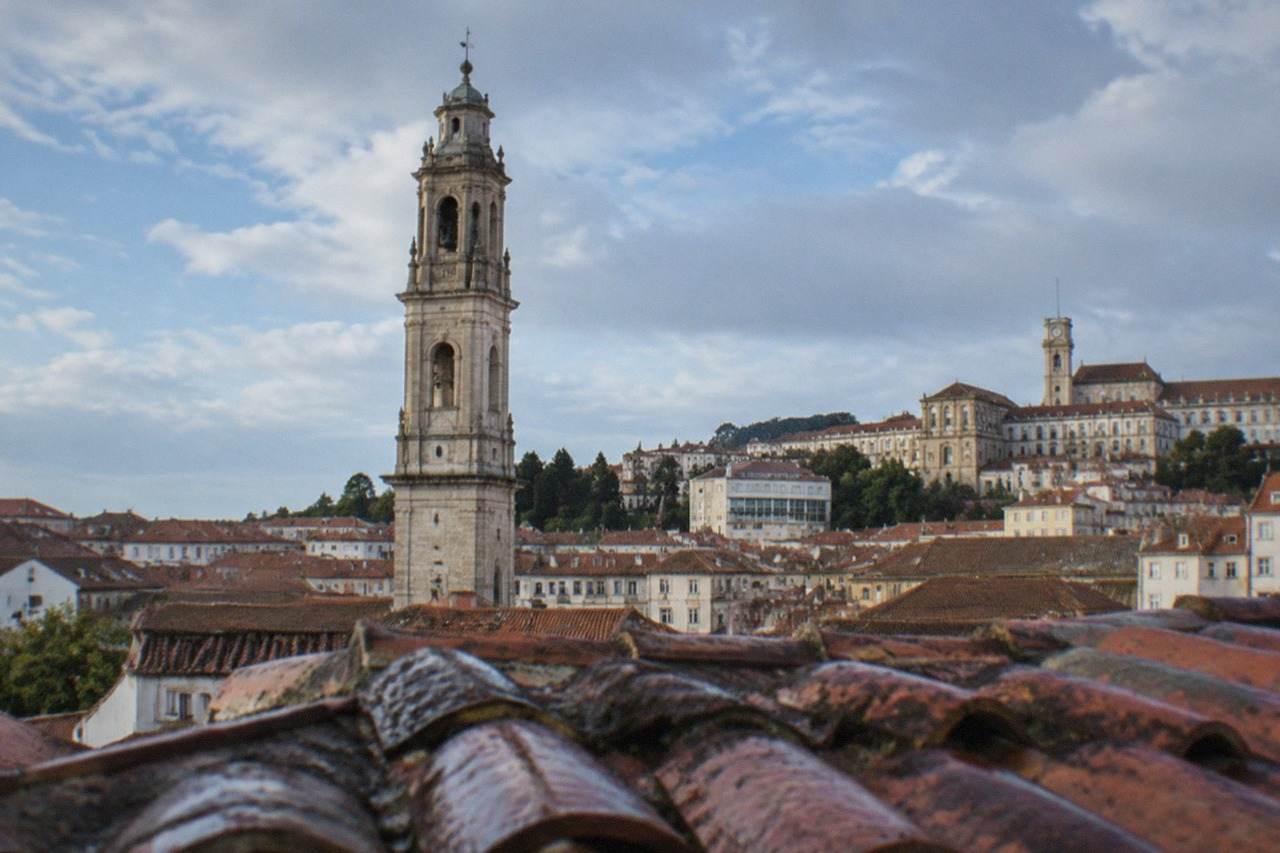
Coimbra, Portugal, the university city on the River Mondego, is one of the names that comes up almost every time travellers rank the country's cities. The question "what are the top 5 cities in portugal?" has no official answer: no Portuguese institution publishes such a ranking, and any list that claims to be measured is invented. What does exist is a strong consensus in travel writing and among visitors themselves, and that consensus keeps returning to the same handful of places. This page sets out that shortlist honestly, then makes the case for Coimbra using only figures this site has verified against official sources, because a ranking is only as good as the numbers under it.
What Are the Top 5 Cities in Portugal?
There is no official top five, but the names that recur across travel writing are Lisbon, Porto, Coimbra, Braga and Évora, with Sintra, Aveiro and Óbidos as frequent challengers. Lisbon and Porto carry the airports and the bulk of the traffic; Coimbra is the historic university city between them; Braga and Évora each anchor a distinct region and a distinct era of Portuguese history. Treat any ordering within that five as opinion, not measurement, because no body publishes one.
That caveat matters more here than on most pages. This site's research verified figures for Coimbra and for Conímbriga, and nothing else. So the sections below compare the five cities on what each place is and on what can actually be sourced for Coimbra, rather than pretending to a league table of populations, prices or visitor counts that nobody measured. If a guide tells you Coimbra is "the third most visited city in Portugal", it is making that up.
The one thing that can be said with a source behind it: the municipality of Coimbra recorded 698,151 overnight stays in 2025, a figure published by the Câmara Municipal itself in its July 2026 report on the tourist tax. That is a real, city-level number, and almost no competing guide carries it. It tells you Coimbra is busy without being saturated, which is precisely the position many travellers say they want from a shortlist city.
Why Does Coimbra Belong on Any Portugal Shortlist?
Coimbra earns its place on the strength of the University of Coimbra, whose Alta and Sofia quarters were inscribed by UNESCO in 2013 under criteria (ii), (iv) and (vi), list reference 1387. The University publishes a figure of about 31,000 students, and its Biblioteca Joanina admits just 50 people every 20 minutes inside a 16.50 EUR combined ticket. Few cities of its size carry a World Heritage inscription, a working medieval institution and that density of monuments together.
The UNESCO point is worth getting exactly right, because most guides get it wrong. The inscribed property is "University of Coimbra, Alta and Sofia": two components inside the old town, the university hill and the college street, not the whole city. Saying "Coimbra is a UNESCO World Heritage city" is the single most common factual error in guides to this place. The university and Rua da Sofia are inscribed; the Baixa and the riverside are not, however much they reward a walk.
The practical consequence of the Joanina's entry rule is the most useful planning fact on this whole site. The library cannot be visited on a standalone ticket at all; it exists only inside the 16.50 EUR combined ticket, the time printed on that ticket is the library slot specifically, and entry outside the slot is refused. Online purchase closes 20 minutes before the visit time. In summer, a visitor who arrives without a pre-booked slot can simply be turned away, and the 50-per-20-minutes ceiling is why. That is honest scarcity, and it is the one thing about Coimbra that genuinely rewards booking ahead.
Beyond the hill, the city stacks up quickly. The Sé Velha charges 3.00 EUR for an individual ticket; Mosteiro de Santa Cruz, the burial church of Portugal's first two kings, charges 5.00 EUR; and Conímbriga, the Roman town about 16 km south in Condeixa-a-Nova, sells a 10.00 EUR ticket covering museum and ruins together and opens seven days a week. The full case is laid out in why Coimbra is famous and in what not to miss in Coimbra.
What Makes Coimbra Different from the Other Big Names?
Coimbra differs from Lisbon and Porto in scale and from Braga and Évora in what it is for: it is a working university city of about 31,000 students built on a steep hill above a river, not a capital, a port or a regional market town. Its tourist infrastructure is sized accordingly, with a 1.00 EUR per-night tourist tax capped at three nights and a compact walkable core. The comparison that matters is not size but texture, and Coimbra's texture is academic.
Lisbon and Porto are metropolises with airports; Coimbra sits between them on the main rail line, reached by train rather than plane. Braga is older as a Roman settlement and religiously heavyweight; Évora is a Roman-and-manueline museum town in the Alentejo. Coimbra's identity is the University, founded centuries before any of its current buildings, and the student traditions that still fill the streets: the black capes, the fado sung only by men in the old academic style, the Queima das Fitas each May. The University closes its visitor circuit on 24 May, and Mosteiro de Santa Cruz suspends visits on the Cortejo, a moveable Sunday, which tells you how completely the festival takes over.
The honest comparison table below sticks to what this site verified for Coimbra. Where another city has a figure, this build did not verify it, so it does not appear.
| What you're comparing | The verified Coimbra figure | What it means for a shortlist |
|---|---|---|
| University combined ticket (Joanina included) | 16.50 EUR adult | Two days of access, fixed library slot |
| University ticket without Joanina | 12.50 EUR adult | Same spaces, no library |
| Tourist tax | 1.00 EUR per night, max 3 nights, from age 16 | Small, capped, paid at the accommodation |
| Overnight stays in 2025 | 698,151, municipality figure | Busy, not saturated |
| Sé Velha individual ticket | 3.00 EUR | Old Cathedral, cheap to enter |
| Mosteiro de Santa Cruz individual ticket | 5.00 EUR | Royal tombs, audioguide extra for groups |
One caution for anyone building an itinerary around all five cities: two of Coimbra's headline sites are currently closed. The Museu Nacional de Machado de Castro is closed for conservation work, its own page says so plainly, and the Torre da Universidade clock tower is closed too, per the University's own information page. Neither should appear on a 2026 itinerary as a climb or a visit. Whether Coimbra is worth going to despite that is a fair question, and the answer is yes, because the closed sites are two among many.
How Many Days do You Need in Coimbra?
Most visitors need two full days in Coimbra: one for the university hill, the Biblioteca Joanina slot, the Sé Velha and the old town lanes, and a second for Santa Cruz, the riverside, Portugal dos Pequenitos and either fado at night or a half-day trip. One day works for the core, but the Joanina's timed slot and the two-day ticket validity make a second day materially better value.
The two-day ticket is the underrated detail. The University's combined ticket is valid for two days across all its spaces except the Joanina slot, which is fixed. Buying it on day one and spreading the palace, the Capela de São Miguel, the Chemistry Laboratory and the museums across two days costs the same 16.50 EUR as rushing everything into one. The full breakdown is in how many days you need in Coimbra, and the question of whether Coimbra is walkable matters here too: it is, but the hill is real, and the vertical gap between the Baixa and the university plateau shapes every itinerary.
When Is the Best Month to Visit Coimbra?
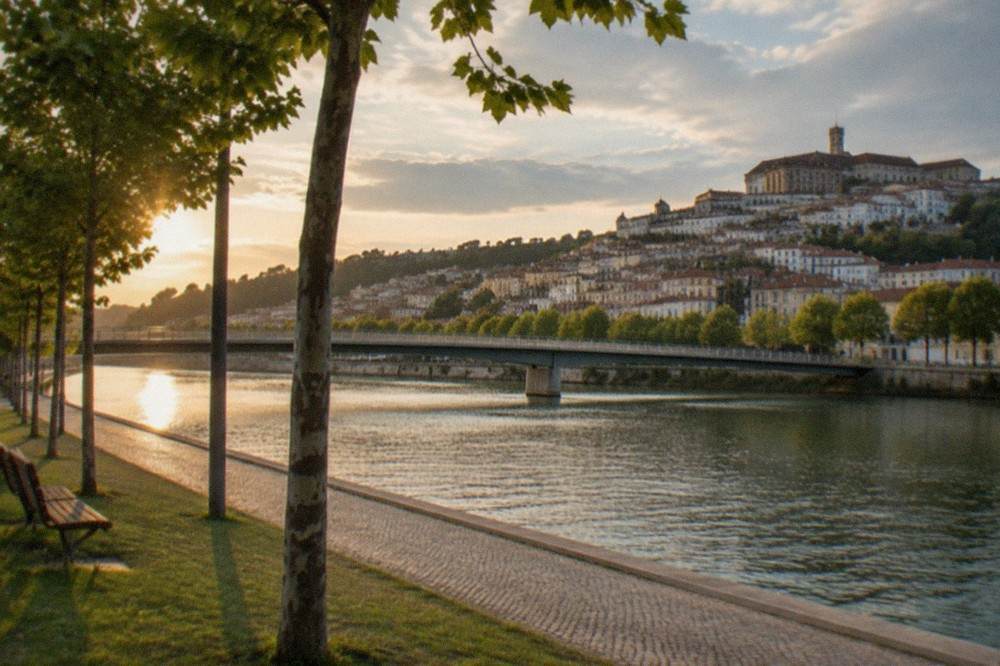
The best months for Coimbra are May, June and September, and September is the quiet standout: IPMA's 1991 to 2020 normals for the Coimbra / Bencanta station show September with a mean maximum of 27.4 C, higher than June's 26.3 C, on only 49.9 mm of rain, with the heavy autumn rain holding off until October's 114.5 mm. July and August are hottest, August averaging 10.9 days above 30 C.
That September figure surprises people, and an earlier draft of this very site got it backwards. September is both hotter and wetter than June on the long-run averages, yet still comfortably dry next to what follows: October's total jumps to 114.5 mm and November is the wettest month of the year at 121.5 mm. May carries the Queima das Fitas and the 24 May closure of the university circuit, so anyone chasing the festival should plan around it rather than around the weather. The month-by-month detail sits on the climate pages of this site's guide section.
| Month | Mean max (C) | Rain (mm) | Days 30 C+ | Shortlist verdict |
|---|---|---|---|---|
| May | 23.3 | 64.7 | 3.5 | Festival month, mild, busy |
| June | 26.3 | 26.0 | 6.2 | Warm and dry |
| July | 28.5 | 8.9 | 8.9 | Effectively dry, hot |
| August | 29.1 | 14.8 | 10.9 | Hottest month |
| September | 27.4 | 49.9 | 7.8 | Best balance, thinning crowds |
| October | 23.2 | 114.5 | 2.0 | Rain arrives in earnest |
Common Questions About the Top 5 Cities in Portugal
What are the top 5 cities in portugal?
There is no official ranking, but the names that recur are Lisbon, Porto, Coimbra, Braga and Évora, with Sintra, Aveiro and Óbidos as common challengers. Any specific ordering within that list is opinion, since no Portuguese institution publishes a measured ranking of cities.
Is Coimbra better than Porto or Lisbon?
They serve different trips. Lisbon and Porto are large metropolises with airports and big-city pace; Coimbra is a compact university city on the main rail line between them. Coimbra suits travellers who want World Heritage monuments, a walkable old town and a student atmosphere without a metropolis around them.
Why is Coimbra famous?
For the University of Coimbra, whose Alta and Sofia quarters were inscribed by UNESCO in 2013, and for the Biblioteca Joanina, the baroque library that admits 50 people every 20 minutes inside a 16.50 EUR combined ticket. The city also holds the burial church of Portugal's first two kings, Mosteiro de Santa Cruz.
Can you see Coimbra on a day trip?
Yes, and many do, from Lisbon or Porto by train. But the Joanina's timed slot, the two-day validity of the university ticket and the fado evenings argue for at least one night. The city's own 2025 figure of 698,151 overnight stays suggests plenty of visitors stay longer than a day.
Is Coimbra a UNESCO World Heritage city?
No, and guides that say so are wrong. The inscribed property is "University of Coimbra, Alta and Sofia", list reference 1387, inscribed in 2013: two components of the old town, the university hill and the college street. The city as a whole is not inscribed.
The shortlist stands: Lisbon, Porto, Coimbra, Braga and Évora are the five names most travel writing converges on, and Coimbra's claim rests on the oldest university culture in the country, a UNESCO-inscribed hill and a library that guards its 50-per-20-minutes rule as firmly as its books. Whether it ranks third, fourth or fifth on anyone's personal list, the verified numbers behind this city, from the 16.50 EUR ticket to the 1.00 EUR tax, are published on Coimbra Travel Guide for anyone who wants to plan the trip around facts rather than slogans.