Is Nazaré, Portugal Worth Going To?
An honest answer to whether Nazaré is worth the detour, written from Coimbra, Portugal: what the beach town is, what it is not, and how it compares with staying in the university city on the River Mondego.
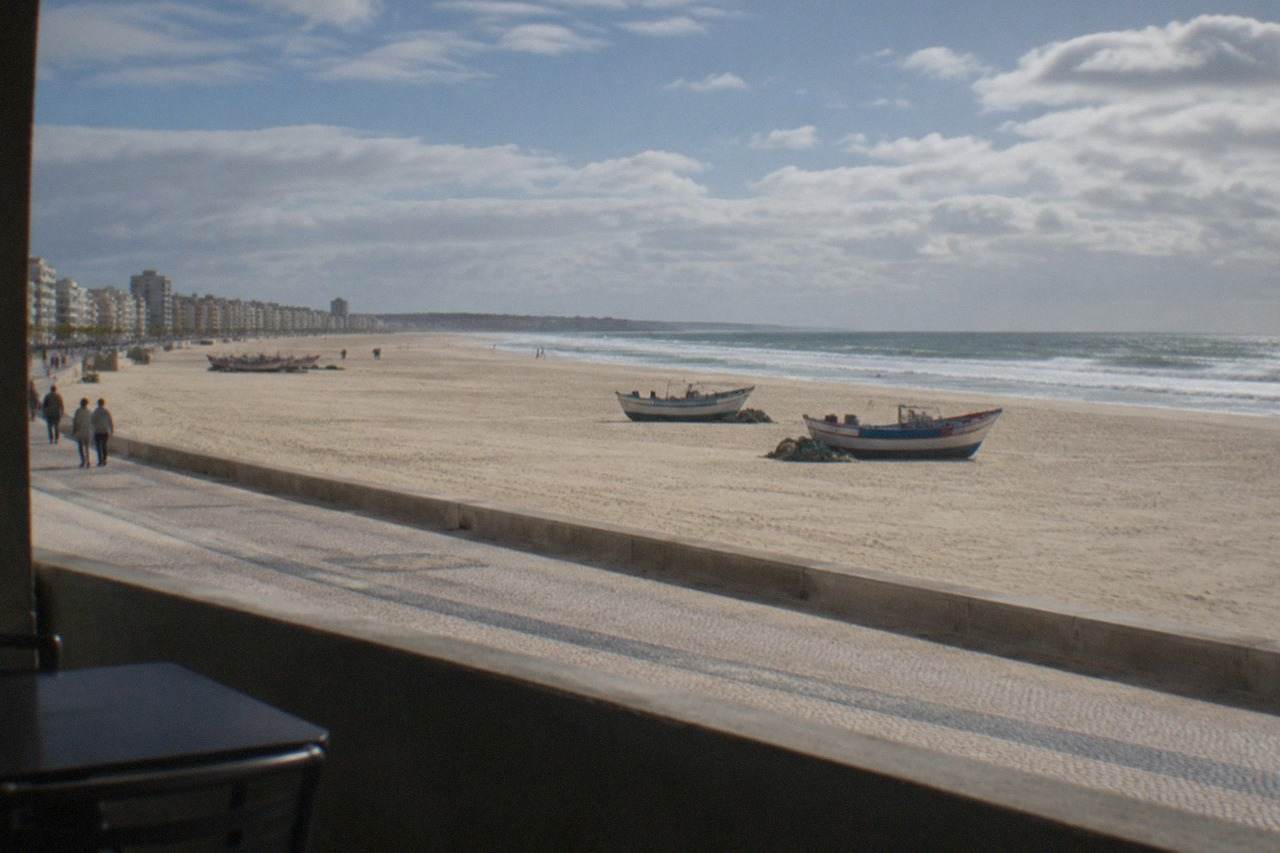
Nazaré is a seaside fishing town on Portugal's Atlantic coast, in the Leiria district, north of Coimbra, and this page answers the question from a specific vantage: Coimbra, the university city on the River Mondego in Portugal's Centro region, where most readers of this site are planning to be. The honest starting point is that this site's research verified facts for Coimbra and for the Roman ruins of Conímbriga, and verified nothing for Nazaré, so no visitor number, price or journey time for Nazaré appears here. What can be weighed honestly is what each place is, and what the verified Coimbra side of the comparison offers.
Is Nazaré, Portugal Worth Going To?
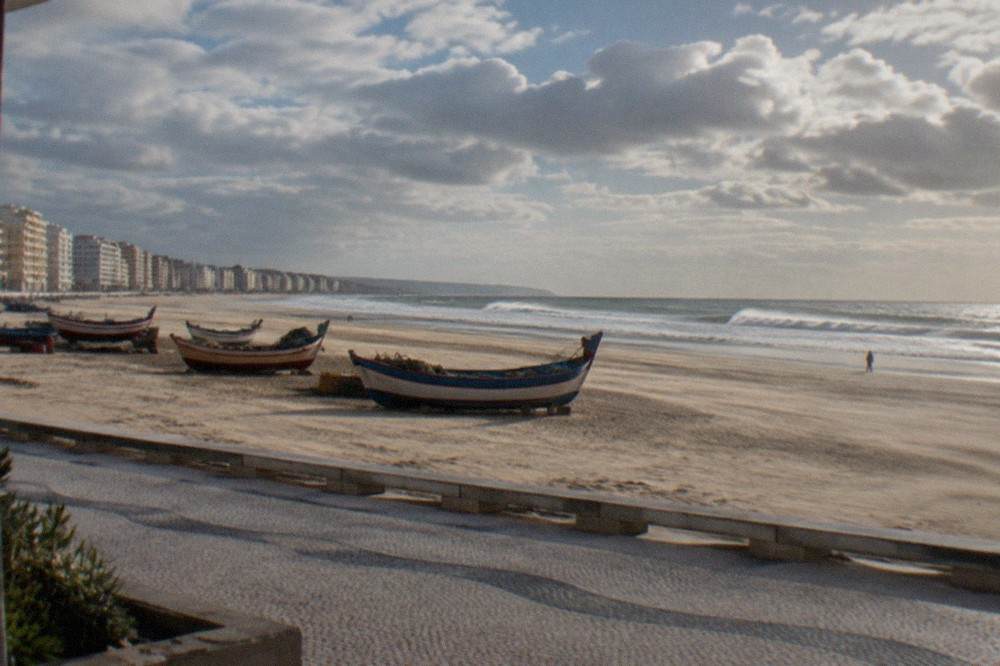
Nazaré is worth going to if the point of the trip is the ocean: it is a working fishing town on a long Atlantic beach, known internationally for the giant waves that break at Praia do Norte, and it delivers sea, sand and fish in a way that Coimbra cannot, because Coimbra is an inland city on the River Mondego and has no beach at all. It is not worth going to as a substitute for Coimbra, which has the university, the Biblioteca Joanina and the World Heritage old town.
That is the shape of the answer. Nazaré and Coimbra are not competitors, they are different categories of destination, and the common mistake is treating them as interchangeable stops on one checklist. Nazaré is a beach town whose fame comes from the sea. Coimbra is a hill city, one of Europe's oldest university towns, whose fame comes from what sits on the hill: the Paço das Escolas, the Joanina Library, the Sé Velha, and the student traditions that run through the whole place.
The geography matters more than most guides admit. Coimbra is a city, a municipality and a district, and the three are different things. The district of Coimbra reaches the Atlantic; the city does not touch the sea. A visitor staying in Coimbra who wants the ocean has to travel for it, and Nazaré is one of several coastal towns in that conversation, alongside Figueira da Foz, which lies west in the same district. This site verified no distances or driving times to any of them, so the honest advice is to plan the coastal leg from a published timetable rather than from a guide's estimate.
For readers deciding how to split days between the hill city and the coast, the Coimbra travel guide covers the city side in full, and is Coimbra worth staying in? addresses whether the city deserves an overnight rather than a passing stop.
What Kind of Place Is Nazaré, Compared with Coimbra?
Nazaré is a small coastal fishing town whose identity is the beach and the sea, while Coimbra is an inland university city of about 31,000 students whose identity is the hilltop campus UNESCO inscribed in 2013 as "University of Coimbra, Alta and Sofia". The two offer almost nothing in common, which is exactly why the question is worth asking carefully rather than answering with a ranking.
Nazaré's international reputation rests on big-wave surfing at its northern beach, where conditions in the Atlantic produce some of the largest waves ridden anywhere. That reputation is real, but it is seasonal and specific: the giant waves are a winter phenomenon, and a summer visitor gets a conventional beach town, a wide stretch of sand and a working fishing community, not a spectacle. This site verified no dates, no wave heights and no season statistics for Nazaré, so treat that as the shape of the place rather than a timetable.
Coimbra's case is different in kind. The University of Coimbra publishes its own numbers: about 31,000 students, 434 courses, four campuses and a botanic garden. The university's visitor programme sells a combined ticket at 16.50 EUR covering the Joanina Library, the Royal Palace, St Michael's Chapel, the Chemistry Laboratory, the Academic Museum, the Cabinet of Curiosities and the Mineral Gallery, valid for two days except the fixed Joanina slot. The Joanina Library admits 50 people every 20 minutes, and the time printed on the ticket is the library slot specifically, with entry outside the slot refused.
A useful way to hold the comparison is to look at what a day actually buys in each place. The table below uses only figures this site verified for Coimbra, and leaves the Nazaré column deliberately free of invented numbers.
| Coimbra (verified) | Nazaré (unverified by this site) | |
|---|---|---|
| Setting | Inland city on the River Mondego | Atlantic coastal fishing town |
| Core draw | University hill, Biblioteca Joanina, old town | Beach and the sea |
| Headline fact | UNESCO inscribed "University of Coimbra, Alta and Sofia" in 2013, list reference 1387 | Known for giant winter waves; no figure verified here |
| Ticket anchor | 16.50 EUR combined university ticket, Joanina slot fixed | None verified |
| Best fit | History, architecture, fado, food | Beach, ocean, seafood |
The one thing to say plainly: a trip built around Coimbra can absorb a coastal day trip. A trip built around Nazaré cannot absorb Coimbra as a footnote, because the university city needs a full day on its own hill, and the Joanina slot has to be booked in advance in any case.
Can You See Nazaré and Coimbra on the Same Trip?
Yes, and that is the practical answer for most travellers: base yourself in Coimbra, which is inland on the River Mondego, and take the coast as a day trip, because Coimbra's verified visitor infrastructure, from the 16.50 EUR university ticket to the 1.00 EUR per night municipal tourist tax, is set up for stays, while Nazaré is set up for beach time. The mistake to avoid is giving both places half a day each.
Coimbra rewards a full day at minimum. The University's own visitor pages state the summer schedule runs 09:00 to 20:00 and the winter schedule 09:00 to 17:30, with the tourist circuit closing entirely on 24 May and 4 October in the current cycle, dates that overlap with academic ceremonies. The Biblioteca Joanina's 50-people-per-20-minutes ceiling means summer slots sell out, and online purchase closes 20 minutes before the visit time. None of that compresses well into a rushed morning.
The tourist tax arithmetic also nudges toward a single base. Coimbra charges 1.00 EUR per guest per overnight stay, capped at three consecutive nights, from age 16, paid to the accommodation at check-in or check-out, in force since 5 April 2023. The municipality's own worked example: a couple staying seven nights pays 3.00 EUR each. A two-centre split doubles the check-ins, not the tax, but it doubles the packing and the travel legs.
For the coastal leg itself, this site verified no bus or train route, frequency or journey time from Coimbra to Nazaré, so the planning advice is to check the operator's own timetable rather than any guide's estimate. What is verified and genuinely useful is Coimbra's own transport picture: the 2026 SMTUC tariff lists a driver-bought single at 2.00 EUR, pre-purchased trips at 0.90 EUR each when bought in packs of three or more, and, notably, SMTUC tickets are valid on the Metro Mondego network too, the new BRT system opening in stages.
If a guided day out appeals more than self-driving, the Sanctuary of Fátima and Coimbra City Tour runs ten hours from $79 per person and is rated 4.6 from 61 reviews, pairing the sanctuary with a proper look at the city. It is one of the few structured ways to see a second Centro destination without giving up the Coimbra half of the day, and you can Check availability on the operator's live listing.
When Is the Best Time to Go, Coast Versus City?
The best time for Coimbra, on the official IPMA 1991 to 2020 normals for the Coimbra / Bencanta station, is September, which has a higher mean maximum than June, 27.4 C against 26.3 C, with only 49.9 mm of rain; the coast is a different question, and Nazaré's surf spectacle is a winter one, so the two places peak in opposite halves of the year.
The Coimbra side of that is measured, official and worth planning around. August is the hottest month, not July, averaging a 29.1 C mean maximum and 10.9 days above 30 C. July is effectively dry at 8.9 mm of rain. November is the wettest month at 121.5 mm, marginally ahead of October at 114.5 mm and January at 113.5 mm, so Coimbra's rain is autumn and winter rain. September is the quiet prize: the crowds have gone and the weather has not. Other pages covering the same trip are gathered on Coimbra Travel Guide.
| Month | Mean max (C) | Rain (mm) | Days 30 C+ | Coimbra planning read |
|---|---|---|---|---|
| June | 26.3 | 26.0 | 6.2 | Warm, dry, student calendar still busy |
| July | 28.5 | 8.9 | 8.9 | Hottest dry month, effectively no rain |
| August | 29.1 | 14.8 | 10.9 | Hottest month overall |
| September | 27.4 | 49.9 | 7.8 | Best balance: warmer than June, far quieter |
| October | 23.2 | 114.5 | 2.0 | Autumn rain arrives in earnest |
Source: IPMA climate normals 1991 to 2020, station Coimbra / Bencanta, station 707.
The Nazaré side cannot be given numbers here, because none were verified. What can be said is structural: a town famous for giant winter waves is, by definition, at its most dramatic outside beach season, and a summer beach town in July and August is at its most crowded. A September trip that does Coimbra's hill in the mornings and the coast on one chosen day threads both.
For the month-by-month Coimbra picture, see the best time to visit guide, and for the city's wet-day options, rainy day Coimbra.
What Would You Miss by Skipping Coimbra for Nazaré?
You would miss the single densest concentration of history in Centro Portugal: the UNESCO-inscribed university hill with its Joanina Library, the Sé Velha at 3.00 EUR, the burial church of Portugal's first two kings at Mosteiro de Santa Cruz at 5.00 EUR, and a fado tradition distinct from Lisbon's, all within a walkable old town. Nazaré has none of that, and no beach town could.
The specifics are worth listing, because they are what a beach detour trades away. The Sé Velha de Coimbra charges 3.00 EUR for an individual visit, per the parish body that manages it. Mosteiro de Santa Cruz charges 5.00 EUR, and it is the burial church of Portugal's first two kings; visits there are suspended on the Cortejo da Queima das Fitas, a moveable Sunday in the May festival season. The University closes its entire visitor circuit on 24 May for the same festival calendar.
Two closures matter for 2026 planning and are honest to state here. The Torre da Universidade is closed, per the University's own information page, and the Museu Nacional de Machado de Castro is closed for conservation work, with its Roman cryptoporticus, a mid-1st-century structure, among the spaces affected. Neither should appear on a current itinerary.
The fado of Coimbra is its own tradition, tied to the student cape and gown, and it is heard in the city's venues rather than on any beach. Readers weighing that side of the city can start with where to hear fado in Coimbra.
So Which Should It Be?
Go to both if the trip allows, base in Coimbra, and give the city the fuller share: the verified numbers of the place, from the 698,151 overnight stays the municipality recorded in 2025 to the 16.50 EUR university ticket, describe a city built for staying, while Nazaré is built for the hours around the tide. If the trip allows only one, the choice is between the ocean and the university, and that is a question of taste, not of ranking.
The overnight-stay figure deserves one line of explanation, because almost no guide has it. The municipality of Coimbra recorded 698,151 overnight stays in 2025, its own figure for the municipality, and estimates its annual cost associated with tourism at 2.44 million EUR, or 3.49 EUR per overnight stay, against which the one-euro tourist tax sits deliberately below cost. That is a city that has measured its own tourism and planned for it.
Nazaré's appeal does not need numbers to be real. A working fishing town on a wide Atlantic beach, with a reputation earned from waves that break bigger than almost anywhere, is a genuine thing to see, and a day of it pairs well with a city of 31,000 students on a hill above a river. The order matters, though. Book the Joanina slot first, because 50 people every 20 minutes does not flex, and let the beach fill whatever day remains.
Common Questions About Nazaré and Coimbra
Is Nazaré, Portugal worth going to?
Yes, if the ocean is the point: it is a genuine Atlantic fishing town with a long beach and a big-wave reputation. It is not a substitute for Coimbra, which offers the university hill, the Biblioteca Joanina and a World Heritage old town that a beach town cannot match, and the two work best combined with Coimbra as the base.
Does Coimbra have a beach?
No. The city of Coimbra is inland, on the River Mondego, and does not touch the sea. The district of Coimbra reaches the Atlantic and contains coastal towns, but the city itself has riverbanks, not beaches, which is why coastal towns such as Nazaré figure in the trip as day-trip options.
Can you visit Nazaré as a day trip from Coimbra?
Day-tripping the coast from a Coimbra base is the shape most trips take, but this site verified no route, frequency or journey time from Coimbra to Nazaré, so plan that leg from a published timetable rather than a guide's estimate.
Which is better, Nazaré or Coimbra?
They are different categories of place, and no verified ranking exists for either. Nazaré is a beach and fishing town; Coimbra is a university city with a UNESCO-inscribed hill. Choose by what the trip is for, not by a league table, because none was measured.
What is the best month to combine both?
For Coimbra the official IPMA normals point to September, with a 27.4 C mean maximum, warmer than June, and only 49.9 mm of rain. The coastal spectacle of Nazaré is a winter phenomenon, so a September base in the city with one chosen coastal day is the balanced plan.
Do you need tickets for the Coimbra university visit?
Yes. The combined ticket including the Biblioteca Joanina is 16.50 EUR for adults, the Joanina admits 50 people every 20 minutes, and the time printed on the ticket is the fixed library slot. Online purchase closes 20 minutes before the visit time, and entry outside the slot is refused.