Coimbra in the Rain: A Wet-Weather Itinerary for the University City, Portugal
Rain in Coimbra, Portugal, is mostly an autumn and winter story, and the city's best attractions are indoors anyway. This itinerary puts the Joanina Library, Santa Cruz, the Sé Velha and the fado houses in the right order for a wet day.

Short answer
Yes, Coimbra works in the rain. Most of its headline attractions are indoors, including the Joanina Library, the Royal Palace, St Michael's Chapel and the Science Museum spaces, all on one combined ticket. The Machado de Castro museum and the Santa Clara-a-Velha monastery are closed for works right now, so plan around them.
Coimbra, Portugal, the university city on the River Mondego, gets most of its rain between October and April, and IPMA's 1991 to 2020 normals for the Coimbra / Bencanta station show just how concentrated that is: November is the wettest month at 121.5 mm, October follows at 114.5 mm, and July at 8.9 mm is effectively dry. The good news for a wet day is structural. The attractions people actually come for, the Joanina Library, the Royal Palace, St Michael's Chapel, the Science Museum collections and the monastic interiors of Santa Cruz and the Sé Velha, are all indoors, and most of them sit within a ten-minute walk of each other on or below the university hill. A rainy day in Coimbra is not a lost day. It is close to the default day.
How Much Rain Does Coimbra Actually Get?
Coimbra averages 866 mm of rain per year across 94 days with at least 1 mm of rain, and the wet months are October through January, each carrying over 110 mm. November is the wettest at 121.5 mm, October carries 114.5 mm and January 113.5 mm, while July at 8.9 mm and August at 14.8 mm are close to dry. These are IPMA's official 1991 to 2020 climate normals for the Coimbra / Bencanta station, the city's own station 3 km from the centre.
The practical reading of that table is simple. A visit between May and September is unlikely to be washed out, and even September, which is wetter than most people expect at 49.9 mm, still leaves twenty-four dry days in an average month. From October onward the rain arrives in earnest, and it keeps arriving until spring. The record extremes at the same station, 41.2 C on 7 August 2016 and -4.3 C on 20 January 2017, frame the two ends of the year, but the number that matters for planning is the rain-day column: roughly one day in three between November and January sees at least 1 mm.
| Month | Mean max (C) | Rain (mm) | Days with 1 mm+ rain |
|---|---|---|---|
| January | 15.0 | 113.5 | 11.3 |
| February | 16.4 | 81.0 | 8.6 |
| March | 19.1 | 75.4 | 9.4 |
| April | 20.5 | 84.6 | 10.6 |
| May | 23.3 | 64.7 | 8.5 |
| June | 26.3 | 26.0 | 3.7 |
| July | 28.5 | 8.9 | 1.7 |
| August | 29.1 | 14.8 | 2.2 |
| September | 27.4 | 49.9 | 5.2 |
| October | 23.2 | 114.5 | 10.3 |
| November | 18.0 | 121.5 | 11.5 |
| December | 15.6 | 111.3 | 11.1 |
One counterintuitive detail from the same table: September's mean maximum of 27.4 C is actually higher than June's 26.3 C, and September is also wetter than June, 49.9 mm against 26.0 mm. What makes early autumn the quiet recommendation is that the heavy rain holds off until October, when the monthly total more than doubles, and the summer crowds have gone home. If a wet day does catch you out, the monthly breakdown on the Coimbra weather guide tells you what to expect for the rest of your stay.
What Can You do Indoors in Coimbra When It Rains?
The core indoor circuit is the University of Coimbra's own combined ticket: the Joanina Library, the Royal Palace, St Michael's Chapel, the Chemistry Laboratory, the Academic Museum, the Cabinet of Curiosities and the Mineral Gallery, at 16.50 EUR adult, valid two days except the fixed Joanina slot. Below the hill, the Sé Velha charges 3.00 EUR and Mosteiro de Santa Cruz, the burial church of Portugal's first two kings, charges 5.00 EUR, both almost entirely indoor visits.
That is a full wet day already, and it survives rain without a single compromise. The University's own visit pages state the summer schedule runs 09:00 to 20:00 from 1 April to 30 September, and the winter schedule 09:00 to 17:30 from 1 October to 31 March, which means the indoor circuit absorbs a morning and an afternoon even in the darker months. The Joanina Library guide covers the timed-entry rules in detail, but the headline is this: the library admits 50 people every 20 minutes, the time printed on your ticket is the library slot specifically, and entry outside that slot is refused. Book the slot before you leave your hotel, not on the way up the hill.
The Sé Velha and Santa Cruz are both managed by the Unidade Pastoral Aeminium, which publishes the prices and hours on its own pages. The Sé Velha's summer hours run 09:30 to 18:30, Sundays 11:00 to 17:30; Santa Cruz visits run 09:30 to 16:30, with Sundays and religious holidays on a separate schedule. One closure worth flagging: Santa Cruz suspends visits on the Cortejo da Queima das Fitas, a moveable Sunday in May, and the University closes its visitor circuit on 24 May for the same festival. Rain is not the only thing that can close a monument here.

| Indoor attraction | Adult price | What you get | Wet-day note |
|---|---|---|---|
| Joanina Library + University + Science Museum | 16.50 EUR | Joanina, Royal Palace, St Michael's Chapel, Chemistry Lab, Academic Museum, Cabinet of Curiosities, Mineral Gallery | Timed Joanina slot, valid 2 days otherwise |
| University + Science Museum (no Joanina) | 12.50 EUR | Same list minus the library | Fully indoor |
| Sé Velha de Coimbra | 3.00 EUR | Church and cloister | Group rate 2.50 EUR for 10+ |
| Mosteiro de Santa Cruz | 5.00 EUR | Sacristy, cloister, tombs of Portugal's first two kings | Suspended on the Cortejo Sunday |
| Live fado show with a glass of port | from $18 per person, on the listing | 50-minute performance | Entirely indoors, evening option |
The fado show deserves a slot in any wet-day plan, because Coimbra's fado tradition is an indoor, after-dark art form and rain outside makes the room feel more, not less, appropriate. The listing for the Coimbra live fado show with a glass of port wine shows a 50-minute performance rated 4.7 from 1,234 reviews, from $18 per person.
Which Coimbra Attractions Are Closed Right Now, Rain or Not?
Three things a normal guide would send you to are shut in 2026: the Museu Nacional de Machado de Castro is closed for conservation work with no published reopening date, Mosteiro de Santa Clara-a-Velha has been closed for requalification works since 20 October 2025, and the Torre da Universidade clock tower is closed, per the University's own information page. None of the three should appear in a same-day plan until their own pages say otherwise.
The Machado de Castro trap is worth spelling out, because the museum's own page on the national Museus e Monumentos portal prints a normal-looking opening-hours table directly below its closure line. Those hours belong to whenever the museum reopens; they are not current, and no ticket price is published while it is closed. What can honestly be said is that the building sits above a Roman cryptoporticus of the mid-1st century at Largo Dr. José Rodrigues, and that its own page should be checked before anyone plans around it. The same honesty applies to Santa Clara-a-Velha: figures of 4.00 EUR and a Tuesday-to-Sunday schedule circulate from before the closure, but they are unsourced for the current state of the monument, so treat it as closed until an official page reopens.

The reliable Monday option, when the national monuments that close on Mondays are shut, is Conímbriga. The Museu Nacional de Conímbriga is open Monday to Sunday, 10:00 to 18:00, with a single 10.00 EUR adult ticket covering both museum and ruins, and it sits in Condeixa-a-Velha in the municipality of Condeixa-a-Nova, roughly 16 km south of the city. It is a day trip rather than a walk, and the ruins themselves are outdoors, so it belongs on a dry-day list more than a rainy one, but the museum half is under cover. The Conímbriga Roman ruins guide has the full picture.
| Attraction | Status | Can you plan around it today? |
|---|---|---|
| Museu Nacional de Machado de Castro | Closed for conservation work | No: no reopening date, no current price published |
| Mosteiro de Santa Clara-a-Velha | Closed for requalification works since 20 Oct 2025 | No: check before going, prior prices unsourced |
| Torre da Universidade | Closed, per the University's info page | No: no climb, no ticket, despite the 184 steps being real |
| Joanina Library | Open, timed slots, 50 people per 20 minutes | Yes: book the slot in advance |
| Sé Velha de Coimbra | Open, 3.00 EUR | Yes |
| Mosteiro de Santa Cruz | Open, 5.00 EUR, 09:30 to 16:30 | Yes, except the Cortejo Sunday |
Is the University Combined Ticket Still Worth It on a Wet Day?
Yes, and arguably more so: the 16.50 EUR combined ticket is almost entirely an indoor product, covering the Joanina Library, the Royal Palace, St Michael's Chapel, the Chemistry Laboratory, the Academic Museum, the Cabinet of Curiosities and the Mineral Gallery, and it is valid for two days except the fixed Joanina slot. The 12.50 EUR version drops the library, and a guided Palace of Schools visit costs 25.00 EUR.
The two-day validity is the wet-day asset. You can spend the morning of day one in the library and palace, come back down the hill to dry out over lunch, and return the next day for the Science Museum spaces without paying again. The University's own programme page sets the capacity rule in its own words: entries into the Joanina building are limited to 50 people every 20 minutes. Online purchase closes 20 minutes before the visit time, and counter purchase is possible subject to slot availability, which is a thin hope in a wet October week when everyone else has the same idea. The rest of the planning pages sit on Coimbra Travel Guide.
The University of Coimbra attractions page walks through the full ticket tiers, including the 16.00 EUR Science Museum plus UC Exploratório option that explicitly excludes the Palace of Schools spaces. One small caution for the umbrella crowd: the Cabinet of Curiosities and the Physics Cabinet close for two days every three months for disinfestation, so one room of the circuit can be dark on any given visit. Rain will not close the university, but its own academic calendar sometimes will: the visitor circuit shuts on 24 May and 4 October, and religious, official and academic ceremonies can interrupt the normal route.

| University ticket | Adult price | Duration | Includes Joanina? |
|---|---|---|---|
| Joanina Library + University + Science Museum | 16.50 EUR | 3h | Yes, timed slot |
| University + Science Museum | 12.50 EUR | 2h30 | No |
| Guided tour, Palace of Schools | 25.00 EUR | 1h30 | Guide-led, Science Museum spaces not included |
| Science Museum + UC Exploratório | 16.00 EUR | 3h | No, excludes Palace of Schools spaces |
| Guided Botanical Garden tour | 10.00 EUR | 1h30 | No, and outdoors |
The Botanical Garden guided tour is the one line in that table a rainy day argues against: at 10.00 EUR for 90 minutes it is a fine product, but it is an outdoor walk, and the garden's own seasonal variations make it a fair-weather choice. Save it for the clearing.
Where Should You Eat in Coimbra When It Rains?
Coimbra's answer to rain is the same as its answer to everything: eat indoors, eat slowly, and order the roast. The city sits on the edge of the leitão da Bairrada country, suckling pig being the regional dish, and its historic café interiors, monastic restaurant rooms and fado houses are all under cover. The municipality publishes no restaurant opening hours this site could verify, so treat any specific door time as something to check on the day.
What can be said with confidence is structural rather than operational. The Baixa, the low town between the river and the hill, is dense enough that a restaurant is never more than a street away, which matters when the rain comes in bursts rather than all day. The restaurants guide covers where to look by neighbourhood, and the leitão da Bairrada guide explains the dish the region is famous for. Neither needs good weather, and the latter is arguably improved by it.
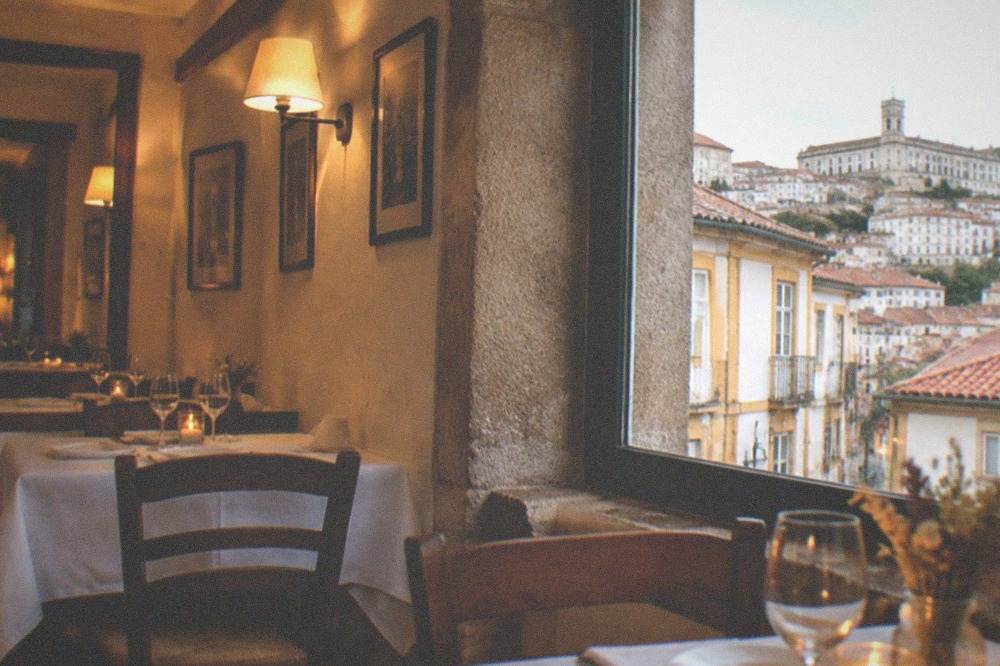
A wet-day eating rhythm that fits the attractions: a long lunch while the rain is heaviest, since the Joanina slot is fixed and midday is the flexible window; a pastry stop in the mid-afternoon lull; and an early dinner followed by the 50-minute fado show, which turns a rain-shortened evening into the day's best hour. The pastries and arrufadas guide lists what to order with a coffee while the weather decides what it is doing. No queue length, no wait time, no door hour is published here for any of them, because none was verified on this build, and a plausible-sounding number is worse than none.
What Can You Do in the Rain in Coimbra with Kids?
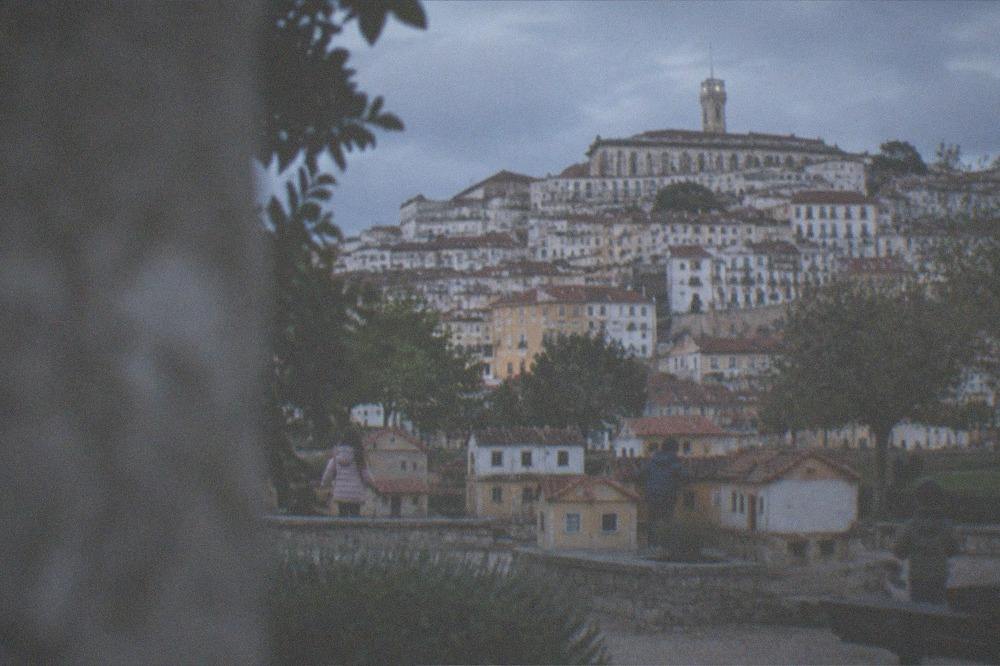
Portugal dos Pequenitos is the wet-day answer for families: the miniature village is largely a walk-through park, but its venue's own horário page lists indoor-friendly hours of 10:00 to 19:00 from 1 March to 15 October and 10:00 to 17:00 in the winter months, and the site's entry-ticket tour is listed from $17 per person. The venue's own price page renders its tariffs client-side, so no euro figure is published here.
The honesty rule on prices for Portugal dos Pequenitos is unusually strict because the venue's own price page serves its table as JavaScript with no euro amount in the delivered HTML, and figures circulating elsewhere are not confirmed from an official page. Publish the hours, link the venue's own ticket page, and let the Portugal dos Pequenitos guide do the rest. On a rainy day the compact scale of the park is actually an advantage: it is small enough to see between showers, and the covered exhibits give a place to wait one out.
For older children, the Science Museum spaces inside the University ticket work in any weather: the Chemistry Laboratory, the Cabinet of Curiosities and the Mineral Gallery are rooms, not routes, and a 12.50 EUR adult ticket covers them without the library's fixed slot. The with kids itinerary sequences a full family day, and the rainy version simply swaps the outdoor stops for these. One genuinely rainy-proof bonus fact, verified on the University's own space page: the Joanina Library houses a colony of bats that patrol the book stacks at night eating the insects that would otherwise damage the volumes. Children rarely object to a library with bats.
Is a Guided Walking Tour Still Worth It in the Rain?
Yes, because the two-hour Coimbra Top Attractions Walking Tour is listed from $5.85 per person, rated 5 from 151 reviews, and a guide keeps a wet group moving between indoor stops instead of standing in the open deciding what to do next. The free GuruWalk options invert the pricing entirely: they are pay-what-you-want walks, and the gurus who lead them are named on their listings, which is the honest way to describe them.
The economics matter on a budget day. A paid walking tour at under six dollars is close to the cost of a bus ticket, and the Coimbra Top Attractions Walking Tour covers the top-attraction circuit in two and a half hours, which is about as long as anyone wants to be under an umbrella. The free walks on GuruWalk run longer, two to three hours, and the tip is decided at the end, which lets the weather negotiate the price. The Coimbra tour of the downtown, historic center, university and botanic garden, for instance, is a three-hour GuruWalk walk rated 4.91 from 662 reviews, and the botanic garden half is the part a rainy day should skip.

A guide also solves the rain-day navigation problem. Coimbra's old town is a hill, and the streets between the university and the river are steep, stepped and, when wet, slick. The self-guided walking tour and the one-day itinerary both assume dry ground and leisurely viewpoints; a guided version compresses the outdoor stretches and spends the saved time inside, which is exactly the trade a wet day demands. The municipality's tourist tax, incidentally, is 1.00 EUR per guest per overnight stay, capped at three nights, from age 16, paid to the accommodation, and it buys you nothing extra on a rainy day, so budget it separately.
What Should You Pack for a Wet Day in Coimbra?
Pack for stone, not for volume: the rain comes in bursts between October and April, but the hazard that actually interrupts a Coimbra day is wet flagstone and cobbles on the hills, so gripped shoes matter more than a heavy coat. The IPMA normals show winter mean maxima of 15 to 16 C, mild but damp, with 11 or more rain days a month in the November-to-January window.
The temperature column is the part visitors from northern Europe misread. A January mean maximum of 15.0 C is not cold by most standards, but 113.5 mm of rain in the same month means the damp gets into everything, and the wind off the Mondego valley can make the riverside feel several degrees below the hill. Layers beat insulation. An umbrella is more useful on the hill, where the streets are narrow, than on the riverside park, where the wind owns the space.
| Item | Why, on Coimbra's own numbers |
|---|---|
| Gripped, waterproof-soled shoes | Steep stepped streets between the hill and the river get slick when wet |
| Compact umbrella | 11+ rain days per month in Nov, Dec, Jan; bursts rather than all-day rain |
| Light waterproof layer | Winter mean max 15 to 16 C, damp rather than freezing; -4.3 C is the record low, not the norm |
| Booked Joanina slot, not hope | 50 people per 20 minutes; online sales close 20 minutes before the slot |
| Rechargeable transit card | 2026 SMTUC tariff: 2.00 EUR on board, 0.90 EUR per trip pre-purchased in packs of 3+, valid 90 minutes |
That last row is a real wet-day saving. The 2026 SMTUC tariff, in force since 1 April 2026, sells a driver ticket at 2.00 EUR and pre-purchased trips at 0.90 EUR each in packs of three or more, each valid 90 minutes with transfers, and the tariff's own heading marks these titles as valid on both the SMTUC and Metro Mondego networks. A bus hop up the hill on a soaking afternoon costs less than half the on-board price if the card is loaded in advance. The getting around guide covers the rest.

Common Questions About Coimbra in the Rain
What is the rainiest month in Coimbra?
November, at 121.5 mm, marginally ahead of October at 114.5 mm and January at 113.5 mm, per IPMA's 1991 to 2020 normals for the Coimbra / Bencanta station.
Is Coimbra worth visiting when it rains?
Yes. The headline attractions, the Joanina Library, the Royal Palace, St Michael's Chapel, the Science Museum spaces, the Sé Velha and Santa Cruz, are all indoors and within a short walk of each other.
Does the Joanina Library close in bad weather?
No. The library runs on timed slots of 50 people every 20 minutes regardless of weather, and the time printed on your ticket is the fixed entry slot. Entry outside the slot is refused.
Is the Machado de Castro museum a good rainy-day option in Coimbra?
Not currently. It is closed for conservation work, with no reopening date published, and the hours table on its own page belongs to whenever it reopens. Check the museum's own page before planning around it.
What is the driest time to visit Coimbra?
July, at 8.9 mm of rain over 1.7 rain days on the 1991 to 2020 normals, with August close behind at 14.8 mm. September stays warm at a 27.4 C mean maximum but carries 49.9 mm, nearly twice June's total.
Can you get around Coimbra by bus in the rain?
Yes. The 2026 SMTUC tariff lists a 2.00 EUR on-board ticket and 0.90 EUR pre-purchased trips valid 90 minutes, and the same titles are valid on the Metro Mondego network.
Rain changes the order of a Coimbra day, not the substance of it. Book the Joanina slot first, work the indoor circuit from the top of the hill down, eat long while the bursts pass, and let the fado room close the evening, and the wettest month in Portugal still delivers a full day in the country's most storied university city.