What Is the Most Prestigious University in Portugal?
The University of Coimbra, in Coimbra, Portugal, is the country's most prestigious university. Here is what backs that reputation, and how to visit it.
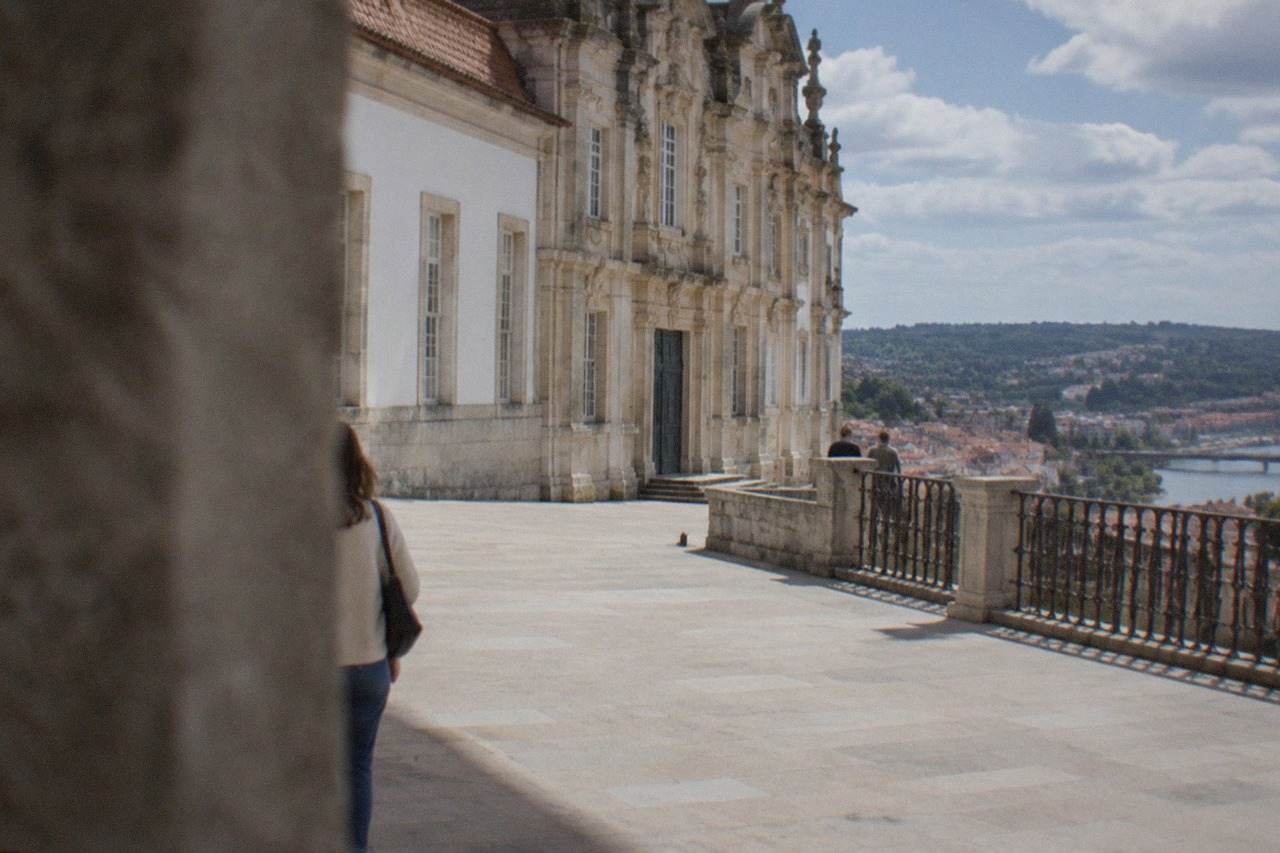
Ask a Portuguese person to name the most prestigious university in their country and the answer will almost always point to Coimbra, the university city on the River Mondego in central Portugal. Not the district of Coimbra, which reaches the Atlantic and is a different thing entirely, and not one of the places sharing the name in Brazil or Angola, but the city itself, where the University of Coimbra has occupied the hill above the river for centuries and still defines everything about the place: its population, its calendar, its fado, and its UNESCO inscription. That reputation is not marketing. It rests on a documented record, and this page sets out what that record actually says.
What Is the Most Prestigious University in Portugal?
The University of Coimbra, in the city of Coimbra, Portugal, is the university most consistently described as the country's most prestigious. It is the institution around which the city's whole identity is built, it holds Portugal's only university UNESCO World Heritage inscription, "University of Coimbra, Alta and Sofia", listed in 2013 under criteria (ii), (iv) and (vi), and it currently publishes a student body of about 31,000 across 434 courses, taught by 1,935 professors.
Prestige is a slippery word, so it helps to pin it to things that can be checked. Three of them stand out. First, the UNESCO listing: the World Heritage property is the university itself, its hill and the college street below it, not the city, and no other Portuguese university has anything comparable. Second, scale and continuity: the University's own homepage, under "The University in Numbers", publishes 31,256 students, 434 courses, 1,935 professors, 378 researchers, 1,537 technical staff, 4 campuses, 22 libraries, 2 museums, 1 botanic garden and 13 residences. The page does not state the academic year, so those figures should be read as the University's current published numbers rather than pinned to a date.
Third, cultural weight. The University of Coimbra is inseparable from traditions that the rest of the country recognises instantly: the black student cape, the Queima das Fitas festival each May, and Coimbra's own style of fado, sung by men in those capes. If you want the fuller argument for the city's standing, the page is Coimbra a prestigious university takes it in more depth, and Coimbra Travel Guide covers the city the university built.
Why Is the University of Coimbra So Prestigious?
The University of Coimbra's prestige comes from its role as the historic centre of Portuguese higher education, its physical dominance of the city, and the 2013 UNESCO inscription of "University of Coimbra, Alta and Sofia" (list reference 1387), which recognises the university hill and the Rua da Sofia college street as a World Heritage property of outstanding universal value under criteria (ii), (iv) and (vi).
The inscription matters because of what it covers and what it does not. The property is two components within the old town: the Alta, the university hill crowned by the Royal Palace of Alcáçova, the Capela de São Miguel and the Biblioteca Joanina, and Sofia, the college street below. Named components include the Royal Palace of Alcáçova, St Michael's Chapel, the Joanine Library, the colleges of Jesus, Holy Trinity, St Jerome, St Benedict, St Anthony of the Quarry and St Rita, the Rua da Sofia colleges, the 18th-century Chemistry and other laboratories, the Botanical Garden, the University Press, and the 1940s University City. The site is managed by the association RUAS, founded by the University, the City Hall, the Regional Delegation of the Ministry of Culture and Coimbra Viva.
What it does not cover is equally important. "Coimbra is a UNESCO World Heritage city" is false, and it is the single most common factual error in guides to this city. The university and Rua da Sofia are inscribed. The city is not, and neither is the Baixa, the old town below the hill, nor the riverside.
The University's connection to the deepest layers of Portuguese history runs through the city as well. Mosteiro de Santa Cruz, in the lower town, is the burial church of Portugal's first two kings, one of the verified historical claims about the city, and the University's presence on the hill above it shaped everything from the street plan to the music. Coimbra fado is a university tradition, distinct from the Lisbon style, and it is sung by students and former students in the black cape. Whether the University is also the oldest in the world is a separate question with a separate answer, covered on is Coimbra the oldest university in the world.
How do You Visit the University of Coimbra?
You visit the University of Coimbra by buying a combined ticket through the University's own visit pages: the full ticket at 16.50 EUR covers the Biblioteca Joanina with a fixed 20-minute timed slot, the Royal Palace, the Capela de São Miguel, the Chemistry Laboratory, the Academic Museum, the Cabinet of Curiosities and the Mineral Gallery, and is valid two days except for the Joanina slot, which is the time printed on your ticket.
The timed-slot rule is the single most important practical fact about a visit. The University's own programme page states that entries into the Biblioteca Joanina building are limited to 50 people every 20 minutes, that the Joanina cannot be bought on its own, that the date and time printed on the ticket is the Joanina slot specifically, and that entry outside the printed slot is refused. Online purchase closes 20 minutes before the visit time. A visitor who turns up in summer without a pre-booked slot can be turned away, and the 50-per-20-minutes ceiling is exactly why.
| Ticket | Adult price | Duration | What it includes |
|---|---|---|---|
| Joanina Library + University + Science Museum | 16.50 EUR | 3h | Baroque Library (Joanina), Royal Palace, St Michael's Chapel, Chemistry Laboratory, Academic Museum, Cabinet of Curiosities, Mineral Gallery |
| University + Science Museum | 12.50 EUR | 2h30 | The same list, without the Joanina Library |
| Guided tour, Palace of Schools | 25.00 EUR | 1h30 | Guide-led visit, Science Museum spaces not included |
| Science Museum + UC Exploratório | 16.00 EUR | 3h | Chemistry Laboratory, Academic Museum, Cabinet of Curiosities, Mineral Gallery, UC Exploratório; does not include the Palace of Schools spaces |
Opening hours follow a summer and winter pattern: 09:00 to 20:00 from 1 April to 30 September, and 09:00 to 17:30 from 1 October to 31 March. The University closes its visitor circuit on 24 and 25 December, 31 December and 1 January, 24 May and 4 October, and it warns that religious, official and academic ceremonies can interrupt the normal tourist circuit. One thing you cannot do at all: the Torre da Universidade, the clock tower, is closed. The University's own information page states "We regret to inform you that this facility is closed", and notes the tower's 184 steps and narrow passage as part of the explanation. No price, no hours, no climb.
For the full ticketing detail, including the guided options, see do you need tickets for the University of Coimbra and the university tickets guide. If you would rather have someone else handle the timed slot, a guided visit with tickets included is the practical route: Check availability for the operator's live listing.
What Is the Most Famous Library in Coimbra?
The Biblioteca Joanina, inside the University of Coimbra's Paço das Escolas, is the most famous library in Coimbra and the one most visitors come specifically to see: a baroque library that admits only 50 people every 20 minutes, exists only inside the 16.50 EUR combined university ticket, and houses a colony of bats that the University credits with eating the insects that would otherwise damage the books.
The bat colony is not folklore. The University's own page on the Joanina confirms it: the library houses bats that eat insects to protect the books. The building's other protections are its thick walls and the historic shelving, but the bats are the detail people remember, and they are official.
The visit itself is short and strictly controlled. The ticket time is the Joanina slot, the stay on the noble floor is about 20 minutes, there is no lingering, and photography on the noble floor is not permitted. The rest of the combined ticket, the Royal Palace, the Capela de São Miguel, the laboratories and museums, can be visited before or after the slot across two days. The deeper story of the building and its rules is on what is the most famous library in Coimbra and the Joanina Library page.
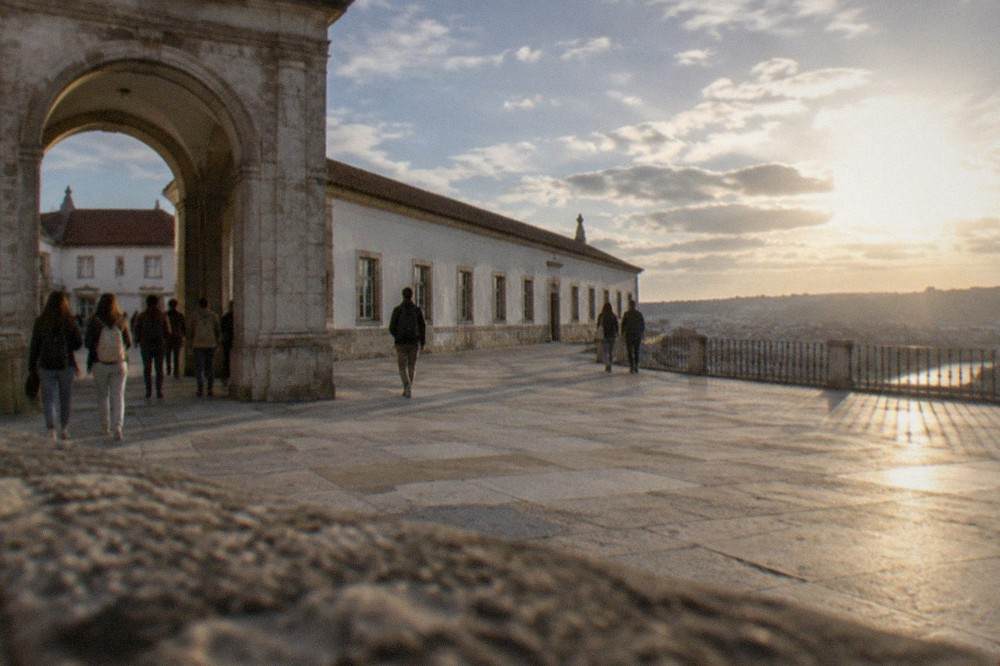
When Is the Best Time to Visit the University of Coimbra?
The best time to visit the University of Coimbra is between late spring and early autumn, and the official climate data makes a specific case for September: IPMA's 1991 to 2020 normals for the Coimbra / Bencanta station show September with a mean maximum of 27.4 C, higher than June's 26.3 C, on only 49.9 mm of rain, while August is the hottest month at a 29.1 C mean maximum and July is effectively dry at 8.9 mm.
That September figure is the city's best-kept secret, and it comes from the city's own station, Coimbra / Bencanta, station 707, 3 km from the centre, not a coastal proxy. The district of Coimbra reaches the Atlantic, but the city does not touch the sea, so a coastal figure would describe a different place.
| Month | Mean max C | Rain mm | Days 1mm+ rain |
|---|---|---|---|
| May | 23.3 | 64.7 | 8.5 |
| June | 26.3 | 26.0 | 3.7 |
| July | 28.5 | 8.9 | 1.7 |
| August | 29.1 | 14.8 | 2.2 |
| September | 27.4 | 49.9 | 5.2 |
| October | 23.2 | 114.5 | 10.3 |
Read the table carefully, because it inverts what most guides assume. September is hotter than June, not cooler, and wetter than June too, 49.9 mm against 26.0 mm. What is true is that the heavy autumn rain holds off until October, when the monthly total jumps to 114.5 mm. November is the wettest month at 121.5 mm. In summer, the practical constraint is not the heat but the Joanina's 50-per-20-minutes ceiling: July and August bring the biggest crowds to the smallest slots.
May deserves a caution of its own. The University closes its visitor circuit on 24 May, and Mosteiro de Santa Cruz suspends visits on the Cortejo da Queima das Fitas, a moveable Sunday, because the student festival's parade takes over the streets. Exact Queima dates are published by the Associação Académica and should be checked there before a May trip, but the two verified closures are reason enough to plan around them.
How Many Students Study at the University of Coimbra?
The University of Coimbra publishes a figure of 31,256 students on its own homepage, alongside 434 courses, 1,935 professors, 378 researchers, 1,537 technical staff, 4 campuses, 22 libraries, 2 museums, 1 botanic garden and 13 residences. The page does not state the academic year, so the honest way to cite it is as the University's current published figure, about 31,000 students, rather than a number pinned to a date.
That student body is the engine of everything distinctive about the city. It fills the Repúblicas, the historic student houses, it fills the fado houses, and it fills the streets during the academic festivals. The municipality's own figures, published on coimbra.pt on 21 July 2026 as part of the economic justification for updating the tourist tax, record 698,151 overnight stays in Coimbra in 2025, with municipal spending directly related to tourism of 1.94 million EUR and an estimated annual municipal cost of tourism of 2.44 million EUR, a cost per overnight stay of 3.49 EUR. The tourist tax itself is 1.00 EUR per guest per overnight stay, capped at three consecutive nights, from age 16, payable to the accommodation; a two-euro rise has been proposed but is not the published rate.
| Figure | Value | Source |
|---|---|---|
| Students | 31,256 | University homepage, "The University in Numbers" |
| Courses | 434 | University homepage |
| Professors | 1,935 | University homepage |
| Libraries | 22 | University homepage |
| Campuses | 4 | University homepage |
| Overnight stays in Coimbra, 2025 | 698,151 | Municipality of Coimbra, July 2026 |
Whether the University is also a good university by teaching and research measures is a question with its own answer on is the University of Coimbra a good university.
Common Questions About the University of Coimbra
What is the most prestigious university in Portugal?
The University of Coimbra, in Coimbra, Portugal. It holds the country's only university UNESCO World Heritage inscription, "University of Coimbra, Alta and Sofia", listed in 2013, and publishes a student body of about 31,000 across 434 courses.
Is Coimbra a UNESCO World Heritage city?
No. The inscription covers the university hill and the Rua da Sofia college street, two components inside the old town, listed as "University of Coimbra, Alta and Sofia" in 2013. The city as a whole is not inscribed.
Can you climb the University of Coimbra clock tower?
No. The Torre da Universidade is closed. The University's own information page states the facility is closed, and mentions the tower's 184 steps and narrow passage. There is no ticket and no timetable for a climb.
Can you buy a Biblioteca Joanina ticket on its own?
No. The Joanina exists only inside the 16.50 EUR combined university ticket, which also covers the Royal Palace, the Capela de São Miguel, the Chemistry Laboratory, the Academic Museum, the Cabinet of Curiosities and the Mineral Gallery. The time printed on the ticket is the Joanina slot, and entry outside the slot is refused.
How many people can enter the Joanina Library at once?
The University's own programme page limits entries to 50 people every 20 minutes. That ceiling is why the library's timed slots sell out in summer, and why booking the slot in advance matters more than any other planning decision on a Coimbra trip.
Is the University of Coimbra worth visiting if you are not a student?
Yes. The Paço das Escolas, the Joanina Library, the Capela de São Miguel and the surrounding World Heritage components are open to the public on a combined ticket valid two days, and the university hill is the reason most visitors come to Coimbra at all.
The question of prestige settles quickly once the record is on the table: the University of Coimbra is the institution with the UNESCO inscription, the burial church of Portugal's first two kings in the town below, the fado tradition in the black cape, and a published student body of about 31,000 on the hill above the River Mondego. Other Portuguese universities are larger or newer, but none carries the same weight, and the place to test that claim is the university hill itself.