What Is the Most Beautiful City in Portugal?
The honest answer to what is the most beautiful city in Portugal, argued from verified facts about Coimbra, the university city on the River Mondego.
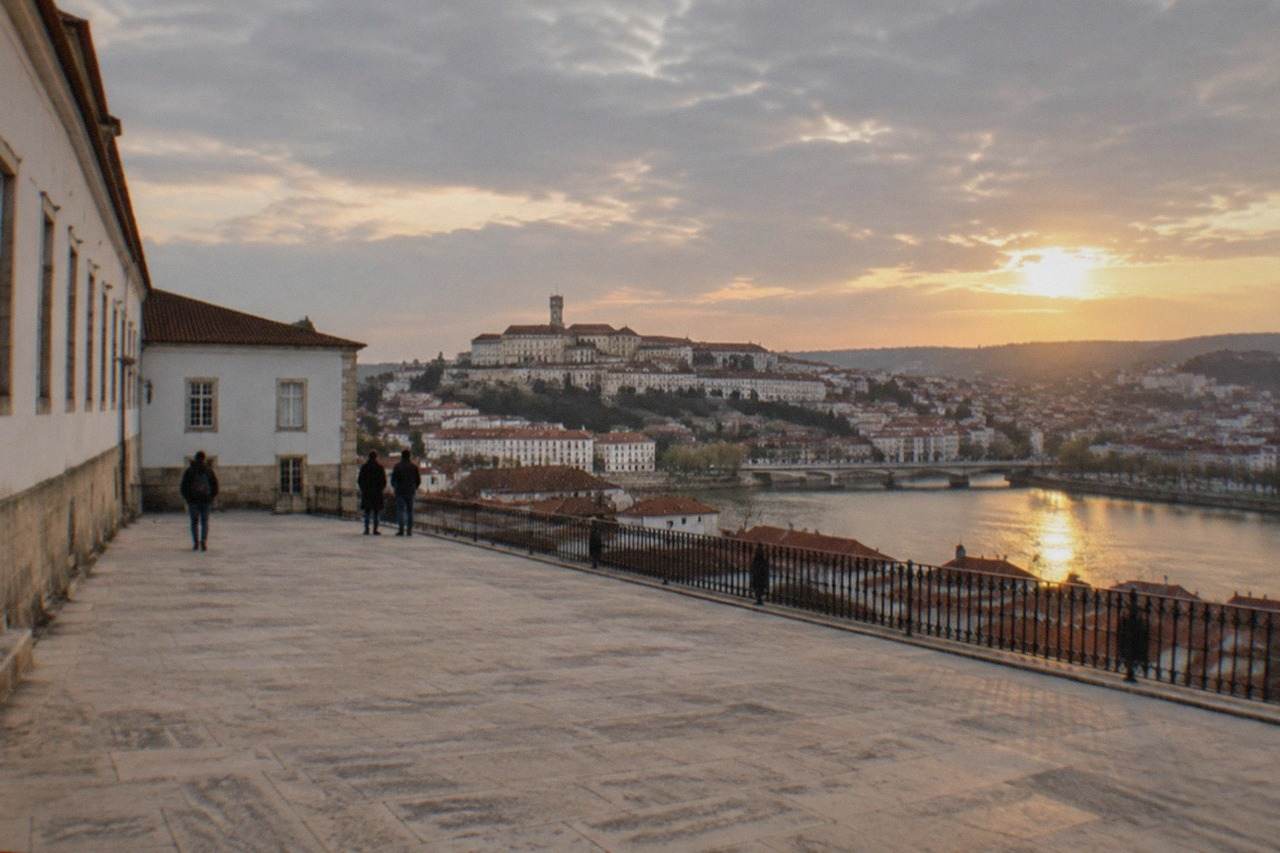
There is no official answer to what is the most beautiful city in Portugal, because no Portuguese or international body publishes a ranking of cities by beauty. What exists instead is a set of verifiable facts, and an unusually large share of them point at Coimbra, the university city on the River Mondego in the Centro region of Portugal. UNESCO inscribed "University of Coimbra - Alta and Sofia" on the World Heritage List in 2013, reference 1387, under criteria (ii), (iv) and (vi), and the inscription covers two components of the old town: the university hill and the college street below it. The municipality recorded 698,151 overnight stays in 2025, its own published figure. Those two facts, one about heritage and one about demand, are the honest starting point for the question, and this page builds the rest of the argument from sources of the same class. For more on what sets the city apart, see what is special about Coimbra Portugal.
What Is the Most Beautiful City in Portugal?
No authority ranks Portuguese cities by beauty, so the honest answer is a judgement built on verified facts, and the strongest verified case belongs to Coimbra, Portugal's university city on the River Mondego. UNESCO inscribed the University of Coimbra - Alta and Sofia in 2013, the municipality recorded 698,151 overnight stays in 2025, and the University publishes a student body of about 31,000, figures no competitor guide can match with sourced numbers for anywhere else.
Beauty is not measurable, but the things that produce it in a city often are: a hill crowned by a monument, a river running below it, a baroque library that limits entry to 50 people every 20 minutes, and a climate table that says when the light is best. Coimbra has all four, and every one of them can be cited. Lisbon and Porto are larger, and Braga and Aveiro have their advocates, but this site's research verified nothing for those cities, so this page will not print a comparison it cannot source. What it can do is lay out what Coimbra demonstrably is, and let the reader weigh it. A good companion piece is is Coimbra Portugal worth seeing, which runs the same test on the question of value.
Why the University Hill Makes Coimbra's Case
The Paço das Escolas, the walled hilltop court of the University of Coimbra, is the single most concentrated piece of architecture in any Portuguese city this site can source, holding the Royal Palace, the Capela de São Miguel, the 184-step tower and the Biblioteca Joanina inside one UNESCO-inscribed perimeter, all covered by a 16.50 EUR combined ticket stamped valid for the whole 2026 season.
The University's own visit page lists what that ticket buys: the Joanina Library's noble floor in a fixed 20-minute slot, the Royal Palace, St Michael's Chapel, the Chemistry Laboratory, the Academic Museum, the Cabinet of Curiosities and the Mineral Gallery, valid across two days except the library slot, which is fixed to the minute printed on the ticket. The capacity rule is the University's own wording: entries are limited to 50 people every 20 minutes, and visitors outside the printed slot are refused. That ceiling is why the hill never feels crushed the way a freely admitted monument can, and it is the one genuine scarcity fact on this site. The tower is closed, the University's information page says so plainly, so the view comes from the terraces rather than the top. The library itself is a strong contender in its own right, covered separately in which library in Portugal is considered the most beautiful.
A guided visit changes the hill entirely, because the buildings are half the story and the student traditions are the other half. The skip-the-line local's tour of the University, rated 4.9 from 87 reviews at from $86 per person, spends an hour and a half on the Paço das Escolas with a guide from the city, tickets handled for you so the 20-minute slot system is not your problem. Check availability if the fixed-slot maths sounds like something you would rather not do alone. The question of the University's standing is covered in is the University of Coimbra a good university.
What Makes the Old Town of Coimbra So Distinctive?
Coimbra's old town runs down a steep hill from the Paço das Escolas to the River Mondego, and its two inscribed halves, the Alta and the Sofia, give it a street fabric that UNESCO judged outstanding under three separate criteria, something no other Portuguese city's old town can claim on this site's sourced record.
Below the university wall, the medieval lanes drop through the Arco de Almedina toward the Baixa, and across the river the Santa Clara district and the Quinta das Lágrimas carry the Inês de Castro story that Portuguese fado has sung for generations. The Sé Velha, the Romanesque old cathedral, charges 3.00 EUR for an individual ticket, published by the Unidade Pastoral Aeminium, which also runs Mosteiro de Santa Cruz at 5.00 EUR, the burial church of Portugal's first two kings. Those are verified prices for verified monuments, and they are small numbers for buildings of that class, which is part of the case for Coimbra as the beauty that does not charge Lisbon prices. The Mondego itself is the frame: the city looks at itself from both banks, and the riverfront park gives the classic view back up at the hill.
| Monument | Verified adult price | What the source is |
|---|---|---|
| University combined ticket with Joanina Library | 16.50 EUR | The University's own visit page, valid 01.01.2026 to 31.12.2026 |
| University ticket without the Joanina | 12.50 EUR | The University's own visit page |
| Sé Velha de Coimbra | 3.00 EUR | The Unidade Pastoral Aeminium parish site |
| Mosteiro de Santa Cruz | 5.00 EUR | The Unidade Pastoral Aeminium parish site |
| Conímbriga museum and ruins, about 16 km south | 10.00 EUR | The national museums portal |
When Is Coimbra at Its Most Beautiful?
IPMA's 1991 to 2020 climate normals for the Coimbra / Bencanta station show that September is the city's quiet masterstroke: a mean maximum of 27.4 C, higher than June's 26.3 C, with only 49.9 mm of rain, while the real autumn rain holds off until October, when the monthly total jumps to 114.5 mm, and August, not July, is the hottest month at 29.1 C mean maximum.
Most guides tell visitors to come in summer. The table says otherwise. July is effectively dry at 8.9 mm of rain, but August averages 10.9 days above 30 C and is the hottest month on both mean and mean maximum, and by September the student city is still warm, less crowded and freshly returned to life with about 31,000 students the University publishes on its own homepage. November is the wettest month at 121.5 mm, marginally ahead of October and January, so the golden window is late May through September, with September the pick. The station is the city's own, 3 km from the centre, not a coastal proxy from the district, which reaches the Atlantic while the city does not. The full index of guides sits on Coimbra Travel Guide.
| Month | Mean max C | Rain mm | Days max 30 C+ |
|---|---|---|---|
| May | 23.3 | 64.7 | 3.5 |
| June | 26.3 | 26.0 | 6.2 |
| July | 28.5 | 8.9 | 8.9 |
| August | 29.1 | 14.8 | 10.9 |
| September | 27.4 | 49.9 | 7.8 |
| October | 23.2 | 114.5 | 2.0 |
The seasonal question is covered in full in the site's best time to visit Coimbra guide, and the month-by-month detail in weather by month.
Is Coimbra the Most Underrated City in Portugal?
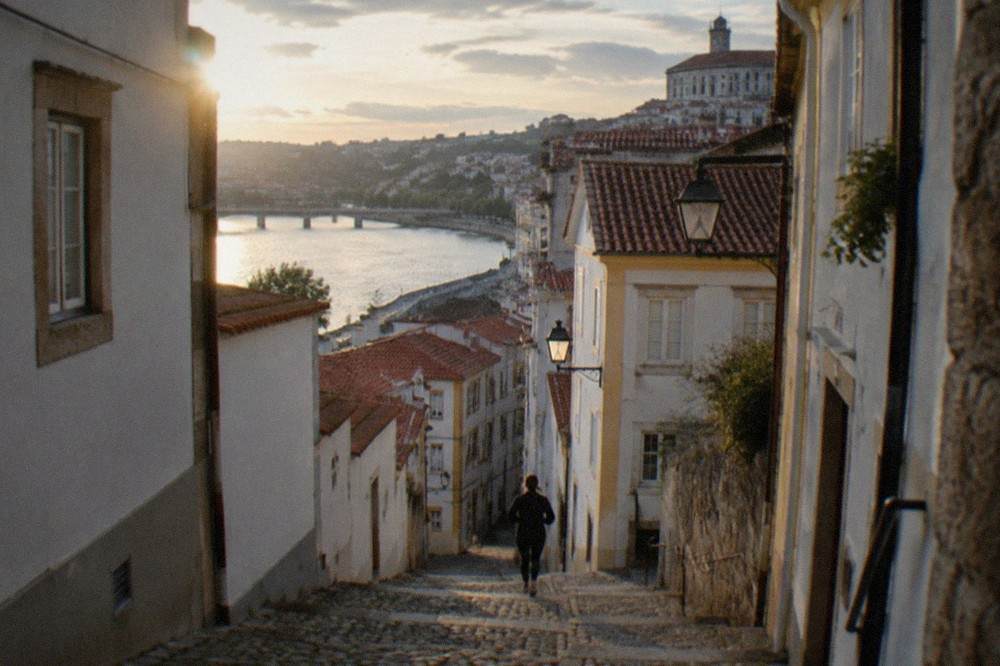
On the sourced record, yes, Coimbra is a strong claimant to being Portugal's most underrated city: it holds a 2013 UNESCO inscription covering the university hill and Rua da Sofia, a baroque library that admits 50 people every 20 minutes, a burial church of Portugal's first two kings at 5.00 EUR, and 698,151 overnight stays in 2025, a serious but not overwhelming volume that keeps the old town walkable where bigger cities are not.
Underrated is a claim about the gap between quality and attention, and the numbers here let you measure both sides. The 698,151 overnight stays are the municipality's own 2025 figure, published in July 2026 as part of the economic case for raising the tourist tax from 1.00 EUR to a proposed 2.00 EUR per night, capped at three consecutive nights, from age 16, paid at the accommodation. The same municipal study put the city's tourism cost at 3.49 EUR per overnight stay, which is a rare thing: a city honestly publishing what a visitor costs it. None of this settles beauty, but it settles that Coimbra is a real, working, student-shaped city that has not been flattened by its own popularity. The case for the city's value is argued further in is it worth going to Coimbra Portugal, and the wider comparison with its northern rival in Coimbra vs Porto.
The tour above is the one this site points at most often, because it solves the hill's one real friction: the fixed Joanina slot. Beyond the city itself, the same Centro region holds the schist villages of the Serra da Lousã, and the trio below widens the choice from the university walk to a budget-friendly top-attractions tour and a half-day in the Lousã hills.
How to See the Beautiful Parts of Coimbra Without Wasting a Day
The efficient route is to book the University's 16.50 EUR combined ticket with a Joanina slot first, walk the Paço das Escolas and the Capela de São Miguel in the morning, descend through the Arco de Almedina to the Sé Velha at 3.00 EUR and Mosteiro de Santa Cruz at 5.00 EUR, and end on the riverfront looking back up at the hill, all inside one day on foot.
The city is compact and steep, and the walkability question is answered in detail in is Coimbra a walkable city. Two cautions from the verified record. The Museu Nacional de Machado de Castro, built over a mid-1st-century Roman cryptoporticus, is closed for conservation work, its own page says so twice, so do not plan around it. The Mosteiro de Santa Clara-a-Velha has been closed for requalification works since October 2025 and publishes no current price or hours, so check before going. Both closures are honest limits on the itinerary, and neither touches the core of the hill, the two cathedrals or the river bank. If one day is all you have, one day in Coimbra sequences it hour by hour.
Common Questions About the Most Beautiful City in Portugal
What is the most beautiful city in Portugal?
No official body ranks Portuguese cities by beauty. The strongest sourced case is Coimbra, whose University hill and Rua da Sofia were inscribed by UNESCO in 2013, whose Biblioteca Joanina admits 50 people every 20 minutes, and whose old town runs from a walled hilltop down to the River Mondego.
Is Coimbra a UNESCO World Heritage city?
No, and this is the most common error in guides to the city. UNESCO inscribed "University of Coimbra - Alta and Sofia", list reference 1387, in 2013 under criteria (ii), (iv) and (vi): two components inside the old town, the university hill and the college street. The city as a whole is not inscribed.
Which is the most beautiful part of Coimbra?
The Paço das Escolas, the walled court at the top of the hill holding the Royal Palace, the Capela de São Miguel and the Biblioteca Joanina, covered by the University's 16.50 EUR combined ticket. The view back from the river bank is the classic complement to it.
When is Coimbra at its most beautiful?
September. IPMA's 1991 to 2020 normals for the Coimbra / Bencanta station show a mean maximum of 27.4 C, warmer than June, with 49.9 mm of rain, before the autumn rain arrives in October at 114.5 mm. The student city is also back in session, with about 31,000 students.
Is Coimbra cheaper than Lisbon or Porto?
This site cannot publish a sourced price comparison for those cities, because nothing was verified for them. What is verified for Coimbra: a 16.50 EUR combined University ticket, a 3.00 EUR Sé Velha ticket, a 5.00 EUR Santa Cruz ticket and a 1.00 EUR per night tourist tax, capped at three nights, from age 16.
How many days does Coimbra need?
One full day covers the University hill, the two cathedrals, Santa Cruz and the riverfront. Two days add Conímbriga, the Roman town about 16 km south in Condeixa-a-Nova, whose museum and ruins share a 10.00 EUR ticket and open seven days a week, making it the reliable Monday option.
The honest verdict: beauty in Portugal is a judgement, and judgements should be built on checkable facts. Coimbra's are unusually strong, from the 2013 UNESCO inscription on the university hill to the 50 people the Joanina admits every 20 minutes and the September temperatures IPMA records at the city's own station, and that is why this site makes its home here.