Is It Worth Going to Óbidos, Portugal?
An honest answer to whether Óbidos is worth going to, written from Coimbra in central Portugal: what Óbidos is, who it suits, and how it compares with time spent in the university city on the River Mondego.

Coimbra, the university city on the River Mondego in central Portugal, is where this guide is written from, and it is also the place most travellers asking about Óbidos are already planning to pass through. The two names sit in the same sentence for a reason: both are stops on the classic central-Portugal route, and the honest answer to whether Óbidos is worth going to depends almost entirely on what you want from the hours you spend there. This site has verified its facts for Coimbra and for the Roman site of Conímbriga, and for nothing else, so what follows compares the two places on what can actually be checked rather than on folklore.
Is It Worth Going to Óbidos, Portugal?
Yes, if you want a compact, walkable walled town with a castle, narrow streets and a strong local liqueur tradition, and you are happy with a visit of a few hours rather than a full day. Óbidos is small, scenic and genuinely medieval in its street plan. It is not worth going to if you want museums, a university, a river, a music tradition or anywhere near the depth that a city like Coimbra offers, because Óbidos has none of those things.
That is the shape of the answer, and it holds up because the comparison is really between a town and a city. Óbidos is a fortified settlement whose walls you can walk in a short loop, whose main street is a single lane of shops selling ginja, the local sour-cherry liqueur, often served in a small chocolate cup you eat afterwards. That is a pleasant two or three hours. It is not a place with layers you peel back over days.
What this site cannot do is print numbers for Óbidos. No distance, no journey time from Coimbra, no ticket price, no visitor count and no population figure for Óbidos was verified by this build, and the rules here forbid inventing one. So the rest of this page does something more useful: it tells you what a Coimbra stop verifiably contains, so you can decide how the two fit together. If you are weighing Óbidos against more time in Coimbra, read is it worth going to Coimbra, Portugal before you commit.
What Kind of Visit Is Óbidos, and Who Is It For?
Óbidos suits photographers, couples on a road trip, and anyone travelling between Lisbon and the north who wants one postcard-perfect stop with walls, flowers and a castle keep. It suits families for a couple of hours. It does not suit anyone looking for a full day of sightseeing, because the town is small enough that its streets exhaust themselves quickly, and there is no major museum, no cathedral of national significance and no working university inside the walls.
The classic Óbidos visit is a walk: up through the main street, around the wall walk where the ramparts allow it, into the castle, now a pousada, and back down with a ginja in hand. People who love it tend to be there early or late, when the day-trip crowds are thin. People who are disappointed tend to have arrived at midday in high summer expecting a full day's worth of sights and finding a single street.
The honest framing is that Óbidos is a highlight, not a destination with a programme. Coimbra is the opposite. The University of Coimbra publishes about 31,000 students on its own numbers page, the city's old town holds a UNESCO-inscribed property, and the municipality recorded 698,151 overnight stays in 2025, its own figure for the municipality. Those are the two different animals you are choosing between. For a fuller case for the city, see why is Coimbra famous.
How Does Óbidos Compare with a Coimbra Stop?
On depth, Coimbra wins clearly and measurably: the University's combined ticket covers the Joanina Library, the Royal Palace, St Michael's Chapel, the Chemistry Laboratory, the Academic Museum, the Cabinet of Curiosities and the Mineral Gallery for 16.50 EUR, valid two days. On atmosphere per square metre, Óbidos wins, because its entire walled core is the attraction. Óbidos is the better half-day photograph; Coimbra is the better two days of your trip.
The comparison is not really close once you count what a Coimbra ticket buys, and the numbers below are all printed on the University's and the parish's own pages. This is what the city side of the ledger looks like, verified:
| Coimbra site | Adult price | What it covers |
|---|---|---|
| University combined ticket with Joanina Library | 16.50 EUR | Joanina Library in a fixed 20-minute slot, Royal Palace, St Michael's Chapel, Chemistry Laboratory, Academic Museum, Cabinet of Curiosities, Mineral Gallery, valid 2 days |
| University ticket without the Joanina | 12.50 EUR | The same spaces except the Joanina Library |
| Sé Velha de Coimbra | 3.00 EUR | The old Romanesque cathedral and its cloister |
| Mosteiro de Santa Cruz | 5.00 EUR | The burial church of Portugal's first two kings, sacristy and choir included |
| Museu Nacional de Conímbriga, about 16 km south | 10.00 EUR | The Roman ruins and the museum on one combined ticket |
One point that matters for planning: the Joanina Library admits 50 people every 20 minutes, in the University's own words, and the time printed on your ticket is the library slot specifically, not a general entry time. A traveller who has only one day in Coimbra and arrives without a pre-booked slot in summer can be turned away. That constraint, which no competitor guide to the region ever seems to mention, is a real reason not to over-schedule a combined Óbidos and Coimbra day. If the library is the priority, the Joanina Library and University tour with an expert guide handles the tickets and the timing, and you can Check availability before you build the rest of the day around it.
There is also a question of which stops to combine if you are touring central Portugal at all. Travellers asking about Óbidos are often also weighing Tomar, the Templar town, and Nazaré on the coast. This site has honest answers for both: is Tomar in Portugal worth visiting and is Nazaré Portugal worth going to. The same rule applies to all of them: this build verified nothing outside Coimbra and Conímbriga, so weigh each on what a stop actually contains, not on rankings nobody measured.
What Does a Combined Coimbra and Óbidos Trip Look Like?
The workable shape is Coimbra as the base and Óbidos as a half-day excursion, not the other way round. Coimbra has the accommodation depth, the evening life, the fado tradition and the two-day university ticket; Óbidos has a wall, a castle and a liqueur. Two nights in Coimbra with one morning or late afternoon given to Óbidos is the pattern that leaves both places satisfied, and it is the pattern that respects the Joanina's fixed 20-minute slots.
Staying in Coimbra also makes financial sense in ways you can check. The city's tourist tax is 1.00 EUR per guest per overnight stay, capped at three consecutive nights, from age 16, paid to the accommodation at check-in or checkout, in force since 5 April 2023. The municipality's own worked example: a couple staying seven nights pays 3.00 EUR each. A two-euro rise was proposed in July 2026 but the published rate remains one euro, and no verified figure for Óbidos exists on this site to compare it with, so the only honest statement is what Coimbra charges.
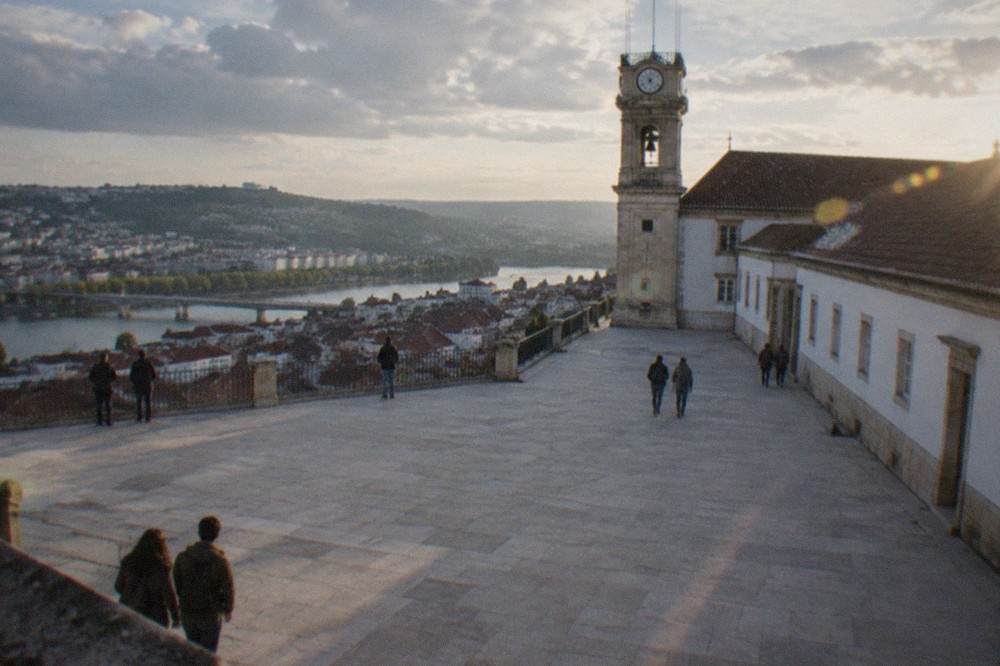
The evening is where the asymmetry is sharpest. Coimbra has its own fado, sung by men in the old academic cape, and a live show with a glass of port wine runs from 18 USD per person on the operator's live listing. Óbidos after the day visitors leave is quiet in a way some travellers love and others find empty. If your trip is about what happens after dark, base yourself in Coimbra. If it is about a wall photograph at golden hour, Óbidos delivers that.
When Is the Best Time to Visit Óbidos and Coimbra?
For Coimbra, the verified climate data points to September: its mean maximum of 27.4 C is higher than June's 26.3 C, it averages only 5.2 days with a millimetre or more of rain, and the university crowds have thinned. July is effectively dry at 8.9 mm, and the autumn rain does not arrive properly until October, when the monthly total jumps to 114.5 mm. For Óbidos, the same central-Portugal pattern applies in general terms, though this site has no station data for Óbidos itself.
The table below is the city of Coimbra's own station, IPMA's Coimbra / Bencanta normals for 1991 to 2020, not a coastal or district proxy, and it is the only climate data this site can stand behind:
| Month | Mean max C | Rain mm | Days with 1 mm+ rain |
|---|---|---|---|
| May | 23.3 | 64.7 | 8.5 |
| June | 26.3 | 26.0 | 3.7 |
| July | 28.5 | 8.9 | 1.7 |
| August | 29.1 | 14.8 | 2.2 |
| September | 27.4 | 49.9 | 5.2 |
| October | 23.2 | 114.5 | 10.3 |
Two cautions from the same table. August, not July, is the hottest month on both mean and mean maximum, averaging 10.9 days above 30 C, so a midday arrival in a walled town with no shade plan is a bad idea in either place. And a widely repeated claim, that September is drier than June, is inverted: September is both hotter and wetter than June. What is true is that the real rain holds off until October. Plan the combined trip in late spring or September and you get the best of both.
One timing trap specific to Coimbra: the University closes its visitor circuit on 24 May, and Mosteiro de Santa Cruz suspends visits on the Cortejo da Queima das Fitas, a moveable Sunday in the student festival season. If your Coimbra half-day collides with either, the university spaces you crossed the city for are shut. Check the University's own info page before locking dates, and if you are still deciding how long the city deserves, read is Coimbra worth staying in.
Common Questions About Óbidos and Coimbra
Is it worth going to Óbidos, Portugal?
Yes, for a half-day: a walkable walled town, a castle keep, and a strong ginja tradition make it a pleasant stop. It is not worth going to if you expect a full day of sights, because the town is small and has no university, major museum or river. Travellers with limited time in central Portugal generally get more from those hours in Coimbra.
Can you see Óbidos and Coimbra on the same day?
Not properly. Coimbra's University ticket alone is designed for two days, and the Joanina Library only admits 50 people every 20 minutes in fixed slots. A rushed combined day risks missing the library entirely. A better plan is two or three nights in Coimbra with Óbidos as a separate half-day excursion.
Is Óbidos or Coimbra better for a first trip to Portugal?
Coimbra, on every measure this site can verify. The city holds a UNESCO-inscribed university property, a Romanesque old cathedral at 3.00 EUR, the burial church of Portugal's first two kings at 5.00 EUR, and a living student culture of about 31,000 students. Óbidos is a fine addition to that trip, but it is not a substitute for it.
How many days do you need in Coimbra if Óbidos is on the itinerary?
Two full days for Coimbra plus a half-day for Óbidos is the comfortable pattern. The University's 16.50 EUR combined ticket is valid two days, which is the institution's own signal of how much time its spaces need, and the Joanina slot is fixed to a printed time, so the rest of the schedule bends around it.
What is the biggest mistake people make with Óbidos?
Arriving at midday in August expecting a full day. Central Portugal's August averages 10.9 days above 30 C in Coimbra's own station data, walled streets hold heat, and the town's sights exhaust themselves in a couple of hours. Go early or late, treat it as a highlight stop, and give the depth of your trip to the city.
Where can I read more about what Coimbra itself offers?
Start with the Coimbra Travel Guide home page, then the detailed pages on the Joanina Library's ticketing, the old town, and the day trips from the city, including Conímbriga, the Roman town about 16 km south in Condeixa-a-Nova whose museum and ruins cost 10.00 EUR on one combined ticket.
The short version: go to Óbidos if a small walled town is what your photographs are missing, and go to Coimbra for everything else, because the city is the only side of the comparison this site can prove with a verified number.