Where Is the Best Place to See Fado in Portugal?
The best place to see fado in Portugal is Coimbra, the university city on the River Mondego, where fado is sung by men in black academic capes. Here is why, plus how to book a show.
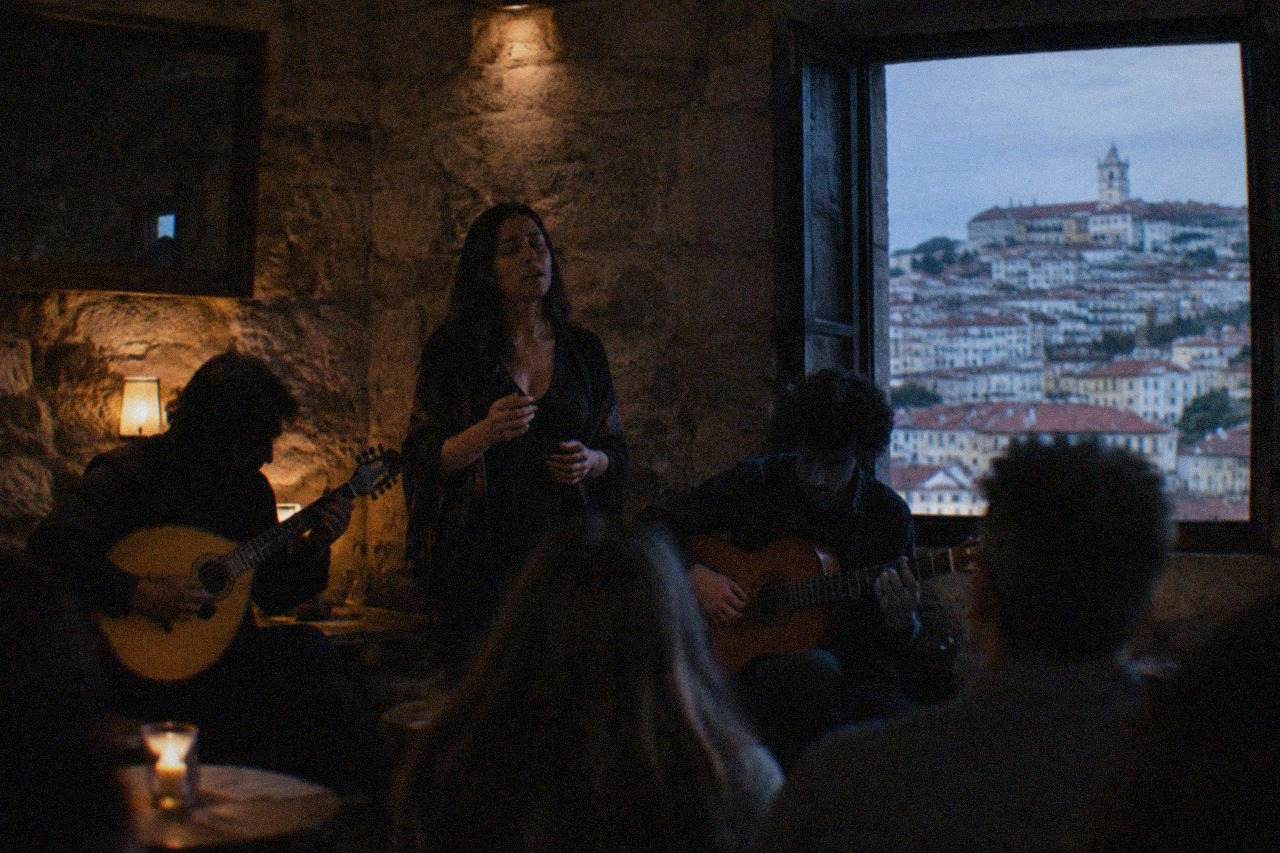
Fado in Portugal splits into two great traditions, and the question of where to hear it best has a real answer: Coimbra, the university city on the River Mondego in central Portugal. Lisbon fado is the older, broader, sadder cousin, sung by men and women in small taverns of Alfama and Mouraria. Coimbra fado, or fado de Coimbra, grew out of the student life of one of Europe's oldest universities, and it is still sung by men, still tied to the black academic cape, and still performed as a street serenade under the old city's windows as well as on a stage. This page, from the editorial desk at Coimbra Travel Guide, lays out what the two forms are, why Coimbra is the more distinctive place to hear them, and how to get a seat at a show without guessing.
Where Is the Best Place to See Fado in Portugal?
The best place to see fado in Portugal is Coimbra, the university city on the River Mondego, because it is the home of fado de Coimbra, a male-voiced, student-born form found nowhere else, performed in venues and as street serenades. Lisbon is the other great answer, with the older tavern tradition of Alfama and Mouraria, but only Coimbra ties the music to the academic cape, the university hill and a ritual of night-time singing that is still living practice rather than revival.
That claim deserves unpacking rather than assertion. Fado de Coimbra is not a marketing invention of the tourism board. It grew out of the student tradition of the University of Coimbra, an institution the University's own pages count at about 31,000 students today, and its imagery, the black capa e batina, the serenade beneath a lover's window, the farewell songs of graduating students, is inseparable from that life. A visitor who hears it in Coimbra hears a form with a social function still attached. A visitor who hears fado in Lisbon hears a magnificent form whose original neighbourhood life has largely given way to professional performance, however good the singers are.
Both are worth hearing. But the question asks for the best place, and the honest answer is that Coimbra offers the version a traveller cannot assemble anywhere else. The basics of the form itself, its history and its emotional register, are covered in what is a Portuguese fado, and the deeper local picture in the Coimbra fado guide.
What Makes Coimbra Fado Different from Lisbon Fado?
Coimbra fado differs from Lisbon fado in voice, costume, subject and setting: it is sung almost exclusively by men, it is tied to the university's black academic cape, its songs are about student life, the city and the Mondego rather than the Lisbon saudade of sailors and fate, and it is performed both in venues and as street serenades. Lisbon fado is mixed-voice, older, tavern-born and today overwhelmingly a staged professional art.
The male voice is the first thing a listener notices. Where Lisbon's most celebrated fadistas have often been women, the Coimbra form is a men's tradition, rooted in the all-male student body of an earlier university era. The repertoire follows: songs about the city, the river, the leaving of students at the end of their studies, the serenade as courtship. The Portuguese guitar, the pear-shaped twelve-string instrument that defines fado's sound everywhere, is tuned and played differently in Coimbra too, with a brighter, more ringing attack.
The setting matters as much as the sound. A Coimbra serenade happens in the street, at night, under a window or in a square, with the singers in their capes. That is not folklore performed at tourists. It is how the tradition has continuously existed. In parallel, ticketed venue shows run in the city, and those are what most visitors will actually attend, because a street serenade cannot be scheduled or promised.
| Fado de Coimbra | Fado de Lisboa | |
|---|---|---|
| Typical singers | Men, historically students or former students | Men and women |
| Costume link | The black academic cape, capa e batina | No student costume tradition |
| Core subjects | Student life, the city, the Mondego, farewell and serenade | Saudade, fate, the sea, Alfama and Mouraria life |
| Typical settings | Ticketed venue shows plus street serenades | Tavern and dedicated fado houses, staged performances |
| Where to hear it | Coimbra, Portugal | Lisbon |
The two forms share the word fado and the feeling of saudade, and they share the instruments, but they are different arts. Readers deciding between the two cities can compare them further in is fado Portuguese or Spanish, which also settles the common confusion with Spanish traditions.
Where to Hear Fado de Coimbra: Venues, Serenades and the Student Tradition
Fado de Coimbra is heard in three ways: at a ticketed venue show, on a guided evening that includes fado among other city experiences, and as a spontaneous street serenade, which cannot be booked or scheduled. No venue's show times, addresses or nightly schedules are published here, because none were verified on this build, so the practical route for a visitor is a bookable show and the operator's live listing for the current details.
The bookable route is the reliable one. The city's best-established option on this site's roster is the Coimbra Live Fado Show with a Glass of Port Wine, a 50-minute performance rated 4.7 from 1,234 reviews and priced from $18 per person, with a glass of port wine included. Fifty minutes is the right length for a first encounter: long enough for the guitarra and the voice to work their spell, short enough that the form does not blur for a newcomer. Check availability on the operator's live listing, since session days and start times change with the season and the venue.
The second route is a guided evening or a walking tour that folds the city's fado story into a wider circuit of its old town. That suits a visitor who wants the context, why the cape, why the men, why the farewell songs, more than an hour of music alone. The third route is the serenade, and it is the one that cannot be planned. Serenades happen around student celebrations, around the academic calendar, sometimes with no warning at all. A visitor who spends an evening walking the old town around the university hill has a chance of one, and no guide can promise it.
One planning note belongs here. The University's visitor circuit closes on 24 May, and Mosteiro de Santa Cruz suspends visits on the Cortejo da Queima das Fitas, a moveable Sunday in the festival week, both facts published by the institutions themselves. The student festival season is when the city's academic traditions, fado included, are at their most visible, but it is also when ordinary visiting schedules bend. Check the dates before building a May trip around them.
How Much Does It Cost to See Fado in Coimbra?
A ticketed fado show in Coimbra costs from $18 per person for a 50-minute performance with a glass of port wine included, based on the listing on this site's roster, rated 4.7 from 1,234 reviews. Beyond the show itself, a full evening of fado in Coimbra is a modest addition to a day's budget, and the free options, street serenades and the city's walking tours, cost nothing but time.
The show price is the anchor figure and it comes from the operator's listing, so treat it as a starting point rather than a promise. What the price buys is the complete form: the guitarra, the viola, the voice, and the port wine in the hand, in a room built for listening rather than for dining. Fado is traditionally listened to in silence, which is why a dedicated show, rather than a restaurant with background music, is the introduction worth paying for.
| Experience | From (per person) | Rating | Reviews | Duration |
|---|---|---|---|---|
| Coimbra Live Fado Show with a Glass of Port Wine | $18 | 4.7 | 1,234 | 50 minutes |
| Coimbra Top Attractions Walking Tour | $5.85 | 5 | 151 | 2 hours 30 minutes |
| Time travel at the Convent of Christ, Tomar | $46.83 | 5 | 80 | 1 to 3 hours |
The walking tour in that table is not a fado experience, but it is the cheap way to learn the city the songs are about, the university hill, the old town, the Mondego, before hearing them sung. The Tomar option belongs to a different day entirely, but it shares the roster's quality band and suits a visitor pairing Coimbra with a Templar day trip. Budget travellers should also know that the city's free GuruWalk walks, tip-based and led by named local guides, are a genuine option; this site's where to hear fado guide covers the free and paid routes in more depth.
When Is the Best Time of Year for Fado in Coimbra?
The best time of year for fado in Coimbra is May, when the student festival season puts the academic traditions the music grew from on open display, though shows run year-round and the practical constraint is the calendar, not the weather: July averages 8.9 mm of rain and is effectively dry, while November is the wettest month at 121.5 mm.
Those climate figures come from IPMA's 1991 to 2020 normals for the Coimbra / Bencanta station, the city's own station, and they correct a common assumption. September is not the start of the rains here; October is, when the monthly total jumps to 114.5 mm. September evenings are warm, the summer crowds have gone, and a walk down from the university hill after a show is at its most pleasant.

May is the emotional peak. The student calendar fills the city with capes and guitars, and the traditions fado de Coimbra sings about are happening in the streets in real time. The trade-off is that the University closes its visitor circuit on 24 May and Santa Cruz suspends visits on the Cortejo Sunday, so monument plans need flexibility. Winter, with November, October and January the three wettest months at 121.5, 114.5 and 113.5 mm respectively, is the season for a small warm room and a voice in the dark, which is, in the end, what fado was built for.
What to Wear, Tipping and Fado Etiquette in Coimbra
Fado etiquette in Coimbra is simple and strict: listen in silence while the song is being sung, do not talk over the performance, and applaud when it ends. Dress is smart-casual rather than formal, and tipping at a fado show follows Portuguese restaurant norms, a modest rounding-up rather than a fixed percentage, with no obligation at all.
The silence rule is the one that matters. In a proper fado room the lights drop, the conversation stops, and the singer owns the room until the last note. Visitors who chat through a song will be hushed, and rightly so, because the music depends on the silence around it. The question of what to wear has its own detailed answer in what to wear to a fado show, and the money question is settled in do you tip at a fado show. Neither answer requires a dinner jacket, and neither requires a calculator.
Common Questions About Fado in Portugal
Where is the best place to see fado in Portugal?
Coimbra, the university city on the River Mondego, is the best place to see fado in Portugal for a distinctive experience: fado de Coimbra is a male-voiced, student-born form tied to the black academic cape, performed in venues and as street serenades. Lisbon is the other great answer, with the older tavern tradition of Alfama and Mouraria.
Is fado de Coimbra different from Lisbon fado?
Yes. Coimbra fado is sung almost exclusively by men, grew out of the University of Coimbra's student tradition, is tied to the black academic cape, and is performed as street serenades as well as in venues. Lisbon fado is mixed-voice, older and tavern-born. Both use the Portuguese guitar, tuned and played differently in each city.
What is the most famous fado song?
The most famous fado song belongs to the Lisbon tradition, and the question has its own detailed answer elsewhere on this site. In Coimbra the best-known repertoire is the student farewell and serenade music of the university tradition.
How much does a fado show in Coimbra cost?
The bookable show on this site's roster, a 50-minute live performance with a glass of port wine included, is listed from $18 per person and rated 4.7 from 1,234 reviews. Check the operator's live listing for current session days and start times, since those change with the season.
Can you hear fado in the street in Coimbra?
Yes, but it cannot be scheduled. Street serenades are part of the living student tradition and happen around academic celebrations, often with no warning. A ticketed venue show is the reliable way to hear the form; a serenade is the lucky bonus.
Do you need to book a fado show in advance?
It is the safer route, especially around the May student festival season and in summer. Session days and start times change with the season, so the operator's live listing is the place to confirm both before planning the evening.
The short version: point the trip at Coimbra, Portugal, book the show with the port wine, keep quiet when the lights drop, and leave an evening free to walk the old town in case the city starts singing on its own.