How Long Should You Spend in Coimbra?
How long should you spend in Coimbra, Portugal? A practical answer based on verified ticket prices, opening hours and timed-entry rules at the University, plus one-day, two-day and three-day plans.
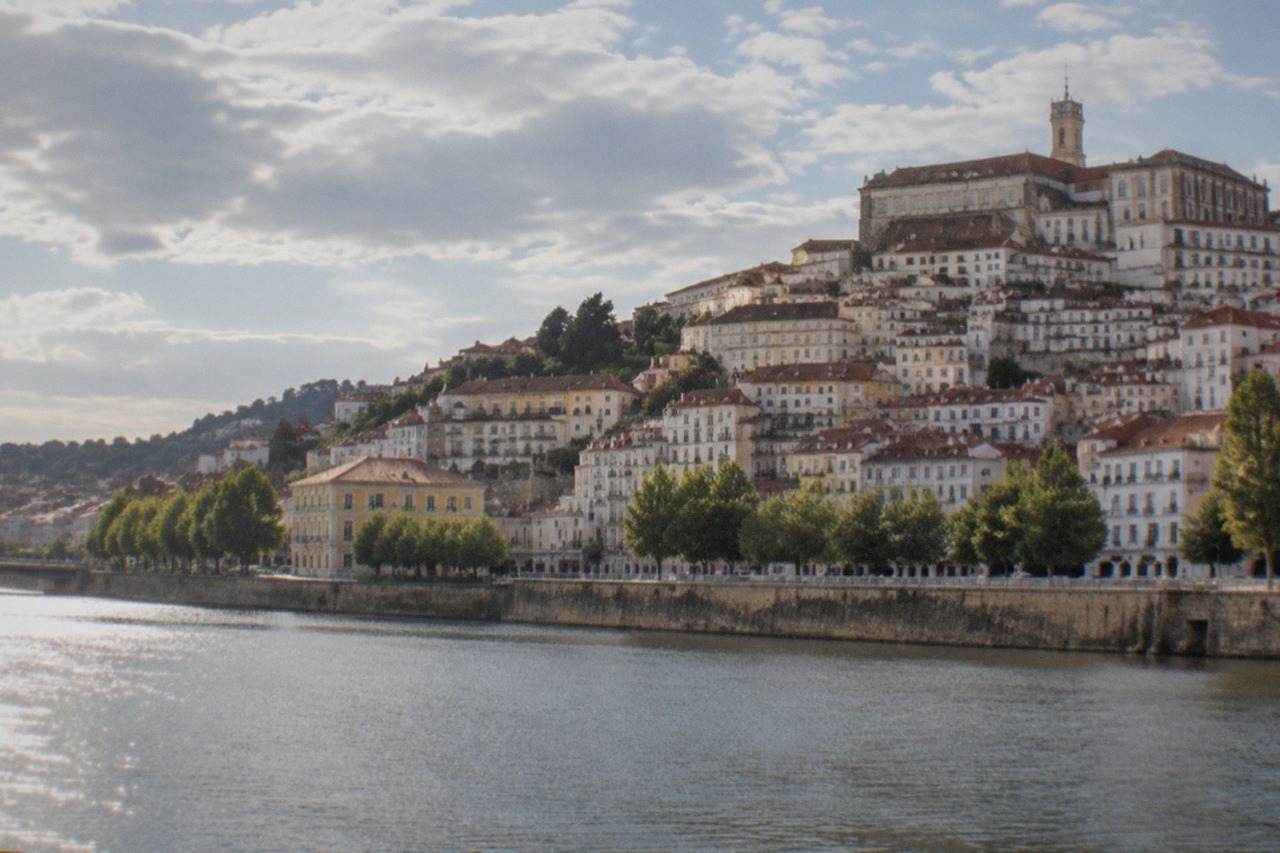
Coimbra, the university city on the River Mondego in central Portugal, is small enough to see the highlights of in a day and layered enough that a day trip undersells it. The honest answer to the length question depends almost entirely on one building: the Biblioteca Joanina admits 50 people every 20 minutes on a fixed printed slot, and that single rule shapes every itinerary on this page. The University's own visitor pages state the ceiling and refuse entry outside the printed time, so a visitor who arrives without a slot in summer can lose the city's most famous interior entirely.
How Long Should You Spend in Coimbra?
Two nights, which gives you one full day plus two half days, is the right length for most visitors to Coimbra, Portugal. One long day covers the university hill and the old town if the Joanina slot cooperates, but it leaves nothing for the Mondego riverside, the fado houses or the museums. Three days adds a day trip to Conímbriga or the Lousã schist villages without hurrying anything. Four or more days only makes sense with multiple day trips.
The reason two nights beats one day is structural, not a matter of taste. The city climbs a hill, the University's own published hours run 09:00 to 20:00 in summer and 09:00 to 17:30 in winter, and the combined ticket that includes the Joanina Library costs 16.50 EUR and is valid for two days, except the Joanina slot itself, which is fixed. The University sells that ticket deliberately as a two-day product: the Royal Palace, St Michael's Chapel, the Chemistry Laboratory, the Academic Museum, the Cabinet of Curiosities and the Mineral Gallery can be spread across two days, while the library admits you only in your printed 20 minutes.
That two-day validity is the quiet argument for staying overnight. A day-tripper must compress everything into one circuit and pray the Joanina slot lands mid-afternoon. A visitor with two nights picks a morning slot, spends the rest of the first day in the Alta, then gives the Baixa, the Sé Velha and the riverside a full second day at a walking pace rather than a marching one.
The University publishes an enrolled population of about 31,000 students, and the municipality recorded 698,151 overnight stays in 2025, its own figure for the municipality. This is a real, lived-in city, not a museum piece, and the difference between a day trip and two nights is largely the difference between seeing it as a monument and seeing it as a place.
What Can You Realistically See in One Day in Coimbra?
A one-day visit can cover the Paço das Escolas circuit, the Biblioteca Joanina slot, the Sé Velha and the old town lanes down to the Mondego, provided you book the Joanina slot in advance and accept that Machado de Castro, Santa Clara-a-Velha and the tower are all closed. One day is enough for the postcard Coimbra, Portugal, but not for the city's second layer, and it leaves no room for a day trip.
The one-day plan works only with the timed-entry rule respected. The University's own program page states that entries to the Joanina are limited to 50 people every 20 minutes, that online purchase closes 20 minutes before the visit time, and that visits outside the stipulated time are refused. Book the slot before you book anything else, then build the day around it.
What one day looks like in practice:
| Time block | What it covers | Verified cost |
|---|---|---|
| Morning | Paço das Escolas: Royal Palace, St Michael's Chapel, Chemistry Laboratory, Academic Museum, Cabinet of Curiosities, Mineral Gallery, plus the Joanina slot | 16.50 EUR combined adult ticket |
| Midday | Walk down through the Arco de Almedina into the Baixa for lunch | Food prices vary, no verified figures |
| Afternoon | Sé Velha de Coimbra, then the old town lanes | 3.00 EUR individual ticket |
| Late afternoon | Mosteiro de Santa Cruz, burial church of Portugal's first two kings | 5.00 EUR individual ticket |
| Evening | Mondego riverside and the Parque Verde do Mondego | Free |
Two closures matter to the one-day plan. The Museu Nacional de Machado de Castro is closed for conservation work; its own page on the national museums portal says so at the top, and it publishes no reopening price, so do not plan around it. The Torre da Universidade is also closed, per the University's own information page, which states the facility is closed outright, so no tower climb belongs in any itinerary. Mosteiro de Santa Clara-a-Velha has been closed for requalification works since October 2025, and no official page currently lists a price or hours for it.
If one day is genuinely all you have, a guided visit is the most efficient use of it. A local guide compresses the university hill into a single loop and handles the queueing mechanics for you.
The budget end of that band is worth a sentence of its own: the Coimbra Top Attractions Walking Tour runs about two and a half hours from $5.85 per person, rated 5 from 151 reviews, which makes it a sensible one-day anchor for visitors who would rather pay a little than navigate the hill alone. For a fuller comparison of the city's headline sights, the Coimbra attractions guide breaks down what each one costs and how long it takes.
Is Two Days the Sweet Spot for Coimbra?
Yes, two full days is the sweet spot for Coimbra, Portugal, because it matches the University's own ticket design: the 16.50 EUR combined ticket is valid two days, so day one takes the Paço das Escolas and the Joanina slot at leisure, and day two takes the old town, the Sé Velha, Santa Cruz, the Botanical Garden and the Mondego riverside without cutting anything. Two days also absorb a closed Monday or a bad-weather morning.
Day two is where the city stops being a checklist. The Botanical Garden can be visited on a guided tour the University itself sells for 10.00 EUR, and the garden's seasonal hours are published on the visit pages. The Baixa rewards aimlessness: the historic cafés, the fado houses and the shopping streets between Praça do Comércio and the river are the part of Coimbra a day-tripper never reaches. The rest of the planning pages sit on Coimbra Travel Guide.

Two days also gives you the fado. Coimbra's fado tradition is distinct from Lisbon's, tied to the student cape and guitar, and the live shows with a glass of port wine run about 50 minutes from $18 per person, rated 4.7 from well over a thousand reviews. That is an evening, and a one-day visitor is already on a train by the time the lights go down.
There is a budget angle worth stating plainly. The municipal tourist tax is 1.00 EUR per guest per overnight stay, capped at three consecutive nights, from age 16, paid to the accommodation at check-in or check-out. The municipality's own published numbers put its tourism-related cost at 3.49 EUR per overnight stay, so the second night is, in the most literal municipal accounting sense, subsidised.
If you are weighing two days against a rushed day trip, the one-day itinerary guide and the two-day itinerary guide both exist, and the difference between them is the difference between seeing Coimbra and visiting it.
What Does a Three-Day Coimbra Itinerary Add?
A third day in Coimbra, Portugal, adds one day trip, and the two best-supported options are Conímbriga, the Roman town about 16 km south in Condeixa-a-Velha, and the schist villages of the Lousã mountain. Conímbriga's museum and ruins cost 10.00 EUR on a single combined ticket and open daily 10:00 to 18:00, which makes it the reliable choice even on a Monday, when several state monuments close.
Conímbriga is the highest-value add. The site sits in the parish of Condeixa-a-Velha, in the municipality of Condeixa-a-Nova, roughly 16 km south of the city, and its national museum publishes a single 10.00 EUR adult ticket covering both museum and ruins, open Monday to Sunday. That seven-day opening is unusual in this region and worth planning around: it makes Conímbriga the perfect Monday excursion when the state-run monuments that close on Mondays are shut.
The Lousã mountain schist villages are the alternative, and the tour roster carries several: a four-hour Discovering Nature in Serra da Lousã walk from $81.95 per person, and longer village-and-castles tours with lunch included. The mountain is close enough that a half-day works, which means a three-day visitor can do the university hill on day one, the old town on day two and still be back for a fado evening on day three.
For the day-trip decision itself, the Coimbra day trips guide compares Conímbriga, Lousã, Buçaco and Tomar on cost and travel time.
How Long Should You Spend in Coimbra If You Want Day Trips?
Four days is the honest ceiling for Coimbra, Portugal, as a base: two days for the city itself, then one day each for two day trips, most naturally Conímbriga and the Lousã schist villages, or a farther option such as Tomar or Fátima. Beyond four days you are repeating ground, because the city's own verified sights fit comfortably in two days and the district's day trips each cost a full day.
The ceiling is real. The inscribed UNESCO property here is "University of Coimbra - Alta and Sofia", list reference 1387, inscribed in 2013, and it covers two components inside the old town, the university hill and the college street, not the whole city. Coimbra is not a World Heritage city in the loose sense guides often claim, and once the Alta, the Sofia, the Baixa and the riverside are done, the city's core is done.
Weather is a legitimate reason to stretch to three or four days rather than compress to two. IPMA's 1991 to 2020 normals for the Coimbra / Bencanta station show November as the wettest month at 121.5 mm, with October close behind at 114.5 mm, while July at 8.9 mm is effectively dry. A shoulder-season visitor building a four-day plan is buying insurance against a rained-out day, and the best time to visit guide works through the whole table month by month.
The second tour pick band below is the practical shortlist for that third and fourth day: the university skip-the-line tour if the Joanina slots are tight, the budget walking tour for the city day, and the Serra da Lousã nature walk for the mountain day.
Common Questions About Time in Coimbra
How long should you spend in Coimbra?
Two nights for most visitors: one full day plus two half days covers the Paço das Escolas, the Biblioteca Joanina slot, the Sé Velha, Santa Cruz and the riverside. Add a third day for Conímbriga or the Lousã schist villages, and a fourth only if you want two day trips.
Is one day in Coimbra enough?
One day covers the university hill, the Joanina slot, the Sé Velha and the old town lanes if the slot is booked in advance. It leaves out the fado evening, the Botanical Garden and every day trip, so it is enough for the highlights and not for the city.
Why does the Biblioteca Joanina force an overnight stay?
The library admits 50 people every 20 minutes on a fixed printed slot, cannot be bought on its own, and exists only inside the 16.50 EUR combined ticket, which is valid two days except the Joanina slot. A day-tripper who cannot get a slot misses the city's most famous interior entirely.
Do you need a car for a longer stay?
Not for the city itself, which is compact and steep. For day trips, the tour roster carries guided options to Conímbriga, Lousã, Buçaco and Tomar, and the SMTUC 2026 tariff sells titles valid on both the bus network and the Metro Mondego network, so a bus ticket works on the new system too.
What is closed right now, so I do not waste a day on it?
The Museu Nacional de Machado de Castro is closed for conservation work, the Torre da Universidade is closed per the University's own page, and Mosteiro de Santa Clara-a-Velha has been closed for requalification works since October 2025. None of the three belongs in a current itinerary.
The short version stands: book the Joanina slot first, give the city two nights, and let the third day be Conímbriga, whose 10.00 EUR combined ticket and seven-day opening make it the one excursion that fits any calendar.